Seated Single Leg Tibialis Press
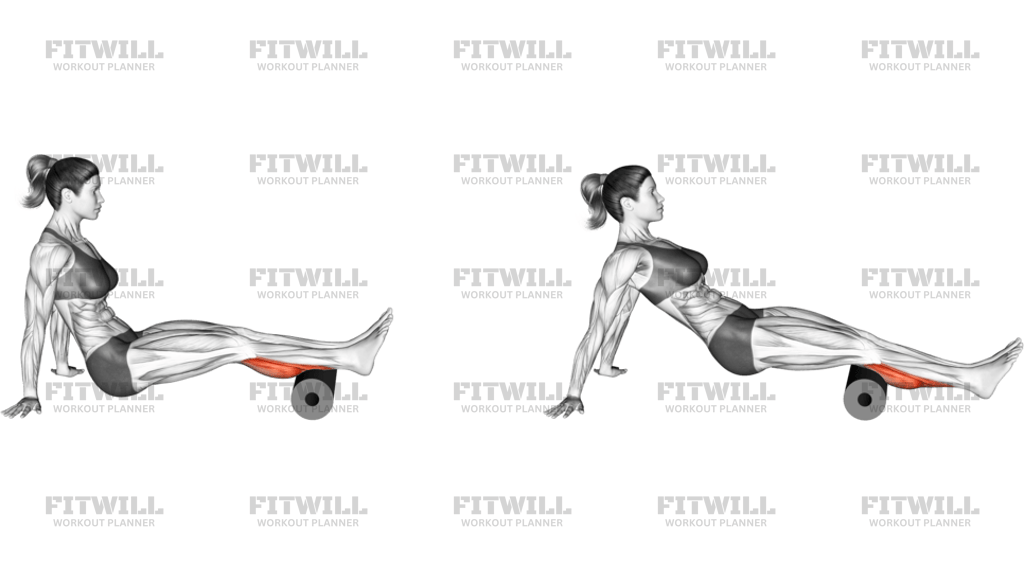
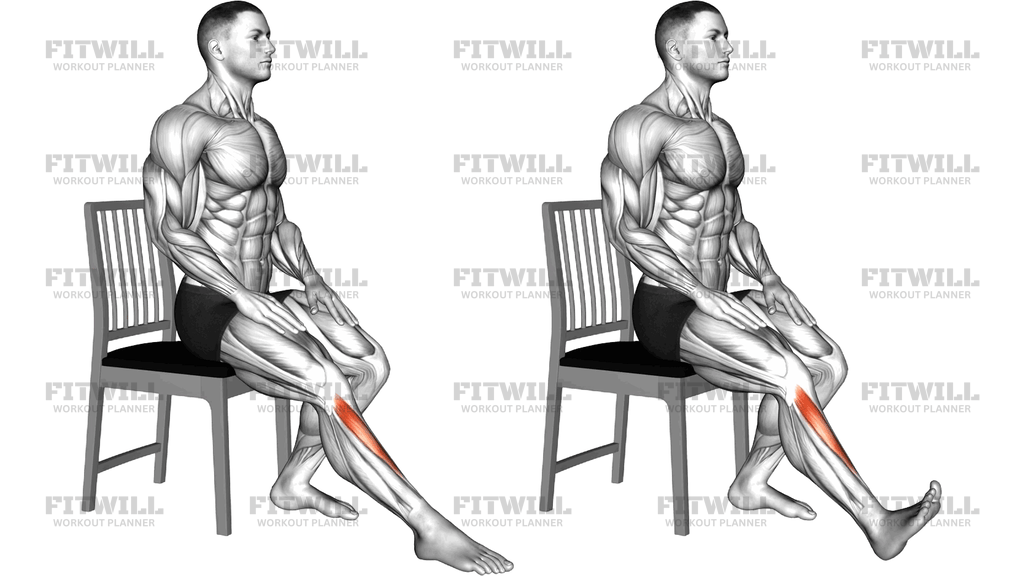
The Seated Single Leg Tibialis Press is a simple bodyweight exercise that targets the tibialis anterior, the muscle running along the outside front of your shin. You perform it sitting on a sturdy chair or bench with one leg extended in front of you and the heel planted on the floor. From there, you repeatedly pull your toes up toward your shin and lower them back down in a slow, deliberate rhythm. Because the knee is nearly straight and the heel stays grounded, the shin muscle does the work without any load on the foot or ankle joint beyond your own limb weight.
Most people train their calves thoroughly but completely ignore the muscles on the front of the lower leg. That imbalance can show up as weak ankle control, especially in runners, hikers, and anyone who spends long hours walking or standing. Strengthening the tibialis anterior helps support the arch mechanics, improves your ability to lift the foot cleanly during gait, and balances out the pulling force of the calf muscles on the lower leg. This exercise fits neatly into warm-ups, rehab-style strengthening blocks, or desk-break routines because it requires nothing more than a chair.
The setup matters more than it looks. Sitting with your torso upright and the working leg extended so the heel rests on the floor places the ankle at just the right angle for a full, clean range of motion. If you scoot too far back, the leg straightens past the point where the heel can stay planted; if you sit too far forward, the knee bends and the movement starts drifting into a quad-driven leg extension instead. Keep the foot relaxed and let the ankle hinge, rather than curling or splaying the toes to fake extra range.
Execution is deliberately slow. Lift the toes and top of the foot toward the shin until you feel the front of the lower leg contract, hold that top position for a beat, then lower the foot back toward the floor under control. The working muscle is small, so the temptation is to rush and bounce through reps — resist that. Controlled tempo with a brief pause at the top produces far more useful work than fast, sloppy repetitions.
You will feel this most along the outer front of the shin, which is exactly where you want to feel it. A mild working burn is normal; sharp pain along the shin bone or inside the ankle is a signal to reduce range or stop. Because each leg works on its own, it is easy to spot and address side-to-side differences, which makes the single-leg format more practical than doing both feet at once.
Use moderate reps, somewhere in the range of fifteen to twenty-five per set per side, and progress by adding pauses or slowing the lowering phase rather than hunting for external load. Pair it with calf raises if you want balanced lower-leg work, and slot it before running or jumping sessions as part of a foot and ankle preparation routine.
[ Workout Log & Planner ]
Put your next workout in Fitwill
Keep your plan and training log ready when you are.


Instructions
- Sit upright on a sturdy chair or bench with your feet flat on the floor and your hands resting on your thighs.
- Extend one leg forward so the knee is nearly straight and the heel of that foot rests on the floor in front of you; keep the other foot flat beside the chair for support.
- Sit tall with your ribs stacked over your hips and brace your trunk lightly so your torso does not slump as you work.
- Keep the working foot relaxed and allow the toes to hang toward the floor to reach the starting position.
- Pull your toes and the top of your foot up toward your shin, hinging only at the ankle while the heel stays glued to the floor.
- Pause for one to two seconds at the top with the foot flexed up and the front of your shin clearly working.
- Lower the toes slowly back toward the floor, resisting gravity instead of letting the foot drop.
- Exhale as you lift the toes, inhale as you lower them, keeping the breath steady throughout the set.
- Complete all repetitions on one leg, then reposition the opposite leg extended and match the rep count on the other side.
Tips & Tricks
- The most common mistake is curling the toes hard to squeeze out extra range — keep the toes loose so the ankle itself produces the movement.
- If your heel lifts or slides as you flex the foot, shorten your reach slightly so the heel can stay planted for every rep.
- Watch for the knee drifting into extension as you fatigue; the shin angle should stay fixed and all motion should happen at the ankle.
- A slow three-second lowering phase makes this exercise noticeably harder without any equipment — use it once the standard tempo feels easy.
- You should feel the work on the outer front of the shin, not as a strain along the shin bone itself; if the bone area complains, reduce your range of motion.
- Avoid turning the foot outward as you lift the toes; keep the toes pointing at the ceiling so the tibialis anterior does the lifting rather than the muscles on the outside of the shin.
- Since one leg works at a time, start with your weaker or tighter side and match the reps with the other side rather than doing more with your stronger leg.
- Do not lock the knee aggressively; a soft, nearly straight knee keeps the lower leg comfortable without turning this into a quad exercise.
- Higher reps with brief top-position holds suit this small muscle better than max-effort attempts, so keep the effort moderate and repeat often.
Frequently Asked Questions
What muscles does the Seated Single Leg Tibialis Press work?
The primary muscle is the tibialis anterior on the front of the shin, which lifts the foot toward the shin. The deeper stabilizers around the ankle and the lower leg support the movement as you control the foot through each rep.
Why does the heel need to stay on the floor during the Seated Single Leg Tibialis Press?
A planted heel anchors the lower leg so the ankle is the only joint moving, which forces the tibialis anterior to do the work. If the heel lifts, other muscles and momentum start covering for the target muscle.
Is the Seated Single Leg Tibialis Press suitable for beginners?
Yes, it is one of the most beginner-friendly lower-leg exercises because it is bodyweight-only, seated, and low in joint stress. Start with one or two sets of fifteen reps per leg and build gradually.
How many reps should I do per set of the Seated Single Leg Tibialis Press?
Fifteen to twenty-five controlled reps per leg works well, since the tibialis anterior is a smaller endurance-oriented muscle. Progress by slowing the tempo or adding a pause at the top rather than rushing more reps.
Why do this exercise one leg at a time instead of both feet together?
Working single-leg lets you feel each side clearly and exposes differences in strength or control between legs. You can then match reps to the weaker side instead of letting the stronger leg dominate.
Can I do the Seated Single Leg Tibialis Press every day?
For most people, yes — the load is light and the movement is gentle, so it can appear in daily warm-ups or desk breaks. If the front of your shin feels persistently sore, take a rest day and reduce volume.
What can I use if I do not have a chair with the right height?
Any stable seat works, including a bench, a sturdy box, or the edge of a couch, as long as your extended heel can rest flat on the floor with the knee nearly straight. Avoid soft or wheeled seating that shifts as you move.
Should I feel this along the shin bone or in the muscle?
You should feel a working sensation in the muscle on the outer front of the shin, not a sharp or aching pain along the bone itself. If the bone area becomes uncomfortable, reduce your range of motion and check that your tempo is controlled.
How is the Seated Single Leg Tibialis Press different from a heel walk or toe raise?
Standing toe raises and heel walks load the ankle with your full body weight and require balance, while this version isolates the ankle in a seated position with the knee nearly straight. The seated setup makes it easier to control tempo and isolate one side at a time.