Standing Wall Slide Quarter Squat Hold
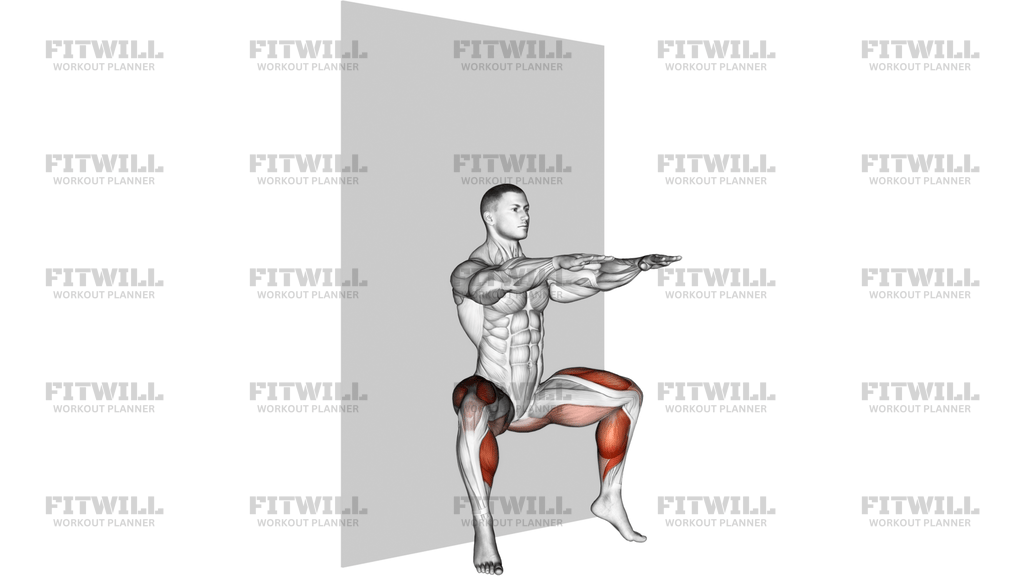
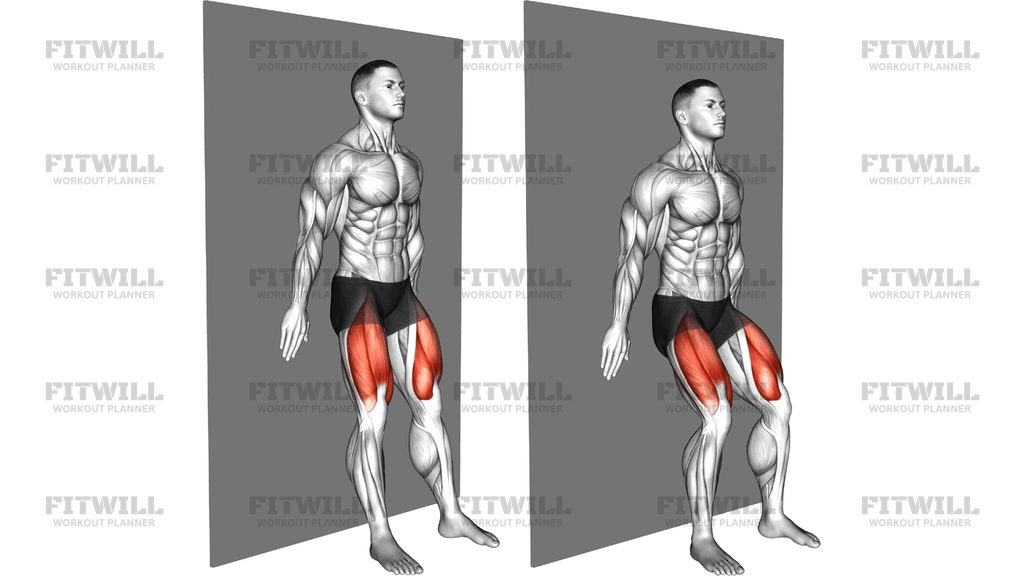
The Standing Wall Slide Quarter Squat Hold is a bodyweight isometric exercise where you press your back flat against a wall, walk your feet out slightly, and slide down into a shallow quarter squat before holding that position for time. Unlike a free-standing squat, the wall gives you constant feedback along your entire spine, which forces you to stay upright and keeps your weight evenly distributed instead of dumping it forward into your knees or toes. The image shows the movement clearly: feet planted a step in front of the hips, back and hips in full contact with the wall, arms relaxed at the sides, and a modest knee bend that stops well above parallel.
This is one of the most accessible squat variations you can do, which makes it a favorite for beginners learning what a proper squat feels like, for older adults rebuilding leg strength, and for anyone returning from time off who wants to load the thighs without heavy equipment or complex technique. Because the depth is limited to a quarter range, the demand stays on the quadriceps in a joint-friendly position, while the glutes and hamstrings work isometrically to keep the hips pressed back against the wall.
The wall contact is what separates this from a regular quarter squat. Sliding your back up and down the wall removes the tendency to lean forward, round the lower back, or let the knees drift inward. If any of those faults happen, you will feel your back peel away from the wall immediately, which turns the exercise into a self-correcting drill. That same feedback also trains the postural muscles of the trunk, since you have to brace lightly the whole time to maintain contact from shoulders to hips.
To execute it well, set your feet about a step in front of the wall at roughly hip width, slide down until your knees are bent but still clearly above a parallel squat depth, and hold there with your weight spread across the whole foot. Keep the shoulders and hips against the wall, arms hanging loose, and breathe steadily rather than holding your breath. The burn builds quickly in the thighs during the hold, so start with shorter sets of 15 to 30 seconds and extend the duration as your tolerance improves.
Common use cases include warm-ups before leg training, low-impact strength work at home or while traveling, active recovery between heavier sessions, and rehab-style programming where controlled isometrics are preferred. Safety-wise, the main points are to keep the knees tracking over or slightly behind the toes, never sink deeper than a quarter range on this variation, and come out of the hold by sliding up the wall with control rather than dropping forward off the wall. If you feel sharp knee pain rather than muscle fatigue, shorten the hold or reduce the depth.
[ Workout Log & Planner ]
Put your next workout in Fitwill
Keep your plan and training log ready when you are.


Instructions
- Stand with your back flat against a clear section of wall, feet together at first, and let your arms hang relaxed at your sides.
- Walk both feet forward one comfortable step, about 12 to 18 inches out from the wall, and set them at hip width with toes pointing straight ahead or slightly out.
- Brace your trunk lightly and press the back of your head, shoulders, and hips against the wall so your whole spine maintains contact.
- Slide your back down the wall by bending your knees until you reach a quarter squat depth, roughly a quarter of the way toward parallel, keeping your hips in contact the entire time.
- Check your knee position so they track in line with your toes and stay behind or over the toes, not collapsing inward or shooting far past them.
- Hold this quarter squat position isometrically, keeping weight spread evenly across both feet and the back glued to the wall.
- Breathe in a slow, steady rhythm through the hold instead of holding your breath, aiming for controlled inhales and exhales every few seconds.
- When the hold time is up, slide back up the wall by straightening your legs under control until you reach a full standing position.
- Step your feet back toward the wall, release the brace, shake out your legs, and reset your wall contact before starting the next hold.
Tips & Tricks
- The most common mistake is sliding too deep into a half or parallel squat; on this variation, stop at a quarter range where the knees stay clearly above parallel so the hold stays controlled.
- If your lower back arches and peels off the wall as you sink, walk your feet an inch or two farther out from the wall before descending.
- Resist the urge to press your hands on your thighs to help; the arms should hang at your sides so the legs do all the work.
- Watch that your knees do not cave toward each other as fatigue builds; cue yourself to spread the floor gently with your feet to keep them tracking over the toes.
- Keep your head in contact with the wall without jutting the chin up; looking straight ahead makes it easier to hold neutral posture.
- Time your holds rather than guessing; 20 to 30 seconds of clean contact beats a sloppy 60-second hold where the back slides and the knees drift.
- Spread your weight across the whole foot; rolling onto the toes usually means your stance is too close to the wall for your current depth.
- If the wall contact feels uncomfortable on your shoulder blades, slide down slightly less far so you can keep the shoulders pressed back without hunching.
- Use a slow exit as part of the exercise, sliding up the wall over two to three seconds instead of popping off it, which keeps tension on the thighs through the full return.
Frequently Asked Questions
Which muscles does the Standing Wall Slide Quarter Squat Hold work?
The quadriceps on the front of the thigh do most of the work during the hold, while the glutes and hamstrings work isometrically to keep the hips pressed into the wall. The calves and trunk muscles contribute as stabilizers throughout the position.
Is the Standing Wall Slide Quarter Squat Hold good for beginners?
Yes, it is one of the best introductory squat exercises because the wall provides instant feedback on posture and limits depth to a safe quarter range. Beginners should start with 15 to 20 second holds and build duration gradually.
How deep should I slide down during the Standing Wall Slide Quarter Squat Hold?
Stop at roughly a quarter of the way to a parallel squat, so the knees are bent but still well above thigh-parallel depth. Going deeper changes the exercise and usually causes the back to lose contact with the wall.
Why does my back keep coming off the wall during the hold?
This usually means your feet are too close to the wall for the depth you are attempting, forcing your pelvis to tuck. Walk your feet an inch or two farther out, or reduce your depth slightly until you can keep the entire spine in contact.
How far should my feet be from the wall in the Standing Wall Slide Quarter Squat Hold?
About one comfortable step, typically 12 to 18 inches, so your knees can bend to a quarter squat while your hips stay against the wall. The exact distance varies with leg length and height.
Should my knees stay behind my toes during this exercise?
Aim for the knees to track in line with the toes and stay roughly over or slightly behind them at quarter depth. If your knees push well past the toes, your stance is probably too close to the wall.
How long should I hold the Standing Wall Slide Quarter Squat Hold?
Start with 15 to 30 second holds for 2 to 3 rounds and extend toward 45 to 60 seconds as your thighs adapt. Stop a set when your back or knees lose position, not just when the burn peaks.
What can I substitute if I do not have a suitable wall?
A free-standing bodyweight quarter squat hold works the same muscles but removes the wall's postural feedback, so brace your trunk harder to stay upright. A sturdy door frame or a stability ball between your back and a wall can also serve the same purpose.
Is it normal to feel a strong burn in the thighs during the hold?
Yes, isometric holds build tension steadily without movement, so a burning sensation in the quads is expected as the set continues. Sharp or pinpoint pain in the knee joint itself is not normal and is a signal to reduce depth or hold time.