Standing External Rotation Behind Back With Towel
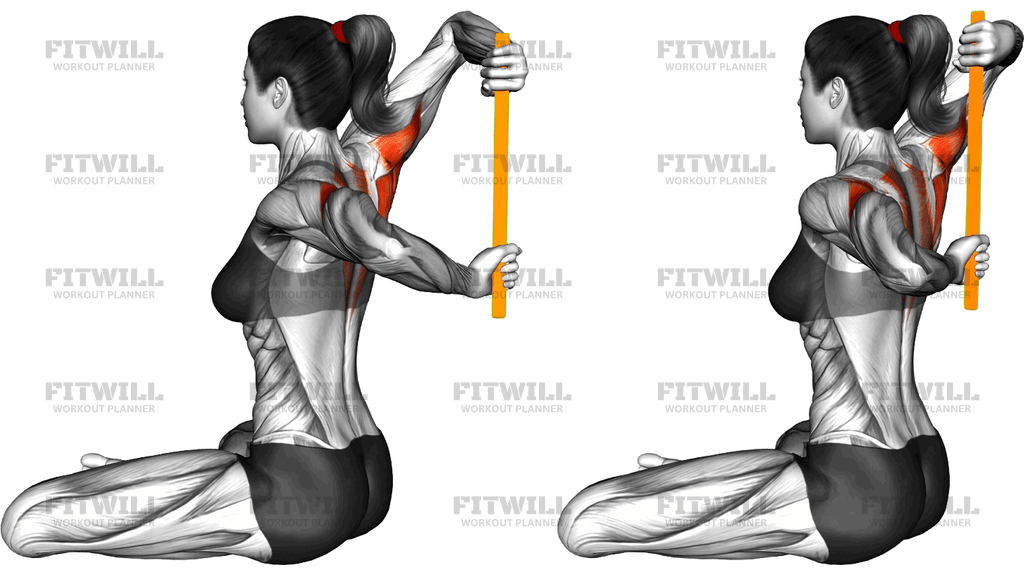
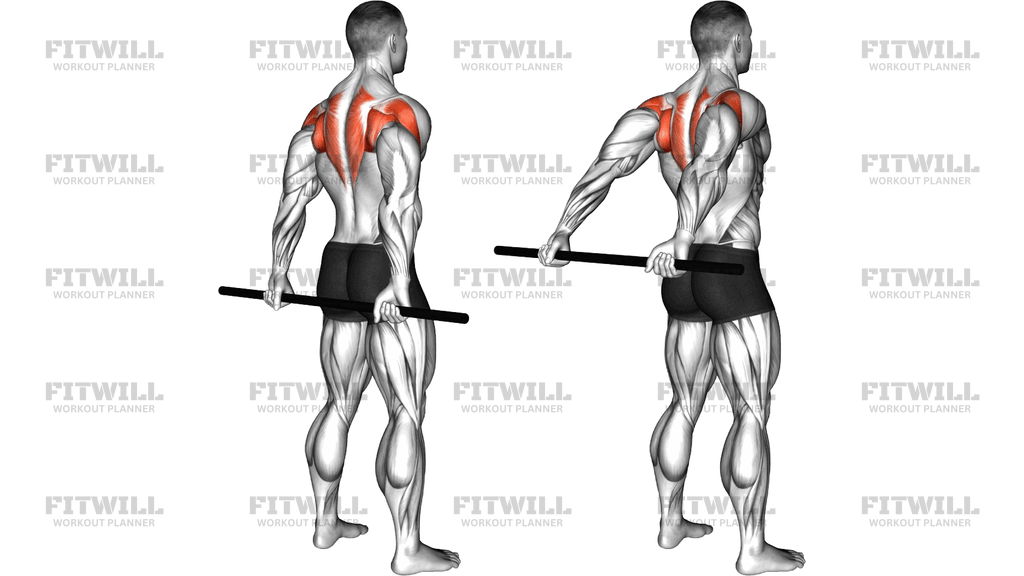
The Standing External Rotation Behind Back With Towel is a targeted rotator cuff drill performed with nothing more than a regular towel. You stand tall, reach both hands behind your back, and grip the towel horizontally at hip level. From there, one elbow bends and the forearm rotates up and away from your lower back while the opposite arm holds the far end of the towel steady, creating gentle tension that guides the rotation. The highlighted working area sits deep in the back of the shoulder, where the external rotators live.
This movement is especially useful for anyone who struggles to reach behind their back — whether that shows up as difficulty tucking in a shirt, reaching a back pocket, or getting into position for a lat pulldown behind the neck. It trains the shoulder's ability to externally rotate with the arm extended behind the body, a position most gym exercises never touch. Weightlifters, swimmers, throwers, and desk workers with stiff shoulders all benefit from keeping this range available.
The setup matters more than it looks. Standing rather than sitting removes any temptation to lean or arch, so your spine stays neutral and the work stays in the shoulder. The towel acts as both a grip aid and a feedback tool: because each hand holds an end, you can feel exactly how much tension is on the joint and dial it up or down instantly. That makes it far safer than pushing on the wrist with the free hand, which many people do when forcing a behind-the-back stretch.
To execute it well, keep the working elbow soft and close to your side, and let the rotation come from the shoulder rather than from shrugging or bending sideways. Move slowly into the end range, pause briefly, and return with the same control. The towel should stay roughly horizontal the whole time; if it tilts steeply, one arm is compensating.
Use this drill as a warm-up before pressing or pulling days, as a standalone mobility slot on rest days, or as part of a rehab-style shoulder routine alongside band external rotations. Two to three sets of slow, deliberate reps per side is plenty. Stop short of sharp pain — a deep stretch or mild working sensation is appropriate, pinching is not.
[ Workout Log & Planner ]
Put your next workout in Fitwill
Keep your plan and training log ready when you are.


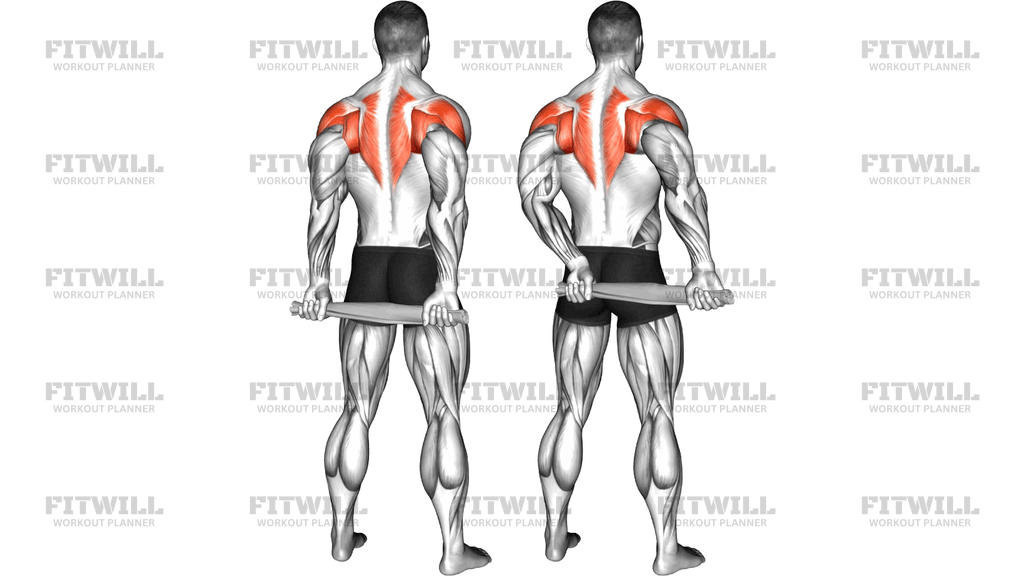
Instructions
- Stand with your feet about hip-width apart, knees soft, and your ribcage stacked over your pelvis so your torso stays upright.
- Hold a towel with both hands behind your back at hip level, palms facing back, so the towel lies horizontally across your glutes and lower back.
- Choose your working arm and keep a light grip on the towel; the opposite hand grips the far end firmly and acts as the anchor.
- Brace your core lightly and draw your shoulder blades down so you are not shrugging into the movement.
- Bend the working elbow and rotate your forearm up and away from your lower back, letting the towel slide slightly through the anchoring hand as tension builds.
- Continue until you feel a firm stretch across the back of the working shoulder and up between the shoulder blades, holding the end position for one to two seconds.
- Slowly rotate the forearm back down until the towel returns to its horizontal starting position behind your back.
- Exhale as you rotate out, inhale as you return, and keep your breathing steady rather than holding your breath at end range.
- Complete all reps on one side, re-grip the towel, then switch the working and anchoring hands and repeat on the other side.
- Between sets, drop your arms and gently roll your shoulders to reset before gripping the towel again.
Tips & Tricks
- If the towel keeps tilting instead of staying horizontal, your anchoring hand is letting it slip — re-grip so both hands start at equal points on the towel.
- Keep the working elbow pointing down and close to your body; letting it flare out turns the drill into a shrug and offloads the rotator cuff.
- Do not lean your torso away from the working arm to gain range — that sidesteps the actual limitation and rounds your lower back.
- A short, wide towel is easier to control than a long bath sheet; excess length invites slack and makes the tension hard to feel.
- Work to the first meaningful resistance, not your absolute end range — forcing the behind-the-back position is the most common way people aggravate this drill.
- If one side is noticeably tighter, start with that side and match the stiffer side's range with your looser side rather than pushing both to maximum.
- Keep your wrists neutral; cocking the working wrist to chase extra rotation stresses the forearm without improving shoulder range.
- Warm the shoulders up first with a few arm circles or light band pull-aparts, since a cold shoulder resists this position noticeably more.
- Progress by adding a longer pause at end range or a couple of extra reps before ever thinking about increasing speed.
Frequently Asked Questions
What muscles does the Standing External Rotation Behind Back With Towel work?
It primarily targets the external rotators of the shoulder — the infraspinatus and teres minor of the rotator cuff — with support from the rear shoulder and the muscles between the shoulder blades. The anchoring arm works isometrically to hold the towel steady.
Why use a towel instead of just rotating the arm behind the back?
The towel gives both hands a secure grip and creates adjustable tension, so you can guide the rotation smoothly instead of forcing the joint. It also lets the anchoring hand control the load precisely, which is safer than pushing on your own wrist.
Is this exercise suitable for beginners?
Yes, as long as you start with a small range and no pain. The towel setup is actually one of the most beginner-friendly ways to train behind-the-back rotation because the resistance is self-regulated by your own grip.
Why does my shoulder pinch when I rotate the towel up behind my back?
A pinching sensation usually means you are pushing too far into end range or letting the elbow drift away from your body. Reduce the range, keep the elbow tucked, and move more slowly; if pinching persists, skip the drill and get the shoulder assessed.
How far should the towel travel during the rotation?
There is no fixed distance — the towel simply follows the forearm as it rotates away from your lower back. Judge progress by how comfortably your forearm reaches, not by how far the towel moves.
How is this different from a standard band or cable external rotation?
Standard external rotations are done with the elbow bent at your side or elevated in front of you, while this version works the shoulder with the arm extended behind the body. That behind-the-back angle is what makes it valuable for reaching, dressing, and overhead-sport positions.
Can I do the Standing External Rotation Behind Back With Towel every day?
Light, controlled sets most days of the week are generally fine because the load is minimal. If the shoulder feels sore or achy afterward, drop back to every other day and reduce the range.
What can I use if I don't have a towel?
Any soft, non-elastic strap works — a resistance band with slack, a belt, or a bathrobe tie all substitute well. Avoid a rigid stick, because the behind-the-back position needs an object that gives slightly if your grip slips.
Should I feel this in the anchoring arm as well?
Some mild effort in the anchoring forearm and shoulder is normal since it holds the towel against the pull. If that arm fatigues before the working shoulder feels anything, use a shorter towel and grip closer to the working hand to reduce the lever length.