Standing Back Clap And Elbow Touch And Prayer Push
The Standing Back Clap And Elbow Touch And Prayer Push is a bodyweight shoulder mobility drill that moves your arms through three distinct hand positions in one continuous sequence: a clap behind your back, an elbow touch in front of your chest, and a prayer press at face height. Because it takes each shoulder from deep internal rotation behind the body into adduction and external rotation in front, it covers a wider range of motion in one rep than most single-pattern arm circles or swings.
The movement is performed standing with nothing but your own arms, which makes it one of the easiest drills to slot into a warm-up. It is especially useful before any pressing or pulling session — bench press, overhead press, push-ups, pull-ups — because it wakes up the rear shoulders, chest, and upper back together. It is also a practical break-up drill for people who spend long hours at a desk, since the three positions actively reverse the hunched, internally rotated arm posture that typing and driving encourage.
Muscularly, the drill is not about loading. The rear shoulders and the rotator cuff control the arm as it travels behind the body, the chest and front shoulders work as you bring the elbows together and press the palms, and the muscles between the shoulder blades stabilize the scapulae throughout. The clap behind the back is the most demanding part for most people and is a honest test of how much internal rotation and extension each shoulder currently has.
Setup matters more than it looks. Stand tall with feet about hip-width apart, ribs stacked over the pelvis, and shoulders relaxed rather than shrugged toward your ears. If you lean back, flare your ribs, or swing your torso to force the hands together, you are borrowing motion from the spine instead of earning it at the shoulder joint. Keep the neck loose and let the arms do the work.
Execute each phase deliberately rather than rushing through it. Reach behind and clap at whatever height your shoulders allow — many people start at lower back level and gradually work the clap higher between the shoulder blades over weeks. Transition smoothly into the elbow touch, then into the prayer press, holding the palm press for a beat before releasing. Smooth transitions are the point; jerky, fast swings defeat the purpose.
A typical dose is 8 to 12 full sequences per side-direction, or about 30 to 60 seconds of continuous movement, usually placed at the start of a workout or between warm-up sets. If the back clap feels pinching or painful rather than just tight, shorten the range, clap lower, or substitute a gentler arm swing until your shoulders adapt. Progress should feel like increasing ease and height, never like forcing through discomfort.
Fitwill
Log Workouts, Track Progress & Build Strength.
Achieve more with Fitwill: explore over 9600 exercises with images and videos, access built-in and custom workouts, perfect for both gym and home sessions, and see real results.
Start your journey. Download today!




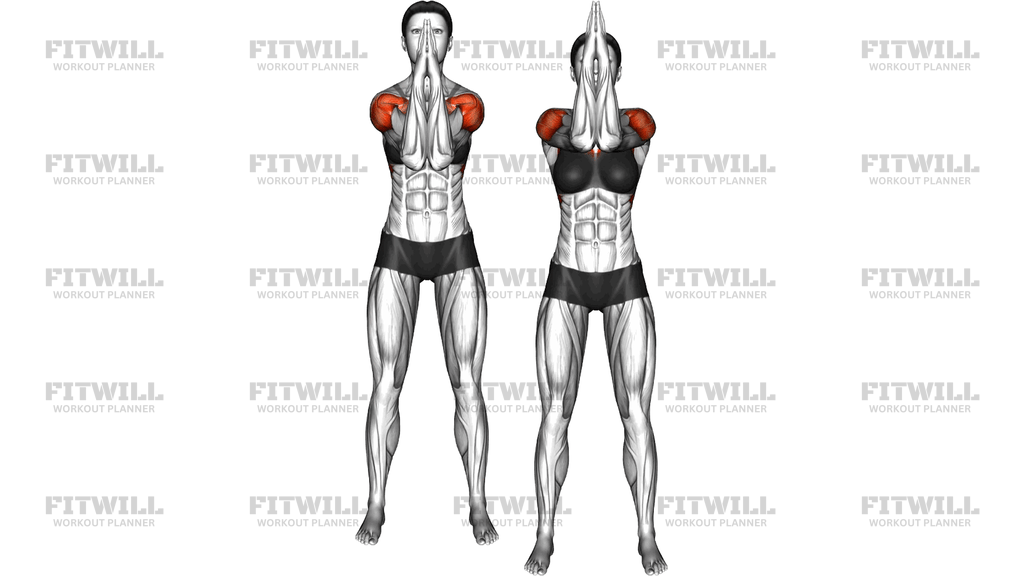
Instructions
- Stand with your feet hip-width apart, weight spread evenly across both feet, and let your arms hang relaxed at your sides.
- Roll your shoulders back and down once, keep your ribs stacked over your hips, and take a light brace through your midsection so your torso stays quiet during the movement.
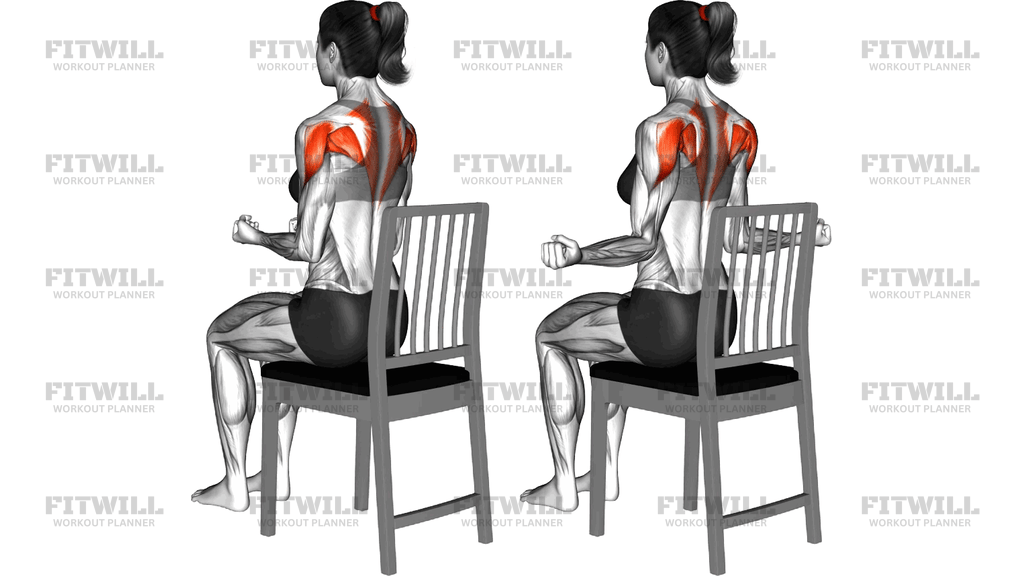
- Begin with the back clap: reach both arms behind your back, bend your elbows, and bring your palms together to clap at whatever height your shoulders comfortably allow — lower back level is a fine starting point.
- Separate your hands and sweep your arms forward and around to the front of your body without shrugging your shoulders up toward your ears.
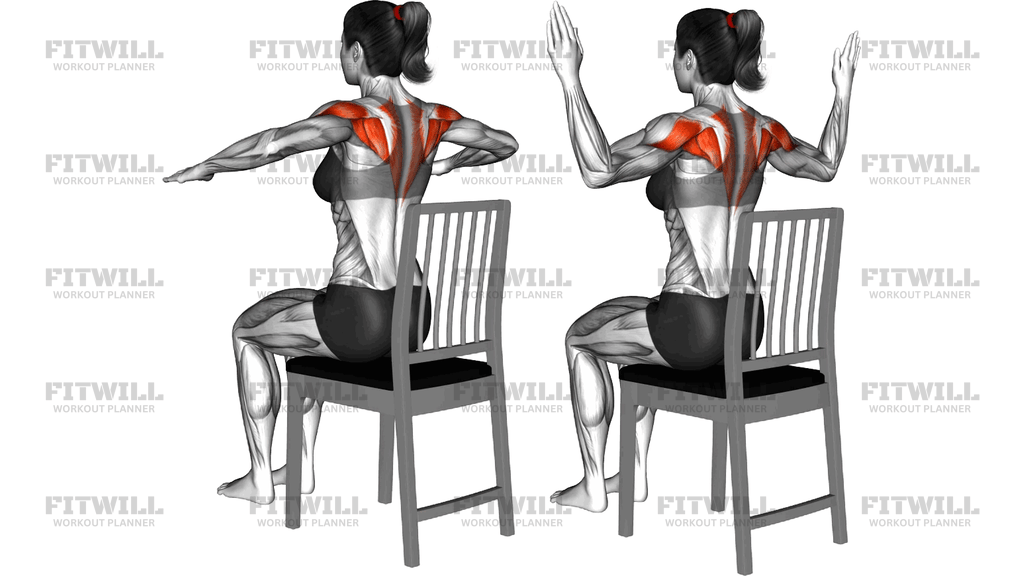
- Move into the elbow touch: raise your forearms to chest height, bring your fingertips toward your shoulders, and gently tap your elbows together in front of your sternum.
- Flow directly into the prayer push: slide your palms together into a prayer position in front of your face or upper chest with fingers pointing up and elbows flared out to the sides.
- Press your palms firmly against each other for one to two seconds, feeling the chest and front shoulders engage while the shoulder blades stay down.
- Release the press, lower your arms back to your sides, and reset your posture before starting the next rep.
- Breathe continuously: inhale as your arms open and travel behind you, exhale as you clap and press to the front.
- Repeat the full sequence for 8 to 12 smooth reps, or keep going for 30 to 60 seconds as a warm-up.
Tips & Tricks
- If you cannot clap behind your back at first, start by simply touching your fingertips at lower back level and let the clap height climb over several weeks — forcing it usually comes from the lower back arching instead of the shoulders moving.
- Watch for shoulder shrugging during the elbow touch; if your shoulders creep toward your ears, lower your forearms slightly and consciously settle the shoulder blades down before touching the elbows.
- Keep your head still and your gaze forward. Many people jut the chin forward during the prayer push, which ties up the neck and reduces the shoulder range you can access.
- During the prayer press, keep your wrists straight and press with the base of the palms rather than collapsing through the hands, so the tension lands in the chest and shoulders instead of the wrists.
- Do not lean your torso backward to help the hands meet behind you — if you feel your ribs flare or your hips push forward, reduce the clap height instead.
- If you feel a pinch at the front of the shoulder during the elbow touch, widen the elbow angle slightly and bring the hands closer to the chest rather than forcing a full squeeze.
- Move at the speed of a controlled stretch, not a jumping-jack tempo; each phase should take roughly one to two seconds so the shoulder actually reaches end range.
- Pair the drill with slow arm circles if your shoulders feel especially stiff — circles open the joint up before you ask for the deeper rotation of the back clap.
- Use it before pressing movements rather than after heavy lifting, when fatigued shoulders are less cooperative and the clap phase tends to get sloppy.
Frequently Asked Questions
Which muscles does the Standing Back Clap And Elbow Touch And Prayer Push work?
It is primarily a mobility drill for the shoulders, with the rear shoulders and rotator cuff controlling the reach behind the back, and the chest and front shoulders engaging during the elbow touch and prayer press. The muscles between the shoulder blades work to keep the scapulae stable throughout.
Can beginners do the back clap if their shoulders are tight?
Yes. Start by touching the backs of your hands or fingertips together at lower back level instead of clapping, and gradually work the contact point higher between the shoulder blades as your range improves. The elbow touch and prayer push phases are usually accessible from day one.
Why can I clap behind my back on one side but not the other?
Side-to-side differences in shoulder internal rotation and extension are very common, often from sports, sleeping positions, or desk habits. Perform the drill on both sides with the same target height and let the stiffer side dictate the pace rather than forcing symmetry in one session.
How many reps of the Standing Back Clap And Elbow Touch And Prayer Push should I do?
Eight to twelve full sequences, or 30 to 60 seconds of continuous movement, is enough for a warm-up. You can repeat it between pressing warm-up sets if your shoulders feel like they need more preparation.
Should I feel this in my chest during the prayer push?
A gentle engagement across the chest is expected when you press your palms together, since the chest helps drive that position. You should not feel sharp pain in the shoulder joint itself — if you do, reduce the press force or flare your elbows slightly wider.
What is the most common mistake with this drill?
Rushing and using torso swing to force the hands together. Arching the lower back and flaring the ribs during the back clap, or shrugging during the elbow touch, means the movement is coming from the spine and neck rather than the shoulders. Slow down and shrink the range until the arms can do it honestly.
What can I substitute if the back clap bothers my shoulders?
Wall slides, slow arm circles, and behind-the-back reaches to a towel all train similar shoulder ranges with less demand. You can also keep the elbow touch and prayer push phases and simply replace the clap with a soft reach-back without contact.
Is this a stretching exercise or a strength exercise?
It sits mainly in the mobility and activation category. The prayer press adds a light isometric squeeze for the chest and front shoulders, but the load is your own arms, so treat it as preparation and joint health work rather than a strength builder.
When is the best time to do the Standing Back Clap And Elbow Touch And Prayer Push?
It works best at the start of upper-body workouts, especially before pressing or pulling, and as a short movement break during long periods of sitting. Doing it as a standalone warm-up on rest days is also a reasonable way to keep the shoulders moving.
Can I do this drill every day?
Yes, in most cases it is gentle enough for daily use since there is no external load. Keep the reps moderate, stay short of any pinching sensation, and let range of motion, not effort, be your progress marker.