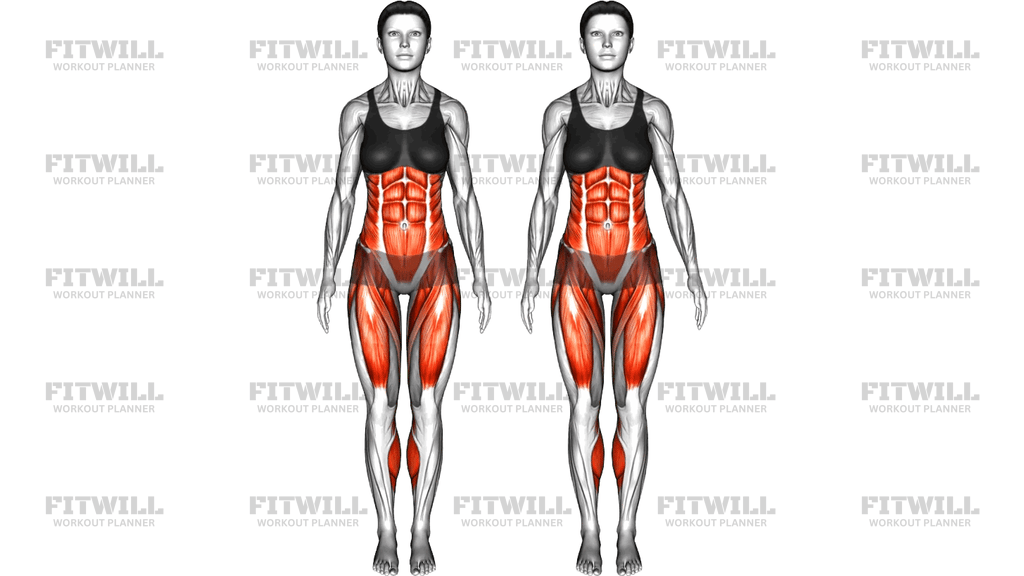
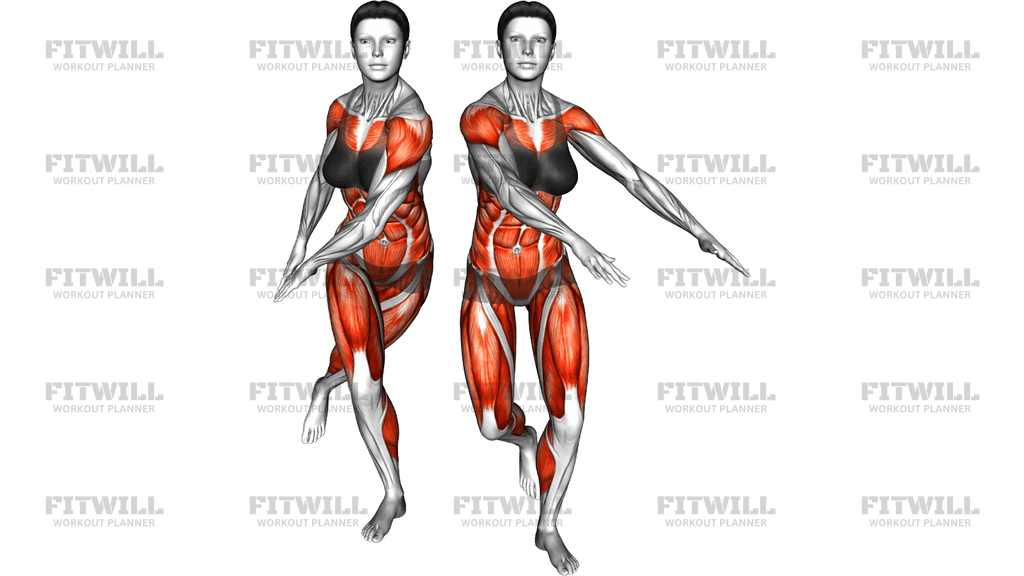
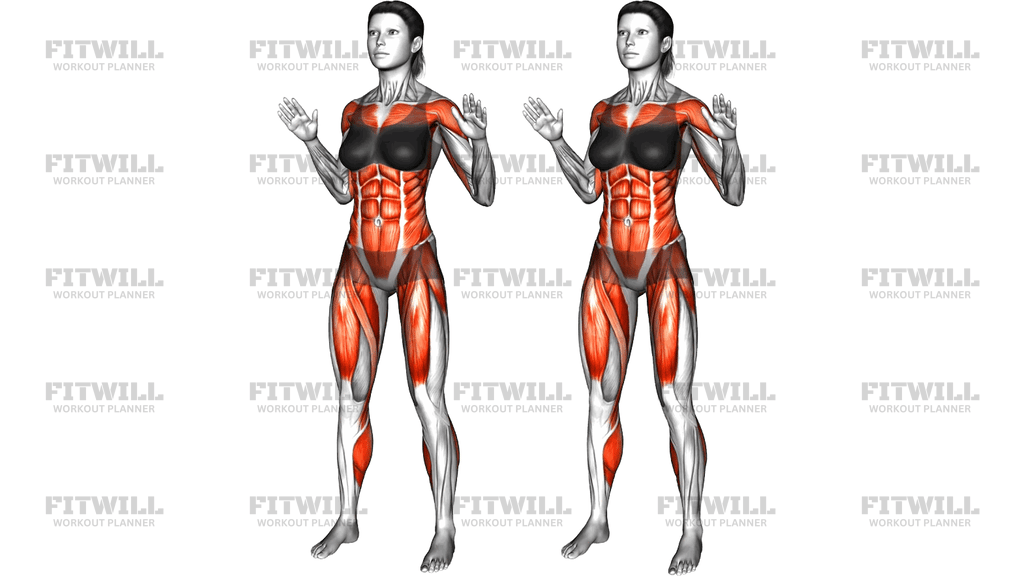
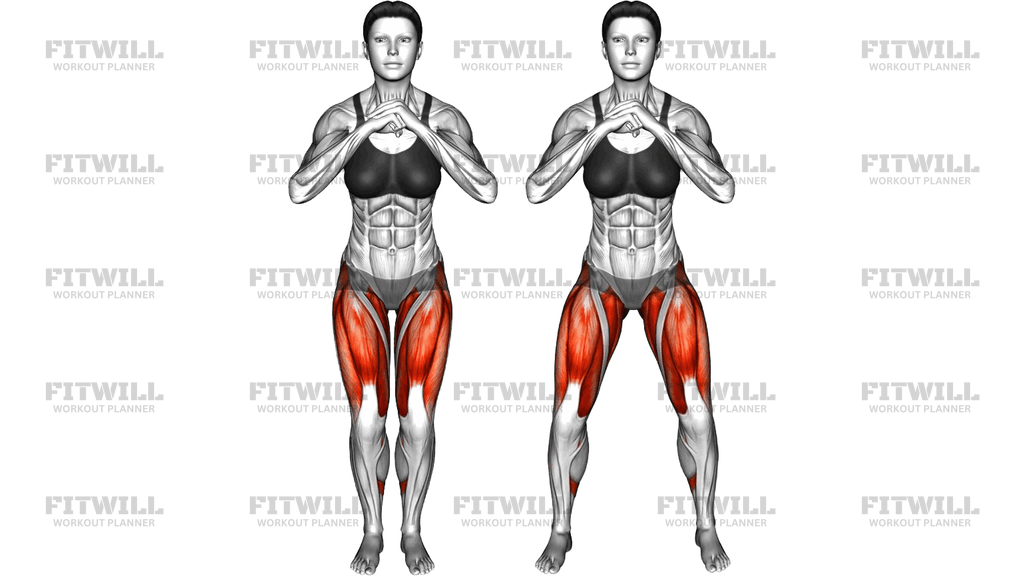
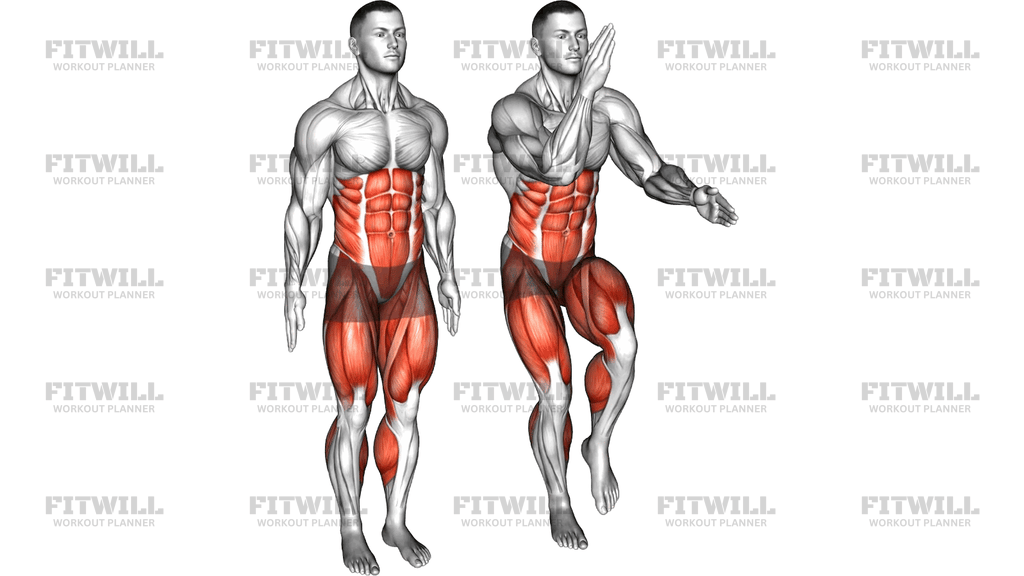
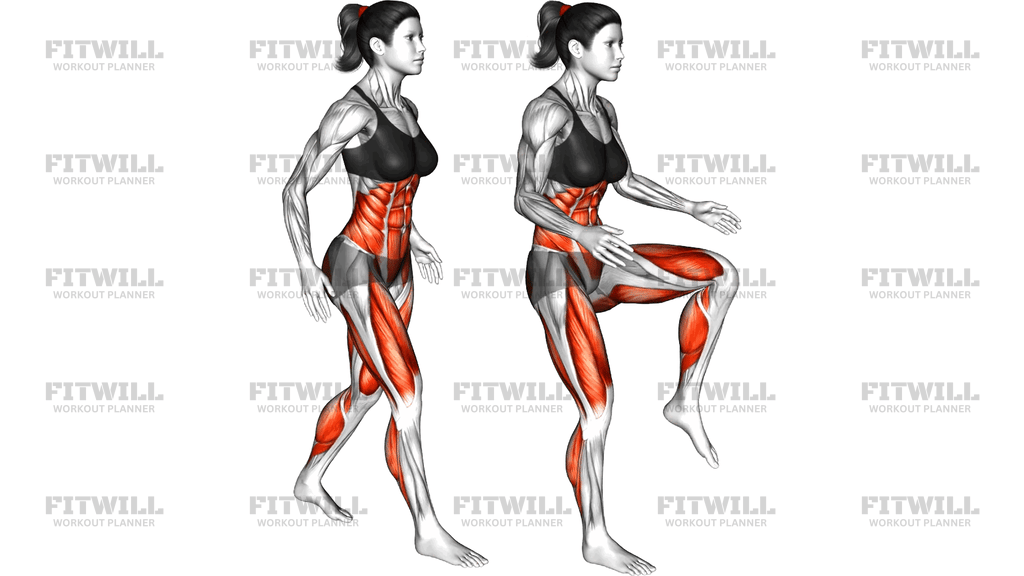
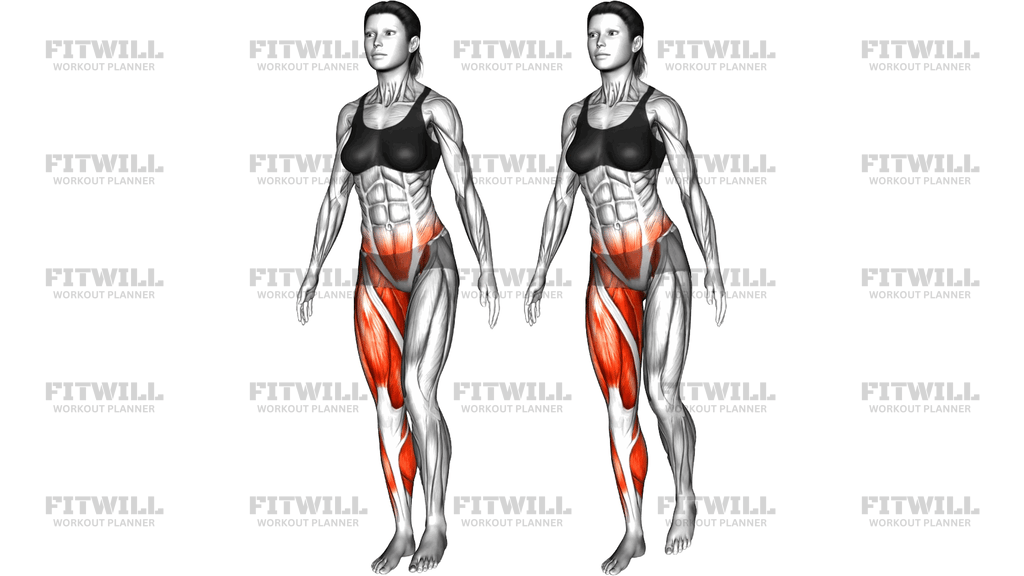
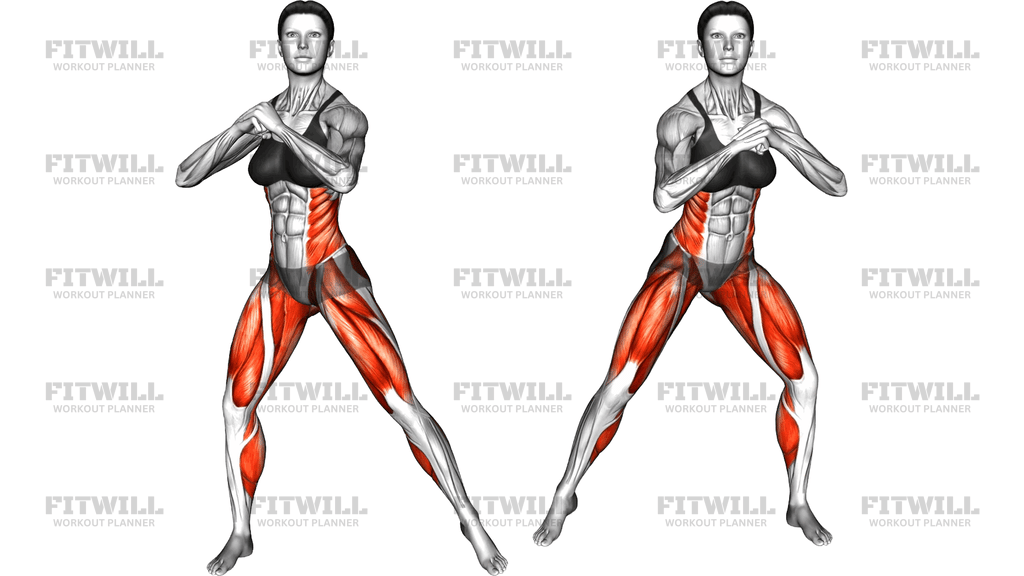
Slow Walking Lunge
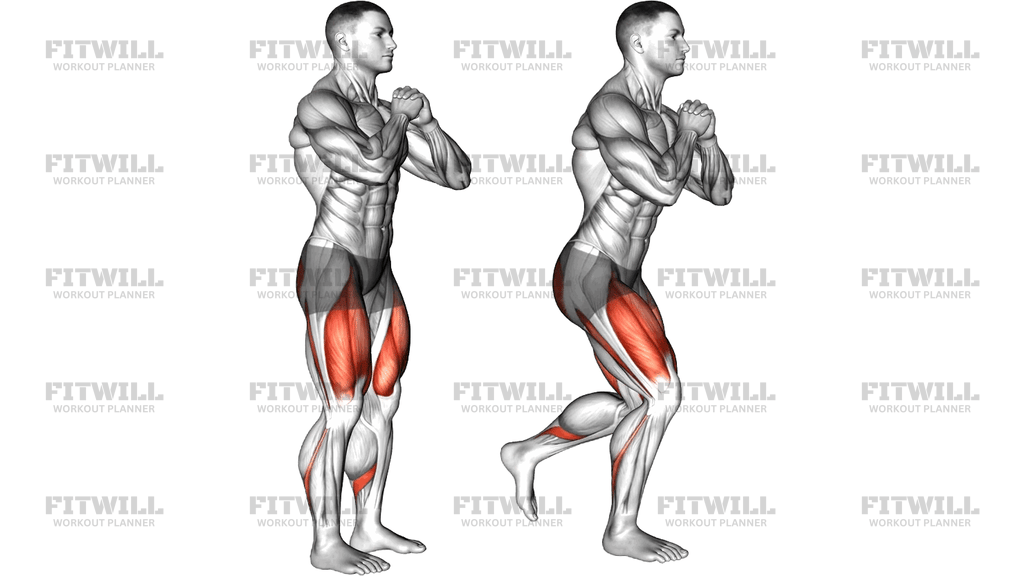
The Slow Walking Lunge is a bodyweight lunge performed with deliberately unhurried tempo: you step forward, lower under control, pause at the bottom, drive up through a tall standing position, and only then take the next step. Unlike a standard walking lunge that flows quickly from rep to rep, this version forces you to own every phase of the movement, especially the transition where you pull the trailing leg through and balance briefly on one leg before planting the next step. Hands are typically clasped at the chest, keeping the load purely on your legs and trunk.
Slowing the lunge down changes the demand considerably. The front leg's quadriceps and glutes work through a longer time under tension on every descent and drive, while the brief single-leg stand between reps challenges your balance, hip stability, and core control in a way fast lunges never expose. The calves and hamstrings assist with the push-off and the controlled knee drive as you bring the back foot through. Because there is no external load, the exercise is accessible, but the tempo makes it genuinely taxing even for experienced lifters.
This movement is useful for several groups. Beginners use it to learn lunge mechanics safely before adding dumbbells or a barbell, since the slow pace makes it easy to feel whether the front knee is tracking correctly and the torso is upright. More advanced trainees use it as a warm-up, a finisher, or a rehabilitative-style strength exercise that hammers single-leg control without stressing the spine with load. It also carries over well to running, hiking, and field sports, all of which depend on strong, stable single-leg positions.
Setup matters more than people expect. Each step should be long enough that both knees can bend to roughly 90 degrees at the bottom, with the front shin close to vertical and the front foot flat. A step that is too short jams the front knee forward and turns the rep into a quad-dominant grind; a step that is too long makes it hard to keep the torso tall. Keep your hands at your chest, ribs down, and gaze forward so your posture stays consistent from the first step to the last.
To execute well, descend over two to three seconds until the back knee hovers just above the floor, pause briefly, then push the floor away through the front foot's whole foot. As you rise, bring the trailing leg through with control, stand fully tall, and only then commit to the next step. Breathing is straightforward: inhale on the way down, exhale as you drive up. If you lose balance, stop, reset your stance, and continue rather than rushing to catch up.
Practically, aim for controlled sets of 8 to 12 steps per leg, or walk a fixed distance such as 20 to 30 meters. Common use cases include leg-day warm-ups, home workouts with no equipment, and tempo work for lifters whose fast lunges have outpaced their stability. If you feel the movement mostly in the front of the knee or you wobble heavily on every transition, shorten the range, slow down further, or practice split squats in place before progressing back to walking.
Fitwill
Log Workouts, Track Progress & Build Strength.
Achieve more with Fitwill: explore over 9600 exercises with images and videos, access built-in and custom workouts, perfect for both gym and home sessions, and see real results.
Start your journey. Download today!




Instructions
- Stand tall with your feet hip-width apart, arms relaxed, then clasp your hands together in front of your chest and pull your elbows slightly down.
- Brace your core as if bracing for a light push, keep your ribs stacked over your pelvis, and set your gaze on a point straight ahead.
- Take a controlled step forward, long enough that both knees can bend to about 90 degrees, and plant your whole front foot flat on the floor.
- Shift your weight onto the front leg and lower straight down over two to three seconds, letting the back knee travel toward the floor while the front shin stays close to vertical.
- At the bottom, the back knee should hover just above the ground, your torso should be tall, and your front heel should remain in contact with the floor; pause here for a beat.
- Exhale and drive through the entire front foot — heel and midfoot — to push yourself back up to standing.
- As you rise, pull the trailing leg through with control, knee driving forward, and stand fully upright on one leg for a moment before the next step.
- Step forward with the opposite leg and repeat the same slow descent, pause, and drive, alternating legs each rep.
- Breathe in on the way down and out on the drive up, keeping the rhythm consistent from step to step.
- Continue for your target number of steps per leg, then stop with both feet together rather than finishing mid-stride.
Tips & Tricks
- If your front knee collapses inward as you lower, consciously drive it out over your little toe — a common fault when the tempo gets slow and the hips fatigue.
- A short step is the most frequent setup mistake: if the front heel lifts or the knee shoots well past the toes, restart the rep with a longer stride.
- Do not rush the transition between steps. The single-leg stand with the trailing knee pulled through is where balance and hip stability are trained, so treat it as part of the rep, not a pause between reps.
- Keep your hands clasped at your chest instead of letting them drift or swing; flailing arms usually signal that your balance, not your legs, is the limiting factor.
- If your back knee touches down hard on every rep, you are descending too fast — the hover just above the floor is the point of the slow tempo.
- Lean your torso slightly forward if you must, but avoid rounding your lower back; a tall chest with ribs down keeps the load on the glutes and quads.
- On a slick floor, slow lunges can make your front foot slide forward under load. Train barefoot on grippy flooring or in flat shoes with solid traction.
- If balance is the weak link, perform the first sets as split squats in place, stepping only after you can lower and rise without wobbling.
- Count tempo rather than eyeballing it — a two-second descent with a one-second pause feels far harder than it sounds and keeps your pacing honest.
Frequently Asked Questions
Which muscles does the Slow Walking Lunge work?
The quadriceps and glutes do most of the work on each descent and drive, with the hamstrings, calves, and adductors assisting. Your core and hip stabilizers work hard throughout, especially during the single-leg transition between steps.
How is the Slow Walking Lunge different from a regular walking lunge?
The tempo is the main difference: you lower over two to three seconds, pause at the bottom, and stand fully upright before taking the next step. This increases time under tension and forces you to balance on one leg between reps instead of flowing quickly from lunge to lunge.
Is the Slow Walking Lunge good for beginners?
Yes, it is one of the best ways to learn lunge mechanics because the slow pace lets you feel and correct knee tracking and torso position. Beginners who struggle with balance can start with stationary split squats and progress to walking once stable.
Why do I wobble when pulling my back leg through on the Slow Walking Lunge?
The transition requires you to stand briefly on one leg while controlling the trailing knee drive, which challenges hip stabilizers and balance. Slow the transition down further, keep your hands clasped at your chest, and practice short sets — the wobble usually fades within a few sessions.
Should my front knee go past my toes in the Slow Walking Lunge?
Some forward knee travel is normal and safe, but with a proper step length the shin stays close to vertical and the heel stays flat. If the heel lifts or the knee jams far forward, your stride is too short — restart with a longer step.
How deep should I go on each rep of the Slow Walking Lunge?
Lower until both knees are bent to roughly 90 degrees and the back knee hovers just above the floor. If you cannot reach that depth with control, use a slightly shorter range rather than crashing down quickly.
Can I add weight to the Slow Walking Lunge?
Yes, holding dumbbells at your sides works well once you can perform controlled bodyweight sets without losing balance. Master the tempo and the single-leg transition first, because adding load to an unstable pattern amplifies form faults.
How many steps should I do per set of the Slow Walking Lunge?
Eight to twelve controlled steps per leg is a solid working set, or walk a set distance of 20 to 30 meters. Because the tempo is slow, expect fewer reps than a fast lunge would allow at the same effort.
Is it safe for my knees to do the Slow Walking Lunge?
When performed with a long enough stride, a flat front foot, and controlled descent, the movement is generally knee-friendly and often used to build single-leg strength. Stop and reassess your stride length and depth if you feel pinching or sharp pain at the front of the knee.
Where should my hands be during the Slow Walking Lunge?
Clasp your hands together in front of your chest with elbows drawn slightly down, as this keeps your torso tall and prevents arm swing from masking balance issues. Letting the arms drift is a common sign that your stance or tempo needs adjusting.