Walking Knee Raise On Spot
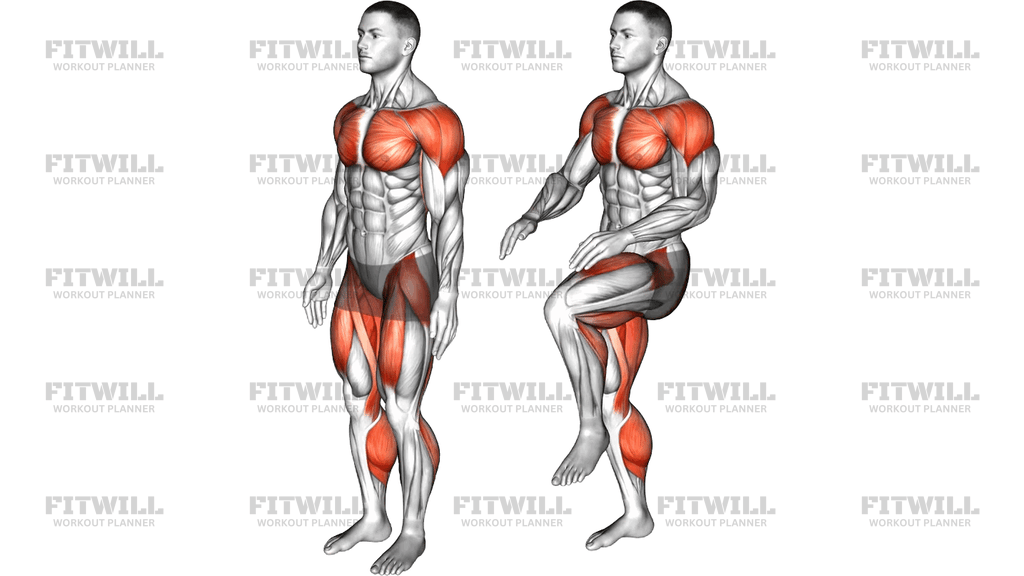
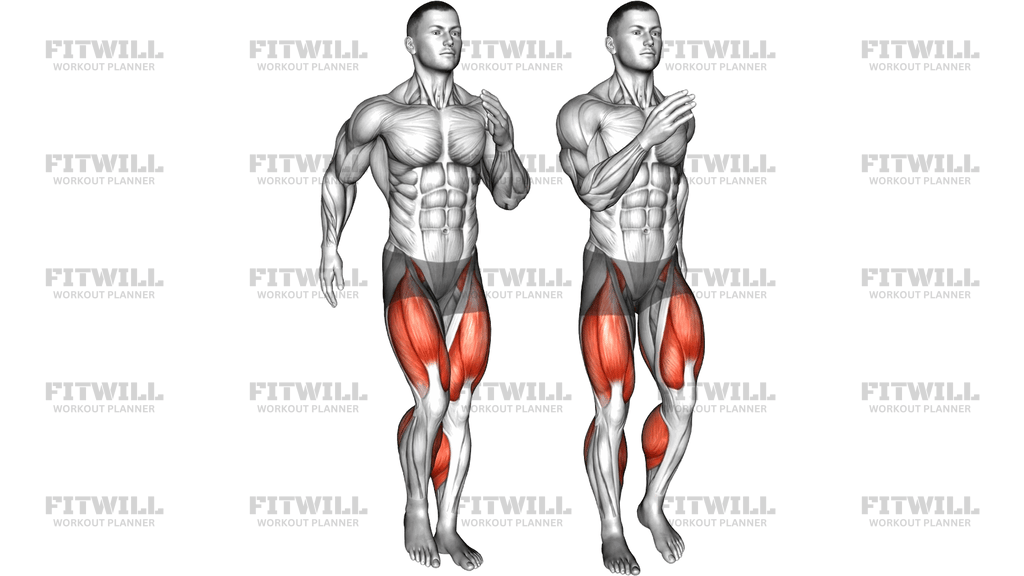
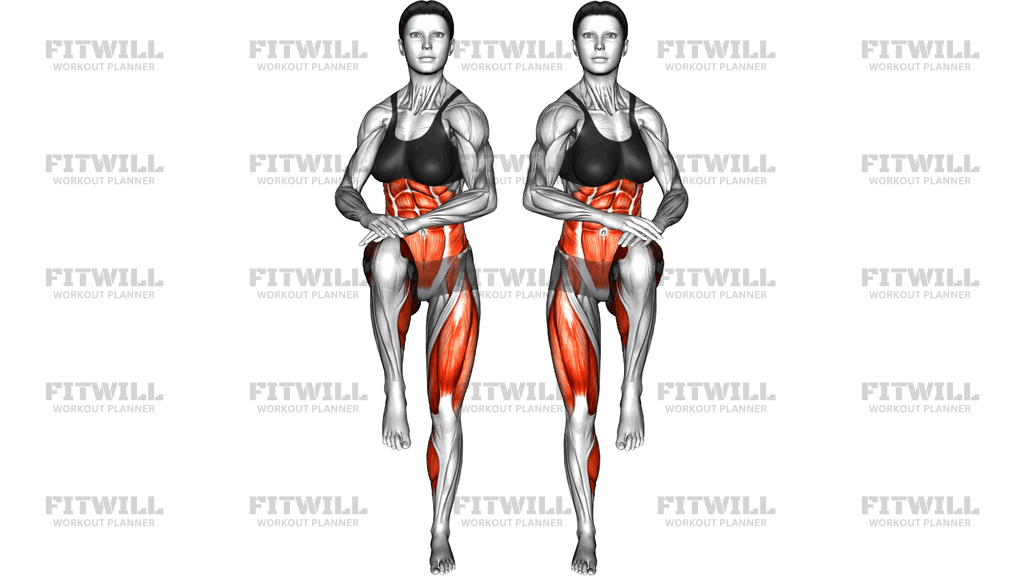
Walking Knee Raise On Spot is a standing body weight movement where you march in place, lifting each knee up toward waist height while your hands meet the top of the raised knee. Instead of traveling forward like a normal walk, you stay rooted to one spot, which turns a simple marching pattern into a balance and hip-flexor drill. The front-to-back frames of the movement show one knee lifting as the opposite leg accepts your full weight, then the sides switching.
This exercise is useful for almost anyone. Beginners use it to learn single-leg stance and control before progressing to harder balance work. Older adults use it to maintain the hip mobility and leg strength needed for stairs and curbs. Runners and field-sport athletes use it as a warm-up to wake up the hip flexors and practice the knee-drive position. It also fits well into circuit training as a low-impact cardio element.
The main work comes from the hip flexors, especially the iliopsoas and rectus femoris, which pull the thigh upward against your leg weight. The standing leg's glutes and calf muscles stabilize your pelvis and keep you from wobbling, while the lower abs and obliques brace your trunk so your torso does not lean back as the knee rises. Because you alternate legs continuously, your heart rate climbs modestly even though your feet barely leave the floor.
Setup matters more than it looks. Standing tall with a braced core and eyes on a fixed point gives you a stable reference, and keeping your weight centered over the standing foot prevents the sideways sway that makes this drill sloppy. Where your hands meet the knee also matters: touching the knee at its highest point gives you a consistent target and keeps the range honest from rep to rep.
To execute it well, lift the knee until your thigh is roughly parallel to the floor, tap it with both hands, then lower it under control rather than letting it drop. Shift your weight smoothly to the lifted side and raise the other knee. Move at a steady rhythm, and let the height, not the speed, be your quality standard. If parallel-thigh height is too demanding at first, lift to whatever height lets you keep your torso upright.
The most common faults are leaning the torso backward to help the knee up, gripping the knee and pulling it higher, and letting the standing hip drop or the foot roll outward. None of these are dangerous in a short set, but they reduce the training effect and can bother the lower back over time. Keep the effort in the front of the hip of the moving leg and the standing glute, stay tall, and treat the hand-to-knee contact as a light tap rather than a tug.
[ Workout Log & Planner ]
Put your next workout in Fitwill
Keep your plan and training log ready when you are.


Instructions
- Stand with your feet hip-width apart, arms relaxed at your sides, and pick a fixed point straight ahead to anchor your gaze.
- Shift your weight onto one leg so the opposite foot hovers just above the floor, and keep your weight balanced over the whole standing foot.
- Brace your abdominal muscles gently and lengthen your spine so you are standing tall before the first lift.
- Raise one knee forward and up until your thigh is about parallel to the floor, letting the knee bend so the lower leg hangs beneath it.
- Bring both hands together and tap the top of the raised knee at its highest point.
- Lower that foot back to the floor under control, placing it where it started rather than letting it drop.
- Immediately shift your weight onto the leg that just finished and lift the opposite knee to the same height with the same hand tap.
- Continue alternating legs in a steady, even rhythm, staying in the same spot on the floor.
- Exhale as each knee lifts and inhale as it lowers, keeping the breathing continuous rather than held.
- When you finish the set, bring both feet together, stand still for a moment to steady yourself, then step away.
Tips & Tricks
- If your torso tips backward as the knee rises, your hip flexors are being helped by arching the lower back; cue yourself to pull the ribs down and lift the knee slightly lower with a tall spine.
- Avoid pulling the knee up with your hands. The tap should happen because the knee arrived there, not because your arms dragged it higher.
- Keep your weight distributed across the whole standing foot. Rolling onto the outer edge means the standing hip is not doing its stabilizing job.
- Watch for the standing hip dropping or jutting sideways each time you lift. Squeeze the standing glute to keep the pelvis level.
- If the full parallel-thigh height is too hard, reduce the range but keep the hand tap by meeting the knee wherever it tops out, then build height gradually.
- Slow the tempo down before speeding it up. A slow, quiet foot placement trains balance far better than a fast, slapping one.
- Do this near a wall or counter until your single-leg balance feels secure, using one fingertip for support only if you genuinely need it.
- Keep your shoulders relaxed and arms moving from the elbows, not hiked up around your ears as you reach for the knee.
- If you feel the front of the standing hip pinching rather than working, shorten your stance slightly and think of lifting the knee straight up in front of your hip instead of across your body.
Frequently Asked Questions
What muscles does Walking Knee Raise On Spot work?
The primary work comes from the hip flexors, mainly the iliopsoas and rectus femoris, which lift the thigh. The lower abs and obliques stabilize your trunk, while the glutes and calves of the standing leg handle balance.
Is Walking Knee Raise On Spot good for beginners?
Yes, it is one of the most accessible single-leg drills because the range and speed are fully adjustable. Beginners can lift the knee to a comfortable height and keep a fingertip on a wall until balance improves.
Why do the hands touch the knee in Walking Knee Raise On Spot?
The hand-to-knee tap gives you a consistent target so every rep reaches the same height, and it reinforces coordination between the upper and lower body. It should be a light contact, not a pull.
How high should I raise my knee?
Aim for a thigh roughly parallel to the floor, which is about waist height for most people. If you cannot reach that while staying upright, lift lower and progress the height as your hip flexor strength improves.
What is the most common mistake in this exercise?
Leaning the torso backward to help the knee rise is the most frequent fault. Keep your ribs stacked over your pelvis and lift slightly lower if you catch yourself arching.
Can I use Walking Knee Raise On Spot as a warm-up?
Yes, it works well before running, jumping, or lower body strength sessions because it activates the hip flexors and practices the knee-drive pattern. Use a controlled tempo and a moderate height for warm-up sets.
What can I substitute if standing balance is difficult?
Try seated knee raises on a sturdy chair, or stand with one hand on a counter for light support. High knee marches holding a stable surface are the closest equivalent.
How many reps should I do?
Count each knee lift as one rep. Ten to twenty per side builds control, while longer timed sets of thirty to sixty seconds shift the exercise toward light conditioning.
Is Walking Knee Raise On Spot safe for the knees?
It is generally a low-impact, knee-friendly movement because the moving leg bears no load and the standing leg stays mostly straight. Keep the movement smooth and avoid locking or snapping the standing knee if you have joint sensitivity.
Should my standing leg stay straight?
Keep a soft, barely bent knee rather than a locked one. A slight bend keeps the thigh muscles engaged and makes the balance easier to manage.