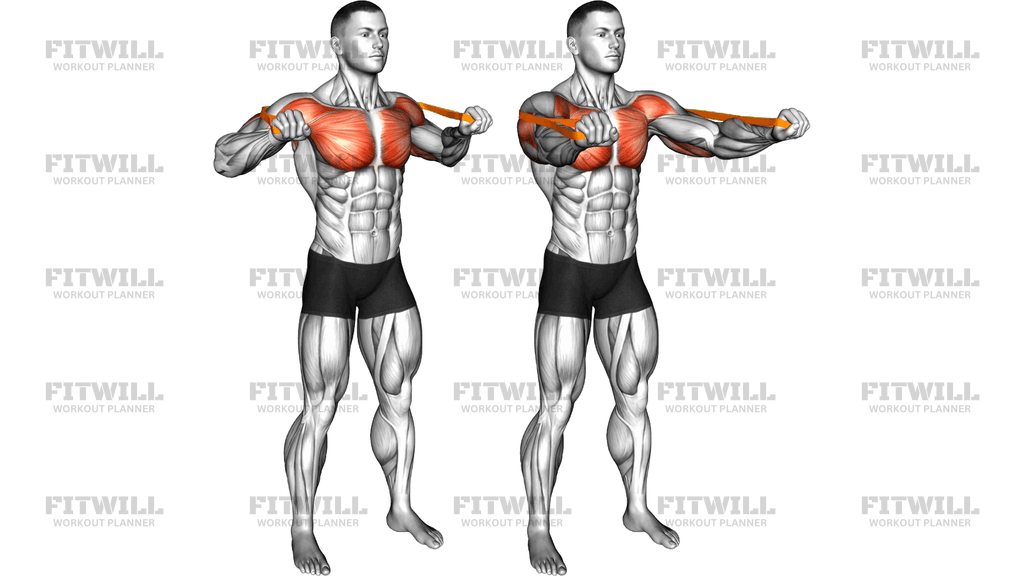
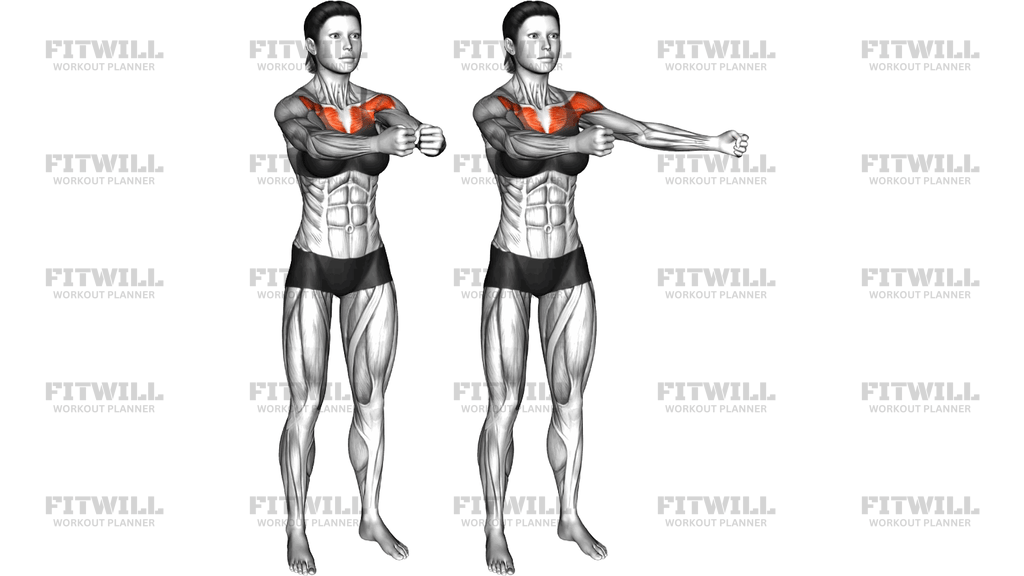
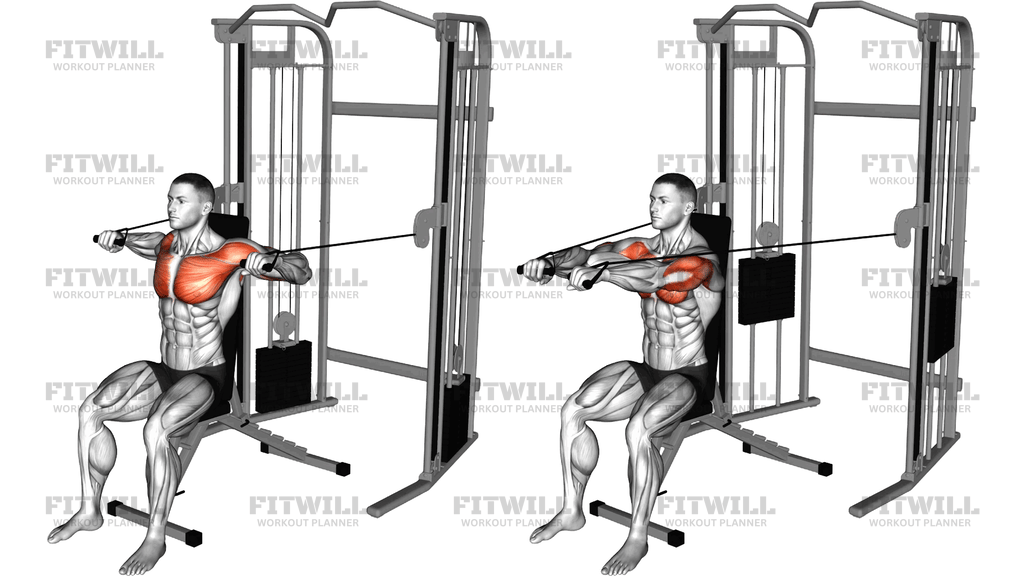
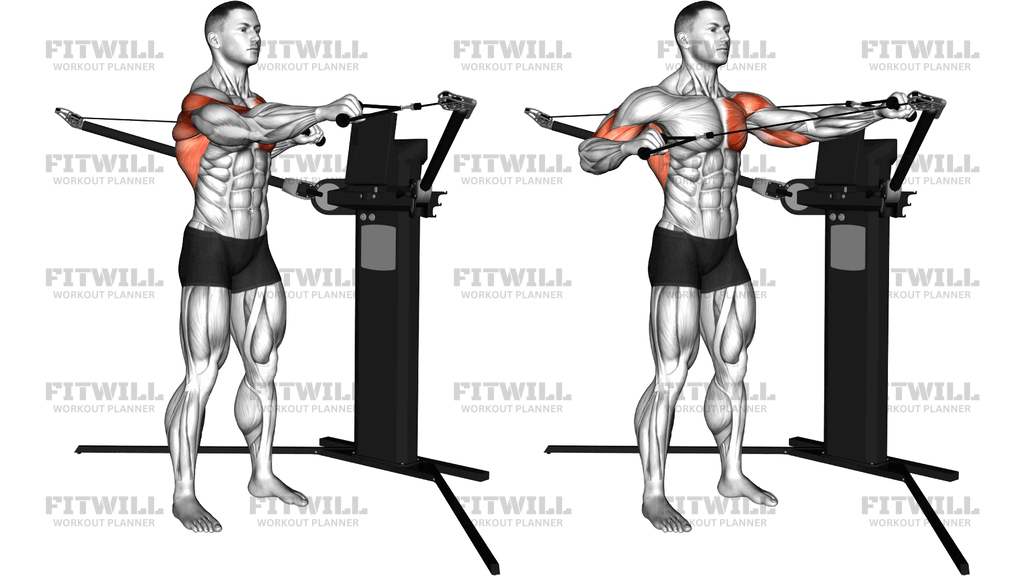
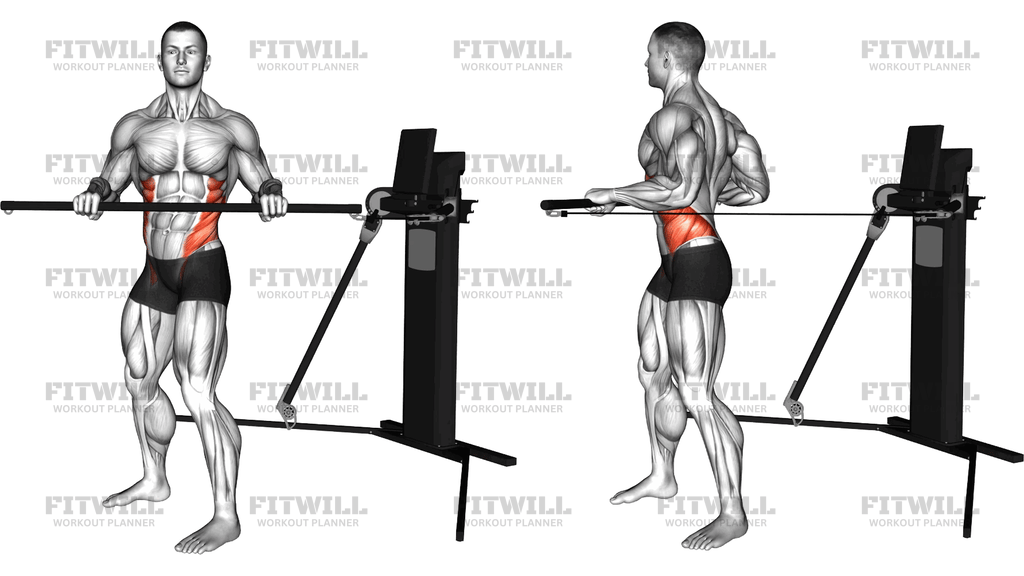
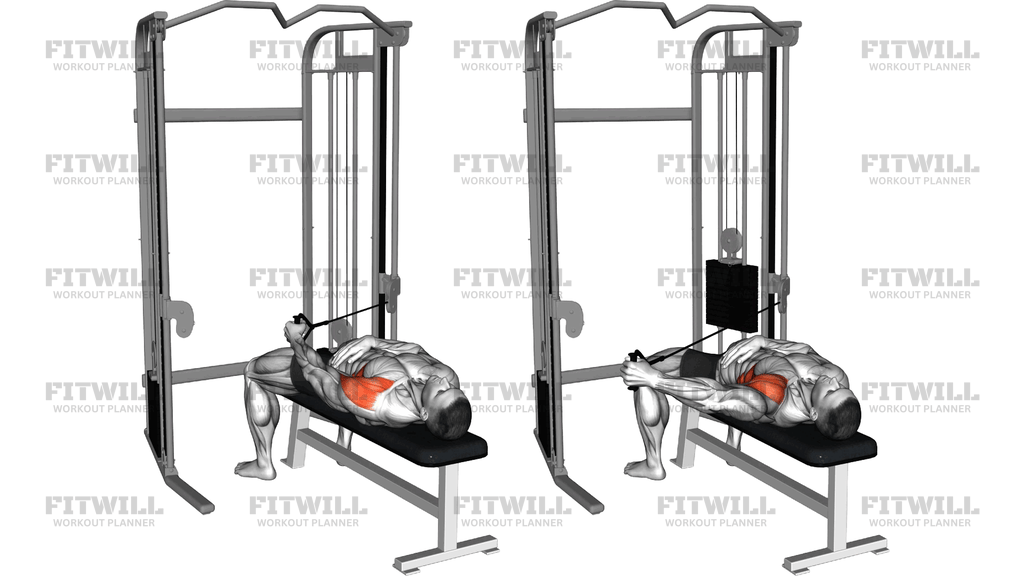
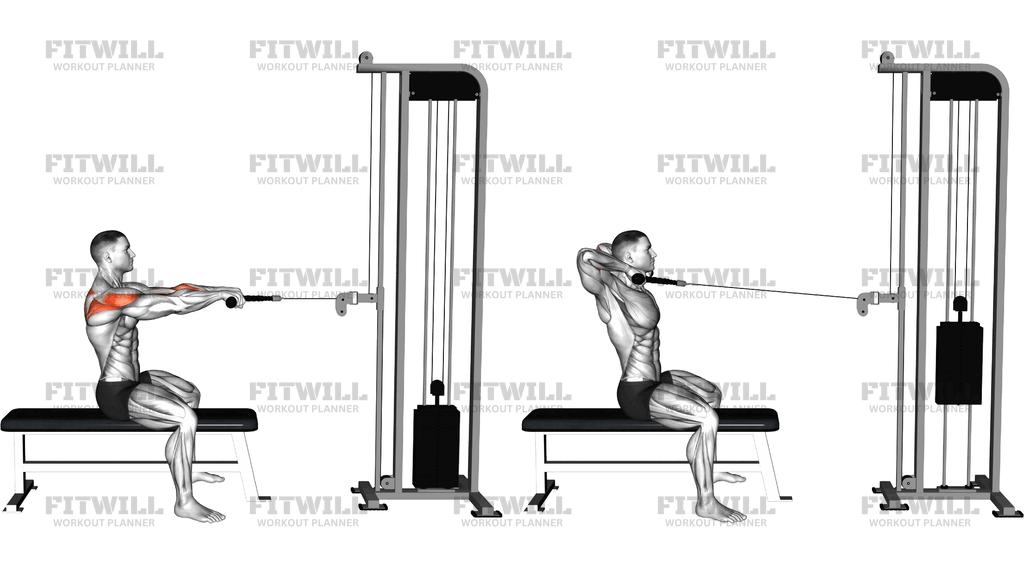
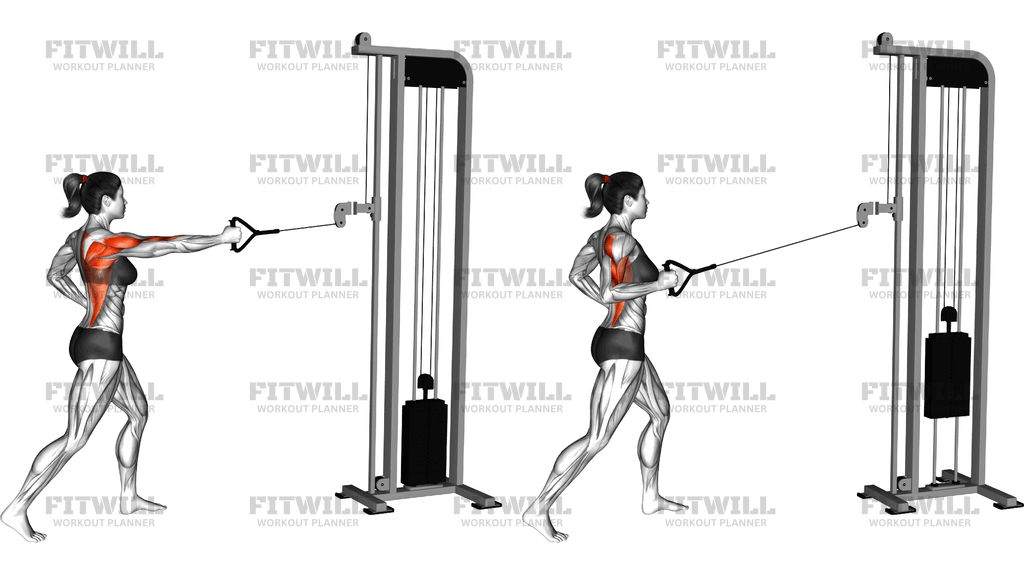
Cable Seated Chest Half Fly
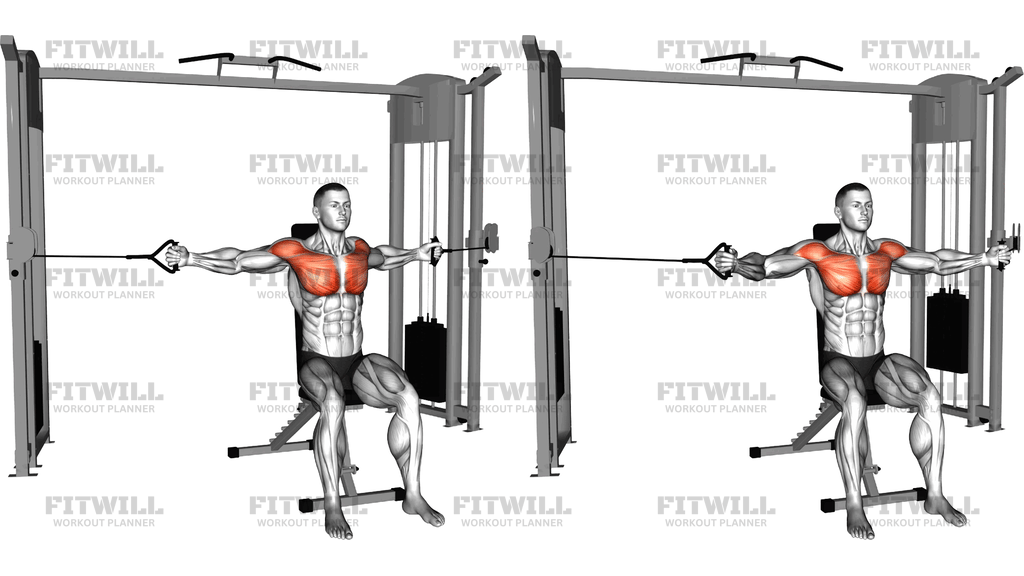
The Cable Seated Chest Half Fly is a chest isolation exercise performed on a dual cable setup with the pulleys set at roughly shoulder height. You sit on a flat bench facing away from the machine, take one handle in each hand with the cables crossing behind your back, and sweep your arms forward in a wide arc from an open position until your hands come level with the front of your shoulders. The term "half" refers to the shortened range: instead of bringing the hands all the way together into a full crossover, you stop the arc at about the midpoint, which keeps constant tension on the pectorals without letting the cables go slack.
This exercise is a solid choice for anyone who wants direct chest work without the shoulder stress that can come from pressing, and it suits lifters from intermediate level upward. Because you are seated and braced against a bench, your torso cannot lean or sway the way it often does during standing cable crossovers, which forces the chest to do the work. The front delts assist throughout the arc, and the muscles around the shoulder blade help keep the arm stable as it moves, but the primary driver is the pectoralis major sweeping the arm toward the midline.
The setup matters more here than in many chest exercises. Pulley height determines the line of pull, so setting the pulleys near shoulder height keeps the resistance traveling directly through the chest fibers rather than drifting into the shoulders. The seated position also pins your hips and lower body, which means the only mobile joints are the shoulders and elbows, giving you a clean, repeatable path on every rep.
To execute it well, sit tall with your chest up and shoulder blades gently drawn back, keep a soft bend in the elbows that stays fixed, and think about moving the arms as two rigid levers rather than bending and straightening the elbows. The forward phase should take one to two seconds with a deliberate squeeze at the front of the arc, and the return should be slow enough that the cables never jerk you backward into the stretch.
Common use cases include finishing a chest session after presses, adding volume to the pecs during a hypertrophy block, or rehabilitating pressing capacity with lighter, controlled loading. Because the resistance comes from cables rather than gravity, the pecs stay loaded through the entire arc, including the stretched position behind your torso where dumbbells tend to unload.
Keep the working weight honest. When the load is too heavy, the temptation is to flare the ribcage, shrug the shoulders, or hinge forward from the hips to steal range, and each of these cheats reduces the challenge to the chest while adding strain to the shoulder joint. Start lighter than you think you need, own the full arc, and progress gradually.
Fitwill
Log Workouts, Track Progress & Build Strength.
Achieve more with Fitwill: explore over 9600 exercises with images and videos, access built-in and custom workouts, perfect for both gym and home sessions, and see real results.
Start your journey. Download today!




Instructions
- Set both pulleys on the dual cable machine to shoulder height and attach a single handle to each side.
- Place a flat bench in the center of the machine, facing away from the stacks, and sit down with your feet flat on the floor about hip-width apart.
- Reach out to each side, grip one handle in each hand with the cables crossing behind your upper back, and pull the handles forward until your arms are straight out from your shoulders with a slight, fixed bend in the elbows.
- Sit tall against the bench, draw your shoulder blades gently back and down, and brace your core so your torso stays upright and still.
- Exhale and sweep both arms forward in a wide arc, keeping the elbow bend constant, until your hands come level with the front of your shoulders at about the midpoint of a full crossover.
- Pause briefly at the front of the arc and squeeze your chest without letting the shoulders roll forward.
- Inhale and let your arms travel back along the same wide path under control until you feel a stretch across the chest, stopping before the cables pull your shoulders forward.
- Keep your wrists neutral and the handles moving in the same horizontal plane at chest height throughout the rep.
- Complete the set, then release one handle at a time back to the stacks to avoid the cables snapping you backward.
Tips & Tricks
- If the cables are dragging across your forearms or wrists, adjust your grip so the handles sit flat in your palms; a twisted grip changes the line of pull and irritates the wrist.
- A common mistake is straightening or bending the elbows as the arms sweep forward, which turns the fly into a partial press. Pick an elbow angle, around fifteen to twenty degrees of bend, and lock it in mentally before the first rep.
- Do not let the bench angle creep into the movement. If you find yourself leaning your chest toward your knees, your weight is too heavy or you are arching to generate momentum, so reduce the load.
- The half range means the hardest temptation is pulling the hands all the way together in front of your sternum. Stopping the arc earlier keeps tension from dropping off and lets you focus on the pec squeeze instead of the arms doing a close press.
- Watch your shoulders in the return phase. If the cables yank your upper arms behind your torso, you have gone too deep; shorten the stretch slightly to protect the shoulder capsule.
- Keep your neck relaxed and gaze forward. Craning the chin forward to "finish" the rep is a sign the chest is fatiguing and the upper traps are taking over.
- Because the cables cross behind you, stand the bench far enough back from the stacks that your hands start slightly behind your chest line; too close and the starting position has almost no tension.
- If one side fatigues faster than the other, train each arm unilaterally for a few weeks to even out strength before returning to the two-arm version.
- Warm the shoulders with a couple of light sets or arm circles before loading, since the stretched position behind the torso is demanding on unprepared shoulder joints.
Frequently Asked Questions
Which muscles does the Cable Seated Chest Half Fly work?
The pectoralis major is the primary mover, sweeping the arms toward the midline. The front delts assist throughout the arc, and the upper back and rotator cuff muscles stabilize the shoulder as the arms travel.
Why is it called a half fly instead of a regular fly?
The arc stops at about the midpoint in front of your chest rather than closing into a full crossover. This shorter range keeps steady tension on the pecs and prevents the resistance from unloading at the end of the movement.
Is the Cable Seated Chest Half Fly suitable for beginners?
Yes, provided you start with a light weight and focus on the arm path. The seated position actually helps beginners because the bench removes the balance and torso sway that make standing cable flys harder to control.
Why are the cables crossed behind my back in this exercise?
Crossing the cables lets each arm start slightly behind your chest line, which gives you a longer stretch on the pecs at the start of each rep. It also keeps the resistance pulling straight back toward the stacks instead of off to one side.
What is the most common mistake with the Cable Seated Chest Half Fly?
Turning the fly into a press by bending and straightening the elbows, or hinging forward from the hips to gain momentum. Both mistakes shift work away from the chest, so keep the elbow bend fixed and the torso glued to the bench.
How high should I set the pulleys?
Set them at roughly shoulder height so the cables travel through the horizontal plane of your chest. Pulleys set too low bias the movement toward the upper chest and shoulders, while pulleys too high turn it into a downward fly.
What can I substitute if my gym has only one cable stack?
You can perform the same seated arc with a resistance band anchored behind the bench, or use a single-arm version facing slightly sideways to the stack. Dumbbell flys on a flat bench are another option, though they lose tension in the stretched position.
How does the seated version differ from a standing cable crossover?
Sitting on a bench eliminates leg drive and torso lean, so the chest has to produce all the force. This makes the exercise stricter and generally better for isolating the pecs, while the standing version allows heavier loads with more body English.
Is it safe to let my arms travel all the way back behind my torso?
Go only as far as you can control without the cables pulling your shoulders forward or your chest collapsing. A comfortable stretch across the pecs is productive; a range that forces your shoulder blades off the bench is asking for trouble.
Where should this exercise fit in my chest workout?
It works well as a finisher after heavy presses, when the chest is pre-fatigued and lighter isolation work drives the final volume. Lighter sets can also serve as a warm-up activation before benching.