Dumbbell Hyperextension (Version 2)
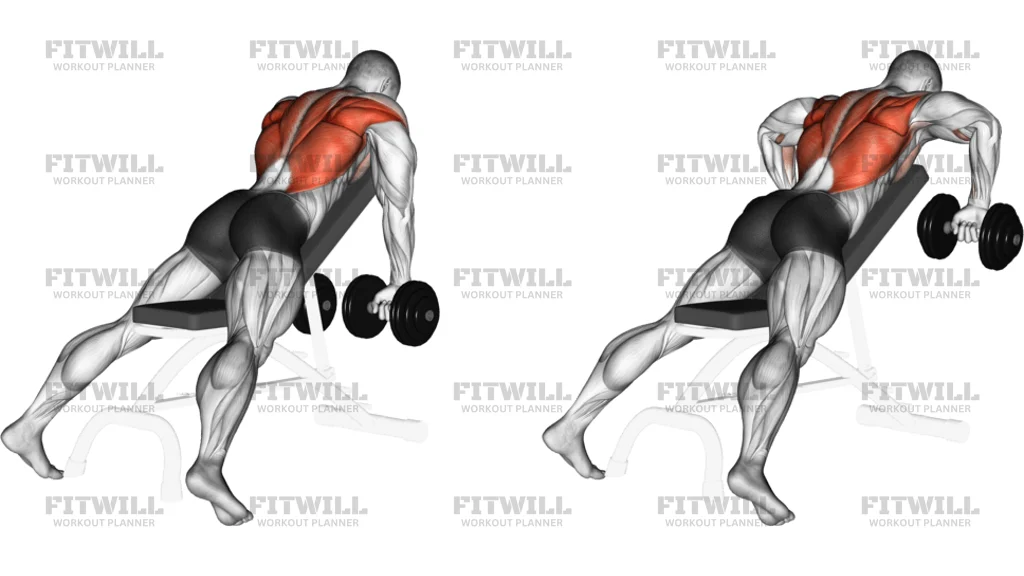
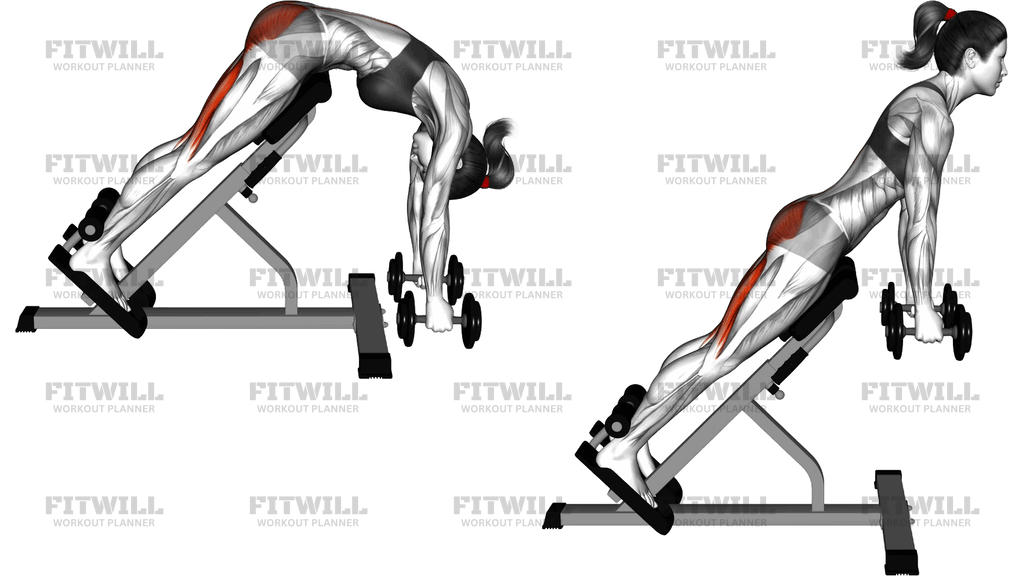
The Dumbbell Hyperextension (Version 2) is a loaded back extension performed on a 45-degree hyperextension bench, with a dumbbell held in each hand throughout the movement. Your feet are anchored under the ankle pads, your hips rest on the hip pad, and you hinge forward at the hips until your torso hangs toward the floor, then drive back up until your body forms one straight line from head to heels. Because the dumbbells travel with your torso, the posterior chain works against added resistance in both directions, not just on the way up.
This exercise primarily strengthens the erector spinae of the lower back, with strong contributions from the glutes and hamstrings, which extend the hips as you rise. The added load makes it a useful progression once bodyweight back extensions feel easy, and it is a practical option for lifters who want to train the posterior chain without a barbell, back squat, or deadlift setup. It also builds tolerance in the trunk muscles for holding a hinged position under load, which carries over to movements like Romanian deadlifts and bent-over rows.
Setup matters more here than in the bodyweight version. The pad should sit just below the hip crease so your pelvis can tilt freely as you hinge, and your feet should be securely tucked under the ankle rollers. If the pad sits too high on your thighs, your hamstrings lose leverage; if it sits too low, the lower back has to stabilize more than it should. Choose dumbbells light enough that you can keep your spine neutral from start to finish, since the weight hangs in your hands at the stretched bottom position.
To perform it well, hold the dumbbells with a neutral grip and let your arms hang straight down, keeping your shoulders relaxed rather than shrugged. Brace your trunk, then push your hips back into the pad and fold forward until you feel a moderate stretch through the hamstrings. From there, squeeze the glutes and extend the hips until your head, spine, and legs align. Avoid kicking up past a straight line; hyperextending the spine at the top shifts tension away from the working muscles and adds unnecessary compression.
You will see this movement used as an accessory after main lifts, as a hypertrophy exercise for glutes and hamstrings, or as a controlled strengthener for people rebuilding confidence in hinging patterns. Keep the tempo deliberate, especially on the way down, because the dumbbells pull you toward the floor at the bottom. If your lower back feels strained rather than worked, or your form breaks down as you fatigue, reduce the weight or drop back to bodyweight extensions until the pattern feels solid.
[ Workout Log & Planner ]
Put your next workout in Fitwill
Keep your plan and training log ready when you are.


Instructions
- Set the hip pad of the hyperextension bench just below your hip crease and adjust the ankle rollers so your feet are firmly secured underneath them.
- Pick up a dumbbell in each hand with a neutral grip, then lie face down over the bench so your hips are on the pad and your legs are straight behind you.
- Let your arms hang straight down toward the floor with your shoulders relaxed, and cross your arms over your chest or hold the dumbbells vertically if that feels more stable.
- Brace your trunk and slightly tuck your chin so your neck stays in line with the rest of your spine.
- Push your hips back into the pad and hinge forward, lowering your torso and the dumbbells toward the floor until you feel a moderate hamstring stretch.
- Pause briefly at the bottom without letting the dumbbells swing or your lower back round.
- Drive your hips down into the pad and squeeze your glutes to lift your torso back up.
- Stop when your head, shoulders, hips, and ankles form one straight line, and do not arch past this point.
- Exhale as you extend up and inhale as you lower back down, keeping your breathing steady throughout the set.
- After your final rep, carefully sit up while still holding the dumbbells, then set them down before releasing your feet from the ankle pads.
Tips & Tricks
- The most common mistake is swinging the dumbbells by dropping quickly into the bottom position. Lower over two to three seconds so the posterior chain controls the descent.
- Do not lift your chest past your legs at the top. Extra arching shifts work from the glutes and hamstrings into spinal compression and often causes soreness in the wrong place.
- If the pad digs into your thighs and limits the hinge, lower it slightly so your pelvis can rotate freely over the edge.
- Keep the dumbbells directly under your shoulders as you descend. Letting them drift forward turns the movement into a lateral raise pattern and strains the shoulders.
- Start lighter than you think you need. The stretch position at the bottom is much harder to control with weight than the top of the movement.
- If you feel your hamstrings cramping, reduce the range slightly at the bottom and work on the stretch gradually over several sessions.
- Squeeze the dumbbells firmly through the whole set. A loose grip lets the weights shift and pulls your shoulders out of position.
- Pause for one second at the top of each rep with your glutes engaged instead of rushing through the reps for momentum.
Frequently Asked Questions
What muscles does the Dumbbell Hyperextension (Version 2) work?
The main movers are the glutes and hamstrings, which extend your hips as you rise, while the erector spinae of the lower back works hard to keep your spine neutral against the load. The trunk muscles also stabilize throughout.
How heavy should the dumbbells be for this exercise?
Start with light dumbbells you can lower slowly and under full control at the bottom of the hinge. Because the weights hang at the stretched position, even a modest pair of dumbbells feels substantially harder than a bodyweight back extension.
How is the Dumbbell Hyperextension (Version 2) different from a regular bodyweight back extension?
The dumbbells add resistance to both the lowering and lifting phases, which increases the demand on the glutes, hamstrings, and lower back. The pattern and setup are otherwise the same on the hyperextension bench.
Should I stop the movement at a straight line or arch higher?
Stop at a straight line from head to heels. Arching past that point loads the spine instead of the hips and does not add useful work for the glutes or hamstrings.
Where exactly should the hip pad be placed?
Position the pad just below your hip crease so your pelvis can tilt forward and back as you hinge. If the pad sits on your thighs, the hinge shortens; if it sits too low, your lower back does more stabilizing than necessary.
Is this exercise suitable for beginners?
Beginners should first learn the hinge pattern with bodyweight back extensions. Once you can control the full range with a neutral spine for comfortable sets, adding light dumbbells is a sensible progression.
What can I use instead of a hyperextension bench and dumbbells?
You can do bodyweight back extensions on the same bench, use a stability ball with feet anchored for a similar hinge, or load the pattern with a barbell Romanian deadlift. Each option trains the same posterior chain from a different angle.
Why do I feel this more in my hamstrings than my lower back?
That is normal and depends on your hip position. Slightly more knee bend and a taller chest at the top shift emphasis toward the glutes, while straighter legs and a deeper stretch increase hamstring involvement.
Is it safe to do this exercise with a history of lower back soreness?
If your back is currently irritated, the loaded stretch position may aggravate it. Stick to bodyweight extensions with a shorter range, keep the tempo slow, and progress the weight only when the movement feels fully comfortable.