Dumbbell Sit Up To Press
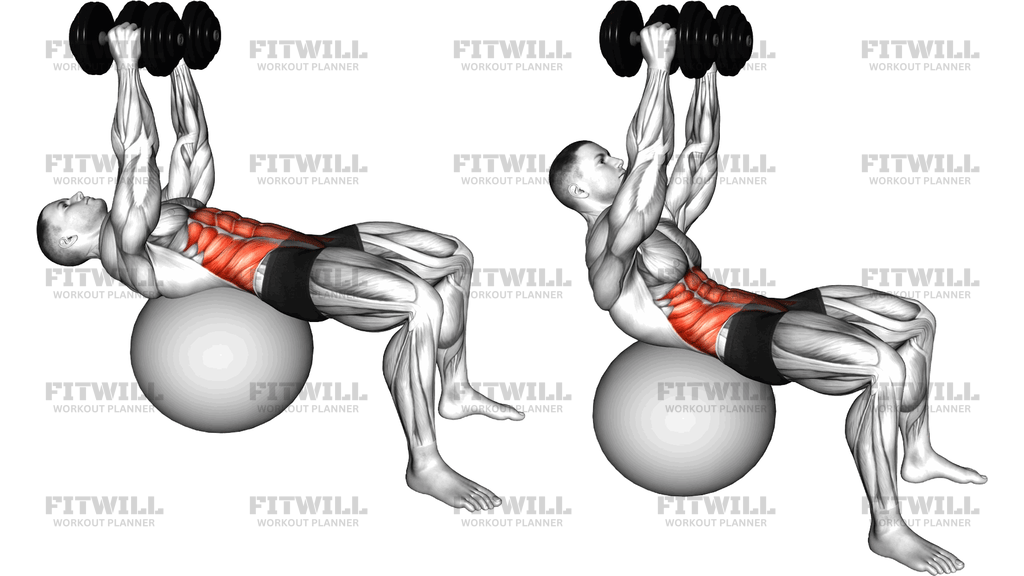
The Dumbbell Sit Up To Press is a compound core exercise that combines a full sit-up with an overhead dumbbell press, all performed from the floor. You start lying on your back with your knees bent and a dumbbell held at each shoulder. As you curl your torso up toward sitting, you drive both dumbbells straight overhead, finishing seated with your arms locked out above your head. The return trip reverses the press first, then lowers your torso back down under control.
What makes this movement valuable is that it stacks two demands on your midsection at once. Your abs have to flex the spine to bring you upright while also bracing hard to give your shoulders a stable base to press from. That means the rectus abdominis, deep core, and hip flexors all work together, while the front delts and triceps handle the pressing portion. Because your feet are unanchored and only your hips and glutes support you at the top, your stabilizers work overtime to keep you from tipping backward as the dumbbells travel overhead.
This exercise suits lifters who already have a baseline of core strength and a comfortable overhead press. It shows up often in conditioning circuits, hybrid training, and general strength programs where you want more out of a set than isolated crunches can offer. Because it ties the trunk and shoulders into one sequence, it also builds the kind of coordinated strength that transfers to picking things up off the floor and pushing objects overhead in daily life.
Setup matters more here than in a standard sit-up. Your lower back starts flat on the floor, knees bent with feet planted, and the dumbbells rest lightly against the tops of your shoulders rather than floating over your face. If the weights drift back behind your shoulders while you are lying down, your elbows lose their support and the pressing position becomes awkward when you reach the top. Keep the dumbbells stacked over your elbows throughout so every press starts from a strong position.
To execute it well, think of the rep as one flowing sequence rather than two separate exercises. Exhale as you sit up and press, using the momentum of your torso rising to help initiate the push once your shoulders clear the floor. At the top, sit tall with your chest up and the dumbbells directly over your head, not drifting forward. Lower the dumbbells back to your shoulders first, then roll your spine back down one segment at a time so your lower back does not slam into the floor.
The main safety consideration is choosing an honest weight. Pressing overhead from a seated position on the floor with no back support amplifies every wobble, and a dumbbell drifting behind your head at the top is the most common failure point. Start lighter than your seated dumbbell press load, keep the press path vertical, and stop the set as soon as your torso starts collapsing on the way up.
[ Workout Log & Planner ]
Put your next workout in Fitwill
Keep your plan and training log ready when you are.


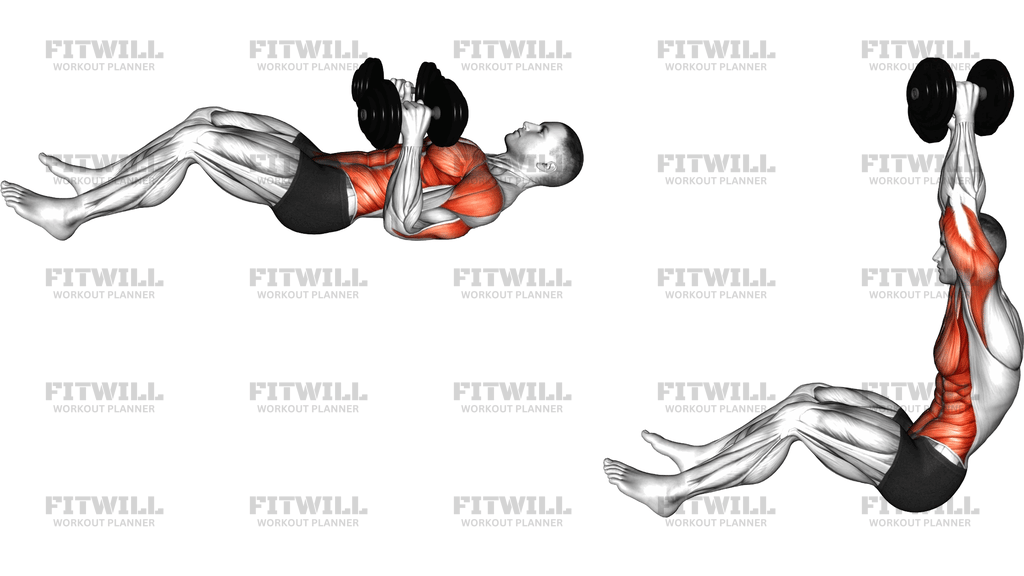
Instructions
- Sit on the floor with your knees bent and feet flat, then pick up a dumbbell in each hand and lie back so your head, upper back, and hips rest on the floor.
- Position the dumbbells against the tops of your shoulders with your elbows bent and tucked in, palms facing forward, and keep your lower back flat against the floor.
- Plant your feet at hip width and squeeze your glutes lightly so your hips stay grounded throughout the movement.
- Brace your core and take a breath in before starting the rep.
- Exhale and curl your torso up, leading with your chest, while simultaneously pressing both dumbbells straight up overhead.
- Finish seated upright with your arms fully extended and the dumbbells stacked directly over your shoulders, biceps near your ears.
- Pause briefly at the top, keeping your ribs down and your back tall rather than arching under the weight.
- Reverse the sequence: lower the dumbbells back to your shoulders first, then roll your spine down slowly until your upper back and head touch the floor.
- Breathe in as you descend, reset your brace, and begin the next rep without bouncing off the floor.
Tips & Tricks
- Choose a weight well below your normal seated press load; the floor version removes all back support, so balance fails long before your pressing strength does.
- If your torso stalls halfway up, the dumbbells are usually too heavy for the press portion, and your abs stop driving the sit-up to compensate.
- Keep the dumbbells stacked over your elbows while lying down; letting them drift behind your shoulders turns the start of every rep into an awkward fishing motion.
- Do not anchor your feet under a couch or rack at first; pressing overhead with pinned feet changes the mechanics and can strain your hip flexors.
- If the dumbbells pull you forward at the top, consciously sit tall and think about pressing toward the ceiling rather than reaching in front of your face.
- Control the descent more than the ascent; dropping your lower back onto the floor at speed is the most common way people irritate their lower back with this movement.
- Chin slightly tucked, not jammed to your chest, so your neck does not take over the curling phase of the sit-up.
- For a harder version, pause for two seconds seated at the top before lowering, or perform all reps on one side to challenge your obliques.
- Place a mat underneath if you are training on a hard surface, since your tailbone and spine segments take direct pressure on every descent.
Frequently Asked Questions
What muscles does the Dumbbell Sit Up To Press work?
The primary muscles are the abs, especially the rectus abdominis, with strong contributions from the hip flexors during the sit-up. The front delts and triceps press the dumbbells overhead, and your deep core stabilizes throughout.
Is the Dumbbell Sit Up To Press suitable for beginners?
Beginners should first build comfort with bodyweight sit-ups and a stable seated dumbbell press, then combine them with very light dumbbells. If either half of the movement breaks down, practice the pieces separately before linking them.
How heavy should the dumbbells be for the Dumbbell Sit Up To Press?
Start noticeably lighter than your regular seated or standing dumbbell press weight, since pressing from the floor with no back support is far less stable. A weight you can press cleanly for all reps without your torso wobbling is the right starting point.
Should I press the dumbbells before or during the sit-up?
Press as you rise, letting the upward drive of your torso help initiate the push once your shoulders leave the floor. Pressing only after you are fully seated turns it into two separate exercises and reduces the coordination benefit.
Why do my hip flexors fatigue before my abs in this exercise?
The hip flexors work hard to lift your upright torso with the added load of two dumbbells. This is normal, but if they cramp early, reduce the weight slightly and focus on curling your ribcage toward your hips rather than just folding at the hips.
Can I anchor my feet during the Dumbbell Sit Up To Press?
It is better to keep your feet free, as the picture shows, because unanchored feet force your core to do the work instead of your hip flexors. If you must anchor them, use a very light weight and keep the press path strict to avoid straining your hips.
What is the most common mistake in the Dumbbell Sit Up To Press?
Letting the dumbbells drift behind the head at the top of the press, which pulls the torso forward and rounds the lower back. Keep the press path vertical and finish with the weights stacked directly over your shoulders.
What can I use instead of the Dumbbell Sit Up To Press?
A single-dumbbell sit up to press halves the stability demand and works well as a regression. A wall sit with an overhead press followed by decline sit-ups is another way to train the same two patterns separately.
Is it safe for my lower back?
For most lifters with healthy backs and a controlled tempo, yes, but the repeated spine flexion under load demands attention to weight choice and descent speed. Lower the dumbbells and torso slowly, and stop if you feel pinching or discomfort in your lower back.