Dumbbells Sumo Squat
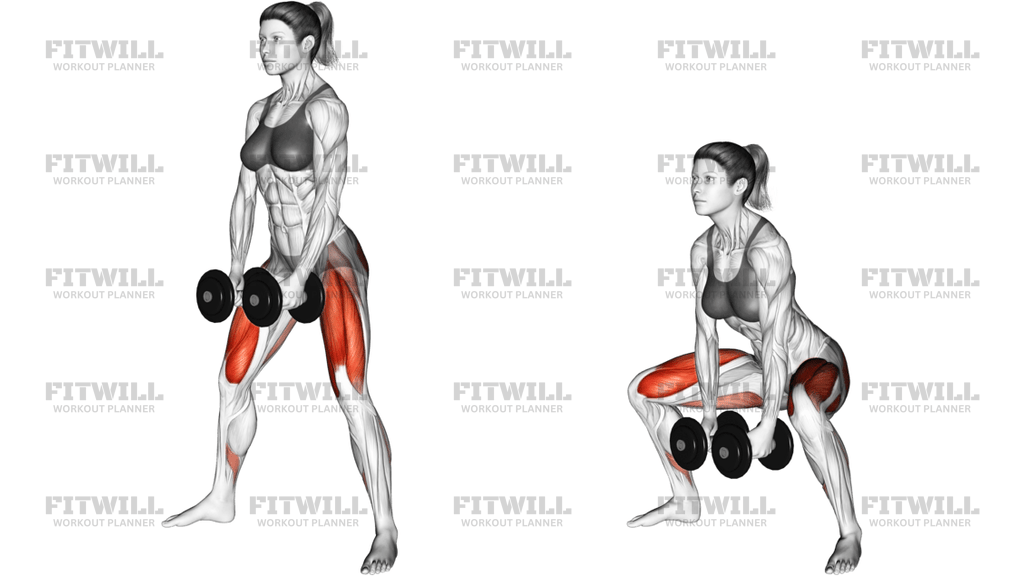
Dumbbells Sumo Squat is a wide-stance lower-body squat variation that keeps the dumbbells hanging between the legs while the feet turn out and the knees track wide. The setup shifts the emphasis toward the inner thighs and glutes while still demanding strong work from the quads, hamstrings, and trunk. It is a useful pattern when you want a squat that feels a little more hip-dominant and adductor-focused than a standard shoulder-width squat.
The image shows the lifter standing tall with a broad stance, toes angled outward, and both dumbbells held down in front of the body. That position matters because the wide base gives the hips room to drop between the legs and helps the torso stay more upright. If the stance is too narrow, the exercise turns into a compromised regular squat; if it is too wide, the knees and hips may lose a clean tracking path. The goal is to find a stance where the heels stay rooted, the knees open in line with the toes, and the dumbbells remain close to the centerline.
On each rep, sit the hips down between the thighs, keep the chest lifted, and lower until the thighs reach a deep but controlled position that you can own without rounding the lower back. The dumbbells should travel straight down under the shoulders rather than swinging forward. At the bottom, reverse the motion by pushing the floor apart, driving through the whole foot, and standing without collapsing the knees inward. Breathing should stay deliberate so the trunk stays braced as the load changes direction.
This movement is often used for hypertrophy, accessory strength work, warm-up squatting patterns, or as a lower-body option when you want a joint-friendly stance that still loads the legs hard. It can be a beginner-friendly exercise when the load is light and the depth is kept honest, but the wide stance still needs patience and control. The most useful reps are the ones where the pelvis stays organized, the spine stays neutral, and the dumbbells stay quiet instead of swinging the movement for you.
If the hips or groin feel restricted, shorten the range slightly and work on a stance that allows the knees to open comfortably. If the lower back takes over, reduce the load and make the torso more upright. The exercise is simple in appearance, but small changes in foot angle, stance width, and depth make a large difference in how the glutes and inner thighs are loaded.
[ Workout Log & Planner ]
Put your next workout in Fitwill
Keep your plan and training log ready when you are.


Instructions
- Stand with your feet wider than shoulder width, toes turned out, and hold one dumbbell in each hand with your arms hanging straight down between your thighs.
- Plant your whole foot, keep your chest tall, and let your knees point in the same direction as your toes before you start the first rep.
- Brace your abdomen and keep your ribs stacked over your pelvis so your torso stays controlled as you descend.
- Sit your hips straight down between your legs, lowering the dumbbells vertically while keeping them close to the floor and centered under your shoulders.
- Keep your knees pressing out over your toes and your heels flat as you reach the bottom of the squat.
- Pause briefly at the lowest position only if you can hold the position without rounding your lower back.
- Drive through both feet to stand, squeezing the glutes as you bring your hips back to full extension.
- Exhale as you rise, then inhale and reset at the top before the next repetition.
- Repeat for the planned number of reps, then step out of the stance and lower the dumbbells safely.
Tips & Tricks
- Turn the toes out just enough to let the knees open naturally; an extreme angle usually makes the descent feel awkward.
- Keep the dumbbells hanging vertically instead of swinging them forward like a deadlift; the load should stay centered between the legs.
- If the heels start to lift, the stance is probably too narrow or the squat is going too deep for your current mobility.
- Think about spreading the floor apart on the way up to keep the knees from caving inward.
- A slightly slower lowering phase makes it easier to feel the inner thighs and glutes working through the bottom range.
- Choose dumbbells you can control without rounding the low back when you reach the deepest point.
- Keep the chest proud, but do not over-arch the lower back to fake a taller torso.
- Stop the set when the knees stop tracking cleanly or the dumbbells start drifting away from the midline.
Frequently Asked Questions
What muscles does Dumbbells Sumo Squat work most?
It mainly targets the glutes and inner thighs, with the quads, hamstrings, and core helping throughout the squat.
How wide should my stance be for the dumbbell sumo squat?
Wide enough that the knees can open and the dumbbells can drop between the legs without the torso tipping forward.
Where should the dumbbells stay during the rep?
Keep them hanging straight down between the thighs, close to the centerline, instead of letting them swing in front of the body.
Should my knees move over my toes?
Yes, in a sumo stance the knees should track in the same direction as the toes instead of collapsing inward.
Can beginners do this exercise?
Yes, as long as the load is light and the stance lets the hips and knees move comfortably.
How deep should I squat in this variation?
Squat only as low as you can while keeping the heels down, knees open, and lower back neutral.
Why use a sumo stance instead of a regular squat stance?
The wider stance usually makes the exercise feel more glute- and adductor-focused while still training the legs hard.
What is the biggest form mistake to avoid?
Letting the knees cave in or letting the dumbbells drift forward are the two most common breakdowns.