Dumbbell Standing Palms In Press
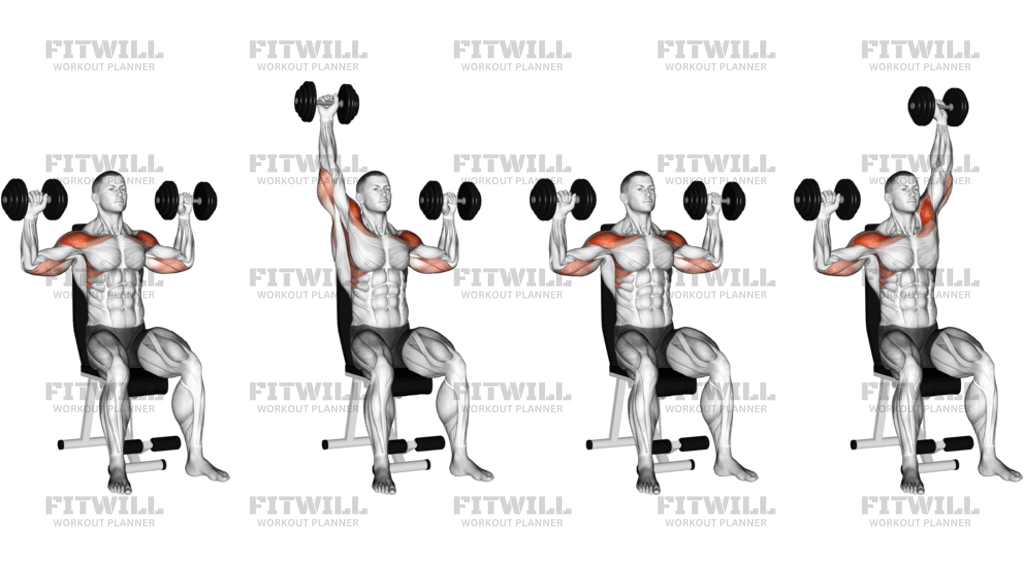
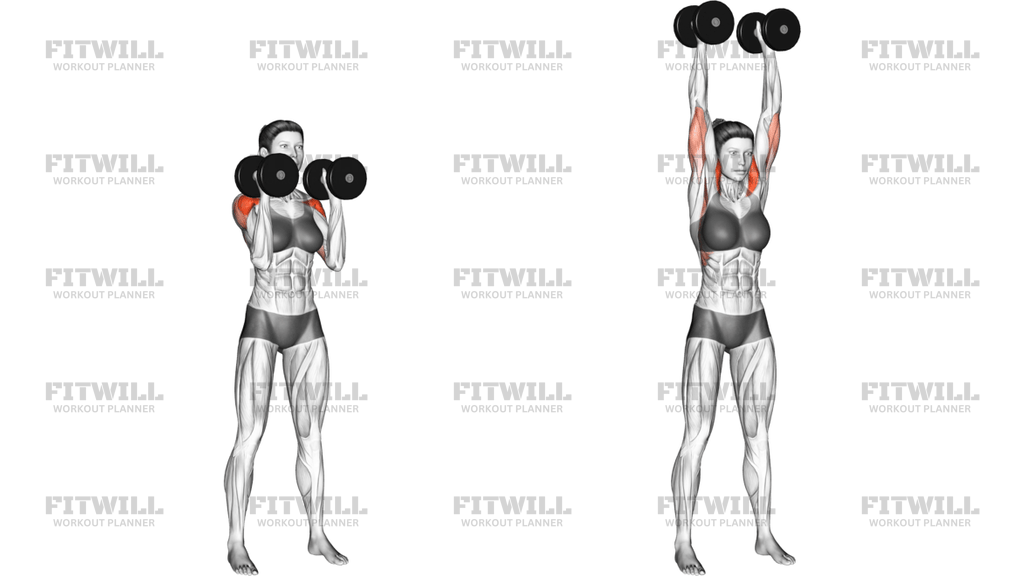
Dumbbell Standing Palms In Press is a standing neutral-grip overhead press built around two dumbbells held with the palms facing each other. It trains the shoulders as the main mover, with the triceps, upper back, and trunk working hard to keep the torso stacked while the weights travel overhead. Because you are standing instead of using a bench or back support, the exercise asks for more balance, rib control, and shoulder stability on every repetition.
The neutral grip changes the feel of the press. Keeping the palms in reduces the urge to flare the elbows wide and usually lets the shoulders move in a more comfortable pressing line for many lifters. The setup matters because the dumbbells should start at about shoulder height, close to the sides of the face, with the wrists stacked over the elbows and the elbows slightly in front of the torso. That position gives you a strong launch point without forcing the lower back to overextend.
During the press, the weights should travel mostly upward and slightly inward so they finish over the midfoot, not in front of the body. Squeeze the glutes, brace the abs, and keep the ribs from popping forward as the dumbbells rise. At the top, the arms should be straight or nearly straight without shrugging the shoulders aggressively. Lower the dumbbells back to the shoulders under control and reset each rep instead of bouncing into the next one.
This is a useful accessory lift for shoulder strength, overhead stability, and balanced upper-body development when you want a simpler pressing pattern than a rotation-based dumbbell press. It fits well in strength blocks, upper-body days, or conditioning circuits where clean technique matters more than maximal load. If you feel the movement mostly in the lower back, the weights are too heavy, the stance is too loose, or the ribs are drifting forward faster than the arms can press.
Treat the exercise as a controlled standing press, not a standing lean-back. A small amount of torso movement can happen naturally, but the goal is to keep the trunk organized while the shoulders and triceps do the work. Use a load that lets you pause briefly at the top, return to shoulder height without losing position, and repeat with the same path from the first rep to the last.
[ Workout Log & Planner ]
Put your next workout in Fitwill
Keep your plan and training log ready when you are.


Instructions
- Stand tall with a dumbbell in each hand at shoulder height, palms facing each other and elbows slightly in front of your ribs.
- Plant your feet about hip width apart and brace your midsection before the first press.
- Keep the dumbbells stacked over your wrists so the forearms are vertical at the start.
- Press both weights upward in a smooth line until your arms are straight or nearly straight overhead.
- Finish with the dumbbells over the middle of your body, not drifting far in front of your face.
- Keep your ribs down and glutes tight so the press comes from the shoulders and triceps instead of a lean-back.
- Lower the dumbbells under control back to shoulder height, stopping before your elbows drop behind your torso.
- Reset your breath at the bottom, then repeat for the planned number of reps.
Tips & Tricks
- Keep the palms facing each other the whole time; do not rotate the wrists into a curl or Arnold-press pattern.
- If the lower back arches hard at the top, the dumbbells are too heavy or the ribs are flaring before the press finishes.
- A slight forward angle of the elbows is usually better than flaring them straight out to the sides.
- Press the weights up and slightly back so they finish over the midfoot instead of in front of the body.
- Pause for a split second overhead to control the lockout before lowering the dumbbells.
- Lower slowly enough that your shoulders stay packed and the weights do not crash onto the delts.
- Keep your neck long and avoid shrugging the dumbbells into your ears at the top.
- A staggered stance can help if your balance is the limiting factor during standing presses.
Frequently Asked Questions
What muscles work most in Dumbbell Standing Palms In Press?
The shoulders are the main drivers, with the triceps and upper-back stabilizers helping finish and control the press.
Why keep the palms facing each other?
The neutral grip keeps the elbows from flaring excessively and often makes the shoulder position feel smoother and more comfortable.
Where should the dumbbells start?
Start with the bells at shoulder height, wrists stacked over elbows, and the elbows slightly in front of the torso.
How do I know if I am leaning back too much?
If your ribs pop forward, your lower back arches, or the dumbbells drift in front of your face, you are using too much body English.
Is this exercise beginner friendly?
Yes, as long as the load is light enough to keep the trunk steady and the dumbbells moving in a clean vertical path.
Should my elbows flare out at the top?
No, let the arms finish overhead without forcing the elbows wide; the press should feel strong and compact.
What is the most common mistake?
Rushing the press and turning it into a standing backbend is the most common breakdown.
Can I swap this for a seated dumbbell press?
Yes, a seated neutral-grip press is a good substitution if you want less balance demand and more upper-body isolation.