Suspension Single Leg Split Squat
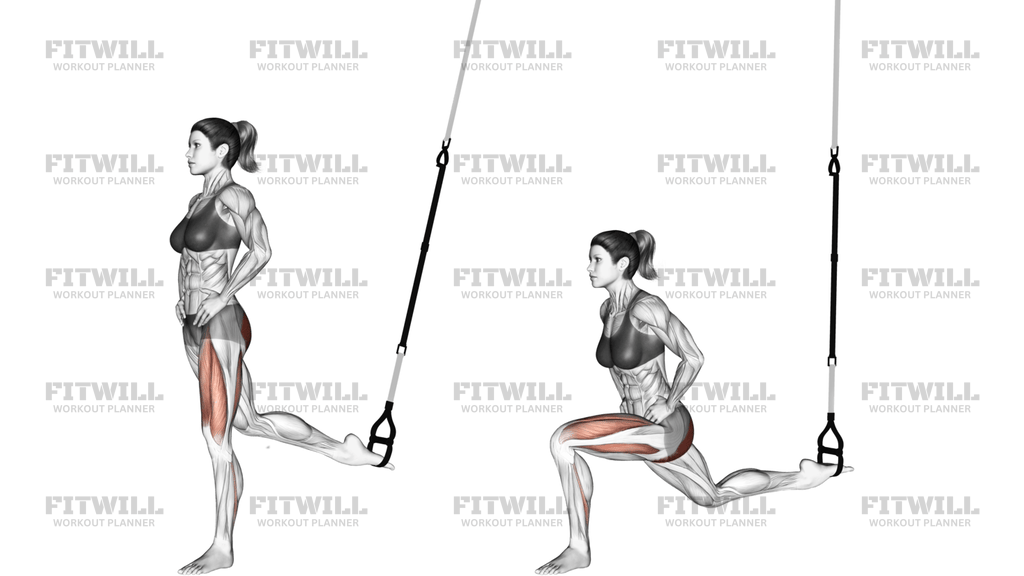
Suspension Single Leg Split Squat is a single-leg lower-body exercise where the rear foot is supported in a suspension strap and the front foot stays planted on the floor. The setup makes the movement more demanding than a standard split squat because the rear leg has to stay balanced in the cradle while the front leg controls the descent and drives the ascent. It is a useful choice when you want unilateral leg strength with extra balance demand and a strong glute, quad, and hip-stability emphasis.
The front leg does most of the work. As you lower, the front knee bends and tracks over the toes while the hips drop straight down rather than drifting forward. The torso stays tall with only a small natural lean, and the rear leg bends behind you as the suspended foot stays quiet. That combination lets the front-side glute, quad, and adductors control the bottom position while the hamstrings and core help keep the pelvis level.
The suspension strap changes the feel of the movement in a useful way. Because the rear foot is not fixed to the floor, you have to control both the split stance and the return path instead of bouncing out of the bottom. That makes this exercise practical for unilateral strength work, stability training, and accessory work when you want more control than a free split squat but still need a hard single-leg challenge.
Good reps start with a long enough stance that the front heel stays down and the back knee can lower without the hips collapsing. The rear foot should remain relaxed in the strap, not actively pushing off the handle. Lower under control until the front thigh approaches parallel or the range you can own, then drive through the front midfoot and heel to stand back up. Exhale as you rise, keep the ribs stacked over the pelvis, and reset the rear leg before the next rep.
This exercise is usually best when the goal is clean unilateral work rather than maximal loading. It fits well in lower-body strength sessions, glute-focused accessory blocks, or warmups that need controlled single-leg mechanics. If balance, knee tracking, or hip control breaks down, shorten the range or reduce the strap assistance before adding more speed or load.
Fitwill
Log Workouts, Track Progress & Build Strength.
Achieve more with Fitwill: explore over 9600 exercises with images and videos, access built-in and custom workouts, perfect for both gym and home sessions, and see real results.
Start your journey. Download today!




Instructions
- Set the suspension strap behind you and place the rear foot in the foot cradle, then stand far enough forward that the front foot can stay flat and stable.
- Plant the front foot about hip-width from the line of travel and square your hips and shoulders toward the front.
- Keep the rear knee softly bent and let the suspended foot hang quietly behind you instead of pushing into the strap.
- Brace your trunk, stack your ribs over your pelvis, and keep most of your weight over the front leg before you start descending.
- Lower straight down by bending the front knee and hip until the front thigh approaches parallel, or as low as you can control without losing balance.
- Keep the front heel down, the front knee tracking over the toes, and the torso tall with only a small forward lean.
- Drive through the front midfoot and heel to stand back up, finishing with the front hip and knee extended without locking out hard.
- Reset the rear leg in the strap before the next rep and breathe out as you stand, then repeat for the planned reps on one side before switching.
- If the strap starts swinging or the front knee caves inward, shorten the range and regain control before continuing.
Tips & Tricks
- Set the front foot far enough forward that the bottom position feels like a squat on the front leg, not a lunge that tips you onto the toes.
- Keep the rear foot passive in the strap; if you are pushing off it, the suspension support is hiding how much work the front leg should be doing.
- Use a small natural torso lean, but do not fold at the waist or let the chest collapse over the thigh.
- Let the front knee travel forward as needed so the heel stays planted; forcing the shin vertical usually shifts stress into the hips and balance system.
- Move slowly through the first third of the descent, because that is where the strap and rear leg are most likely to swing.
- If balance is the limiter, lower the reps and own a shorter range before adding depth.
- A slight pause at the bottom removes bounce and makes the front glute and quad do the work instead of the suspension straps.
- Keep the pelvis level; if one hip drops or twists, the stance is too narrow or the range is too deep for now.
- Use the same foot placement on both sides so left-right differences are obvious and easy to correct.
Frequently Asked Questions
What muscles work hardest in a Suspension Single Leg Split Squat?
The front leg’s glutes and quadriceps do most of the work, with the hamstrings and core helping keep the hips stable.
Is the rear leg supposed to push into the suspension strap?
No. The rear foot should stay supported but mostly passive so the front leg provides the main force.
How far forward should I stand from the anchor?
Far enough that the front heel stays down and the back knee can lower without the strap yanking you backward.
Why does the front knee move forward over the toes?
That forward knee travel is normal in a split squat and helps keep the front foot grounded while the glute and quad share the load.
Can beginners use this suspension variation?
Yes, but only with a short range of motion and a controlled tempo until the balance and stance feel consistent.
What is the most common form mistake?
People often bounce out of the bottom or let the rear strap swing, which turns the set into a balance drill instead of a clean split squat.
Should I feel this more in my glutes or quads?
Both are involved, but a more upright torso usually shifts the emphasis toward the quads, while a slight forward lean brings in more glute work.
What if I cannot keep my balance at the bottom?
Shorten the stance slightly, reduce the depth, and slow the descent until the front foot and pelvis stay steady.
Where does this fit best in a workout?
It works well in lower-body strength blocks, glute accessory work, or unilateral stability training after the main lift.