Suspension Single Leg Squat
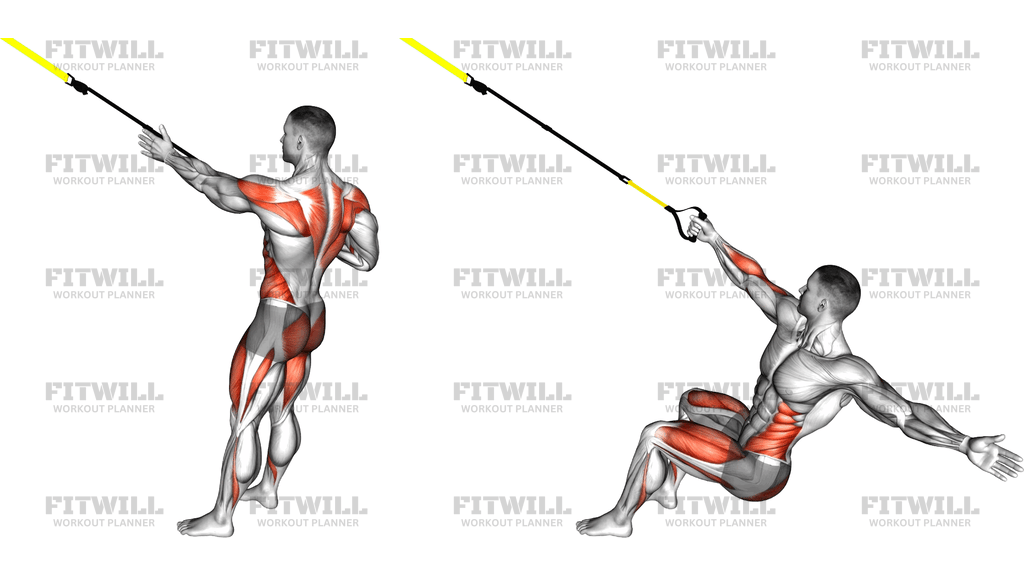
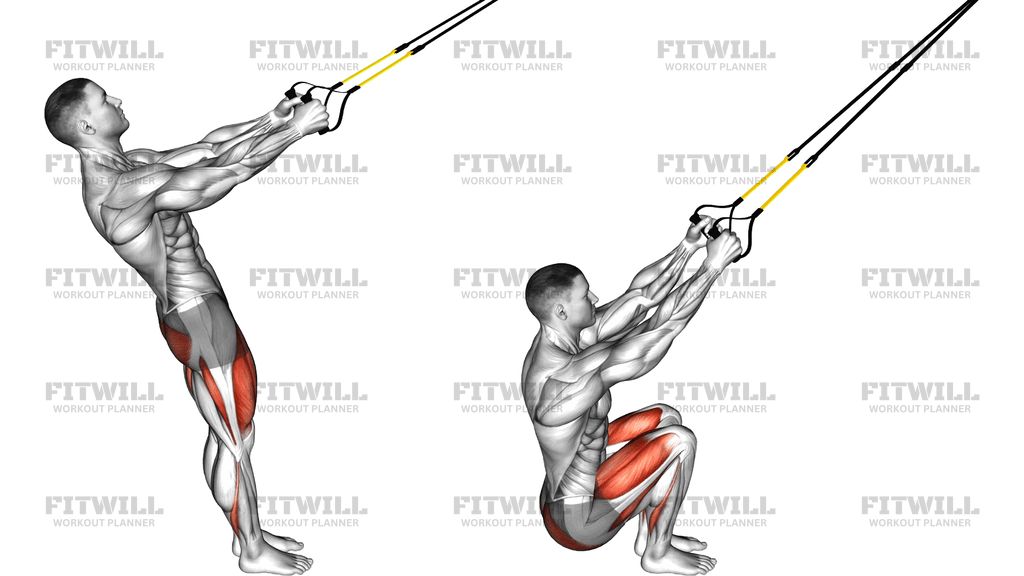
Suspension Single Leg Squat is a suspension-assisted unilateral squat that uses the straps to help you balance while one leg does most of the work. It is a strong choice for building single-leg strength, control, and confidence when a bodyweight pistol squat is not yet clean or stable enough. The straps reduce the balance demand just enough to let you focus on the squat path, knee tracking, and hip control.
The main emphasis is on the glutes and thighs of the working leg, with the hamstrings and core helping you stay organized as you descend and stand back up. The setup matters because the handles are doing only part of the job: if you lean too far back or pull too hard with the arms, the squat turns into a rope-assisted pull instead of a lower-body drill. A good rep keeps the torso tall, the pelvis controlled, and the standing foot planted through the heel and midfoot.
Use the straps to counterbalance, not to hang your body weight. As you lower, the free leg stays out in front to help you balance while the working knee bends and tracks over the toes. The goal is to sink into a deep, controlled single-leg squat position without collapsing the arch, twisting the knee inward, or bouncing out of the bottom. On the way up, drive the floor away and let the hips and thigh finish the rep.
This exercise is useful for warm-ups, lower-body accessory work, and unilateral strength blocks because it exposes side-to-side differences quickly. It also gives you an easy way to scale depth: shorten the range if your hips tuck under, your heel lifts, or the torso folds forward too much. When the movement is done well, it should feel smooth, stable, and athletic rather than shaky or forced.
Because Suspension Single Leg Squat is a balance-assisted pattern, it is best trained with deliberate reps and a moderate range you can repeat evenly. Keep the straps snug enough to help, but not so supportive that they carry the whole rep. If you can lower under control, pause briefly, and stand up without shifting around, the exercise is doing its job.
[ Workout Log & Planner ]
Put your next workout in Fitwill
Keep your plan and training log ready when you are.


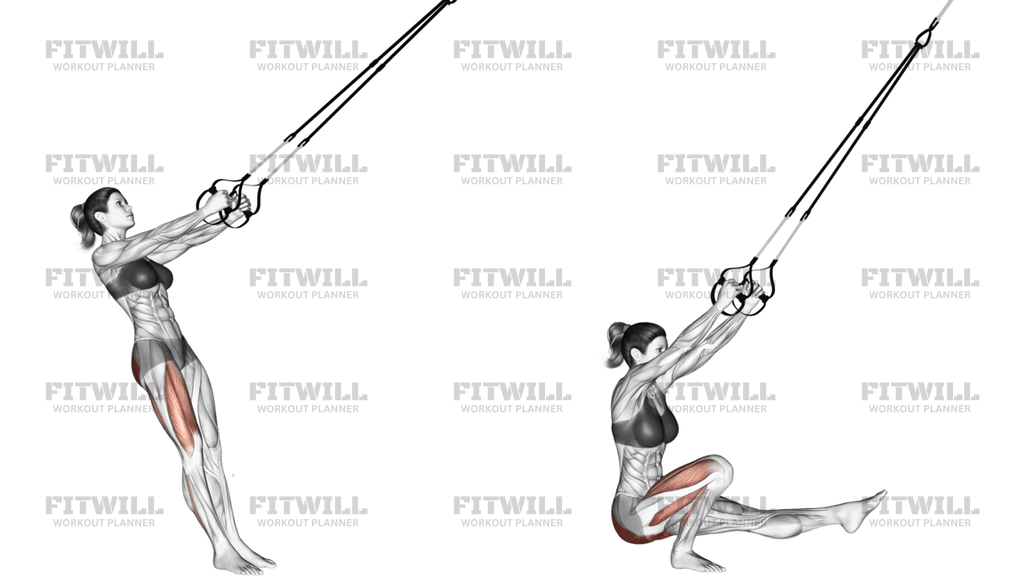
Instructions
- Stand facing the anchor with both suspension handles in your hands, arms straight, and one foot planted under your hip.
- Lean back just enough to create tension in the straps, then extend your free leg slightly in front of you for balance.
- Keep your chest tall, ribs down, and working foot flat from heel to midfoot before you start descending.
- Sit down through the working hip and knee, letting the free leg float forward as a counterbalance rather than as support.
- Lower under control until your thigh approaches parallel or your comfortable bottom position without the heel lifting.
- Pause briefly at the bottom while keeping the knee tracking over the middle toes and the straps steady.
- Drive through the heel and midfoot to stand back up, using the handles only for balance instead of pulling yourself up.
- Finish tall with the hips fully extended, then reset the free leg and stance before the next rep.
- Repeat for the planned reps, and stop the set if the standing knee caves in or the torso starts twisting.
Tips & Tricks
- Use the straps as a counterbalance, not as a row handle; if your elbows bend hard, you are cheating the squat.
- Keep the working foot rooted through the heel and big toe so the arch does not collapse as you descend.
- A slight forward reach of the free leg makes the bottom position easier to control and keeps the pelvis from rolling backward.
- If you cannot stay balanced at depth, shorten the range before the heel lifts or the low back rounds.
- Think about sitting between the heel and the opposite hip instead of dropping straight down onto the toes.
- Keep the straps taut before each rep so you do not have to jerk into the first inch of the squat.
- The rep should feel like the working leg is standing you up; if the arms do most of the work, reduce assistance or depth.
- A slow lowering phase usually exposes shaky knee tracking, which is useful feedback on this movement.
Frequently Asked Questions
What muscles does Suspension Single Leg Squat train most?
It mainly trains the glutes and quads of the working leg, with the hamstrings and core helping you stay balanced and upright.
Are the suspension straps supposed to hold my body weight?
No. They should help you balance and slightly unload the movement, but the standing leg should still do the squat.
How do I keep my knee from caving in on Suspension Single Leg Squat?
Keep the foot tripod grounded and let the knee track over the middle toes as you lower and stand. If the knee still drifts inward, reduce depth and use more strap assistance.
What should my free leg do during the squat?
Hold it slightly in front of you as a counterbalance rather than letting it swing behind you. That helps keep the pelvis level and makes the descent more controlled.
Is Suspension Single Leg Squat good for beginners?
Yes, it is often easier than a full pistol squat because the straps provide balance help. Start with a shallow range and build depth only when you can stay steady.
What is the most common mistake with the handles?
Many people pull on the handles to lift themselves up. The handles should stay taut for support, but the working leg should still drive the rep.
Can I use this instead of a pistol squat?
Yes, it works well as a progression toward a pistol squat or as a safer assisted alternative when balance is the limiting factor.
How deep should I go on Suspension Single Leg Squat?
Go only as deep as you can while keeping the heel down, the torso controlled, and the knee tracking cleanly. Depth is useful only if the bottom position stays organized.