Hip Lift Low Back Off Floor
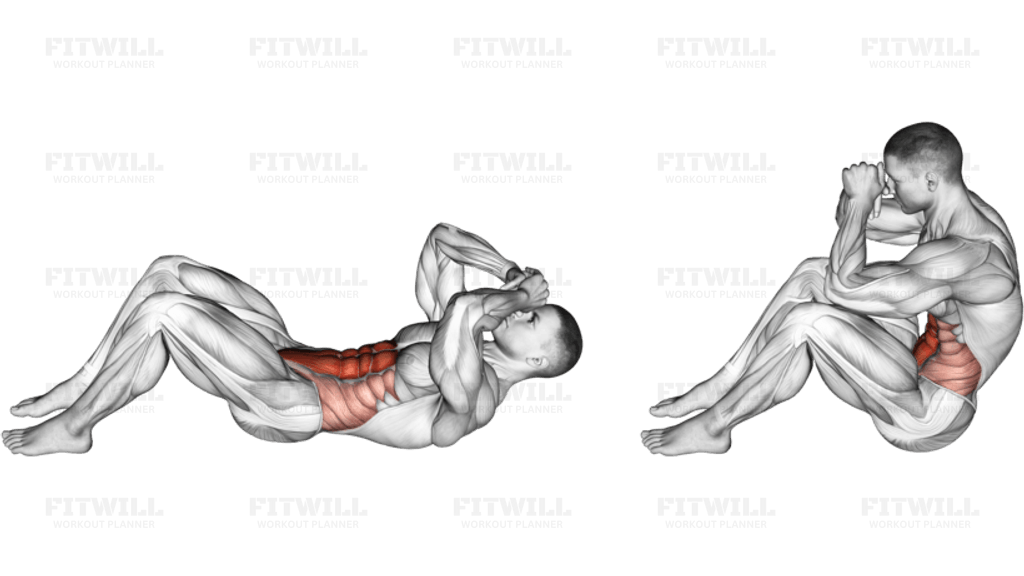
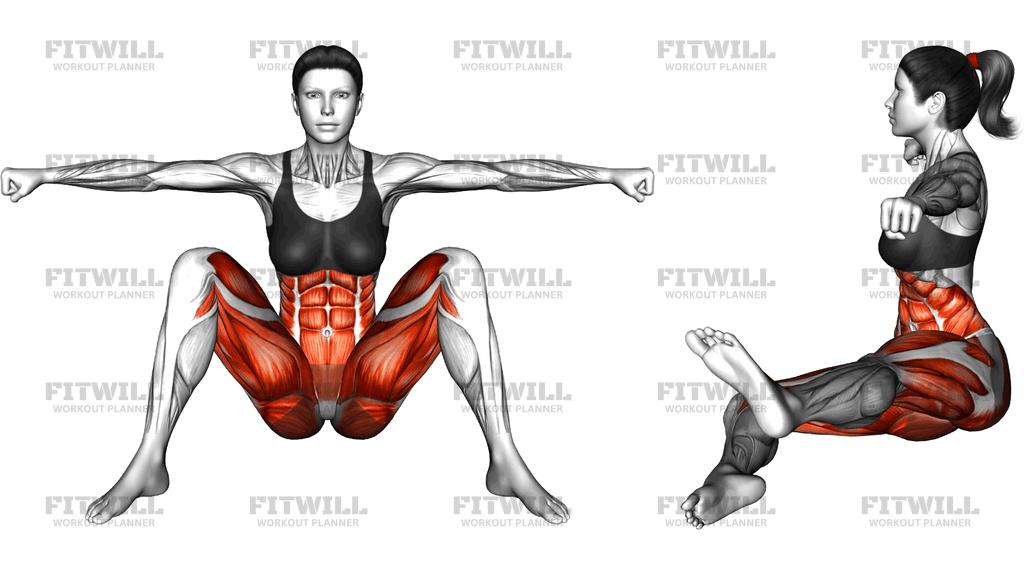
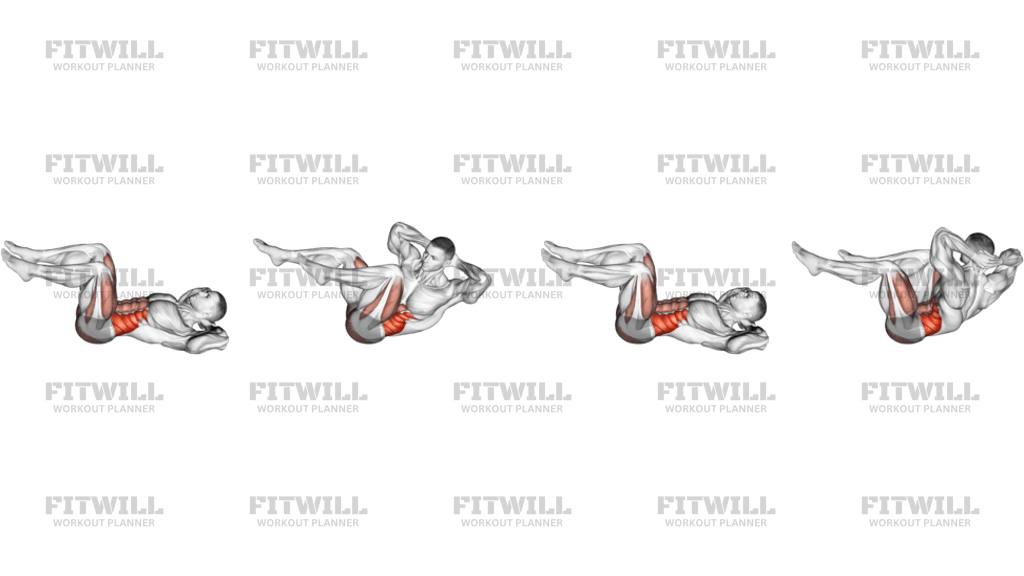
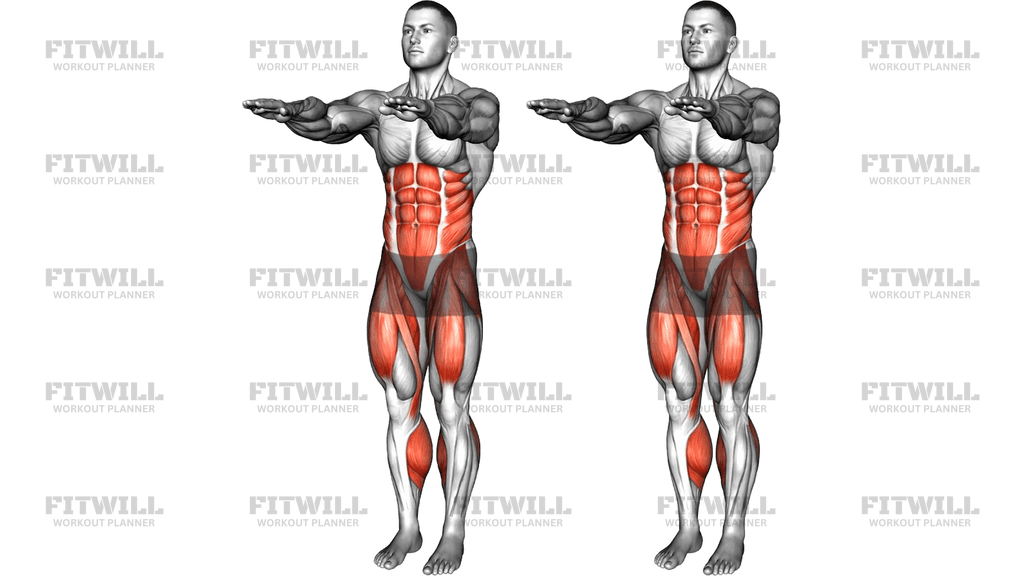
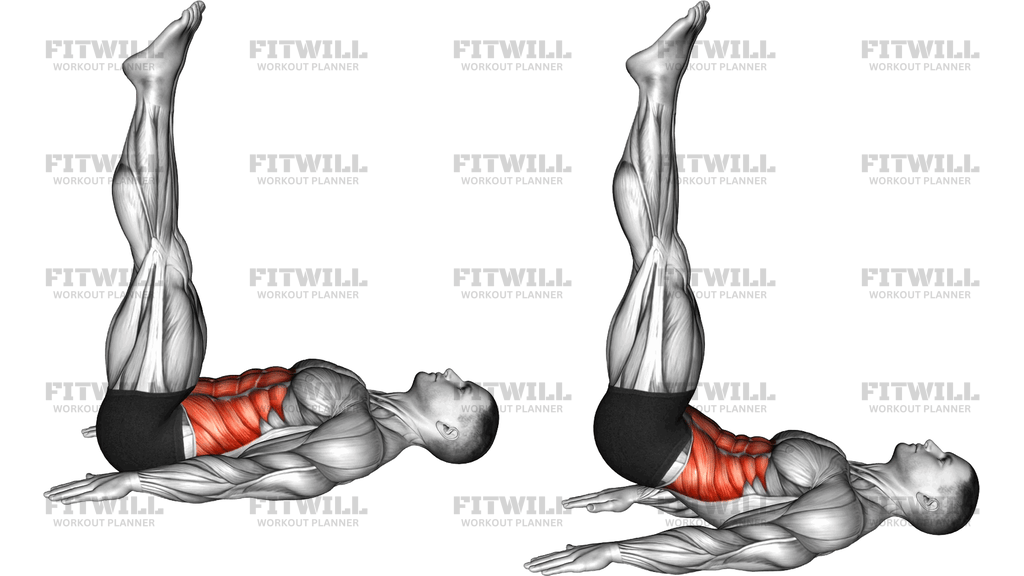
The Hip Lift Low Back Off Floor is a bodyweight abdominal exercise performed lying on your back with your legs pointed straight up toward the ceiling. From that position, you lift your hips and lower back off the floor by curling the pelvis upward, then lower back down under control. The image shows the two key positions clearly: legs vertical and hips resting on the floor in the start position, and the hips peeled up off the floor at the top with the abs doing the work.
This movement is essentially a short-range reverse crunch with straight legs. Instead of bending the knees and pulling them toward the chest, you keep the legs extended upward and focus entirely on rolling the pelvis toward the ribcage. That makes it a very direct way to challenge the lower portion of the rectus abdominis, along with the deep core muscles that control pelvic position. The hip flexors assist, but the goal is to make the abdominal wall, not the legs, drive the movement.
It is a good fit for people who already tolerate basic crunches and leg raises and want a harder option for the midsection without any equipment. Because the legs stay vertical, there is less strain on the lower back than with straight-leg raises held low to the floor, which makes it a sensible progression for many intermediate trainees. It is commonly used in ab circuits, home workouts, and as an accessory movement for lifters who want more trunk control for squats and deadlifts.
Setup matters more than most people expect. Lie flat with your arms relaxed at your sides, palms down for a little support, and point your legs straight up so they are roughly perpendicular to the floor. Before you move, press your lower back gently toward the floor and brace your abs. If your legs drift forward over your chest or sway side to side, the exercise becomes a leg swing instead of a pelvic curl, and the abdominal benefit drops off quickly.
To execute it well, think of lifting your hips by pulling your pubic bone toward your belly button. The feet travel slightly backward over the head as the hips and lower back leave the floor, and the lift should look like a curl, not a thrust. Pause briefly at the top, then lower the hips back to the floor one vertebra at a time rather than dropping down. Keep the movement slow enough that you could stop it at any point; if momentum is moving your legs, the abs are not doing the lifting.
The most common faults are pushing off with the hands, bouncing at the bottom, and using a big leg swing to fling the hips up. All three turn a precise core exercise into a sloppy hip movement. Keep the range honest, exhale as you curl up, and stop the set when you can no longer lift the hips smoothly. Done this way, the Hip Lift Low Back Off Floor is a safe, focused addition to almost any midsection routine.
[ Workout Log & Planner ]
Put your next workout in Fitwill
Keep your plan and training log ready when you are.


Instructions
- Lie flat on your back on the floor with your arms alongside your body, palms facing down and pressed lightly into the floor for support.
- Raise both legs straight up toward the ceiling until they are roughly perpendicular to the floor, knees fully extended and feet together.
- Press your lower back gently into the floor and brace your abdominal wall before starting the rep.
- Exhale and curl your pelvis upward, pulling your pubic bone toward your ribcage so your hips begin to lift.
- Continue the curl until your hips and lower back are completely off the floor and your feet have traveled slightly back over your head.
- Pause for a second at the top, keeping the legs vertical and the abs tightly contracted rather than letting the legs fall toward your face.
- Inhale and lower your hips back down slowly, returning the lower back to the floor vertebra by vertebra.
- Touch the hips down lightly without bouncing, reset your brace, and begin the next rep.
- Keep your head, shoulders, and upper arms in contact with the floor throughout the entire set.
Tips & Tricks
- Think 'curl, don't thrust': the pelvis should roll up like a wheel, and if your hips are being launched by a leg swing, you are using momentum instead of the abs.
- Keep the legs vertical the whole time. If your feet drift over your chest, the hip flexors take over and the abdominal curl shortens.
- Place your hands under your glutes only if your lower back arches off the floor at the bottom; do not use them to push the hips upward.
- Limit the top position to where your lower back actually lifts, not how far your feet travel toward your head — a small, clean curl beats a big ballistic swing.
- If your heels separate or your knees bend as you fatigue, it usually means the legs are compensating; shorten the set and keep the knees locked.
- Move at a two-to-one tempo, roughly two seconds up and a slower return down, to keep tension on the rectus abdominis the whole time.
- Exhale sharply as you curl up; this helps the deep core brace and makes the pelvic lift feel more controlled.
- A mat or soft surface helps if your spine is sensitive to pressing into a hard floor, but avoid a surface so soft that your hips sink and wobble.
- If you feel the work mostly in your hip flexors or the front of your thighs, reduce the range and focus harder on pulling the pelvis toward the ribs.
Frequently Asked Questions
What muscles does the Hip Lift Low Back Off Floor work?
The primary muscle is the rectus abdominis, with strong emphasis on the lower fibers as the pelvis curls upward. The deep core stabilizers assist, and the hip flexors contribute as supporting movers.
Why do the legs stay straight and vertical in this exercise?
Vertical legs remove the momentum and lower-back strain that come from swinging straight legs up from the floor. That lets the movement stay focused on curling the pelvis off the ground rather than lifting the legs themselves.
Is the Hip Lift Low Back Off Floor suitable for beginners?
Beginners can attempt it, but most should start with bent-knee reverse crunches or standard pelvic tilts first. If you cannot lift the hips without swinging your legs or pushing off your hands, build that foundation before progressing.
How is this different from a regular reverse crunch?
In a reverse crunch the knees are bent and drawn toward the chest, while here the legs stay extended toward the ceiling and only the pelvis moves. This makes the exercise shorter in range but more demanding on the abs to initiate and control the pelvic curl.
How many reps should I do?
Aim for sets of 8 to 15 controlled repetitions, stopping when the curl becomes jerky or the legs start to swing. Since the movement is short in range, quality matters far more than volume.
My lower back hurts when I lower down — what should I change?
Slow the descent, make sure your lower back returns to the floor completely before the next rep, and press your palms into the floor for support. You can also slide your hands under your glutes to reduce the arch at the bottom position.
Should I push my hands into the floor to get my hips up?
Light pressure with the palms is fine for stability, but pushing hard turns the set into an upper-body assist and robs the abs of work. If you need a strong push to lift, regress to a bent-knee version.
Can I substitute another exercise for the Hip Lift Low Back Off Floor?
Yes — bent-knee reverse crunches, hanging knee raises, or lying leg raises all train the abdominal wall in a comparable way. Choose whichever lets you keep the pelvis curling without momentum.
How high should my hips lift at the top?
Lift until your hips and lower back are fully off the floor and your feet have traveled slightly back over your head. There is no benefit to forcing the feet further toward the floor behind you at the expense of control.
Is it safe to do this exercise every day?
Daily practice is possible for many people since it is a bodyweight movement, but the abs still need recovery like any muscle. Two to four focused sessions per week is enough for most trainees to see steady progress.