Barbell Lying Row
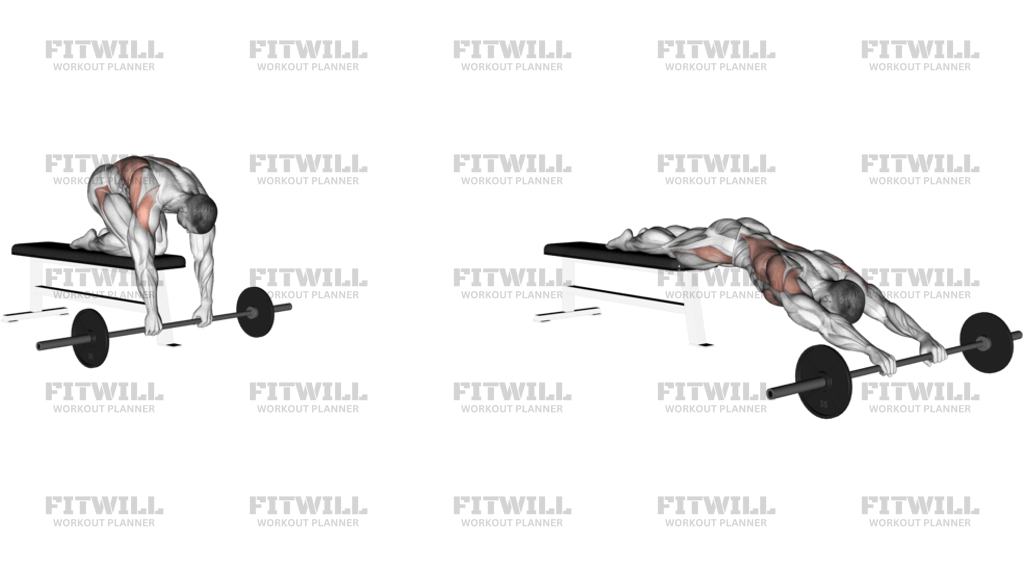
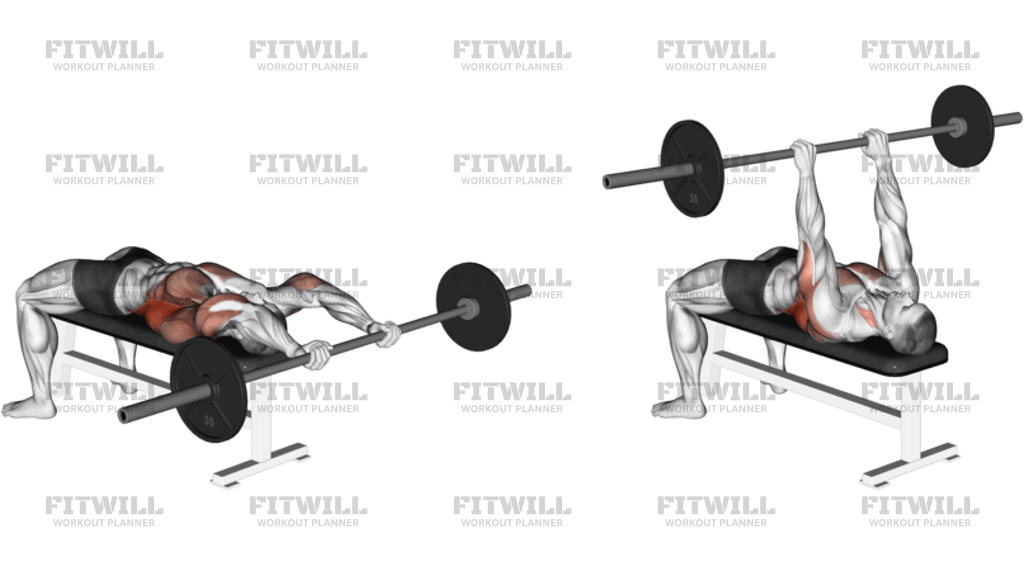
The Barbell Lying Row is a rowing variation performed face down on a flat bench with a barbell positioned underneath you. Instead of standing and hinging forward like a bent-over row, your torso is fully supported by the bench, which removes momentum from the equation and forces your back muscles to do the work. From the lying position, you reach down to grip the bar and pull it up toward the underside of the bench, squeezing your shoulder blades together at the top before lowering it back down with control.
This setup makes the movement especially useful for lifters who tend to cheat on standing rows by swinging their torso or using their lower back to heave the weight. Because your chest and torso stay glued to the bench, the lats, rhomboids, mid traps, and rear shoulders are isolated in a way few free-weight rows can match. It also builds the biceps and forearms as they work to hold and move the bar.
The bench-supported position is what makes this exercise distinctive, and getting it right matters. You want the bench high enough that your arms can hang and reach the bar with a full range of motion, and you want the bar placed directly beneath your shoulders or slightly toward your head so the pull stays in a straight vertical line. If the bar sits too far toward your feet, the angle changes and your shoulders get pulled into an awkward position at the bottom.
To perform it well, keep your chest in contact with the bench for every rep, drive your elbows up and slightly back, and think about pulling with your elbows rather than your hands. At the top, the bar should come close to the underside of the bench while your shoulder blades retract. Lower the bar slowly rather than dropping it, since the stretch at the bottom is where a lot of the lat work happens.
The Barbell Lying Row fits well into back days as a secondary or finishing movement, typically done for moderate reps with a weight you can control strictly. It is also a solid option for people with lower back fatigue who still want heavy rowing volume without loading the spine in a bent-over position. Start lighter than you think you need, since the supported position makes the weight feel deceptively easy on the first rep and much heavier by the fourth.
[ Workout Log & Planner ]
Put your next workout in Fitwill
Keep your plan and training log ready when you are.


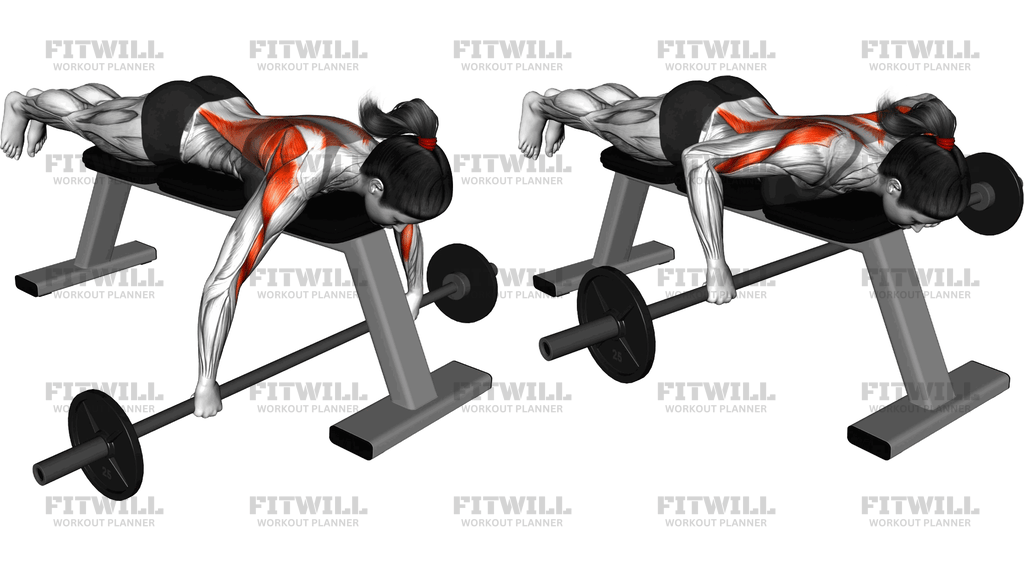
Instructions
- Place a loaded barbell on the floor directly beneath a flat bench, running perpendicular to the bench so you can grip it with both hands.
- Lie face down on the bench with your chest supported and your head just past the top edge, letting your arms hang toward the floor.
- Reach down and grip the bar with an overhand grip, hands roughly shoulder-width apart, directly below your shoulders or slightly toward your head.
- Tighten your core, squeeze your glutes lightly, and keep your chest pressed into the bench so your torso cannot lift or rock.
- Pull the bar up by driving your elbows toward the ceiling, keeping them around 45 degrees from your torso rather than flared straight out.
- Continue pulling until the bar reaches the underside of the bench and your shoulder blades are fully squeezed together.
- Hold the top position for a brief moment, feeling the contraction across your upper back and lats.
- Lower the bar under control until your arms are nearly straight, letting your shoulder blades spread before the next rep.
- Exhale as you pull the bar up and inhale as you lower it back down.
- Complete your set, then carefully set the bar on the floor before sitting up from the bench.
Tips & Tricks
- Do not lift your chest off the bench to help the bar up. If your torso rises, the weight is too heavy and your back is no longer doing the work.
- Keep the bar directly under your shoulders. Letting it drift toward your feet turns the pull into an awkward triceps-extension angle and strains the shoulders at full stretch.
- Grip the bar firmly but avoid squeezing so hard that your forearms fatigue before your back does.
- If your shoulders pinch at the bottom, stop a few degrees short of a fully straight arm and keep light tension in your lats between reps.
- Think about pulling your elbows to the ceiling instead of pulling with your hands. This keeps the emphasis on the lats and upper back instead of the biceps.
- Avoid bouncing the plates off the floor or re-dropping the bar between reps. The controlled stretch at the bottom is one of the main benefits of this setup.
- Use collars on both ends of the bar so the plates cannot slide toward one hand while you are lying under the bar.
- If the bench is too low and limits your range of motion, raise the bench on safety blocks or use a higher bench rather than shortening the pull.
- Chalk or a secure overhand grip matters here, since your hands are pulling from an unfamiliar angle and a slipping bar is hard to recover while lying down.
Frequently Asked Questions
Which muscles does the Barbell Lying Row target?
It primarily works the lats, with strong contributions from the rhomboids, mid traps, and rear shoulders as you squeeze the shoulder blades at the top. The biceps and forearms assist throughout the pull.
How is the Barbell Lying Row different from a bent-over row?
Your torso is fully supported by the bench, so you cannot swing or use your lower back to move the weight. This forces stricter reps and removes much of the spinal loading of a bent-over position.
Where exactly should I position the barbell under the bench?
Place it on the floor directly beneath your shoulders or slightly toward your head, perpendicular to the bench. This keeps the pull in a clean vertical line and lets your arms hang naturally at the bottom.
Is the Barbell Lying Row suitable for beginners?
Yes, as long as beginners start with a light bar and focus on keeping the chest on the bench and pulling with the elbows. The supported position actually makes it easier to learn proper rowing form than standing rows.
Why does my lower back still feel involved if my chest is on the bench?
The erector spinae work lightly to stabilize your torso, but they should not be straining. If they fatigue or ache, check that your hips are not sagging and reduce the weight so you are not extending your spine to finish reps.
What is the most common mistake with this exercise?
Lifting the chest off the bench to help the bar up, which turns it into a partial back extension. Another frequent error is letting the bar drift toward the feet, which changes the pull angle and irritates the shoulders.
What can I use instead of a barbell if I do not have one?
A pair of dumbbells works well in the same face-down bench position and even allows a slightly longer range of motion. A Smith machine bar set at the right height is another option, though the fixed path removes some freedom in the pull.
How should I breathe during the Barbell Lying Row?
Exhale as you pull the bar up toward the bench and inhale as you lower it. Because you are lying face down, avoid holding your breath on hard reps, as pressure builds more quickly in this position.
How heavy should I go on this row?
Choose a weight you can pull strictly for your target reps without your chest leaving the bench. Because the position supports your torso, the bar feels easier than a bent-over row at first, so build up gradually.
Is it safe to lie face down under a loaded barbell?
It is safe with a few precautions: use collars on the plates, keep the bar directly under your shoulders, and set it down fully on the floor before sitting up. Never sit up while still gripping the bar, as this can pull you off balance.