Dumbbell Rear Delt Fly And Row
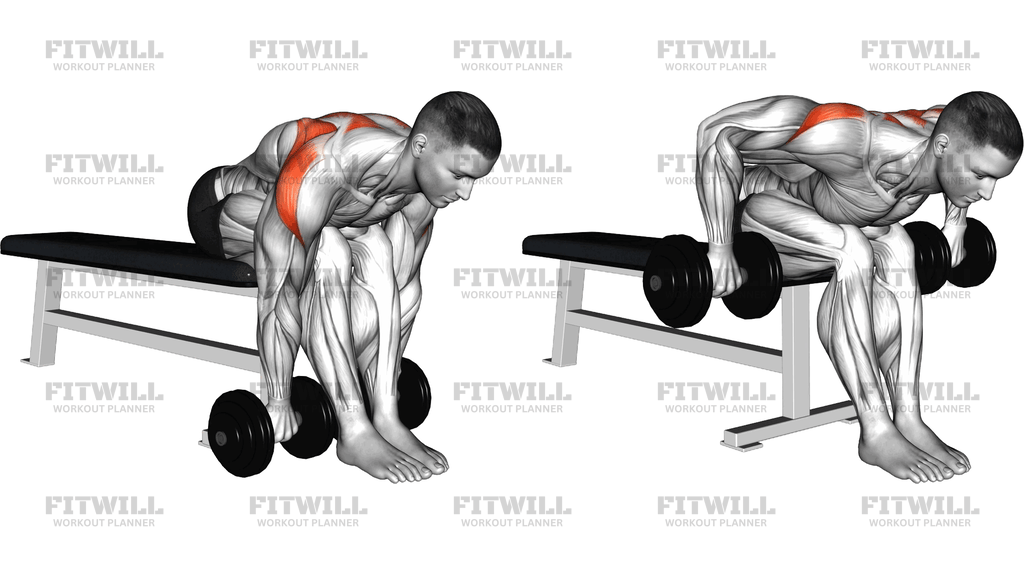
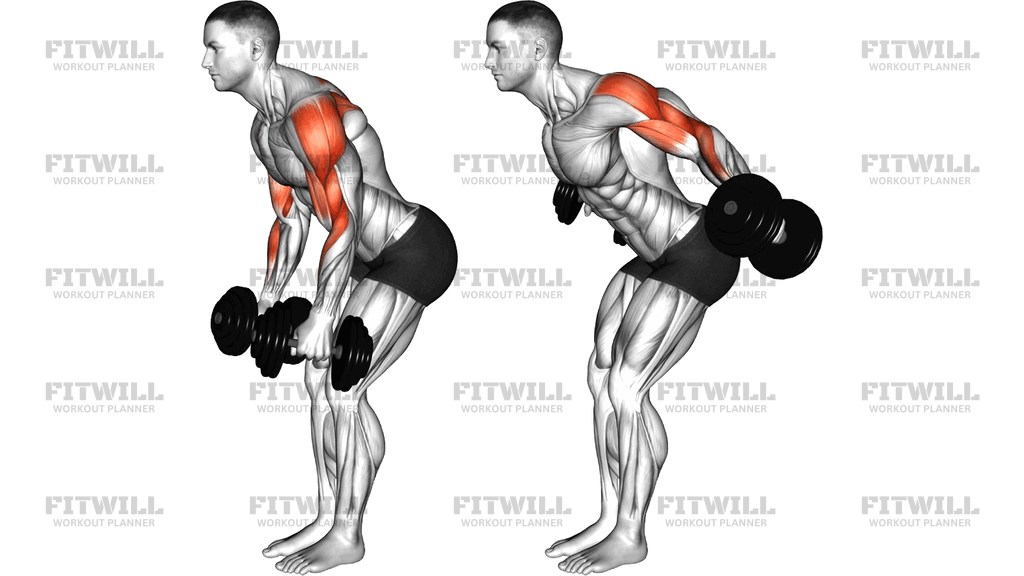
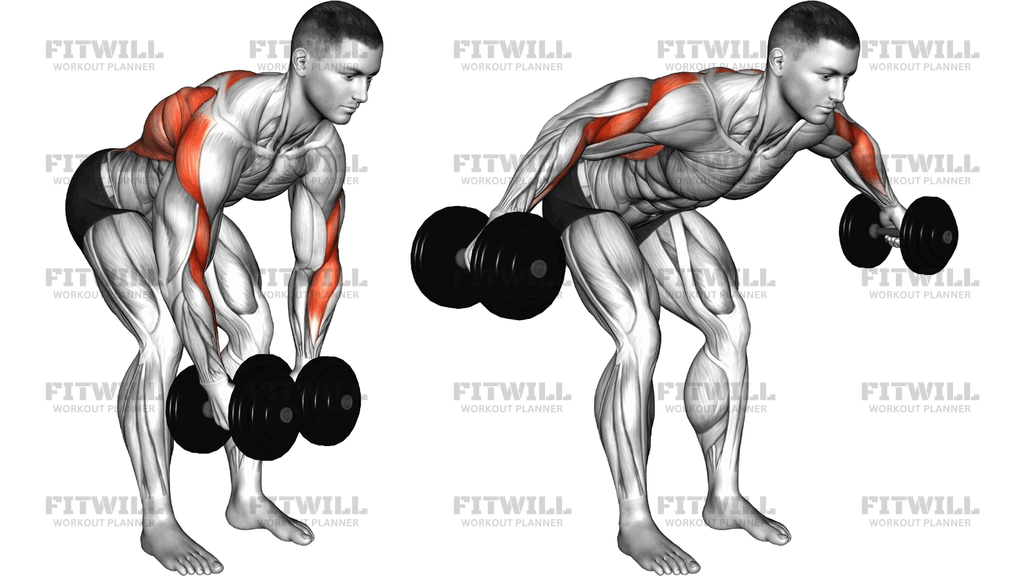
The Dumbbell Rear Delt Fly And Row is a bent-over dumbbell movement that blends two pulling patterns into one rep. You hinge forward at the hips until your torso is angled well past parallel-ish territory toward the floor, let the dumbbells hang straight down, then sweep them up and out to the sides in a wide arc until your elbows reach roughly shoulder height. Because the elbows stay flared and the weights travel outward rather than straight back, the demand lands squarely on the rear delts while the upper back handles the heavy stabilizing work.
This exercise earns its place in a program for a simple reason: the rear delts and the muscles between the shoulder blades are the most commonly undertrained area on the upper body. Most pressing and front-facing work leaves them behind, and that imbalance shows up as rounded shoulders and cranky shoulder mechanics over time. Anyone who benches or presses regularly, sits at a desk all day, or wants visibly developed shoulders from every angle will get real mileage out of this pattern.
The setup is what makes or breaks it. The hinge has to come from the hips with a braced, neutral spine, not a rounded lower back, because your torso will be held in that position for the entire set. Your knees stay softly bent, your neck stays in line with your spine, and the dumbbells hang directly under your shoulders with a neutral grip. From there, the rep is an arc, not a shrug and not a cheat-swing: lead with the elbows, let the weights follow, and stop when your upper arms are level with your back.
The "fly and row" character of the movement means you can think of it as a wide-elbow row that finishes like a rear delt fly. The dumbbells travel out and up along a slight arc rather than being dragged straight up alongside your ribs, which is what separates this from a standard bent-over row. That wider path shortens the leverage slightly, so expect to use lighter dumbbells than you would for a conventional row.
A practical starting point is two to four sets of 10 to 15 reps with a weight you can lower slowly. This movement punishes ego lifting more than most, because once the torso starts rocking, the rear delts stop working and momentum takes over. Pair it with rows or pull-ups in the same session, or use it as a finisher when the upper back is already warmed up and you just want to flood the rear delts with focused work.
[ Workout Log & Planner ]
Put your next workout in Fitwill
Keep your plan and training log ready when you are.


Instructions
- Hold a dumbbell in each hand with a neutral grip, palms facing your body, and stand with your feet about hip-width apart.
- Hinge forward at the hips, pushing them back and letting your torso lower until it is angled well toward the floor, with a slight bend in both knees.
- Brace your core and lock in a neutral spine, then let the dumbbells hang straight down beneath your shoulders with your arms fully extended.
- Draw your shoulder blades back slightly to set the upper back before the first rep begins.
- Exhale and pull the dumbbells up and out to the sides in a wide arc, leading with your elbows so they flare outward rather than staying tucked.
- Continue the arc until your upper arms are roughly level with your torso and the dumbbells are near shoulder height, then pause briefly at the top.
- Inhale and lower the dumbbells back down along the same wide path under control until your arms are fully extended again.
- Keep your torso and head completely still throughout the set; if your chest starts rising as you pull, the weight is too heavy.
- Complete all reps in one continuous hinge, then stand up by driving your hips forward and set the dumbbells down with a flat back.
Tips & Tricks
- The most common failure point is turning this into an upright row by letting the torso rise as the dumbbells come up. Film yourself from the side once; if your chest angle changes during the rep, drop the weight.
- Think "elbows wide, weights heavy" at the top. If you cue pulling with your hands, your biceps take over and the rear delt fly portion of the movement disappears.
- A slight bend in the elbows is correct, but if your arms are bending and straightening rep after rep, the set has drifted into a curl. Lock in your elbow angle before the first rep and keep it there.
- Squeeze the dumbbells firmly. A loose grip on this movement lets the wrists drift back and turns a clean shoulder arc into a sloppy swing.
- Do not chase height. Once your elbows pass shoulder level, the traps and momentum hijack the rep; level with your back is the honest end point.
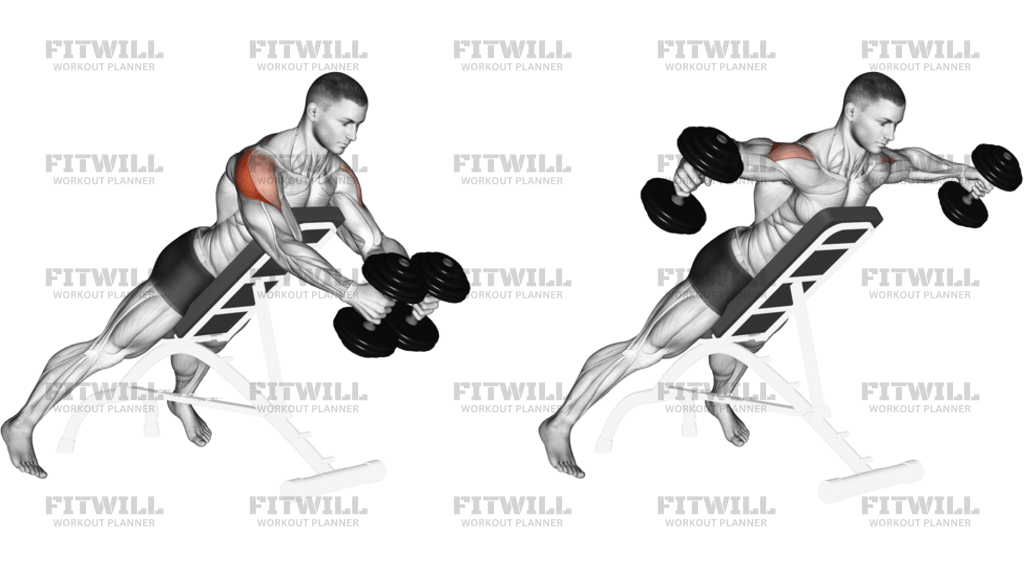
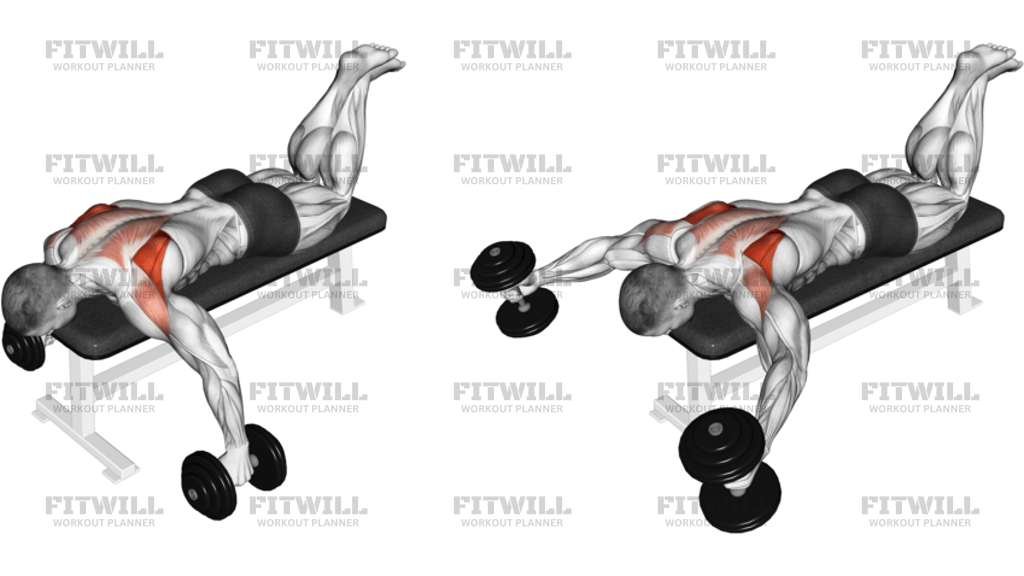
- If your lower back fatigues before your shoulders, place your forehead and chest against an incline bench set low, or perform the movement seated at the end of a bench, bent over your thighs.
- Keep your neck long by looking at a spot on the floor a foot or two in front of you. Craning up to watch a mirror rounds the hinge into a hunch.
- Use a two-second lowering phase. The eccentric is where the rear delts get the most out of this movement, and it is also what stops the dumbbells from dangling into a dead hang between reps.
Frequently Asked Questions
Which muscles does the Dumbbell Rear Delt Fly And Row work?
The primary movers are the rear delts, with the middle traps and rhomboids working hard to control the shoulder blades. The biceps assist on the pull, and the lower back and core hold your hinged torso position for the whole set.
How is the Dumbbell Rear Delt Fly And Row different from a regular bent-over row?
In a bent-over row the elbows stay close to your sides and the dumbbells travel up along your ribs, emphasizing the lats and mid-back. Here the elbows flare wide and the weights arc out to the sides, shifting the work to the rear delts.
Can beginners do the Dumbbell Rear Delt Fly And Row?
Yes, as long as they can hold a hip hinge comfortably. Start with very light dumbbells for 10 to 12 reps, and consider practicing the hinge position without weight until the bent-over setup feels stable.
Why is my lower back sore after doing this exercise?
Your spinal erectors are working isometrically to hold your torso in the hinge, so some fatigue there is normal. Sharp discomfort or a back that gives out before your shoulders means the hinge is breaking down or the weight is too heavy.
What weight should I use for the Dumbbell Rear Delt Fly And Row?
Choose dumbbells noticeably lighter than your bent-over row weight, since the wide elbow path shortens your leverage. If you cannot pause for a beat at the top or lower the weights slowly, go lighter.
How many reps and sets should I do?
Two to four sets of 10 to 15 reps works well, since the rear delts respond to moderate loads and controlled tempo. Keep at least one or two reps in reserve rather than training to a grinding failure.
Can I do the Dumbbell Rear Delt Fly And Row with chest support on a bench?
Yes. Lying chest-down on an incline bench removes the lower back and core demands entirely, which makes it a good option if your hinge fatigues first or you want to isolate the rear delts completely.
What can I substitute if I do not have dumbbells?
A bent-over rear delt fly with resistance bands, a reverse pec deck machine, or cable rear delt flyes all train the same pattern. The dumbbell version is simply the most accessible option in most gyms.
Should my palms face each other or face backward during the movement?
Start with a neutral grip, palms facing your body, as the dumbbells hang down. The grip will rotate naturally as your elbows rise, and forcing any other hand position usually just strains the wrists.