Cable Bent Over Overhand Grip Rear Delt Fly
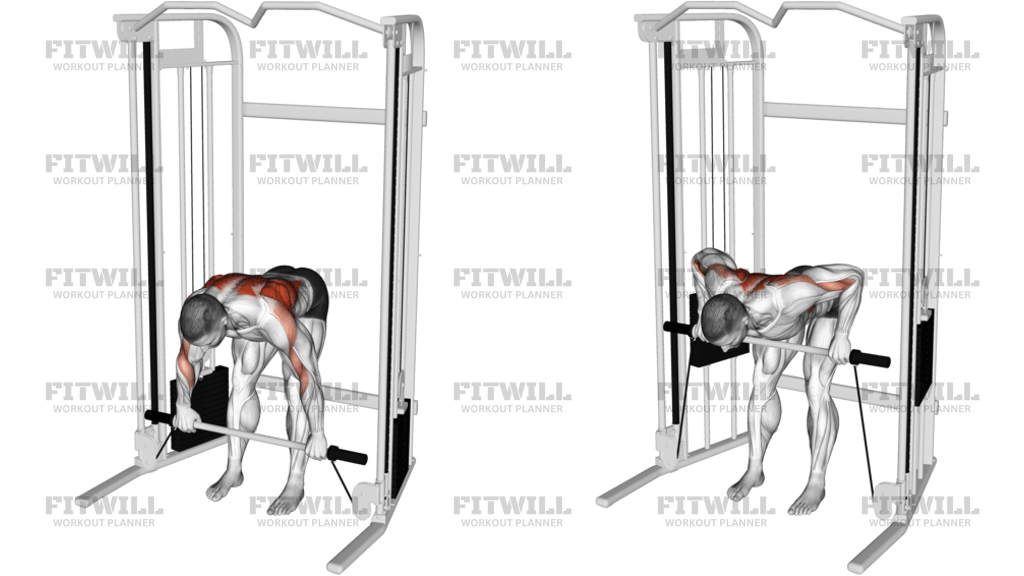
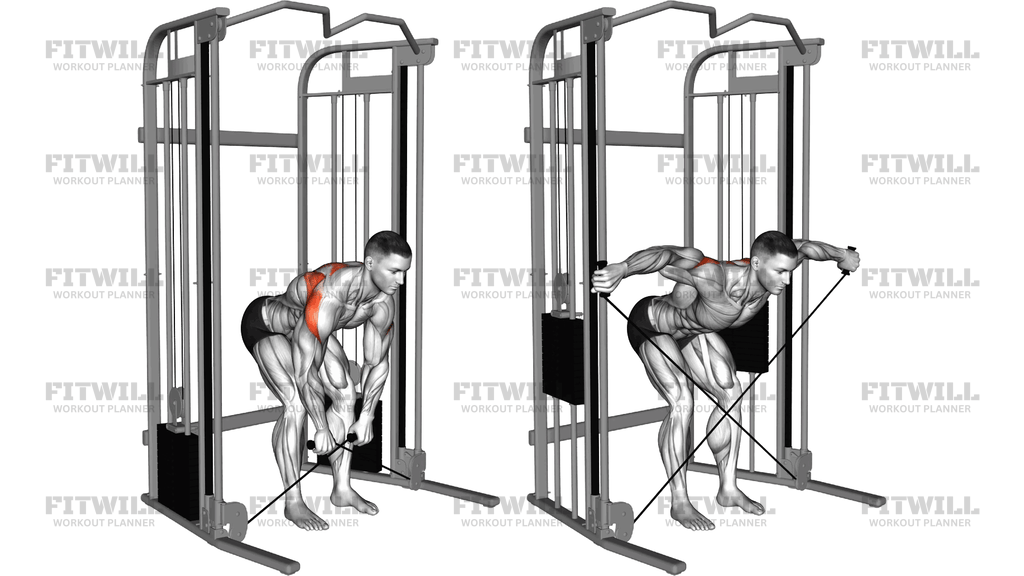
The Cable Bent Over Overhand Grip Rear Delt Fly is a cable-based isolation exercise that targets the rear deltoids, the muscles on the back of the shoulders that most pressing and pulling routines leave undertrained. You set both pulleys of a dual-cable station to the low position, grab the opposite handle so the cables cross underneath you, then hinge forward at the hips and sweep your arms up and out to the sides until they reach roughly shoulder height. Because the resistance comes from cables that cross behind your body, the tension on the rear delts stays smooth and continuous through the entire arc, including the top of the rep where dumbbell rear delt flies tend to lose it.
This movement is especially useful for anyone whose training is heavy on bench presses, push-ups, and overhead pressing. The front and middle delts get plenty of work from those lifts, while the rear delts often lag behind, which can contribute to rounded shoulders and an unbalanced look. Adding this exercise two to three times per week helps fill that gap, and it also serves lifters who want stronger, more stable shoulders for rows, pull-ups, and overhead work.
The overhand grip and the crossed-cable setup matter more than they might seem. Holding each handle in the opposite hand means the cable pulls diagonally across your body, so when you raise your arms out to the sides, the resistance line matches the rear delt's natural pulling direction. The overhand (palms-down) grip keeps the elbows slightly soft and discourages biceps from taking over, letting the shoulder blades' retractors and the rear delts do the work.
Execution quality comes down to torso position and intent. Hinge forward until your torso is close to parallel with the floor or angled slightly higher if that feels better on your lower back, brace your core, and keep your spine long rather than rounded. From there, lead with the elbows and think about pushing your hands wide apart rather than pulling them back. The arms should stay mostly straight with just a small bend at the elbows, moving in a wide arc, not a rowing path toward the hips.
You will see this exercise in shoulder days, upper-body pull sessions, and bodybuilding programs aimed at detail and balance. Because the cables provide constant tension and the weight stack allows small, precise jumps, it suits both beginners learning to feel their rear delts and advanced lifters finishing a shoulder session with focused volume. Start light, control the return, and let the rear delts, not momentum, move the weight.
[ Workout Log & Planner ]
Put your next workout in Fitwill
Keep your plan and training log ready when you are.


Instructions
- Set both pulleys of a dual-cable station to the lowest position and attach a single handle to each cable.
- Stand centered between the pulleys, take the right-side handle in your left hand and the left-side handle in your right hand so the cables cross under your legs.
- Step back slightly so the weight stacks lift the cable slack off, then hinge forward at the hips until your torso is angled between 45 degrees and parallel to the floor, with soft knees and a flat back.
- Let your arms hang down in front of you toward the pulleys, palms facing down in an overhand grip, with a small bend in the elbows.
- Brace your core and squeeze your glutes to lock your torso in place before the first rep.
- Exhale and raise both arms out to the sides in a wide arc, leading with the elbows, until your hands reach about shoulder height.
- Pause briefly at the top and squeeze your rear delts and the muscles between your shoulder blades.
- Inhale and lower your arms slowly back down along the same wide path, resisting the cables as they return toward the pulleys.
- Complete your reps, then stand up tall and release the handles one at a time, keeping hold of the other cable's tension until both are safely set down.
Tips & Tricks
- If your lower back fatigues before your shoulders do, raise your torso to a 45-degree angle instead of going fully parallel, or rest one hand on a bench for support while you set up.
- A common mistake is turning the fly into a row. If your hands drift back toward your hips, the lats and traps take over; think about sweeping your arms out wide, not pulling them back.
- Keep the elbow bend fixed. Straightening your arms as you lift or bending them more mid-rep turns the movement into a press or row and steals work from the rear delts.
- Use much less weight than you think you need. Rear delt flyes with crossed cables are mechanical disadvantages for the shoulders, and heavy loads almost always turn the set into a body-swinging row.
- Stop the lift at shoulder height. Raising your hands higher tends to shift work to the upper traps and compresses the shoulder area at the top.
- Avoid rounding your upper back as you hinge. A long, neutral spine keeps the shoulder blades free to move, which is what the rear delts need to do their job.
- Do not let the cables rest slack between reps. Staying under tension from the first inch to the last is the whole reason to use the cable setup here.
- Try a slight thumb-down tilt of the hands at the top if you want a stronger squeeze, but stop immediately if you feel any pinching at the front of the shoulder.
- Crossing the cables means each arm works against the opposite stack, so if one side feels weaker, check that you are not leaning or rotating toward one pulley to help it along.
Frequently Asked Questions
What muscles does the Cable Bent Over Overhand Grip Rear Delt Fly work?
The rear deltoids are the primary movers, with the middle traps and rhomboids assisting as your shoulder blades come together. Your lower back and core work isometrically to hold the bent-over position.
Why do the cables need to cross in this exercise?
Grabbing the opposite handles makes each cable pull diagonally across your body, which lines the resistance up with the rear delts' natural line of pull. It also adds tension at the start of the rep, when the rear delts are stretched and weakest.
Is this exercise suitable for beginners?
Yes, as long as you start with a light weight and focus on the wide, controlled arc rather than the number on the stack. The cable setup is actually forgiving for beginners because tension is smooth and the path is guided by the pulleys.
How is this different from a dumbbell rear delt fly?
Dumbbells pull straight down, so tension drops off when your arms are lowered. The crossed cables keep steady resistance through the whole range and pull from slightly behind you, which many lifters find gives a stronger rear delt contraction.
My hands drift backward and it feels like a row. What am I doing wrong?
You are probably using too much weight or pulling with your elbows instead of leading them out wide. Reduce the load and cue yourself to push your hands apart to the sides, stopping at shoulder height, rather than dragging them behind your body.
Can I substitute a resistance band for the cables?
Yes. Anchor a band low on each side, cross it under your feet, and mirror the same bent-over, wide-arc motion. You lose the adjustable weight stack but keep the crossed-line resistance pattern.
Where should the pulleys be set for the Cable Bent Over Overhand Grip Rear Delt Fly?
Set both pulleys to the lowest position on the tower. This makes the cables run along the floor and up past your legs, creating the upward-outward arc the rear delts need.
How many reps and sets should I do?
Two to four sets of 12 to 20 reps works well, since this is a small muscle group that responds better to controlled higher-rep work than to heavy grinding sets. Keep rest periods short, around 45 to 60 seconds.
Is it safe if I have lower back discomfort when bending over?
Reduce the hinge to about 45 degrees, keep your knees bent, and brace your core firmly throughout the set. If discomfort persists, a supported version done chest-down on an incline bench is a reasonable alternative, and you should not work through sharp pain.
Should my palms face down the whole time?
Yes, the overhand grip is what defines this variation and keeps the elbows soft without the biceps contributing much. Rotating your palms as you lift shifts emphasis and turns the movement into something closer to a face pull or reverse fly with external rotation.