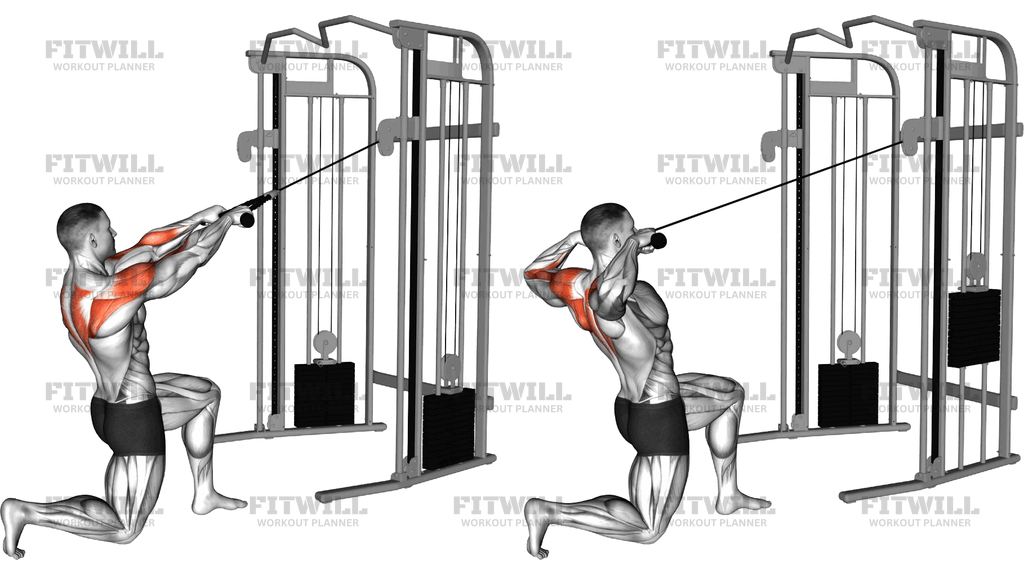
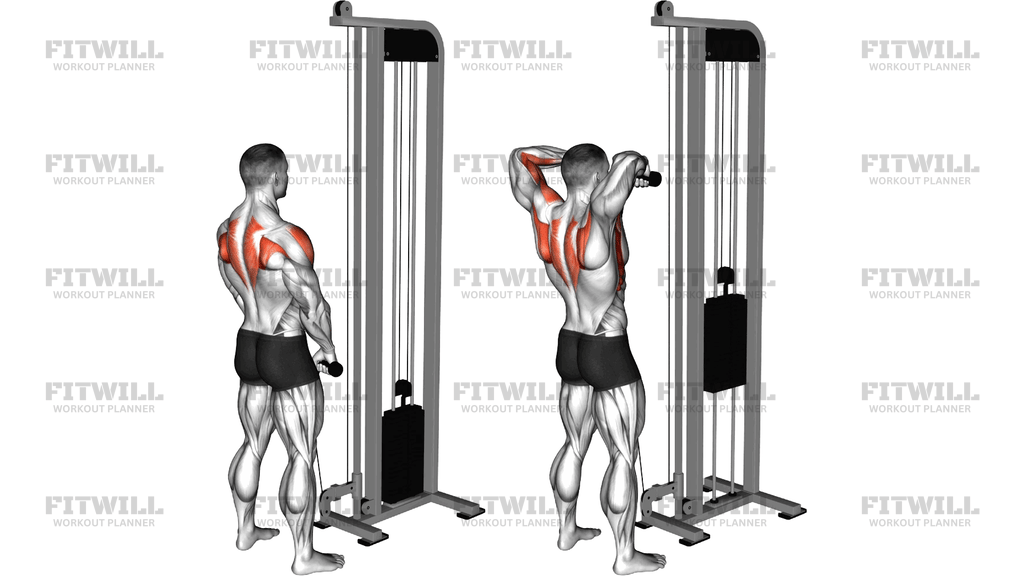
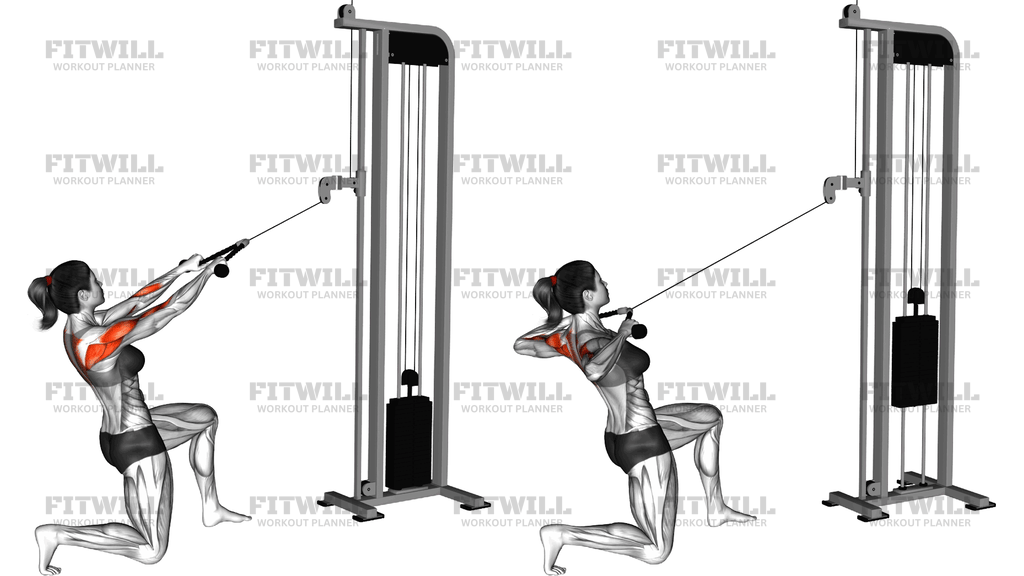
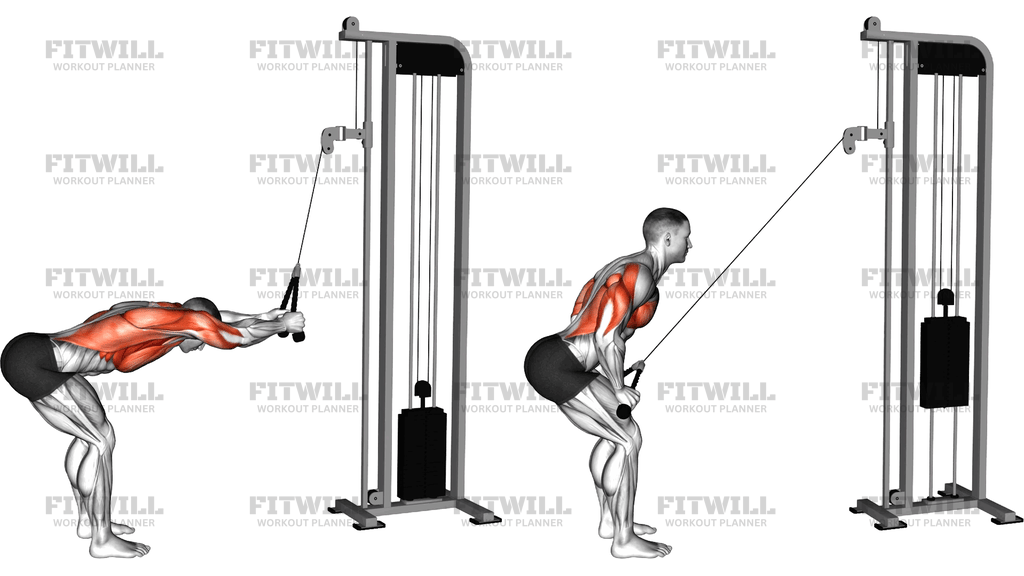
Cable Upright Row (Rope Attachment)
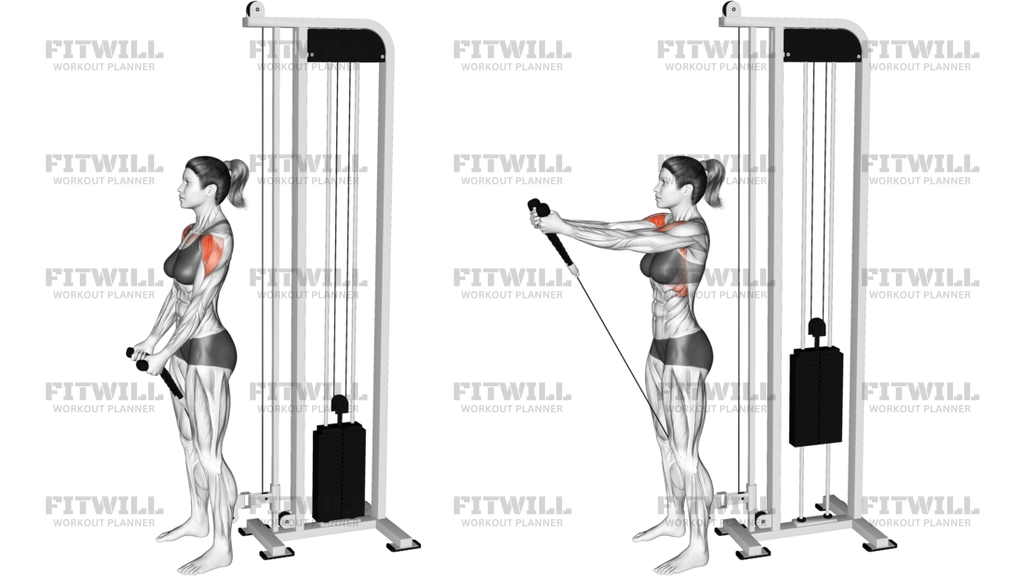
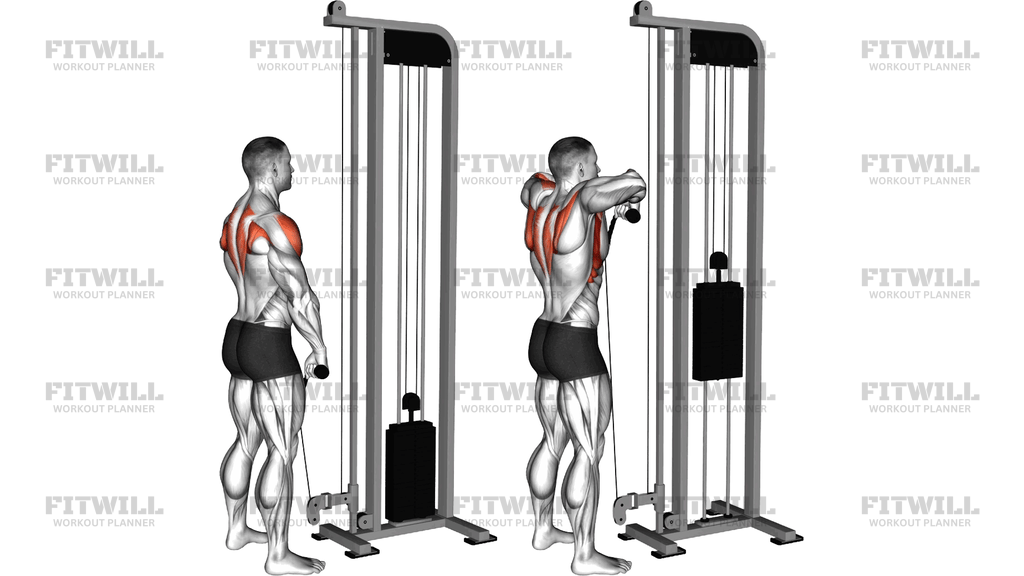
The Cable Upright Row (Rope Attachment) is a vertical pulling exercise performed at a cable station with a rope handle clipped to the low pulley. You stand facing the machine, hold the two ends of the rope with a neutral grip, and pull upward along the front of your body until your elbows finish above shoulder height. The cable's continuous tension makes this version noticeably smoother than a barbell upright row, because the resistance follows a consistent line and the rope lets your wrists move freely instead of being locked into a fixed bar path.
This movement primarily targets the upper trapezius and the side deltoids, with the middle traps and rhomboids contributing as the shoulder blades rise at the top. The biceps assist as elbow flexors, which is why you'll often feel them working even when the intent is shoulder-focused. Compared to the straight bar version, the rope attachment lets you split the hands slightly and rotate the grip naturally at the top, which many lifters find friendlier to the shoulder joints.
The setup matters more than people expect. Because the rope hangs from a low pulley, your distance from the machine determines the pull angle. Standing too far back turns the movement into more of a front raise, while crowding the pulley changes the resistance vector at the top. Position yourself so the cable runs close to your body throughout the pull, and keep your torso upright with a slight lean permitted as the weight gets heavier.
Execution should feel like a pull, not a shrug-and-swing. Drive the elbows up and out, letting the wrists stay relaxed so the rope ends track near your chest. The end position has your elbows high and slightly wider than your hands, upper arms roughly parallel to the floor or a bit higher. Lower the rope under control rather than letting the stack yank your arms back down, since the eccentric half still trains the traps and delts.
The Cable Upright Row (Rope Attachment) fits well into shoulder days as a secondary movement after pressing, or into pull-focused sessions where you want extra trap work without loading the spine. It is commonly used in hypertrophy programs for 8 to 15 reps per set. Keep the loads moderate; this is an exercise where a little weight performed with clean elbow travel builds more shoulder width and trap thickness than a heavy, jerky pull ever will.
[ Workout Log & Planner ]
Put your next workout in Fitwill
Keep your plan and training log ready when you are.


Instructions
- Clip a rope attachment to the low pulley of a cable machine and select a moderate weight that lets you pull with strict form.
- Stand facing the machine with your feet about hip-width apart, close enough that the cable runs near the front of your body, and grab one rope end in each hand using a neutral grip with your thumbs pointing up.
- Let your arms hang straight down toward the pulley, then brace your core, pull your shoulders back slightly, and keep your chest tall without arching your lower back.
- Lead the pull with your elbows, driving them up and out to the sides so the rope ends travel up along the front of your torso toward your chest.
- Keep your wrists loose and let them bend naturally as the rope rises; avoid straightening your arms into a rigid bar-like position.
- Finish with your elbows at or just above shoulder height and slightly higher than your hands, feeling the squeeze across your upper traps and side delts.
- Pause briefly at the top, then lower the rope slowly and under control until your arms are fully extended again and the tension stays on the cable.
- Exhale as you pull up and inhale as you lower the weight back to the start.
- Complete your reps, then set the rope down or let the stack settle gently before stepping away from the machine.
Tips & Tricks
- If your wrists feel pinched at the top, that is the biggest advantage of the rope over a straight bar—let the ends rotate inward as you pull instead of forcing a rigid grip.
- Pulling the rope with your hands instead of your elbows turns this into a biceps curl with a shrug attached. Cue yourself to think 'elbows to the ceiling' so the shoulders and traps do the work.
- Stopping the pull at chest height robs the side delts of the hardest part of the range. Only go as heavy as you can while still getting the elbows above the shoulders.
- A jerky start usually means the weight is too heavy or you're standing too far from the pulley, which puts slack in the cable at the bottom. Step closer and drop a plate if the first inch feels like a yank.
- Keep your torso still. Rocking your hips to launch the rope turns it into a full-body heave and dilutes the trap and delt work you came for.
- Shrugging your shoulders up toward your ears before the elbows move shortens the trap range. Let the elbow drive lead and the shrug happens as a natural finish, not the whole movement.
- Because the cable pulls slightly forward from the low pulley, keep tension on the traps by not letting your arms swing fully forward on the way down.
- The rope lets you vary hand separation slightly rep to rep; a slightly wider split of the hands tends to feel better for lifters with cranky shoulders.
- Higher reps in the 10 to 15 range suit this exercise well, since the muscle groups involved respond to time under tension and heavier loads tend to degrade the elbow path quickly.
Frequently Asked Questions
What muscles does the Cable Upright Row (Rope Attachment) work?
The primary movers are the upper trapezius and the side deltoids, with the middle traps and rhomboids assisting as the shoulder blades elevate. The biceps help flex the elbows, so you'll feel them working as supporting muscles.
Why use a rope attachment instead of a straight bar for upright rows?
The rope lets each hand move independently and rotate into a neutral grip, which reduces the forced internal rotation a fixed bar can create at the top of the pull. Many lifters find it more comfortable on the shoulder joints while still loading the traps and delts effectively.
How high should my elbows go on the Cable Upright Row (Rope Attachment)?
Pull until your elbows reach at least shoulder height and sit slightly above your hands. Going higher emphasizes the upper traps more, while stopping at chest height shifts work toward the side delts and biceps.
Is the Cable Upright Row (Rope Attachment) safe for people with shoulder pain?
The neutral rope grip and free wrist path make this one of the more shoulder-friendly upright row variations, but discomfort is still a signal to stop. Shortening the range so the elbows stop at mid-chest often keeps the movement comfortable; persistent pain should be checked by a professional.
How far from the cable machine should I stand?
Stand close enough that the cable stays near the front of your body through the whole pull, usually within a foot of the pulley. Too much distance tilts the resistance forward and changes the exercise into more of a front raise.
Can beginners do the Cable Upright Row (Rope Attachment)?
Yes, and the cable setup is actually a good place to learn the pattern because the rope guides the path and the weight stack is easy to adjust. Start light, focus on leading with the elbows, and build control before adding load.
What is the most common mistake with this exercise?
Using too much weight and turning the pull into a body-swinging heave led by the hands. The fix is a lighter load, a braced torso, and consciously driving the elbows up and out while the wrists stay relaxed.
What can I substitute if I don't have a cable machine?
A barbell or dumbbell upright row is the closest alternative, and a resistance band anchored low can also work if you pull the ends upward the same way. The rope version's advantage is the free-moving wrists, so dumbbells are the next best option for neutral grip.
Where should the Cable Upright Row (Rope Attachment) fit in my workout?
It works best as a secondary movement after your main presses or pulls, typically for 3 to 4 sets of 10 to 15 reps. Because the traps and side delts are smaller muscle groups, it's more effective as a controlled accessory than a heavy lift.
Should I shrug at the top of the pull?
A small, natural shrug at the end of the pull is fine and adds upper trap involvement, but it should happen after the elbows have reached shoulder height. Leading with a shrug shortens the delt range and turns the set into a partial movement.