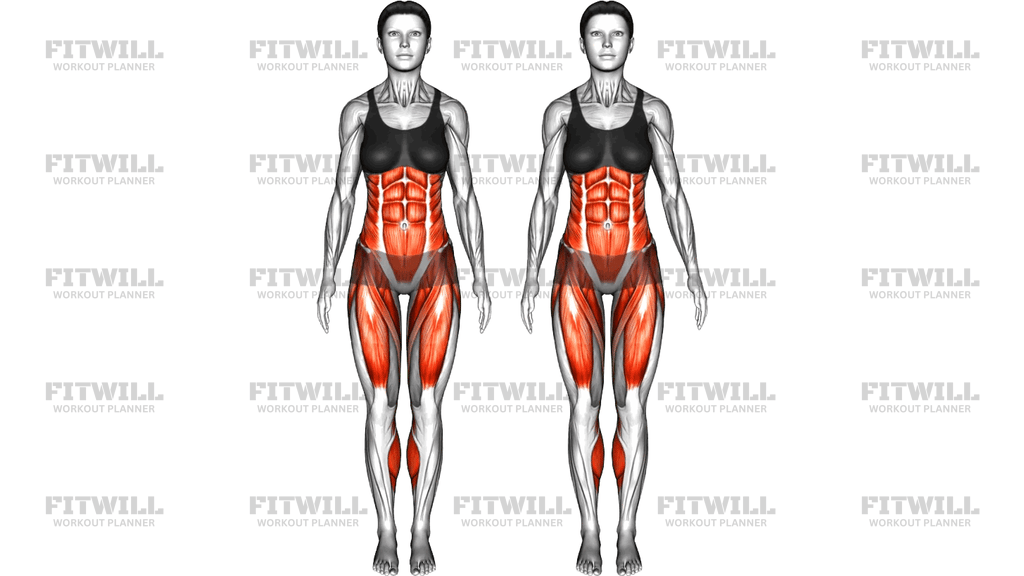
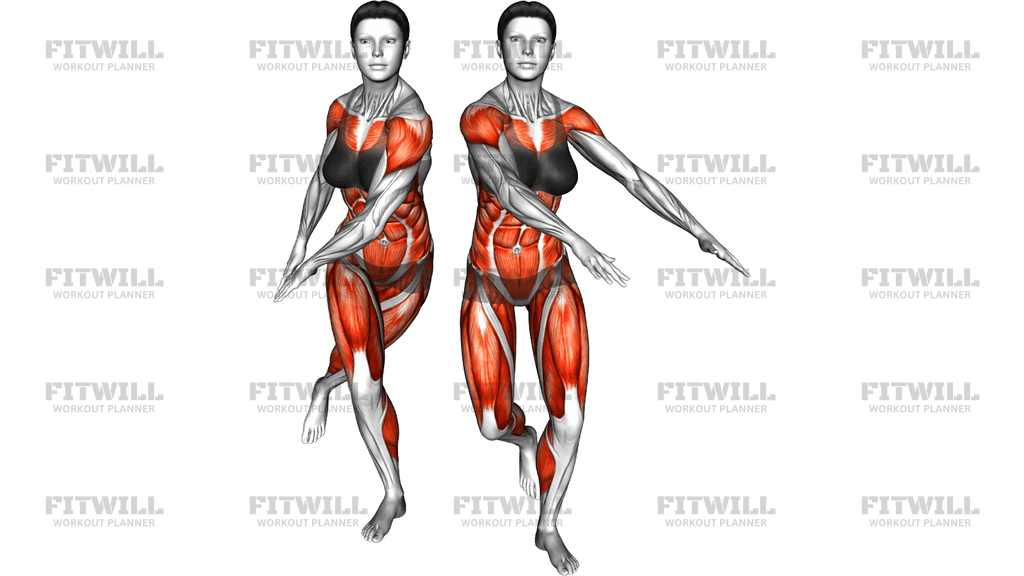
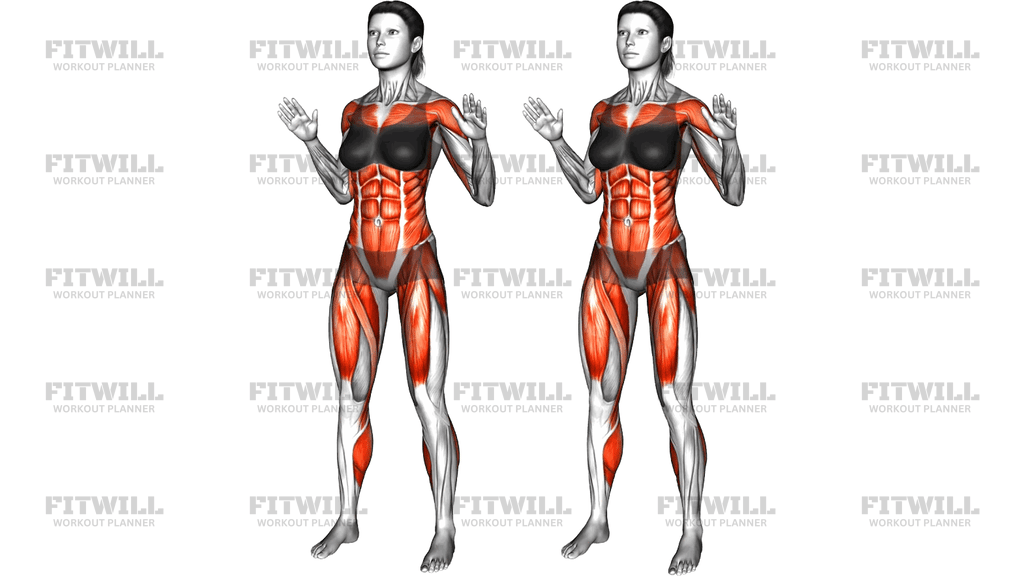
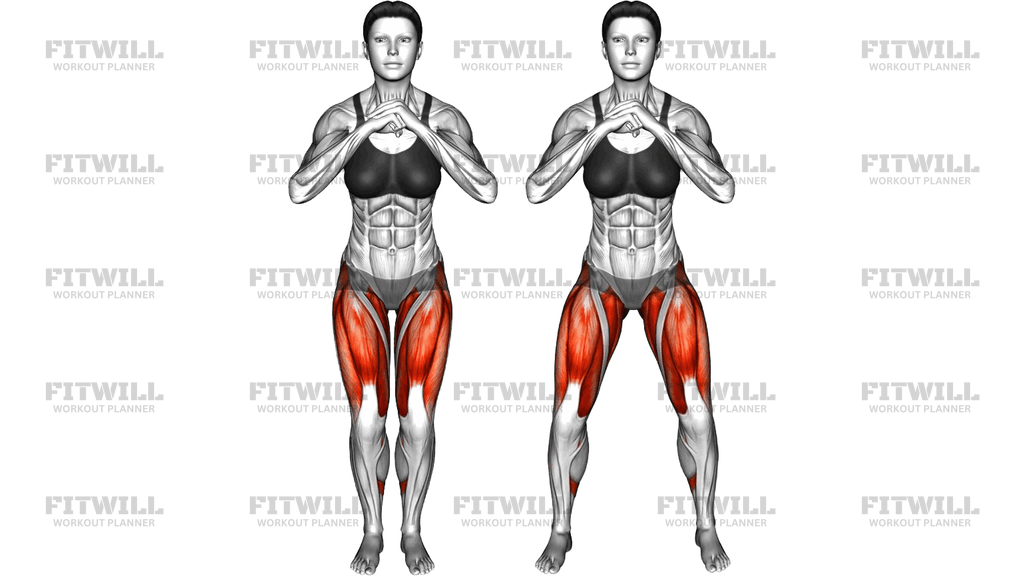
Standing Alternating Knee Extension
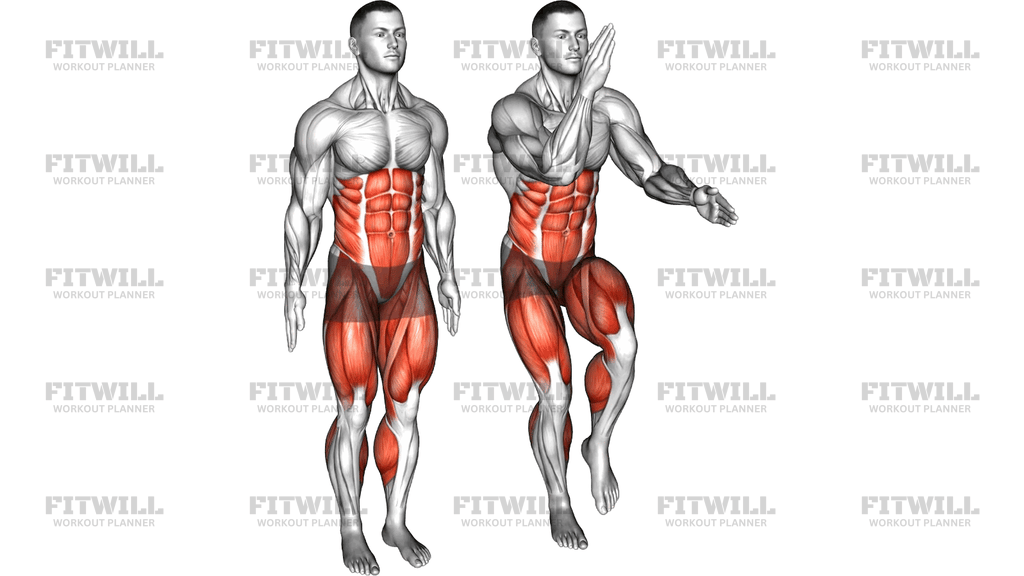
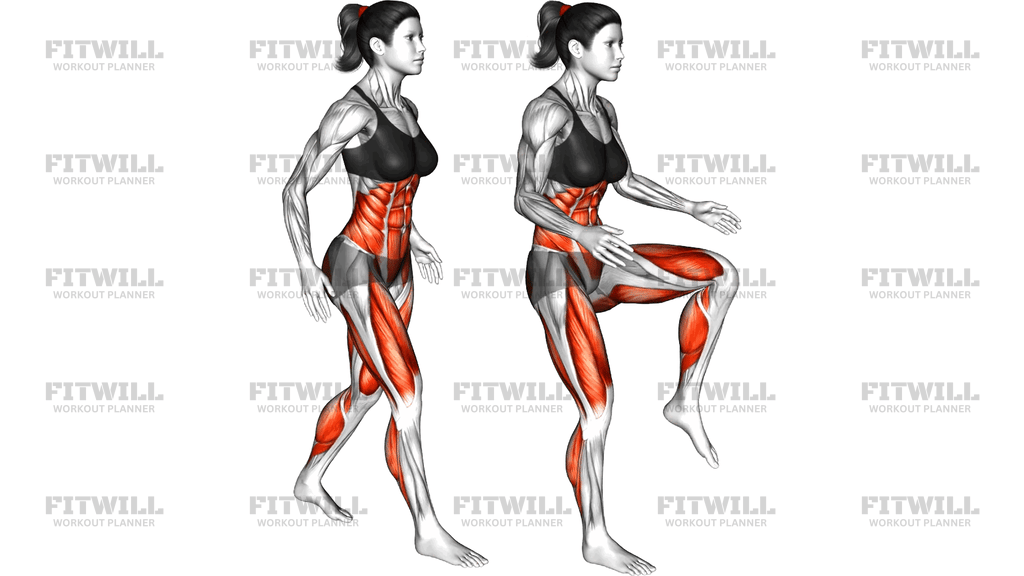
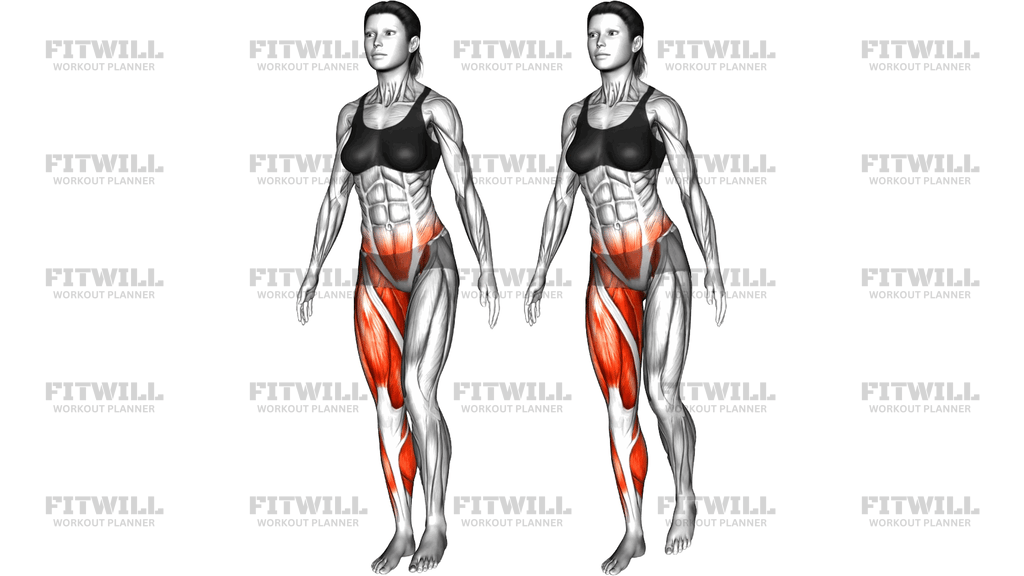
The Standing Alternating Knee Extension is a body weight movement performed from an upright stance. From standing tall with your hands resting on your hips, you lift one knee up in front of your body to roughly hip height, then straighten that knee so the lower leg reaches forward, before bending the knee again and lowering the foot back to the floor. You then repeat the same lift-and-extend sequence on the other leg, alternating sides for the duration of the set.
This movement works two jobs at once. Extending the knee against gravity loads the quadriceps, while lifting the thigh drives the hip flexors at the front of the hip. Because you balance on one leg during every repetition, the standing glute and the deep trunk muscles also work to keep your torso upright and your pelvis level. The hands-on-hips position in the setup makes any sway or hip drop easy to feel, which is part of why this exercise doubles as a balance drill.
The setup matters more than it looks. A tall stance with the ribs stacked over the pelvis keeps the work in the hip and thigh instead of letting the lower back arch or the torso collapse forward as the knee comes up. Moving the knee and lower leg in a smooth, forward path rather than swinging the leg out to the side keeps tension on the quads and hip flexors and protects the standing knee from twisting.
This exercise suits warm-ups, active recovery days, and home routines where no equipment is available. It is also a practical choice for older trainees or beginners rebuilding single-leg stability, since the range and speed are easy to regulate. More advanced lifters often use it as a low-fatigue activation drill before squats or lunges, or as a high-repetition finisher for the hips and thighs.
To execute it well, lift the knee deliberately rather than quickly, pause briefly with the thigh parallel to the floor, then extend the lower leg until the knee is nearly straight before returning the foot under control. Keep your breathing steady and your gaze fixed on a point ahead of you to help with balance. If you wobble at first, that is normal; slow the tempo down and the stability will come quickly.
The main safety points are simple. Avoid locking or snapping the knee into full extension, keep the standing leg softly bent rather than rigid, and stop the set when your balance starts to break down rather than pushing through sloppy reps. Because the demand is modest and no external load is involved, most people can train this movement several times per week without issue.
Fitwill
Log Workouts, Track Progress & Build Strength.
Achieve more with Fitwill: explore over 9600 exercises with images and videos, access built-in and custom workouts, perfect for both gym and home sessions, and see real results.
Start your journey. Download today!




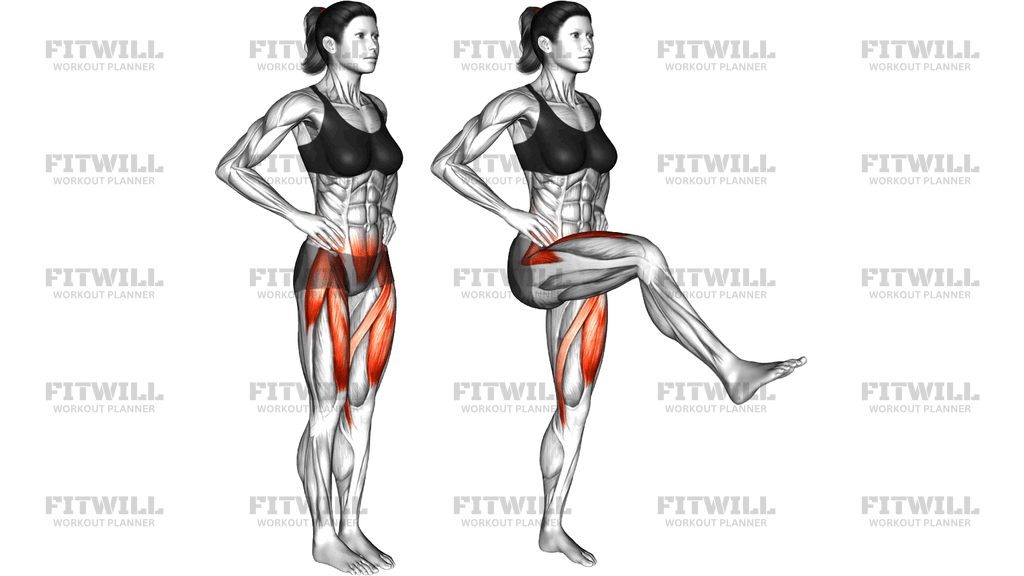
Instructions
- Stand tall with your feet hip-width apart and place your hands lightly on your hips, elbows out to the sides.
- Shift your weight onto one leg and keep a soft, slightly bent knee on that standing leg.
- Brace your abdominal muscles and stack your ribs over your pelvis so your torso stays upright.
- Lift your other knee up in front of you until your thigh is roughly parallel to the floor.
- From that raised position, straighten your knee so your lower leg reaches forward until the leg is nearly extended.
- Bend the knee again to draw your foot back in, then lower it to the floor with control.
- Exhale as you lift and extend the knee, and inhale as you lower the foot back down.
- Repeat the same lift-and-extend sequence on the opposite leg, keeping your hands on your hips throughout.
- Continue alternating legs for the planned number of repetitions per side, resetting your stance and posture whenever you feel your balance drift.
Tips & Tricks
- If your torso leans back as the knee comes up, the hip flexors are being bypassed by lower back arching; shorten the lift so your thigh stops just below parallel.
- Do not let the foot tap down hard between reps; a light, controlled touch keeps the standing leg and hip engaged the entire set.
- Fix your eyes on a spot on the wall at eye level to reduce wobbling, since looking down at your leg makes balance noticeably harder.
- If your standing knee locks out, keep a small bend in it for the whole set; a rigid support knee is the most common fault in this movement.
- Slow the extension phase down rather than kicking the lower leg out; a two-second reach forward keeps tension on the quadriceps.
- Keep your hands on your hips instead of letting them swing, because arm swing hides how much your trunk is rotating to compensate.
- If hip height causes your lower back to arch, think about tucking the pelvis slightly under before each lift.
- Start with a shorter range and progress to a full hip-height knee lift once you can complete all reps without your hip dropping on the standing side.
Frequently Asked Questions
Which muscles does the Standing Alternating Knee Extension work?
The main work comes from the quadriceps as you straighten the knee, with strong support from the hip flexors as the thigh lifts. The standing-side glutes and deep core muscles stabilize your torso and pelvis throughout each rep.
Is the Standing Alternating Knee Extension good for beginners?
Yes, it is a low-load movement that teaches single-leg balance and hip control without any equipment. Beginners can start with a shorter knee lift and fewer reps per side and build up as balance improves.
Should my knee be fully straight at the end of the extension?
Straighten the knee until the leg is nearly extended, but avoid snapping or forcing it into a hard lockout. A controlled reach to just short of full extension keeps the quadriceps working and is easier on the joint.
Why do I lose my balance when I lift my knee in the Standing Alternating Knee Extension?
Balancing on one leg while a limb moves is genuinely demanding, so some wobble is expected at first. Slow the tempo, keep a soft bend in the standing knee, and fix your gaze on a point ahead of you to steady yourself.
Can I do the Standing Alternating Knee Extension as a warm-up?
Yes, it works well before squats, lunges, or running because it raises the heart rate lightly and activates the quads, hip flexors, and stabilizers. Two to three sets of eight to ten reps per side at a relaxed pace is enough.
What is the most common mistake in this exercise?
Leaning the torso back and arching the lower back to lift the knee higher is the most frequent fault. Keep your ribs stacked over your pelvis and lift only as high as you can without changing your posture.
How is the Standing Alternating Knee Extension different from a high-knee march?
A high-knee march stops at the lifted-knee position, while this exercise adds a deliberate extension of the lower leg before the foot returns down. That extra knee extension is what loads the quadriceps directly.
Can I hold onto something for support during the Standing Alternating Knee Extension?
Yes, resting one hand lightly on a wall or chair back is a sensible regression if your balance is limiting you. Try to keep the other hand on your hip and reduce the support over time as your stability improves.
How many repetitions of the Standing Alternating Knee Extension should I do?
For balance and muscle endurance, two to three sets of ten to fifteen controlled reps per side works well. Since the load is low, quality of movement matters far more than the total rep count.
Is it safe to do the Standing Alternating Knee Extension every day?
For most people, yes, because the movement uses body weight only and the demand on the joints is modest. If you have an existing knee or hip complaint, keep the range comfortable and check with a qualified professional before adding daily volume.