Lever Side Seated Single Arm Neutral Grip Rear De
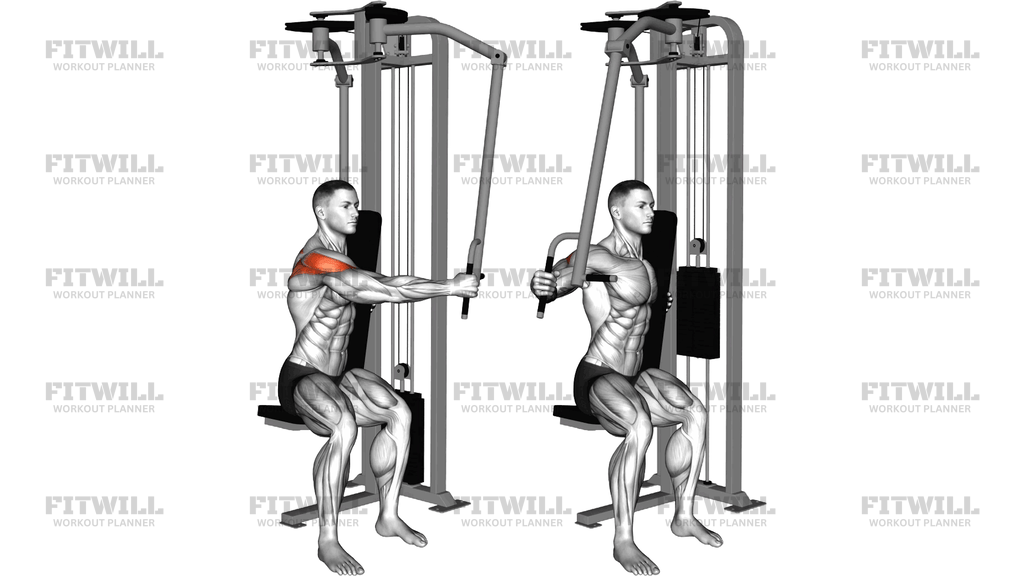
The Lever Side Seated Single Arm Neutral Grip Rear Delt Fly is a machine-based isolation movement performed on a leverage machine while seated with your back braced against an upright pad. You work one arm at a time, holding a neutral-grip handle at shoulder height, and sweep your straight arm out to the side and back in a wide horizontal arc. Because the machine handles the resistance, every bit of your attention can go into the rear delt itself rather than into stabilizing a dumbbell.
This is one of the most direct ways to load the rear deltoid, the muscle at the back of the shoulder that gets highlighted in the working arm during the movement. The rhomboids and mid-traps assist as the shoulder blade retracts late in the range, and the side delt contributes near the start of the sweep. It trains exactly the horizontal shoulder extension and abduction pattern that pull-ups, rows, and presses tend to skip.
The seated setup against the back pad matters more than it looks. Sitting upright with your chest open and your torso quiet forces the rear delt to do the moving instead of letting the torso twist or the arm drift toward the lat. The neutral grip also keeps the shoulder in a comfortable, slightly externally rotated position, which many lifters find gentler on the joint than a pronated grip. Training one arm at a time exposes left-right differences that usually hide when both arms move together.
To execute it well, sit tall on the seat with feet flat and the pad of the machine against your upper back. Grip the handle with your palm facing inward, arm extended roughly in front of your chest at shoulder height, elbow just short of locked. From there, pull the handle out and back in a smooth arc until your arm lines up with or slightly behind your shoulder line, feeling the back of your shoulder contract rather than shrugging the weight up. Pause briefly, then ride the lever back under control until the arm returns to the start.
This exercise suits lifters who want to balance out pressing volume, people rebuilding shoulder health after long stretches of desk work, and bodybuilders chasing rear delt detail that dumbbell rear delt flyes sometimes miss because of stabilization demands. Because the lever arm moves on a fixed path, it is also a good choice for beginners learning what a rear delt contraction is supposed to feel like.
Keep the weight honest. The arc is long, the lever arm gives you no mechanical advantage, and ego loading almost always turns the movement into a row or a shrug. A slow tempo with a light-to-moderate load, a deliberate pause at the back, and a controlled return will do far more for this muscle than heaving the stack.
[ Workout Log & Planner ]
Put your next workout in Fitwill
Keep your plan and training log ready when you are.


Instructions
- Adjust the seat height so that when you sit with your feet flat on the floor, your working arm lines up at shoulder height and your back rests squarely against the upright back pad.
- Select the weight on the leverage machine, then grip the handle with your palm facing inward in a neutral grip and extend your arm forward so it sits roughly in front of your chest, elbow just short of locked.
- Sit tall, pull your ribs down, and brace your trunk lightly while pressing your upper back into the pad so your torso cannot rotate during the sweep.
- Keep your non-working hand relaxed at your side or on your thigh, and level both shoulders before you start so the working side does not climb toward your ear.
- Exhale as you sweep your straight arm out to the side and back in a wide horizontal arc, leading with the elbow and keeping the arm at shoulder height the whole way.
- Finish with your arm out level with or slightly behind your shoulder line, squeezing the back of the shoulder for a count without shrugging or leaning.
- Inhale as you let the lever carry your arm forward along the same arc, resisting the weight instead of dropping it, until your arm is back in front of your chest.
- Complete all repetitions on one arm, re-grip and reset your posture, then match the reps on the other side.
Tips & Tricks
- Think of the movement as opening a heavy door sideways with a straight arm, not pulling it toward you. If your elbow bends and the handle travels back past your ribs, the lats and biceps have taken over.
- If you feel it in the front of your shoulder or the biceps instead of the rear delt, your arm is likely sitting too low. Raise the seat or reposition so the handle starts at true shoulder height.
- A creeping shrug is the most common giveaway of too much weight. If the working shoulder rides up toward your ear, drop the load and cue yourself to keep the space between ear and shoulder long.
- Because you face sideways to the machine, resist the urge to rotate your trunk backward to help the lever. Pinning your upper back into the pad is what keeps the tension on the rear delt.
- Do not fully lock the elbow at the start. A soft, almost-straight arm keeps tension continuous and protects the joint when the lever pulls the arm forward.
- The pause at the back of the arc is where most of the growth signal lives. Hold the end position for a full second before returning rather than bouncing off the stretch.
- Match reps exactly between arms and always start with your weaker side. The single-arm setup makes imbalances obvious, so use it to correct them rather than letting the strong side set the standard.
- If the machine's start position stretches your shoulder uncomfortably at the front, adjust the seat back slightly or shorten the range until the first few degrees feel smooth.
Frequently Asked Questions
Which muscles does the Lever Side Seated Single Arm Neutral Grip Rear Delt Fly work?
The rear deltoid is the primary mover, with the rhomboids and middle trapezius assisting as the shoulder blade retracts toward the end of the arc. The side delt helps early in the sweep and the forearm muscles work to hold the neutral grip.
Why does this version use a neutral grip instead of a pronated one?
The inward-facing palm keeps the shoulder slightly externally rotated, which many people find more comfortable at the joint and lets the rear delt contract through a clean arc. If a pronated grip bothers your shoulder on flyes, this grip is usually the better starting point.
Is this exercise suitable for beginners?
Yes. The fixed lever path removes the stabilization demand of a dumbbell, so a beginner can focus purely on feeling the rear delt contract. Start light, keep the torso still against the pad, and prioritize the pause over the load.
Why train one arm at a time on this machine?
Single-arm work reveals side-to-side differences in strength and control that hide when both arms move together. It also lets you set up squarely against the pad and gives each rear delt full attention without the other arm pulling you off position.
What is the most common mistake on the Lever Side Seated Single Arm Neutral Grip Rear Delt Fly?
Bending the elbow and dragging the handle back toward the torso, which turns it into a row. Keep the arm essentially straight and lead with the elbow in a wide horizontal arc so the rear delt, not the lat, does the work.
How heavy should I go on this movement?
Go lighter than you expect. The long lever arm makes moderate loads feel demanding, and once the weight gets heavy you will shrug or twist to finish the arc. Choose a load you can pause at the back for a full second on every rep.
Where should my arm finish at the end of each rep?
Aim for your arm level with or just slightly behind your shoulder line, out to the side of your body. Pulling much farther back usually recruits the lats and pulls the shoulder blade out of position.
Can I substitute dumbbells if my gym has no leverage machine?
Yes, a bent-over or chest-supported single-arm dumbbell rear delt fly with a neutral palm covers a similar pattern. You will need more trunk and stabilizer control, so start with lighter dumbbells than the machine weight suggests.
How many sets and reps should I use?
Two to four sets of 10 to 15 controlled reps per arm works well for most goals, since the rear delt responds to time under tension. Rest briefly between sides so the second arm gets the same quality of effort.
Is it safe for my shoulder if I feel pinching at the start position?
Mild discomfort at the far forward stretch is a signal to adjust, not push through. Raise or lower the seat so the handle starts at shoulder height, slightly soften the elbow, and shorten the range until the first few degrees of the arc feel smooth and pain-free.