Suspension Jump Squat
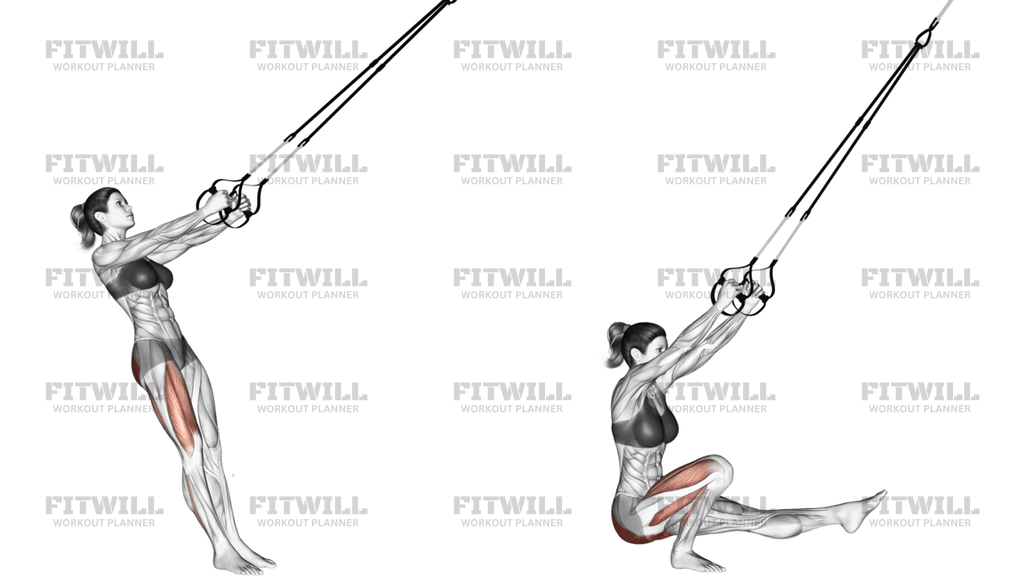
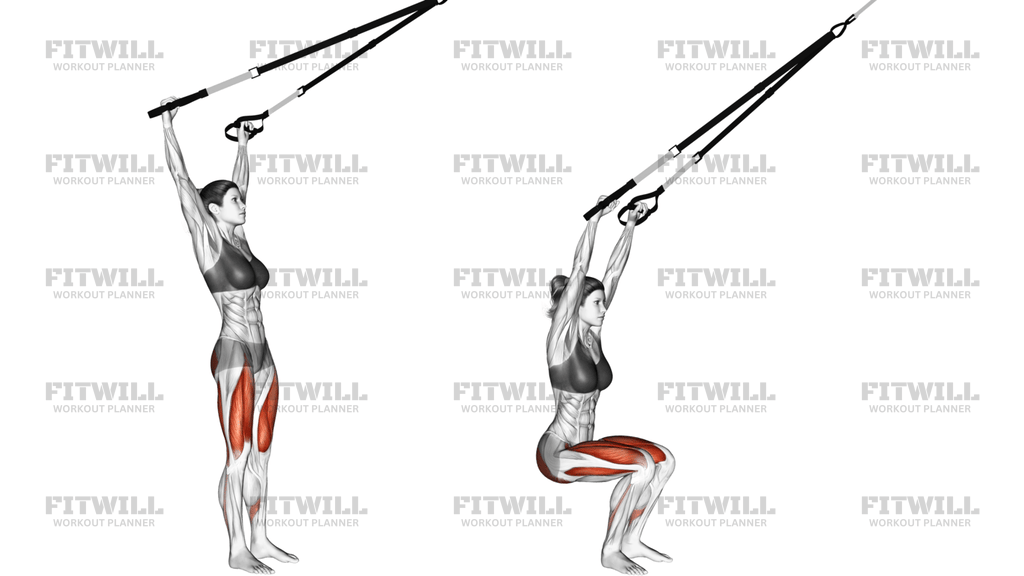
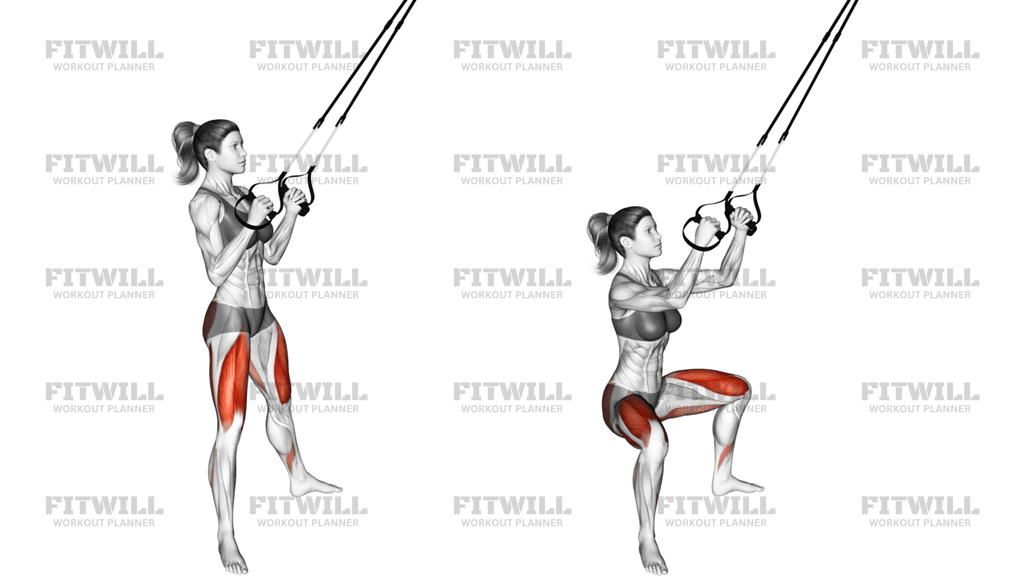
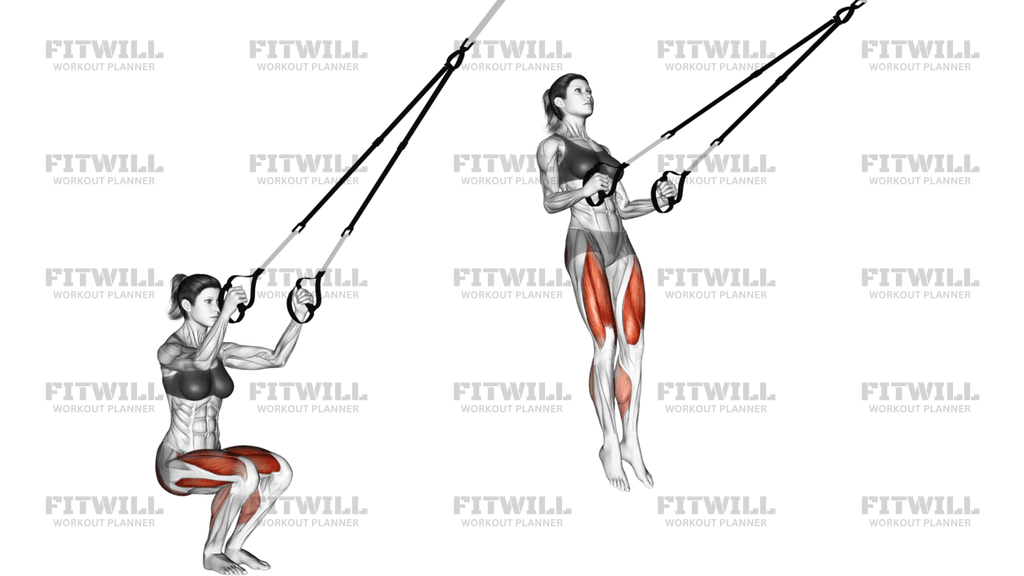
Suspension Jump Squat is a suspension-assisted lower-body power drill that combines a squat pattern with an explosive rise. The straps help you stay balanced while you load the hips, knees, and ankles through the descent, then drive up with speed from the bottom. It is primarily a thighs exercise, but the image and movement also show a strong contribution from the glutes, hamstrings, calves, and trunk.
The movement is useful when you want a squat pattern that keeps you honest about posture and force production. Holding the handles in front of the chest gives you an external reference for balance, which makes it easier to sit into the squat and come back up without folding at the waist. The suspension also adds an upper-body stability demand, so the arms and shoulders work isometrically to keep the straps steady while the legs do the real power work.
The important technical point is to keep the straps taut, feet planted about hip-width to shoulder-width apart, and the chest tall as you sink down. The knees should track in line with the toes, not cave inward, and the heels should stay grounded until the drive phase. From the bottom, push the floor away hard and rise quickly. Depending on your program, the finish can be a fast stand, a small jump, or a brief rise onto the balls of the feet, but the intent is always the same: accelerate up with control and land or reset softly.
Because this is a dynamic squat variation, the quality of each repetition matters more than chasing speed. Start with a shallow to moderate depth if the straps or your mobility make a deep squat unstable. The torso should stay organized, the ribs should not flare, and the head should remain neutral rather than jutting forward toward the anchor point. If the straps are jerking you off balance, shorten the range or slow the descent until the movement feels repeatable.
This exercise works well in lower-body conditioning blocks, athletic warmups, or power-focused circuits where you want a squat pattern with assistance and resistance at the same time. Use it when you want to train leg drive, coordination, and lower-body explosiveness without loading the spine heavily. The best reps look crisp, springy, and controlled, with a clean reset before each new squat.
[ Workout Log & Planner ]
Put your next workout in Fitwill
Keep your plan and training log ready when you are.


Instructions
- Adjust the suspension straps so the handles hang at about chest height and stand facing the anchor point.
- Hold one handle in each hand with your elbows bent, step your feet to hip-width or slightly wider, and take enough tension out of the straps to stay balanced.
- Set your chest tall, ribs stacked over your pelvis, and your weight spread through the whole foot before you descend.
- Sit your hips back and down into a squat while keeping the straps taut and the handles steady in front of your chest.
- Lower until your thighs reach a comfortable squat depth and your heels are still connected to the floor.
- Drive through the floor forcefully to stand up fast, and add a small jump or rise onto your toes if your version of the exercise calls for it.
- Land softly with bent knees, absorb the impact through the hips and ankles, and keep the straps under control.
- Reset your stance and breathing before the next repetition so each rep starts from a clean setup.
- Repeat for the planned number of reps without letting the torso fold or the handles swing.
Tips & Tricks
- Keep the straps slightly tensioned the whole time; slack handles make the bottom position feel unstable.
- Choose a squat depth you can own without your heels lifting or your chest collapsing toward the anchor.
- Use the handles for balance, not to pull yourself up, so the legs and hips stay responsible for the drive.
- Think about punching the floor away on the way up instead of yanking on the straps.
- Let the knees track over the middle toes; inward collapse is the first sign that the set is too fast or too deep.
- If the jump is noisy or stiff on landing, shorten the range and soften the deceleration before adding speed again.
- Keep the elbows bent and the handles close enough that the straps do not swing across your body.
- Breathe in on the descent, then exhale sharply as you drive upward.
- Stop the set when the straps start to wobble or your landing loses symmetry.
Frequently Asked Questions
What muscles do Suspension Jump Squats work?
They mainly train the thighs and glutes, with the hamstrings, calves, and core helping stabilize the movement.
Why use suspension straps for a jump squat?
The straps add balance support and give you a handle position that makes it easier to stay upright while you move explosively.
How low should I squat before I jump?
Go only as deep as you can while keeping the heels down, the chest lifted, and the straps steady.
Should I pull on the handles to come up?
No. Use the handles for balance and let the legs drive the rise; the straps should assist, not lift you.
Is this more of a strength or cardio exercise?
It can serve both roles, but it is usually programmed as a lower-body power or conditioning drill rather than a heavy strength lift.
Can beginners do Suspension Jump Squats?
Yes, if they start with a shallow squat and a small rise instead of an aggressive jump.
What usually goes wrong with the setup?
The most common issue is starting too far from the anchor or with too much slack, which makes the squat feel unstable and jerky.
How do I make the exercise harder?
Use a deeper but still controlled squat, move the rise faster, or reduce how much assistance you take from the straps.