Suspension Sumo Squat
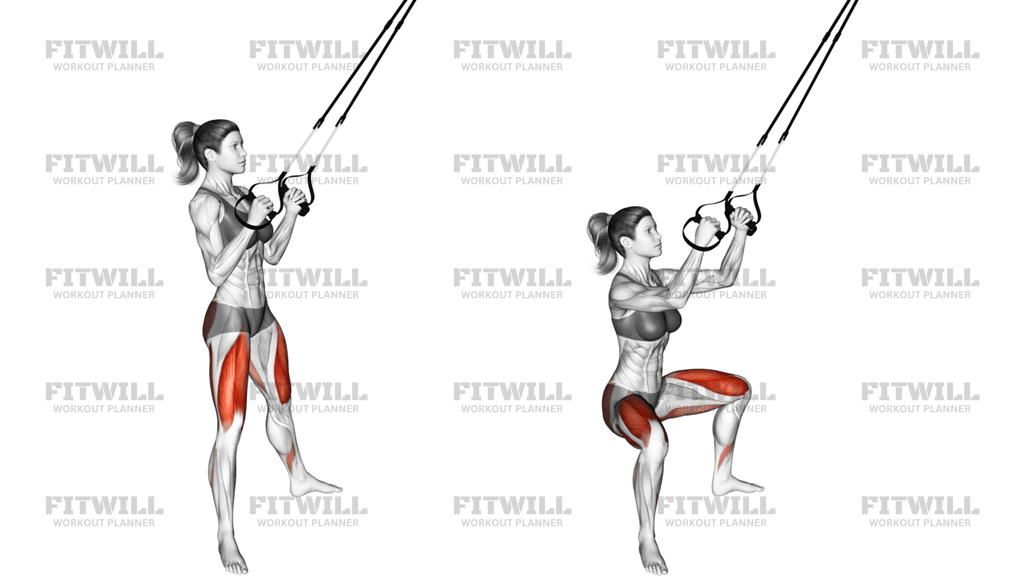
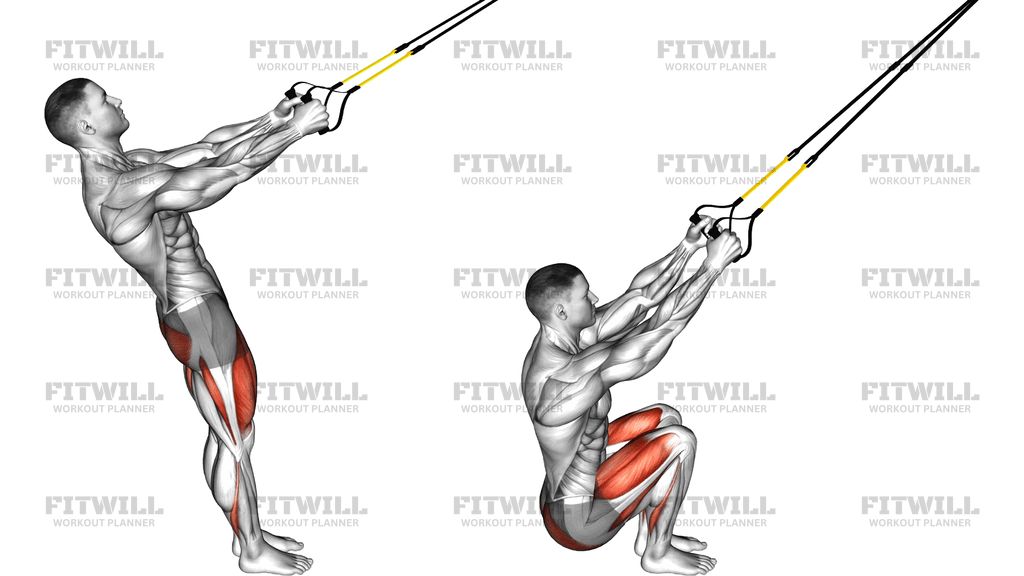
Suspension Sumo Squat is a supported wide-stance squat that uses suspension straps to help you stay balanced while you train the hips and legs. The straps are not the main source of force; they are there to give you a steadier line of pull so you can sit into a deep sumo position, keep the torso tall, and focus on controlled lower-body work. It is especially useful when you want squat mechanics, glute emphasis, and a cleaner upright posture without needing a heavy external load.
The exercise is most strongly felt in the glutes, with the inner thighs, quadriceps, and core contributing to the descent, bottom position, and stand. In anatomy terms, the main work centers on the Gluteus maximus, with support from the adductors, quadriceps, Rectus abdominis, and Erector spinae. The wide stance shifts more demand into hip opening and knee tracking, so small setup changes matter more here than in a standard shoulder-width squat.
Set the straps high enough that you can hold the handles at chest level with soft elbows and a light lean back. Stand a little farther from the anchor until the straps are taut, then plant your feet wide with the toes turned out just enough for the knees to track naturally. From there, keep the ribs stacked over the pelvis, brace before every rep, and use the handles for balance rather than pulling yourself upward. If the straps are doing the work, the squat becomes shallow and the hips never fully load.
Each repetition should look like a controlled sit-down between the legs, not a forward fold. Let the hips drop between the knees, keep the heels grounded, and drive the knees in the same direction as the toes. At the bottom, the thighs should be opened by the stance and the torso should still stay proud, with the chest lifted rather than the low back arched. Stand by pressing through the whole foot and squeezing the glutes to finish tall without leaning back into the straps.
Use Suspension Sumo Squat when you want a lower-body accessory movement that is easier to balance than a free squat but still demands good joint alignment, tempo control, and hip strength. It fits well in warmups, hypertrophy blocks, conditioning circuits, or as a regression when a free sumo squat feels unstable. Keep the rep quality high: choose a stance, depth, and body angle you can repeat cleanly, and stop the set when the knees collapse inward, the heels pop up, or the straps start to dominate the movement.
[ Workout Log & Planner ]
Put your next workout in Fitwill
Keep your plan and training log ready when you are.


Instructions
- Adjust the suspension straps to chest height, then face the anchor and hold the handles with your elbows bent and your shoulders relaxed.
- Step back until the straps are taut, then set your feet wider than shoulder width with the toes turned out to a comfortable sumo angle.
- Stack your ribs over your pelvis, keep your chest tall, and brace your midsection before the first rep.
- Start the squat by sending your hips straight down between your knees instead of folding forward at the waist.
- Keep both heels flat and let the knees travel in line with the toes as you descend under control.
- Lower only as deep as you can keep your spine long, your feet planted, and the straps from pulling you forward.
- Drive through the whole foot to stand, squeezing the glutes at the top while keeping the torso upright.
- Use the handles for balance only, then reset your breath and repeat for the planned number of repetitions.
Tips & Tricks
- Keep enough tension in the straps to steady you, but not so much that you can pull your way out of the squat.
- Turn the toes out only as far as your knees can follow without collapsing inward.
- Think about lowering your hips between your heels rather than reaching your chest toward the floor.
- If your heels lift, bring the feet a little wider or shorten the depth before adding more reps.
- Keep the elbows soft and let the handles float with you instead of rowing with the arms.
- Use a slower descent to make the glutes and adductors do more of the work.
- Pause briefly in the bottom position only if you can stay tall and balanced there.
- Stop the set when the knees cave, the low back arches, or the straps start to support your bodyweight.
Frequently Asked Questions
What muscle does Suspension Sumo Squat target most?
The glutes are the primary target, with the inner thighs, quads, and core helping control the squat.
Can beginners perform this exercise?
Yes. The suspension straps make it easier to balance than a free sumo squat, so beginners can learn the pattern with less load.
How far back should I stand from the anchor?
Far enough that the straps stay taut with your elbows bent, but not so far that you have to lean back hard to stay upright.
Should the handles be doing the lifting for me?
No. Use the handles for balance and posture only; the squat should still come from the hips and legs.
How wide should my stance be?
Wide enough for a sumo squat, with the knees able to open in line with the toes and the feet still fully planted.
Why do my knees cave inward in the bottom?
The stance may be too narrow, the depth may be too deep, or you may be losing foot pressure. Widen the stance slightly and reduce range.
How do I make the exercise harder without adding weight?
Slow the lowering phase, add a brief pause near the bottom, or reduce how much the straps help you balance.
What should I do if my heels come up?
Shorten the depth, widen the stance slightly, and keep the whole foot pressed into the floor as you descend.