Seated Neck Pull
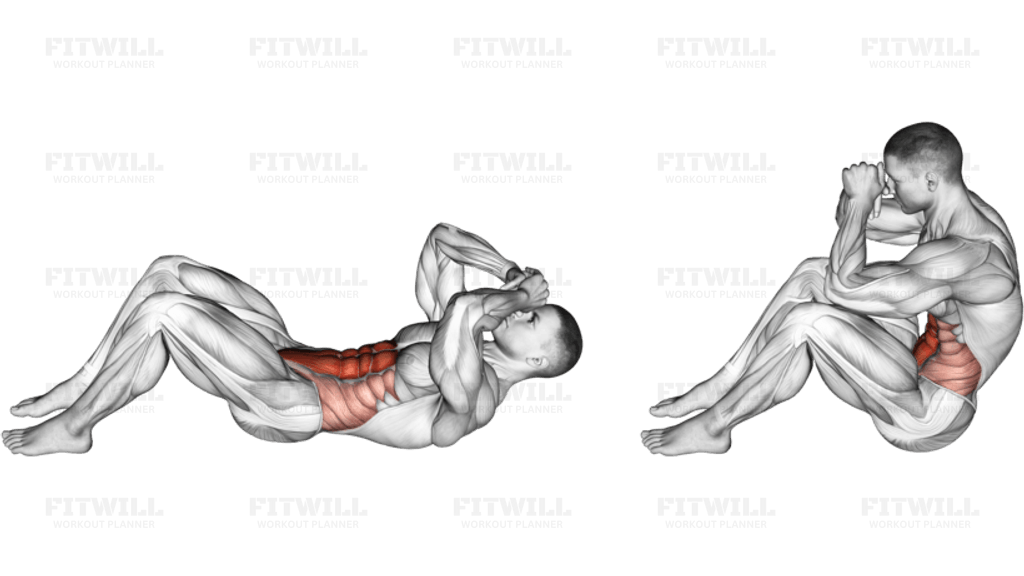
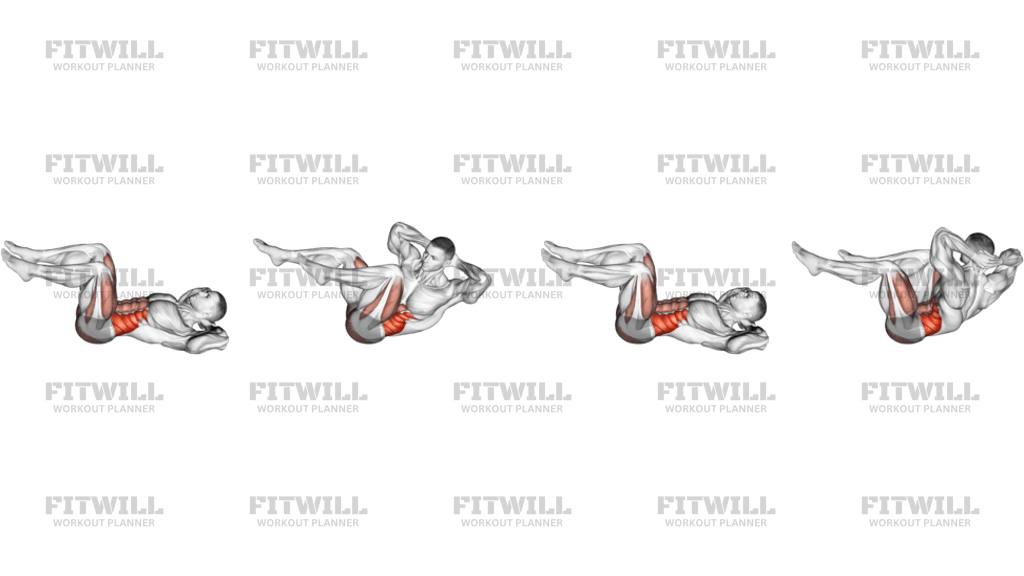
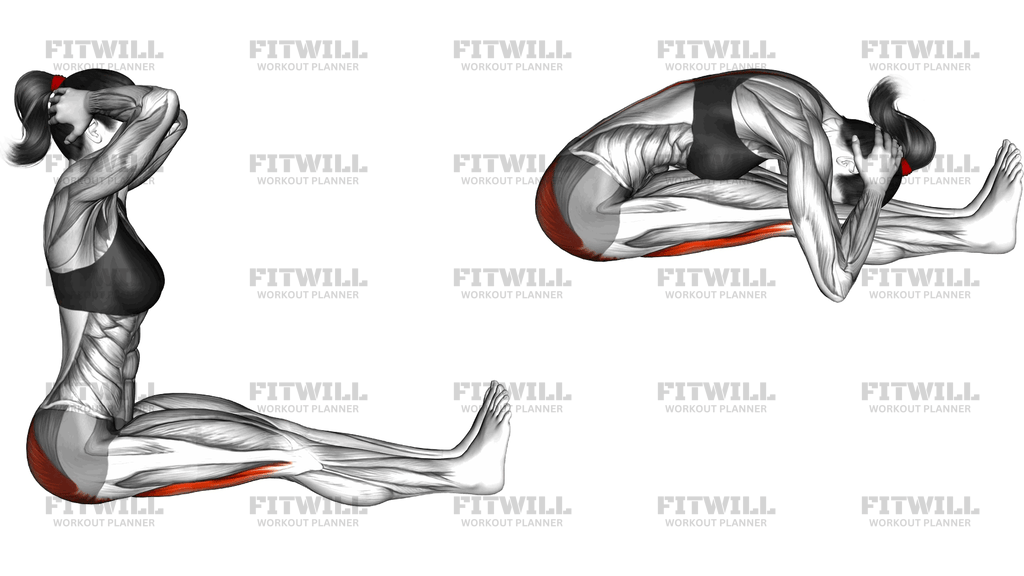
The Seated Neck Pull is a Pilates-style mat exercise where you sit with your legs extended in front of you, place your hands lightly behind your head, and roll your torso forward over your legs one vertebra at a time before rolling back up to a tall seated position. Despite the name, nothing is actually pulled with the neck — the term refers to the hand placement at the back of the head and neck, and the work is meant to come entirely from your abdominals and deep core.
This movement trains controlled spinal flexion and articulation, which is a different skill from a standard crunch. Instead of curling the ribs toward the hips, you segment the spine piece by piece, rolling down toward your legs and rolling back up with even control. The extensor muscles along the spine work eccentrically as you round forward and concentrically as you stack back up, while the hamstrings and glutes get a gentle stretch at the bottom of the fold.
The seated setup is what makes this exercise demanding. With your legs extended and your sit bones planted on the floor, you have no back support, so your trunk has to stabilize itself through the entire range. The extended-leg position also places a stretch demand on the hamstrings and lower back, which is why people with tight posterior chains often feel the fold more in their legs than in their abs at first.
To execute it well, the priority is keeping your hands as passive support rather than active pullers. Fingertips rest at the back of the head, elbows stay wide, and the torso moves because your abdominals draw the spine into flexion, not because your arms drag your head down. The roll forward should be slow enough that you can feel each section of your back round, and the return should take just as long as the descent.
This exercise fits well into Pilates mat sessions, core-focused warm-ups, or cooldowns where you want to combine abdominal work with a posterior chain stretch. It is commonly used by people who sit a lot and have lost the ability to flex and extend the spine smoothly, and by anyone who wants more control in their trunk rather than just more repetitions.
The main safety point is the neck itself. If you feel strain in your neck at any point, you are likely using your hands for leverage. Reduce the range, lighten the hand contact, and let the abs do the work. If your lower back or hamstrings complain in the extended-leg position, softening the knees slightly is a reasonable adjustment without losing the core benefit.
[ Workout Log & Planner ]
Put your next workout in Fitwill
Keep your plan and training log ready when you are.


Instructions
- Sit on an exercise mat with your legs extended straight in front of you, hip-width apart, and flex your feet so your toes point toward the ceiling.
- Rest your fingertips lightly at the back of your head and neck without interlacing your fingers tightly, and open your elbows out to the sides.
- Sit tall on your sit bones and lengthen the back of your neck, as if holding an apple under your chin.
- Inhale to prepare, then exhale and draw your lower belly in to begin tipping your pelvis backward and rounding your lower spine.
- Continue rolling forward through the middle and upper back until your torso is rounded over your thighs, letting your head follow the curve with your elbows pointing down.
- Pause for a breath at the bottom, feeling the stretch along your hamstrings and lower back without forcing your chest toward your legs.
- Inhale, then exhale as you roll back up by tucking your pelvis under and stacking your spine segment by segment until you return to the tall seated start.
- Keep your weight even on both sit bones throughout, and avoid letting your hips rock or your legs lift.
- Breathe steadily — exhale on the roll down, inhale at the bottom, exhale on the roll up — and complete your repetitions before relaxing your hands.
Tips & Tricks
- The most common fault is pulling on the head with the hands. Your fingertips should only guide the head; if you notice your elbows squeezing in or your chin jamming down, lighten the contact and restart the rep from a tall seat.
- Do not let your eyes lead the movement. Looking at your knees too early flattens the cervical curve and shifts work into the neck — keep your gaze soft and let the head follow the spine's curve instead.
- If your hamstrings are tight, your sit bones will roll backward and round your lower back before the abs even engage. Sitting on a small folded towel or slightly bending the knees preserves the spinal articulation.
- Move slowly enough that you can feel your spine round one section at a time. If the whole torso flops forward in one piece, you are using momentum and skipping the core work this exercise exists for.
- Keep your legs active by reaching the crown of your head's opposite direction — heels pressing forward and toes pulling back — rather than letting the legs go limp on the floor.
- Do not chase depth. A controlled roll to mid-shin level beats forcing your forehead to your knees with your hands, and the abdominal demand is actually higher in the partial range.
- Watch for one hip lifting as you fold. Rocking to the stronger side is easy to miss in a flexed position, so check that both sit bones stay planted through the whole rep.
- If your lower back feels pinched on the return rather than worked, you are likely arching too far past tall sitting. Stop the return at a long, neutral spine instead of extending backward.
Frequently Asked Questions
What muscles does the Seated Neck Pull work?
The primary work comes from the abdominals, especially the rectus abdominis, which controls the rolling flexion of the spine. The spinal extensors along the back work to return you upright, while the hamstrings and glutes receive a stretch at the bottom of the fold.
Why is it called a Neck Pull if the neck isn't the target?
The name comes from the hand placement — fingertips resting at the back of the head and neck. The movement itself is driven by the trunk, and pulling on your neck is actually the main form mistake to avoid.
Can beginners do the Seated Neck Pull?
Yes, but most beginners should reduce the range and bend the knees slightly. Rolling only partway forward while keeping full control teaches the spinal articulation without needing extreme hamstring flexibility.
Should my hands pull my head forward during the fold?
No. The hands act as a light guide for the head only. If you use them to drag your torso down, the work shifts from your abs to your arms and neck, which is exactly what the exercise is designed to prevent.
How is the Seated Neck Pull different from a sit-up?
A sit-up moves the trunk as one rigid block, while the Seated Neck Pull rounds the spine segment by segment. That articulation is the entire point — the abs control each section of the roll rather than hinging the whole torso at once.
My hamstrings feel this more than my abs. Is that wrong?
It is common with tight hamstrings, since the extended-leg position stretches the back of the thighs. Bend your knees slightly or elevate your hips on a folded towel so the fold comes from your spine rather than being blocked at your hips.
How many repetitions should I do?
Five to eight slow, controlled repetitions is typical for a Pilates-style set. Because each rep is deliberate and takes several seconds, quality matters far more than volume here.
Is the Seated Neck Pull safe if I have neck problems?
If you have a neck injury or recurring neck pain, check with a qualified professional before adding it to your routine. If you practice it, keep the hand contact very light and stop immediately if any strain reaches your neck rather than your abs.
Can I substitute another exercise for the Seated Neck Pull?
A seated forward fold with a rounded back covers the hamstring and lower back stretch, while slow rolling-like-a-ball or controlled curl-ups cover the spinal articulation. The combination of both in one movement is what makes this exercise distinct.