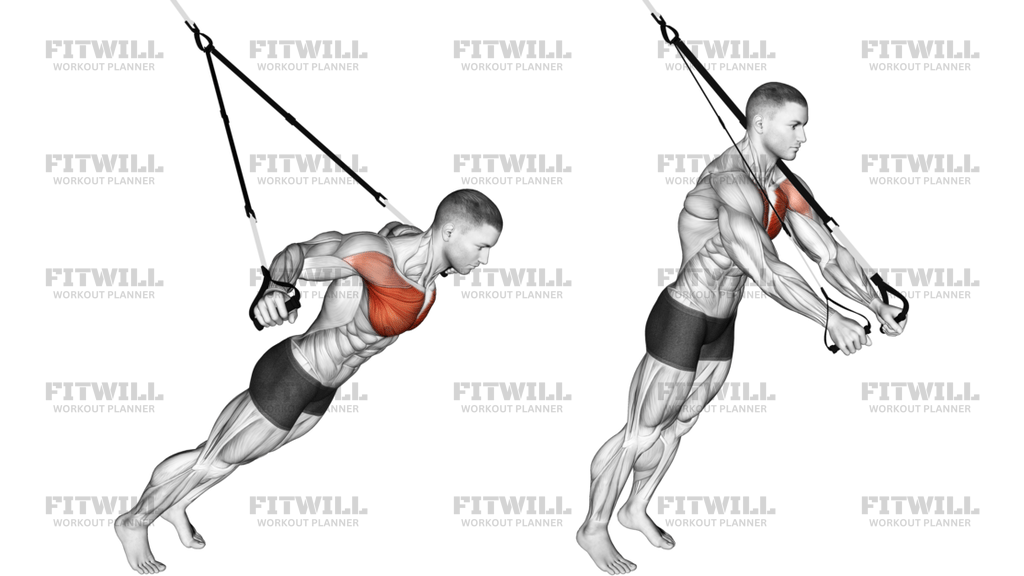
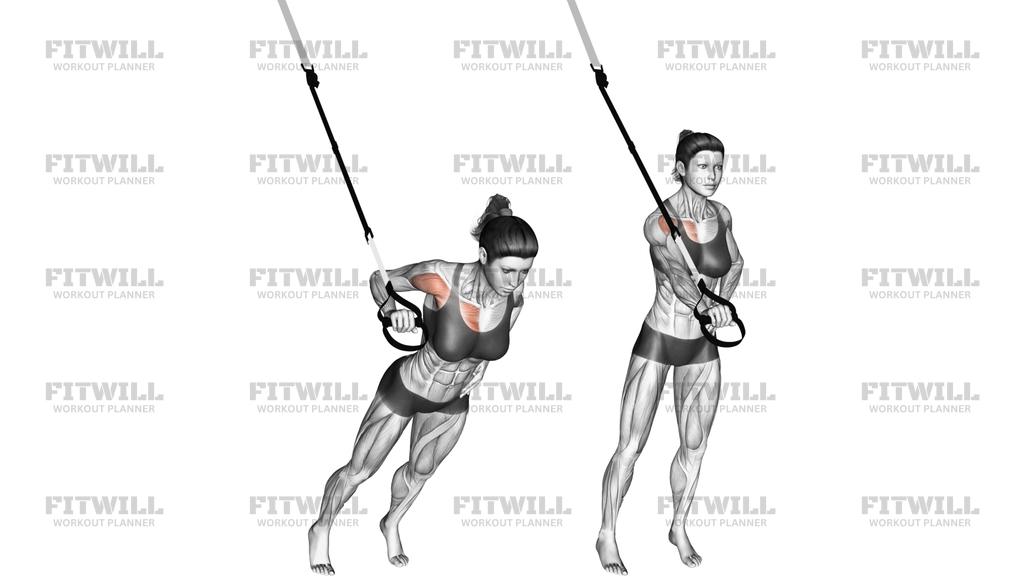
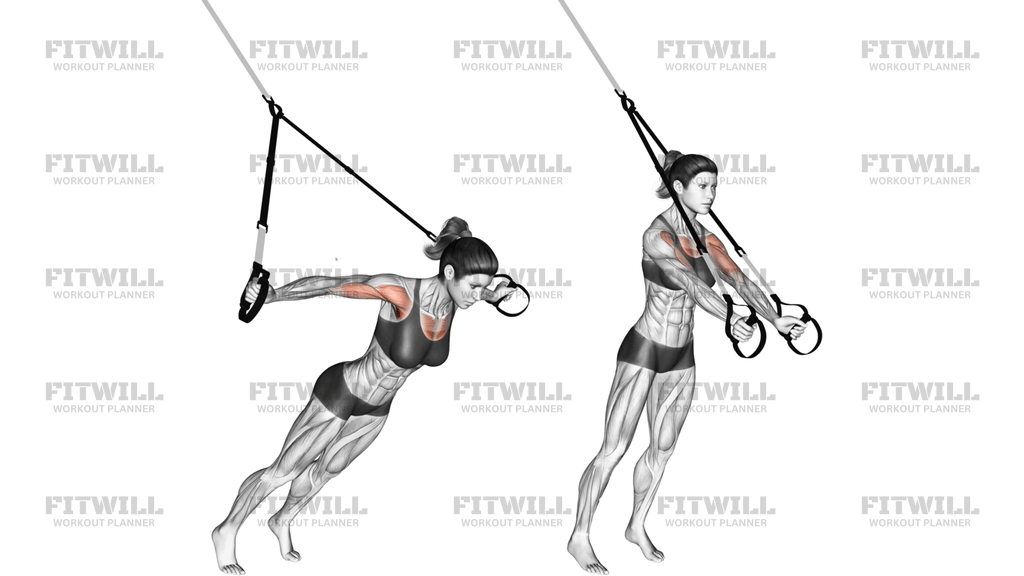
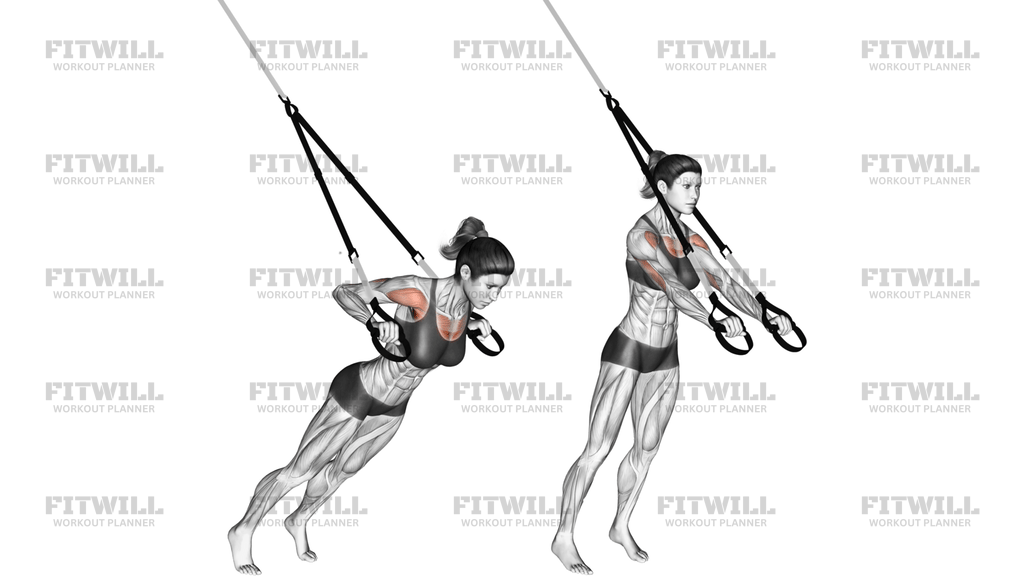
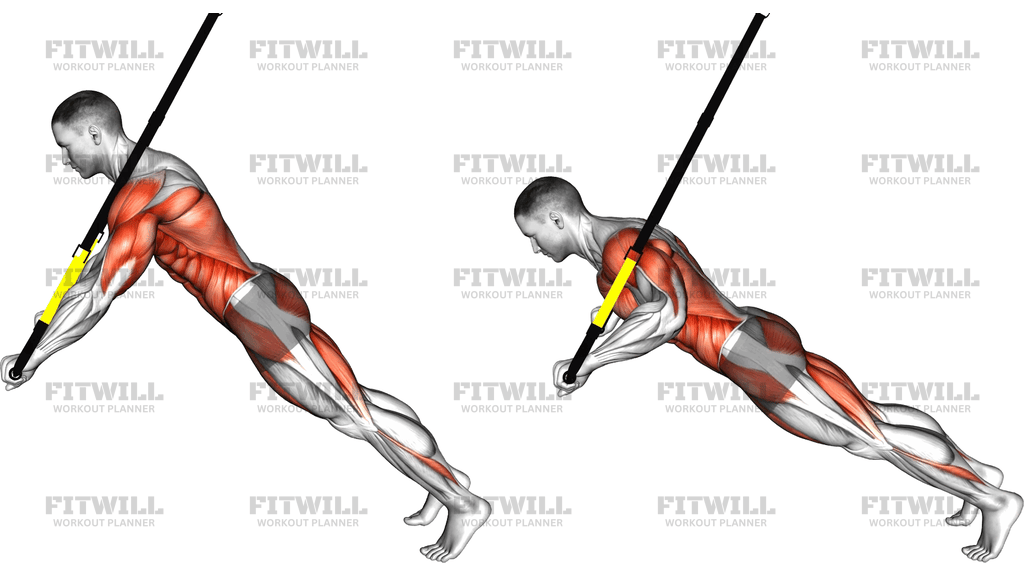
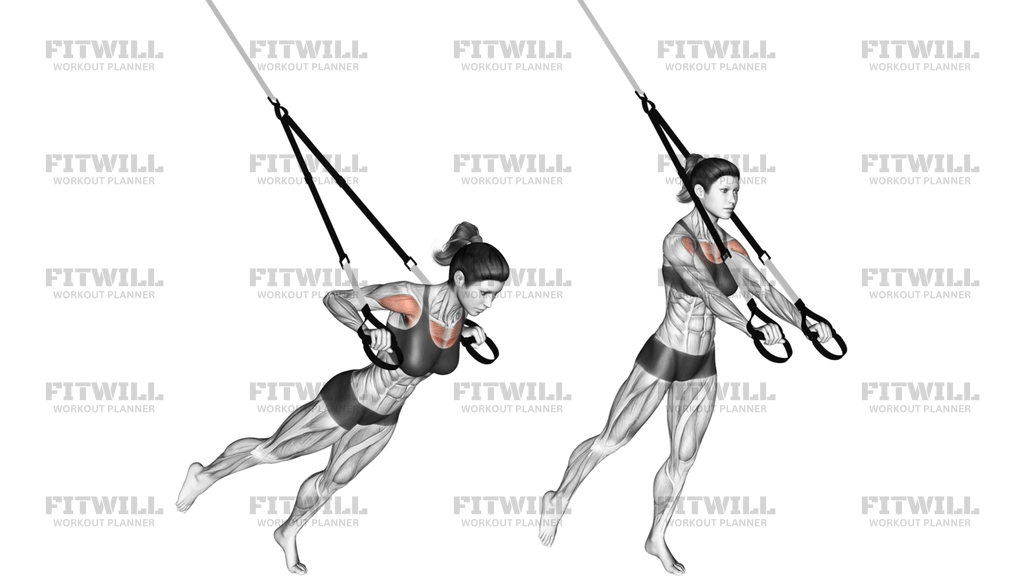
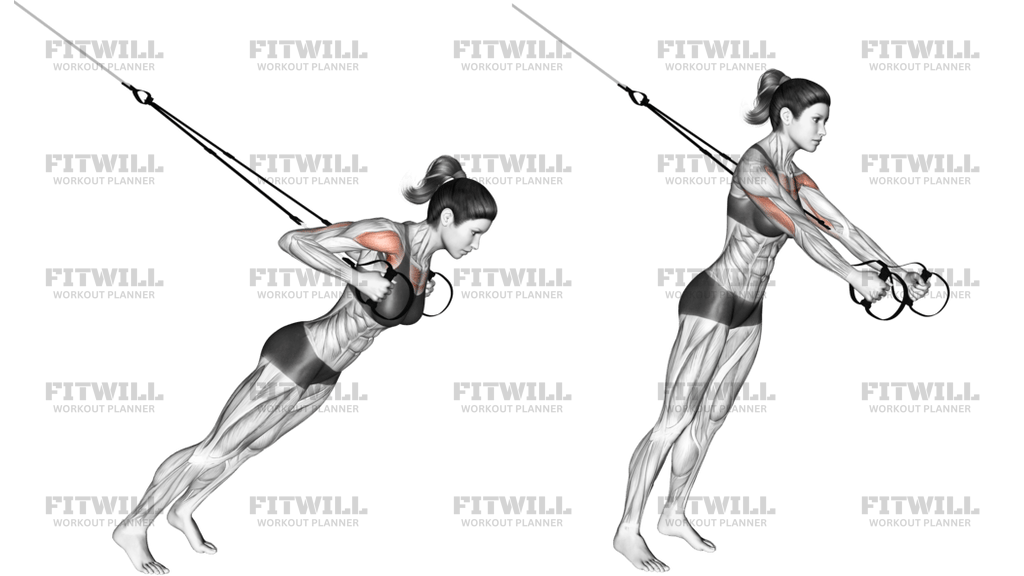
Suspension One-Arm Leg Push-Up
Suspension One-Arm Leg Push-Up is an advanced pressing variation that turns a familiar push-up into a stability drill. With one hand on a suspension handle and one leg lifted, you have to produce chest-driven pressing force while the core, glutes, and shoulder stabilizers keep the torso from rotating or collapsing. That extra instability is what makes the exercise useful: it exposes side-to-side weaknesses quickly and demands clean control instead of momentum.
The setup matters more here than on a standard push-up. The straps should be short enough that the working handle sits near lower-chest height when you are in position, and the body should form one long line from head to the planted foot. The working shoulder needs to stay stacked over the handle, the free leg needs to stay active and extended behind you, and the hips need to stay level. If the stance is too narrow or the strap is too long, the rep turns into a twist instead of a press.
Each repetition should feel smooth and deliberate. Lower the chest toward the handle by bending the working elbow at roughly a 30-45 degree angle from the torso, keep the shoulder packed, and avoid letting the ribs flare as you descend. Press the handle away until the arm is straight again, then finish the rep without bouncing or snapping through the top. Breathe in on the way down and exhale as you drive back up so the trunk stays braced through the hardest part of the press.
Suspension One-Arm Leg Push-Up is best for experienced lifters who already own a solid suspension push-up and want more unilateral challenge. It trains the chest and triceps hard, but it also asks the front shoulders and deep core to do their job so the body does not drift or rotate. That makes it a strong accessory for pressing days, athletic conditioning, or any session where you want pressing strength to carry over into better body control.
If you cannot keep the pelvis square or the shoulder starts rolling forward, reduce the range of motion, widen the base slightly, or regress to a two-leg suspension push-up before coming back to this version. The best reps are quiet, even, and repeatable. If the movement turns into a fight for balance before the chest does the work, the setup needs to be simplified.
Fitwill
Log Workouts, Track Progress & Build Strength.
Achieve more with Fitwill: explore over 9600 exercises with images and videos, access built-in and custom workouts, perfect for both gym and home sessions, and see real results.
Start your journey. Download today!




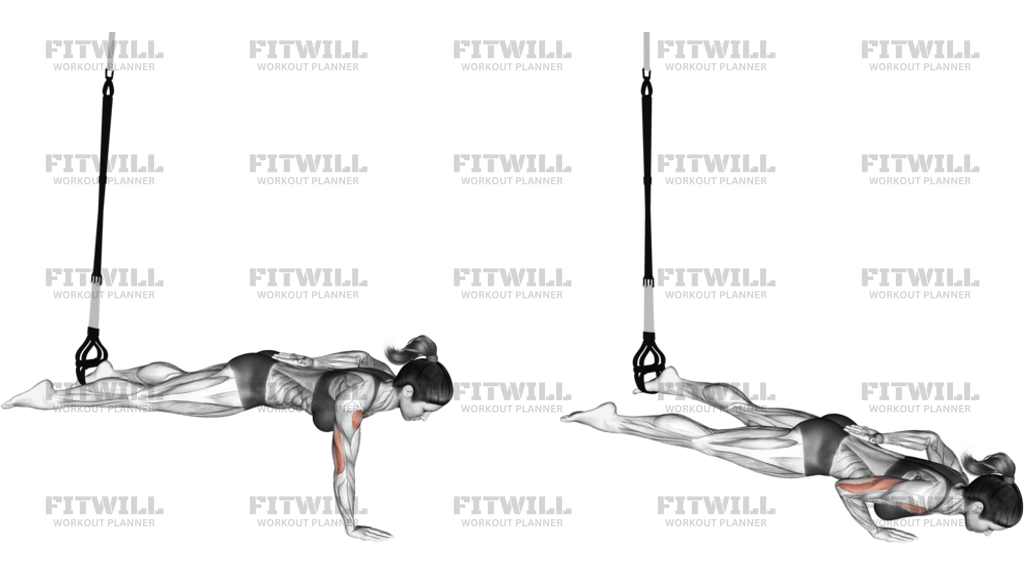
Instructions
- Shorten the suspension straps so one handle hangs around lower-chest height, then grip it with one hand and face the floor in a push-up stance.
- Walk your feet back until your body is angled in one straight line from head to heels, with the working shoulder stacked over the handle.
- Plant the supporting foot firmly and lift the opposite leg off the floor so the free leg reaches long behind you.
- Brace your abs and squeeze your glutes so your ribs stay down and your hips do not rotate.
- Bend the working elbow and lower your chest toward the handle in a smooth diagonal path.
- Keep the elbow about 30-45 degrees from your torso and let the handle stay close to the line of your chest.
- Press the handle away until the arm is straight again, finishing with your shoulder and hips still square to the floor.
- Lower back under control, reset your balance if needed, and switch sides after the planned reps.
Tips & Tricks
- If the handle drifts far in front of your shoulder, shorten the straps so the start position feels stacked instead of stretched.
- A slightly wider planted foot makes it easier to stop the torso from twisting when the free leg is lifted.
- Keep the lifted leg straight and active behind you; a relaxed bent leg usually makes the pelvis rotate.
- Stop the descent before the working shoulder rolls forward or the chest collapses toward the floor.
- Lower more slowly than you press up so the suspension straps do not swing you through the bottom.
- Keep the handle deep in the palm with a neutral wrist; letting the wrist fold back turns the movement into a grip exercise too soon.
- If your hips sway, reduce the depth of the rep before adding more load or more range.
- Use a conservative rep target and end the set the moment the body starts to twist instead of press straight.
Frequently Asked Questions
What muscles does Suspension One-Arm Leg Push-Up work most?
The chest does most of the pressing, with the triceps and front shoulders helping finish the rep. The core and glutes work hard to keep the torso from rotating while one leg stays off the floor.
Is Suspension One-Arm Leg Push-Up beginner-friendly?
Usually not. Most people should first own a regular suspension push-up or a high incline push-up before trying this unilateral version.
How should my handle and straps be set up?
Set the straps short enough that the handle sits around lower-chest height in your start position. If the handle hangs too low, the shoulder drifts forward and the press gets harder to control.
Why does my torso twist during Suspension One-Arm Leg Push-Up?
Twisting usually means the stance is too narrow, the straps are too long, or the core is losing tension near the bottom. Widen the planted foot slightly and shorten the range until the hips stay square.
How deep should I go on each rep?
Go only as low as you can while keeping the working shoulder packed and the pelvis level. If the chest cannot lower toward the handle without rotation, the rep is already too deep.
Where should my free leg be?
Keep the free leg long behind you instead of letting it bend and dangle. That straight line helps counterbalance the working side and keeps the pelvis from opening up.
What is the best regression for this exercise?
Use a two-leg suspension push-up or a high incline one-arm push-up before returning to this version. Both options reduce the anti-rotation demand while keeping the pressing pattern.
How can I tell if I am using too much load or too much difficulty?
If the shoulder starts shrugging, the straps swing, or the hips turn before the chest finishes the press, the variation is too hard for your current setup. Make the angle easier and rebuild control first.