Smith Behind Neck Press
The Smith Behind Neck Press is a seated overhead press performed with the barbell fixed in a Smith machine, starting with the bar resting across the back of your shoulders at neck level and pressing it straight up overhead. Because the Smith machine locks the bar into a fixed vertical track, you don't have to stabilize the weight in space the way you would with a free barbell, which lets you concentrate fully on driving through the deltoids. It's essentially the machine version of the classic behind-the-neck military press.
This movement primarily targets the side delts, with strong involvement from the front delts, triceps, and upper traps as the bar travels overhead. Because the bar sits behind the neck rather than in front, the shoulder is placed in an externally rotated position, which shifts a little more emphasis toward the side and rear portions of the deltoid compared to a front press. The seated position with your back against the bench removes momentum from the hips and lower body, making it a strict upper-body pressing exercise.
The Smith machine setup matters for one big reason: safety and consistency. The fixed path means the bar can only move straight up and down, so you must position the bench so the bar descends to exactly the right spot behind your neck on every rep. It also gives you built-in safety catch pins and the ability to twist the bar to rack it at any point, which is valuable for an exercise where you can't simply step out from under a failed rep the way you could with a front press.
To execute it well, sit upright on a bench placed inside the Smith machine, plant your feet flat and wide enough for a stable base, and grip the bar slightly wider than shoulder width. Keep your chest tall, ribs down, and lower back lightly supported against the bench rather than arching excessively. Press the bar up until your arms are extended, then lower it under control to just below ear level behind your neck before pressing again. Avoid bouncing the bar off the base of your neck, and keep your head in a neutral position rather than jutting forward.
The behind-the-neck position isn't for everyone. It demands decent shoulder mobility, and lifters with limited external rotation or a history of shoulder impingement usually do better with a front press instead. For those with healthy, mobile shoulders, it can be a useful variation for building round, balanced delt development. Start light, treat it as a secondary shoulder exercise rather than your main heavy press, and prioritize smooth, controlled reps over maximum load.
[ Workout Log & Planner ]
Put your next workout in Fitwill
Keep your plan and training log ready when you are.


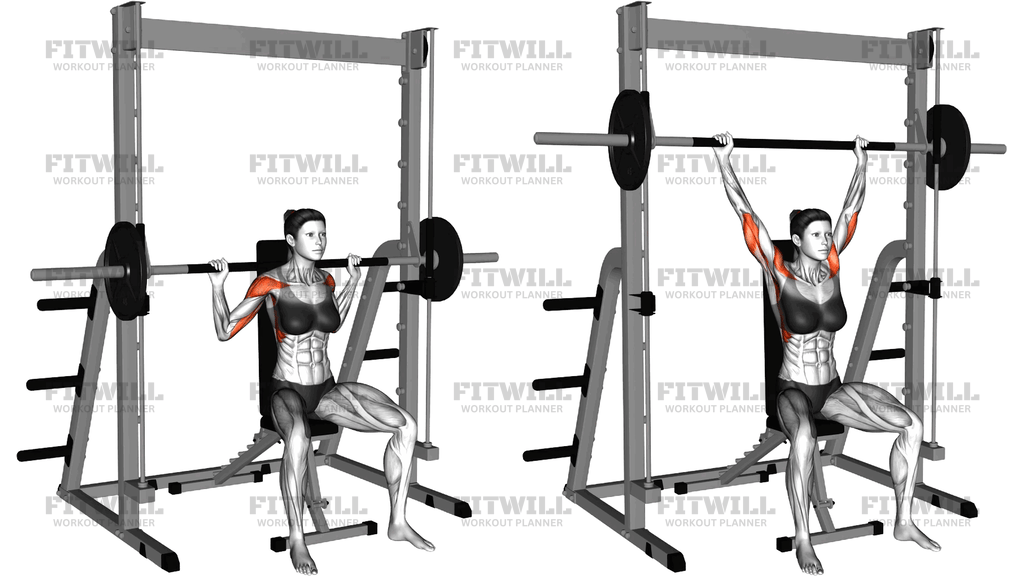
Instructions
- Set an upright bench inside the Smith machine so the fixed bar track lines up directly behind your shoulders when you sit down, then set the safety catches just below the lowest point of the bar's path.
- Adjust the bar height so you can unrack it while seated without shrugging or standing, typically around the level of the top of your shoulders.
- Sit with your back and hips firmly against the bench, feet flat on the floor about hip width or slightly wider, and grip the bar with an overhand grip slightly wider than shoulder width.
- Rotate the bar to release it from the safety hooks and take a breath, bracing your core while keeping your chest tall and your head in a neutral position.
- Press the bar straight up along the machine's track until your arms are fully extended overhead without locking or hyperextending the elbows.
- Pause briefly at the top, then slowly lower the bar behind your neck until it reaches about ear level, keeping your elbows roughly under the bar as it descends.
- Exhale as you press up and inhale as you lower the bar, keeping the breathing rhythm steady throughout the set.
- Keep your lower back in contact with the bench and resist the urge to lean your head forward or shrug your shoulders toward your ears as the bar comes down.
- Complete your final rep, rack the bar by rotating it back onto the hooks, and confirm it is secured before letting go and standing up.
Tips & Tricks
- Do a mobility check before loading weight: if you can't comfortably hold an empty bar behind your neck with your elbows under it, switch to a front press until your shoulder mobility improves.
- The most common mistake is setting the bench too far forward or back, which forces the bar to drift toward the neck on the descent. Test the path with an empty bar and slide the bench until the bar lands cleanly behind the shoulders.
- Do not bounce the bar at the bottom. Tapping the base of your neck or upper traps with momentum is one of the fastest ways to irritate the shoulder joint in this position.
- Widen your grip if your elbows drop too far below the bar at the bottom, which signals the position is too tight for your current shoulder range of motion.
- Keep the weights modest. Behind-the-neck pressing feels stable because the machine guides the bar, but the shoulder joint is still in its most vulnerable position at the bottom of this movement.
- Watch for your head drifting forward as you press. Cue yourself to pull the back of your head gently back against the bench so the bar travels over your midline, not in front of it.
- Avoid loading plates onto the bar for your first several sessions. The fixed track removes balance demands but not joint stress, and progress should come from mobility and control first.
- If one shoulder feels pinched at the bottom, shorten the range of motion slightly rather than forcing the bar lower; the side delts still get plenty of work from ear-level reps.
- Set the safety catches after you've warmed up and know your exact bottom position, not before, so they actually catch the bar if you fail a rep.
Frequently Asked Questions
What muscles does the Smith Behind Neck Press work?
It primarily targets the side delts, with the front delts and triceps assisting strongly and the upper traps engaging as the bar passes overhead. Because the bar starts behind the neck, the delts work in an externally rotated position compared to a front press.
Is the Smith Behind Neck Press safe for beginners?
Most beginners are better served by a front press first, since the behind-the-neck position requires good shoulder mobility and the joint is in a less favorable position at the bottom. If you're new but have healthy, mobile shoulders, start with a very light load and strict form.
Why use a Smith machine instead of a free barbell for behind-the-neck pressing?
The fixed vertical track prevents the bar from drifting off line, and you can rack it at any point by rotating your wrists, which matters when the bar is behind your head and you can't safely bail forward. This makes the machine version considerably more forgiving.
How wide should my grip be on the Smith Behind Neck Press?
A grip slightly wider than shoulder width works for most lifters and keeps the elbows roughly under the bar at the bottom. If your elbows drop well below bar level or your shoulders feel pinched, widen your grip a little.
Where exactly should the bar come down to at the bottom?
Lower it to about ear level, resting lightly on the upper traps at the base of the neck, without bouncing. Going deeper only helps if your shoulder mobility allows it without any pinching or strain.
Why do I feel this in my neck instead of my shoulders?
This usually means you're shrugging your upper traps toward your ears or lowering the bar too far and compressing the neck area. Keep your shoulders pressed down away from your ears and shorten the range so the bar stops around ear level.
What can I use instead of the Smith Behind Neck Press?
A seated dumbbell press or a front-of-the-neck machine press trains the same deltoids and triceps with a more shoulder-friendly joint angle. A behind-the-neck press with free weights is a possible substitute but demands more stability and mobility.
Should I sit upright or lean back against the bench?
Sit upright with your back in contact with the bench and only a slight natural arch in your lower back. Excessive leaning turns the movement into an incline-style press and shifts stress away from the side delts.
Can the Smith Behind Neck Press replace my main overhead pressing exercise?
It works better as a secondary or accessory movement rather than your primary heavy press. The fixed bar path reduces stabilizer demand, and the behind-the-neck position limits how much load most lifters can handle safely.
How do I fail a rep safely on this exercise?
Set the Smith machine safety catches just below the bar's lowest point before you start. If you can't complete a rep, lower the bar with control and rotate it to rack it on the catches rather than trying to push a failed rep overhead.