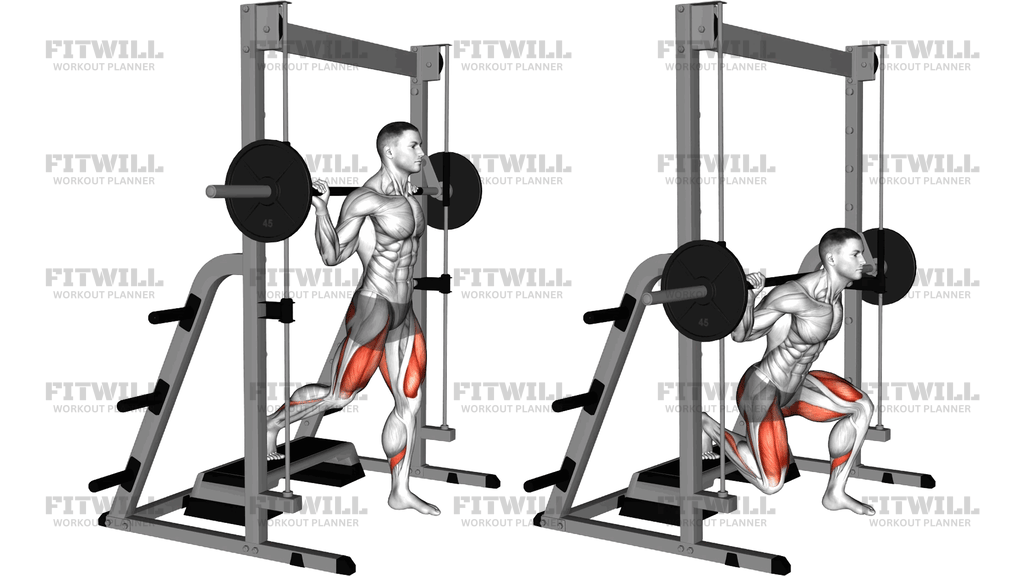
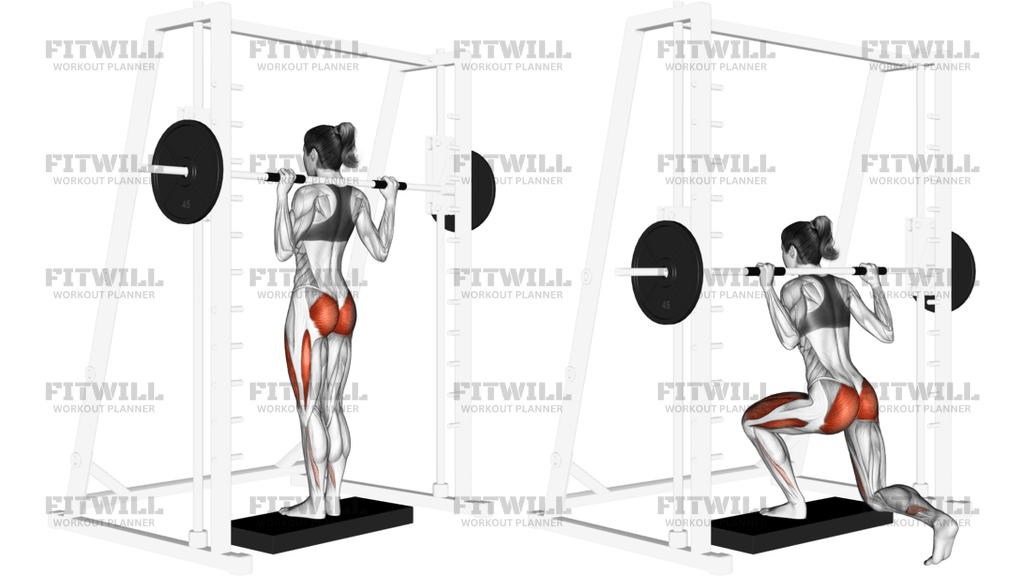
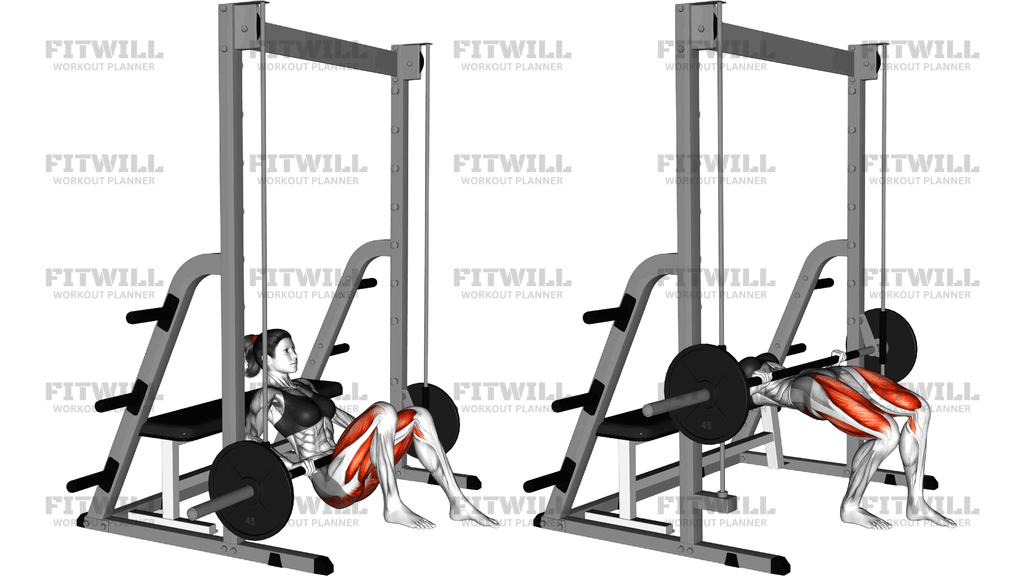
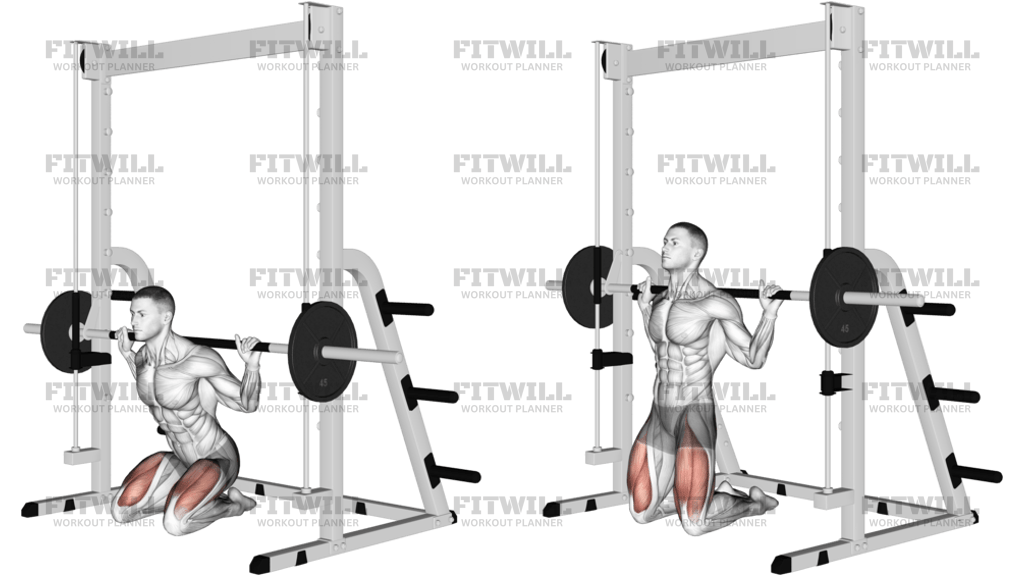
Smith Staggered Stance Romanian Deadlift
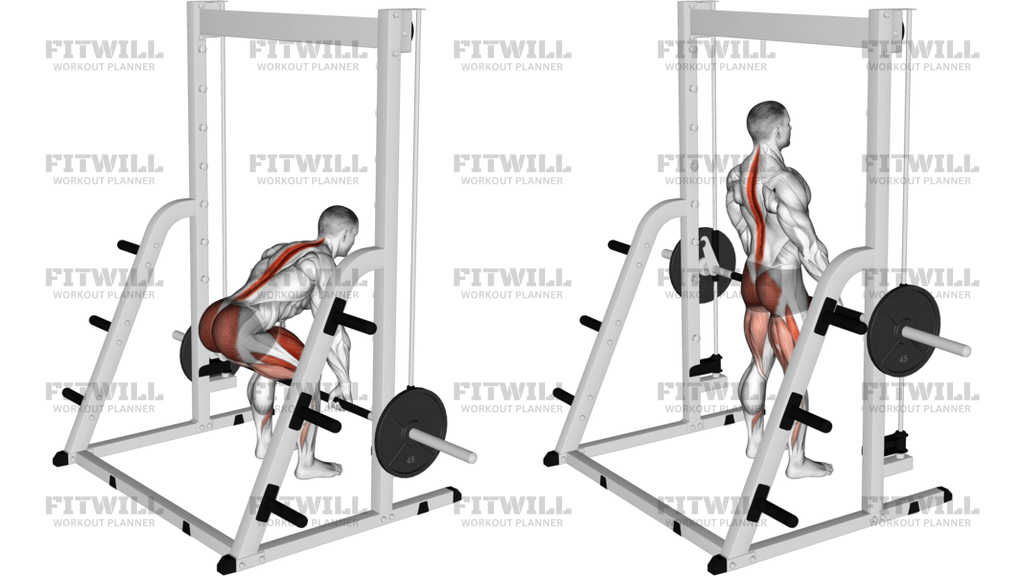
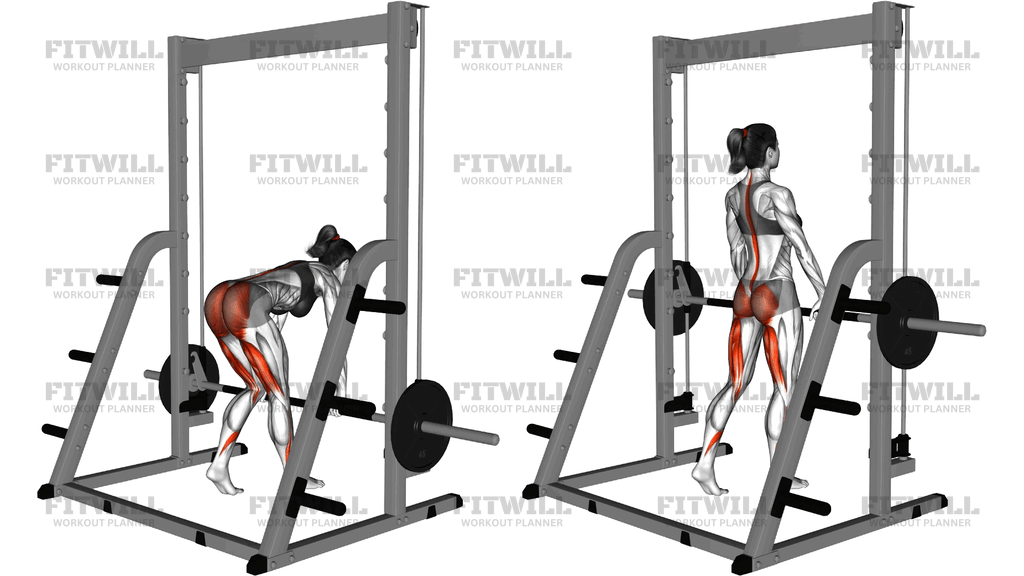
The Smith Staggered Stance Romanian Deadlift is a single-leg biased hip hinge performed on the Smith machine, with one foot positioned slightly ahead of the other and the bar moving along the fixed vertical path in front of your body. The staggered stance splits the difference between a bilateral Romanian deadlift and a full single-leg version: your back foot acts as a kickstand, giving you enough stability to load the front leg's glutes and hamstrings hard without spending all your energy on balance.
This exercise is especially useful for lifters who want to address side-to-side differences in hip strength, or for those who find free-barbell single-leg hinges too wobbly to load meaningfully. Because the Smith machine bar slides on a fixed track, the bar cannot drift forward or backward, so you can focus entirely on pushing your hips back and feeling the stretch down the back of your standing leg. That makes it a popular choice for glute-focused hypertrophy work, rehab progressions after bilateral deadlifting, and athletes who need unilateral hip strength for running, jumping, or changing direction.
The main muscles at work are the glutes and hamstrings of the front leg, which lengthen under load as your torso travels down and contract to bring you back upright. The erector spinae along your spine work isometrically to hold a neutral back position, the calf and foot of the front leg stabilize your base, and the rear leg takes just enough load to keep you balanced without stealing work from the front side.
Setup matters more here than in a standard RDL. Your front foot should carry most of your weight, your back heel can lift naturally, and the bar needs to sit close to your front thigh so the hinge stays a hip movement rather than a lower-back pull. Because the bar path is locked, you set your position first, then let the bar follow the rails while your hips travel backward.
To execute it well, unlock the bar, hinge at the hips with a soft bend in the front knee, and lower the bar along the fixed path until you feel a strong stretch in the front leg's hamstring, usually around mid-shin height. Keep your chest proud and your spine long rather than rounding toward the floor. Drive your front foot into the ground and squeeze the glute to stand tall, finishing each rep at full hip extension before the next descent.
A few practical points: start with a light load to learn where your hips travel on the fixed track, keep both hands on the bar with a comfortable overhand grip, and reset your stance fully between sets or when switching legs. If you feel the work shifting into your lower back, the most common fix is reducing range and sitting your hips further back while keeping the bar near your front leg.
[ Workout Log & Planner ]
Put your next workout in Fitwill
Keep your plan and training log ready when you are.


Instructions
- Set the Smith machine bar at roughly hip height and load it with a light to moderate weight.
- Stand facing the machine with the bar in front of your thighs, feet hip-width apart, then step one foot back so your weight sits about 80 percent on the front leg; the rear heel may lift slightly.
- Grip the bar with both hands just outside your front thigh using an overhand grip, and unlatch it from the safety hooks.
- Brace your core, pull your shoulder blades gently back, and set your spine in a long, neutral position with your eyes forward.
- Push your hips straight back, letting the front knee bend softly while the bar slides down the fixed rails close to your front leg.
- Lower until you feel a strong stretch in the front hamstring, typically around mid-shin, without letting your lower back round.
- Drive through the heel and midfoot of the front leg and squeeze the glute to return to a tall standing position with the hips fully extended.
- Exhale as you rise and inhale at the top before each descent, keeping the breath steady throughout the set.
- Complete all reps on one side, re-rack the bar onto the hooks, then reset your stance with the opposite leg back.
- Adjust the safety stops or unload weight before letting go of the bar once it is fully latched on the machine.
Tips & Tricks
- Keep the bar in contact with or very close to your front thigh on the way down; if it swings away from your leg, your hips are not traveling back far enough.
- The most common mistake is turning this into a squat. If your front knee bends a lot and your hips drop instead of moving back, reset and exaggerate the backward hip shift.
- Do not let your torso twist toward the loaded side. Square your hips and shoulders toward the machine so the front glute does the work instead of your lower back compensating.
- A shorter range with a flat back beats a deeper rep with a rounded one. Stop the descent the moment your hamstring stretch ends and your spine starts to flex.
- Keep roughly 70 to 80 percent of your weight on the front foot. If the back leg starts pushing the bar up, the rear foot is carrying too much load and the set becomes a weak bilateral deadlift.
- Point the toes of both feet forward and grip the floor with the front foot. A caved-in arch or rolled-out ankle shows up as wobbling at the top of each rep.
- Because the Smith bar is counter-guided, avoid bouncing at the bottom; the fixed path can hide sloppy tempo, so control both the lowering and the lift.
- Start lighter than your regular Smith RDL. The staggered stance places more demand on one leg, and the jump in difficulty per side surprises most lifters.
- Switch which leg is forward between sets, not within a set, so both sides get the same quality of work and you can compare strength evenly.
Frequently Asked Questions
Which muscles does the Smith Staggered Stance Romanian Deadlift work the most?
The glutes and hamstrings of the front leg do most of the work, since they lengthen during the hinge and drive you back up. The lower back muscles hold your spine steady isometrically, and the calf and foot of the front leg help stabilize your base.
Why use a staggered stance instead of a normal Romanian Deadlift on the Smith machine?
The staggered stance shifts most of the load onto one leg, which helps expose and fix left-to-right differences in hip strength. The rear foot still acts as a kickstand, so you get unilateral benefit without the full balance challenge of a single-leg version.
How much of my weight should be on the back leg?
Keep about 70 to 80 percent on the front leg, using the rear foot only for balance. If you feel the back leg pushing hard into the floor, step it slightly further back or lighten the load.
Should my back heel stay on the floor during the Smith Staggered Stance Romanian Deadlift?
It does not have to. As your hips travel back, the rear heel often lifts naturally, which is fine as long as the back toes stay planted and your hips stay squared forward.
Is this exercise suitable for beginners?
Yes, if you start with a very light load or even an empty bar. The fixed bar path removes the balance demands of a free-weight staggered stance hinge, but beginners should master the hip hinge pattern on both legs first.
Why do I feel this more in my lower back than my hamstrings?
That usually means your hips are dropping forward into a squat pattern or your torso is rounding at the bottom. Push the hips further back, keep the bar close to your front thigh, and shorten the range until the stretch lands in the hamstring.
How low should I lower the bar?
Lower until you feel a strong stretch in the front hamstring, usually around mid-shin, while keeping your spine neutral. The right depth depends on your hamstring flexibility and hip structure, not on reaching the floor.
What can I use if my gym has no Smith machine?
A staggered stance dumbbell Romanian deadlift is the closest substitute, holding one or two dumbbells in front of your thighs. Expect a slightly greater balance demand since the weight is no longer on a fixed track.
How should I breathe during this exercise?
Inhale and brace your core at the top before each rep, hold that tension through the descent, and exhale as you drive back up to standing. Reset your breath at the top rather than at the bottom of the hinge.
How many sets and reps work best for this movement?
For muscle development, 3 to 4 sets of 8 to 12 reps per side with a controlled tempo works well. Because the front leg handles most of the load, use a lighter weight than a regular Smith RDL and progress slowly.