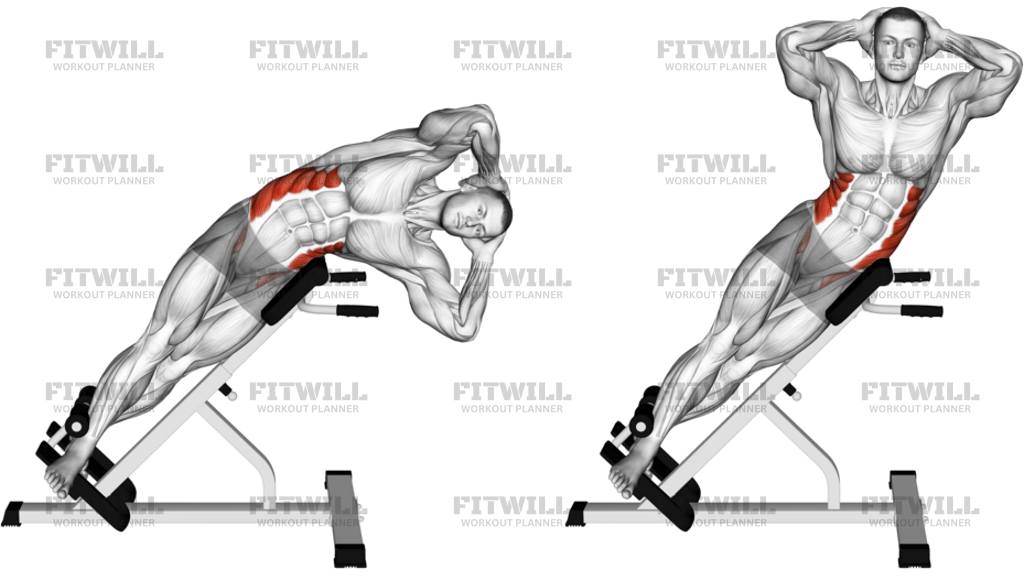
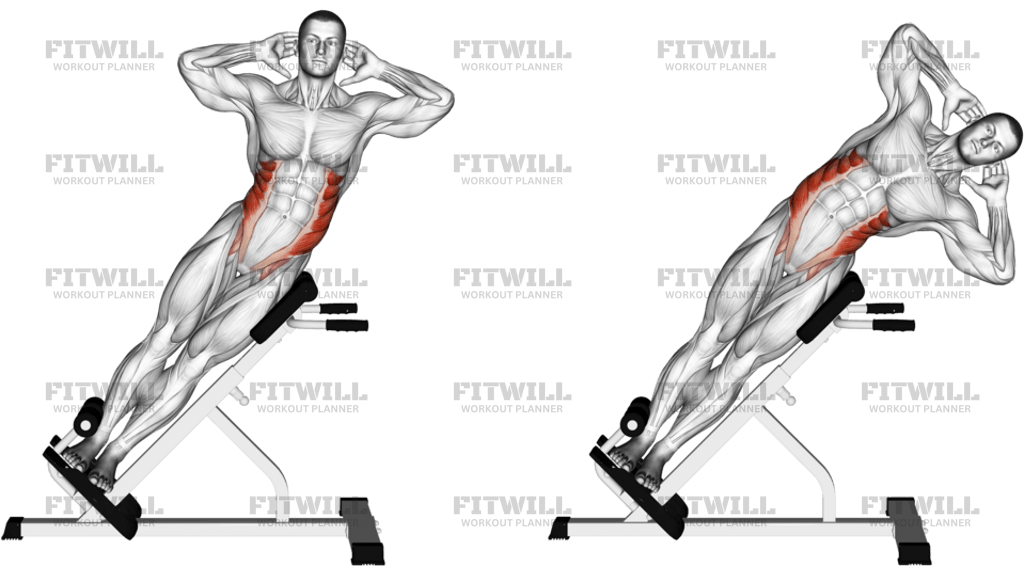
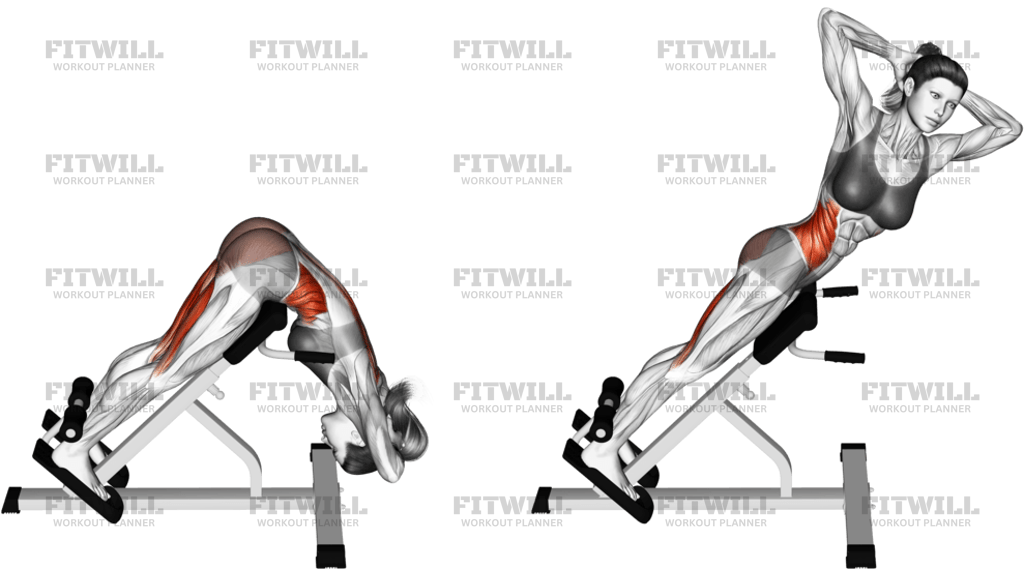
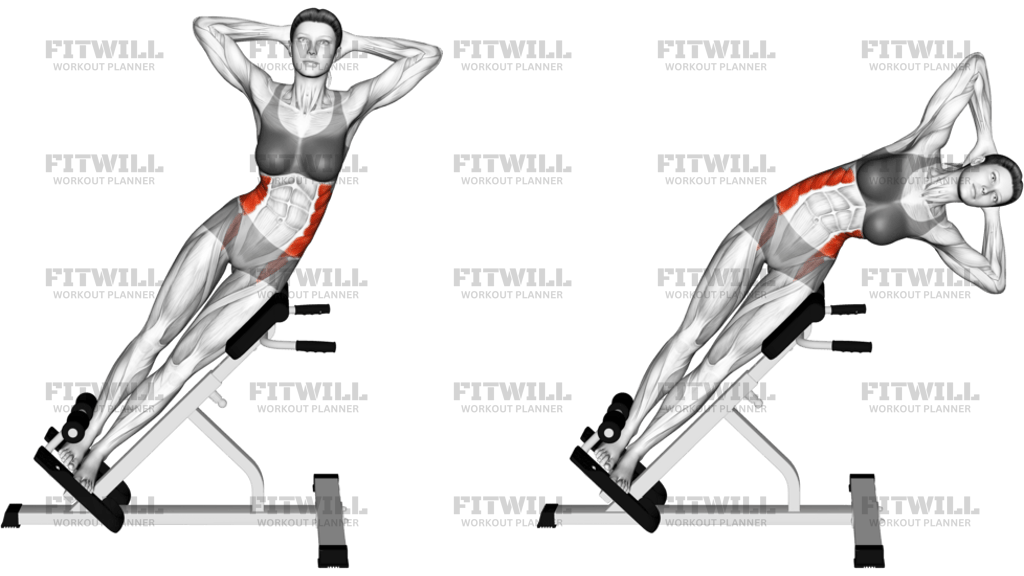
Glute Ham Developer Straight Arms Sit Up
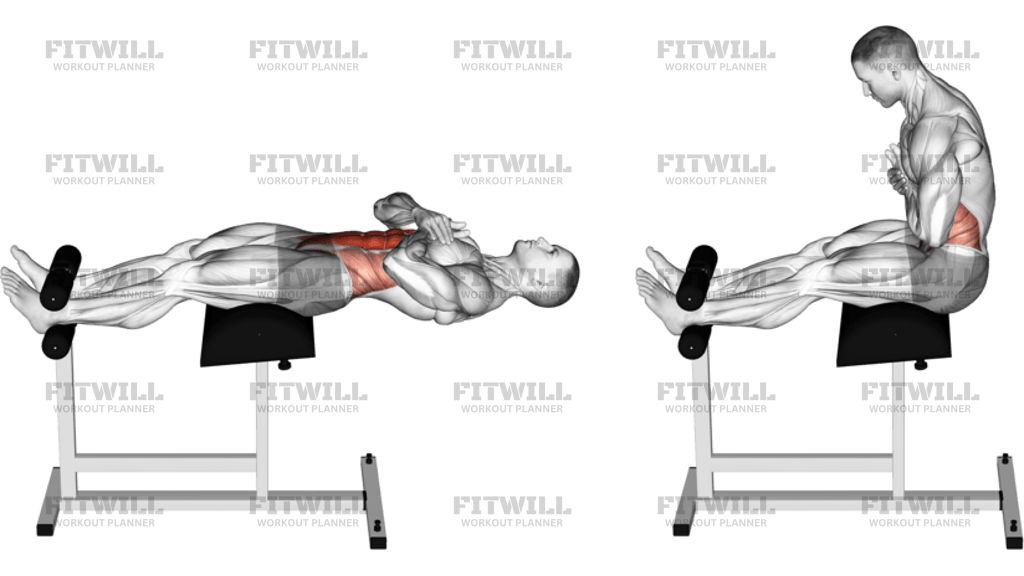
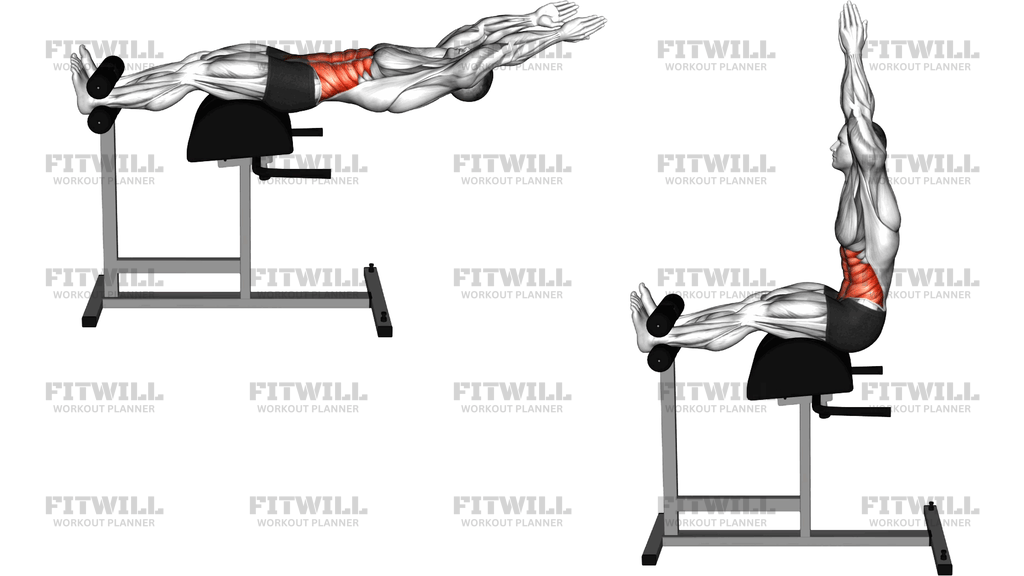
The Glute Ham Developer Straight Arms Sit Up is a sit-up performed on a glute ham developer (GHD) bench, where you hook your feet under the foot rollers, lower your torso back past horizontal with your arms extended straight overhead, and then curl your trunk all the way back up to a tall seated position. Because the hips hang off the far edge of the pad and the torso travels behind the bench, your abdominals work through a much longer range than a floor sit-up, which is exactly what makes this movement both effective and demanding.
The main work comes from the abs, particularly the rectus abdominis, which has to shorten from a fully stretched position to pull your ribs toward your pelvis. The hip flexors assist strongly once your trunk clears the bench, and the deep core musculature works throughout to keep your spine segmented and controlled rather than hinging as one stiff block. Keeping the arms straight and overhead lengthens the lever further, so even without external load this is one of the harder sit-up variations you can do.
This exercise suits lifters who already tolerate loaded or extended-range trunk flexion and want a bodyweight option that still challenges the abs. It is a staple in CrossFit-style conditioning, in postural work for people who sit a lot and need active trunk extension, and in programs for athletes who need to express force through a long trunk range, such as throwers and gymnasts. If you are newer to training, start with partial range or a shorter drop-back before going all the way to the bottom position.
Setup matters more on the GHD than on almost any other ab bench. Your butt should sit just off the near edge of the pad, knees slightly bent, and the foot roller should contact the back of your ankles with your toes pulled up toward your shins. If your hips are too far forward on the pad, the range shortens; if they are too far back or the rollers are loose, you will slide or lose your anchor at the bottom, and the movement turns into a leg-yanking struggle instead of a controlled sit-up.
To execute it well, think of the descent as one long, deliberate lengthening and the ascent as a rolling wave. Reach back with straight arms until your hands touch the floor behind you or reach your end range, pause briefly, then initiate the return by tipping the pelvis and curling the spine up one section at a time, finishing tall with your arms overhead or by your ears. Move at a speed you could stop at any point; if momentum does the middle of the rep for you, the range is too aggressive for now.
Because the trunk extends behind the bench, this exercise places a stretch load on the lower back as well as the abs. Keep the range within what you can control, avoid using a violent arm swing to launch yourself up, and treat it like a strength movement with quality reps rather than a race. Two to four sets of 8 to 15 controlled reps is a reasonable starting point for most trainees.
[ Workout Log & Planner ]
Put your next workout in Fitwill
Keep your plan and training log ready when you are.


Instructions
- Set the foot roller so the back of your ankles will rest against it and the pad ends just before your butt, leaving your hips free to extend behind the bench.
- Sit on the pad facing away from the foot plate, place your feet on the plate with the rollers behind your calves, and pull your toes up toward your shins to lock your ankles in.
- Lie back so your trunk is supported on the pad, knees slightly bent, and extend both arms straight overhead so they line up with your torso.
- Brace lightly, inhale, and lower your torso back in one smooth line, letting your arms track overhead as your trunk passes the edge of the bench.
- Descend until your hands reach the floor behind you or you reach your controlled end range, keeping the arms locked straight the whole way.
- Pause for a beat at the bottom, then start the return by tilting your pelvis and curling your upper back, mid back, and shoulders up sequentially toward your thighs.
- Continue curling until your trunk is fully upright and vertical over your hips, arms still reaching straight up or beside your ears.
- Exhale as you curl up, then breathe in again at the top before starting the next lowering phase.
- Lower with control on every rep rather than dropping into the stretch, and avoid pulling with your neck or swinging your arms to initiate the ascent.
- At the end of the set, unhook your ankles carefully by lifting your toes and sliding your legs off the roller, then step away from the bench.
Tips & Tricks
- If your feet pop off the roller at the bottom, it is usually because your toes are pointed instead of flexed — pull the toes back toward your shins so the roller catches the calf instead of sliding over it.
- Most people rush the stretch portion and cut off the hardest part of the rep; take two to three seconds to lower so the abs actually work through the extended range.
- Watch for the trunk coming up as one rigid plank with the hips doing all the work — if you cannot curl segment by segment, reduce the depth of your drop-back until you can.
- Do not bend the elbows to help yourself up; the arms are a fixed lever, and every elbow bend shortens the challenge to the abs.
- If you feel the movement only in the front of your hips, you are likely piking at the hips on the way up — think about driving your chest toward the ceiling as your pelvis tips under.
- Keep the knees slightly bent rather than fully locked; a soft knee gives the hip flexors a better line of pull and takes strain off the lower back at the bottom.
- A short isometric hold at the bottom is an easy way to progress once the full range feels easy, but only hold as long as you can keep your ribs down and your lower back comfortable.
- If the stretch behind the bench feels excessive, limit the depth to where your trunk is roughly parallel to the floor and build up from there over weeks, not days.
- Place the GHD on a flat surface and check that the frame does not rock; an unstable base is far more noticeable here than on a floor sit-up because you are lying over the end of the pad.
Frequently Asked Questions
Which muscles does the Glute Ham Developer Straight Arms Sit Up work the most?
The rectus abdominis of the abs is the primary mover, working from a fully stretched position into full trunk flexion. The hip flexors assist once your trunk passes the bench, and the obliques and deep core stabilize throughout.
Why does this sit-up use straight arms instead of arms crossed at the chest?
Straight arms held overhead extend the lever arm, which increases the demand on the abdominals without adding weight. It also helps you keep a consistent body line on the way down and up.
Is the Glute Ham Developer Straight Arms Sit Up safe for beginners?
It can be, but the extended range behind the bench is demanding on both the abs and the lower back. Beginners should start with a partial drop-back, roughly to horizontal, and only progress to the full range once they control the whole rep without momentum.
How is this different from a regular floor sit-up?
On the floor, your trunk stops at the mat, so the abs never work from a stretched position. On the GHD, your torso drops behind the bench, which lengthens the working range considerably and makes each rep much harder.
How far behind the bench should my torso go at the bottom?
Go to where your hands reach the floor behind you or to the deepest point where you can still control the pause and the return. If you drop in fast and rely on a bounce to come up, the range is beyond your current control.
My feet keep slipping off the roller at the bottom — what should I fix?
Dorsiflex your ankles by pulling your toes toward your shins so the roller catches the back of your calves, and double-check that your knees stay slightly bent rather than fully straightened.
What can I use if I do not have a glute ham developer?
A decline bench with your feet secured lets you work a similar extended range, or you can do straight-arm sit-ups on the floor for a shorter, easier version. An ab bench with foot anchors is the closest substitute.
How many reps should I do on the Glute Ham Developer Straight Arms Sit Up?
Start with 2 to 4 sets of 8 to 12 controlled reps, prioritizing a smooth descent and a segmented curl on every rep. Add depth or reps before you ever add speed.
Why do I feel this more in my hip flexors than my abs?
That usually means your trunk is hinging up as one block from the hips instead of curling from the pelvis upward. Slow the ascent, exaggerate the pelvic tilt at the start of the pull, and reduce the depth until your abs are doing the visible work.
Should my lower back be sore after this exercise?
Muscle soreness in the trunk can be normal, but sharp or persistent low back discomfort is a signal to shorten the range, slow the descent, or step back to a partial-depth version. If the discomfort continues, get it assessed before continuing with extended-range flexion work.