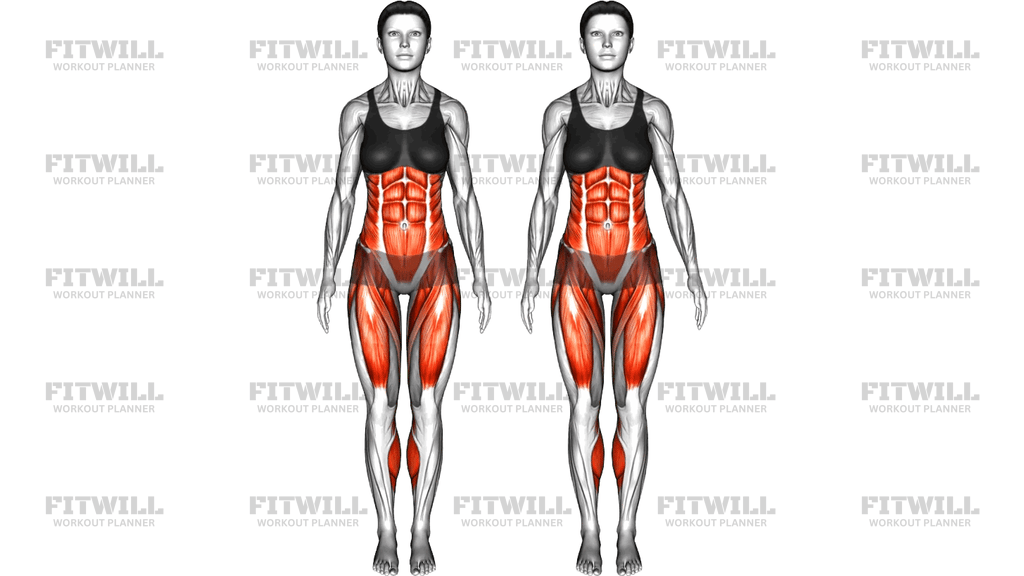
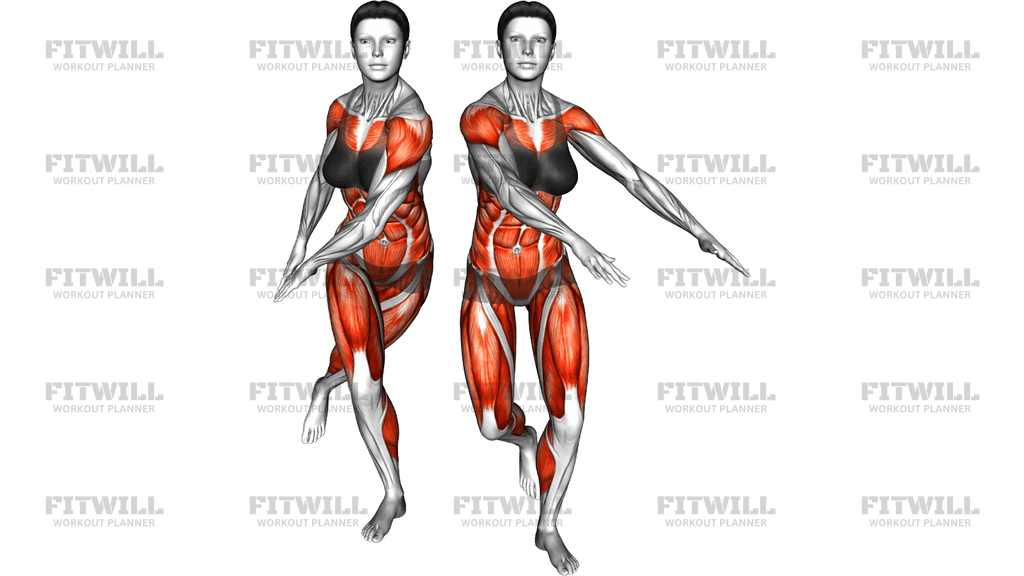
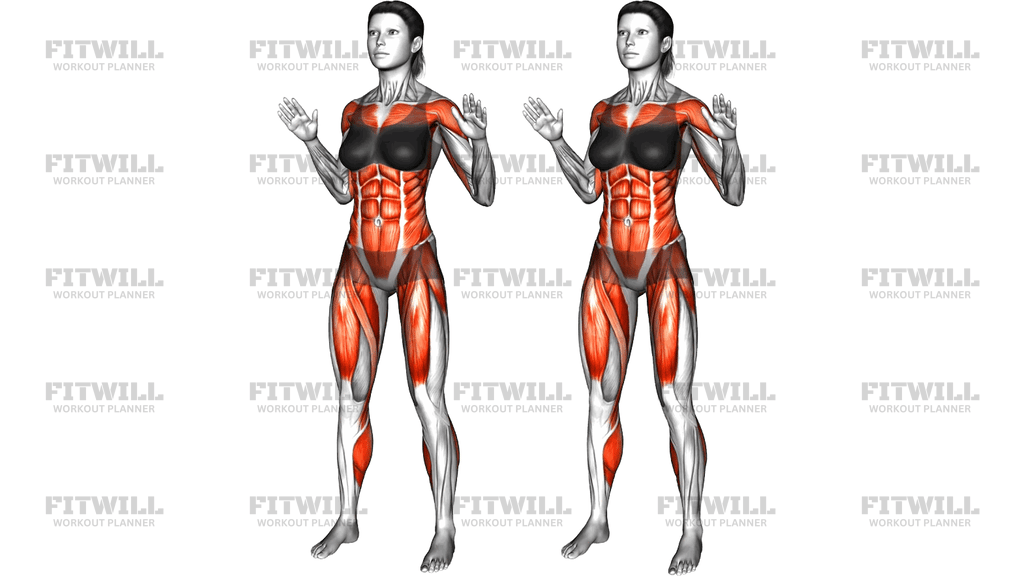
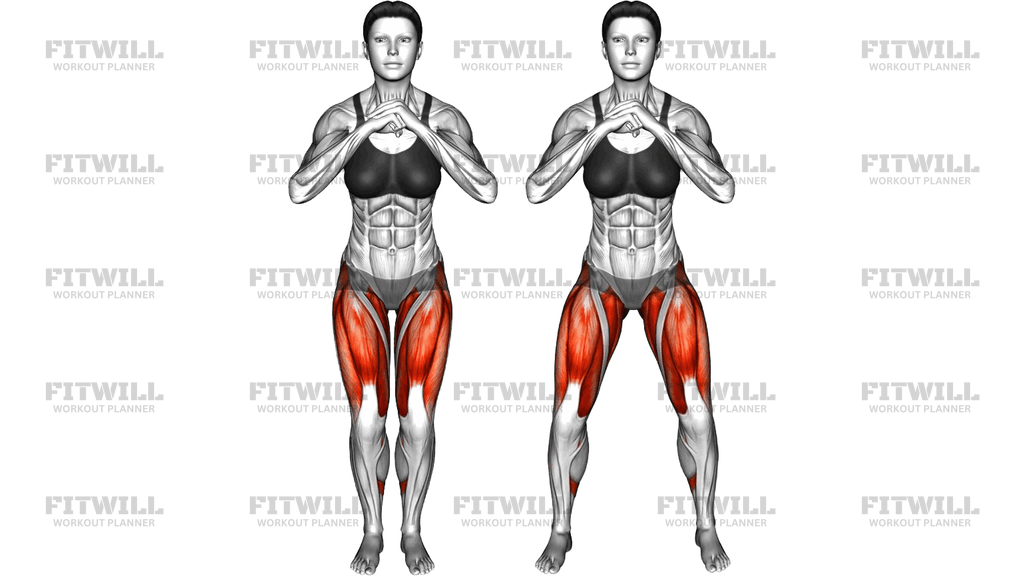
Criss Cross Tuck Jump
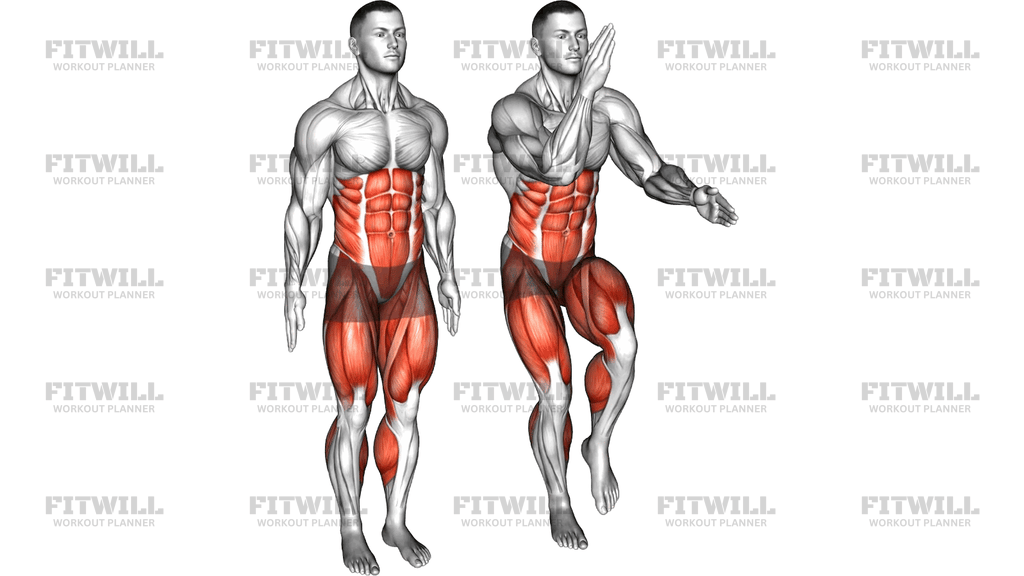
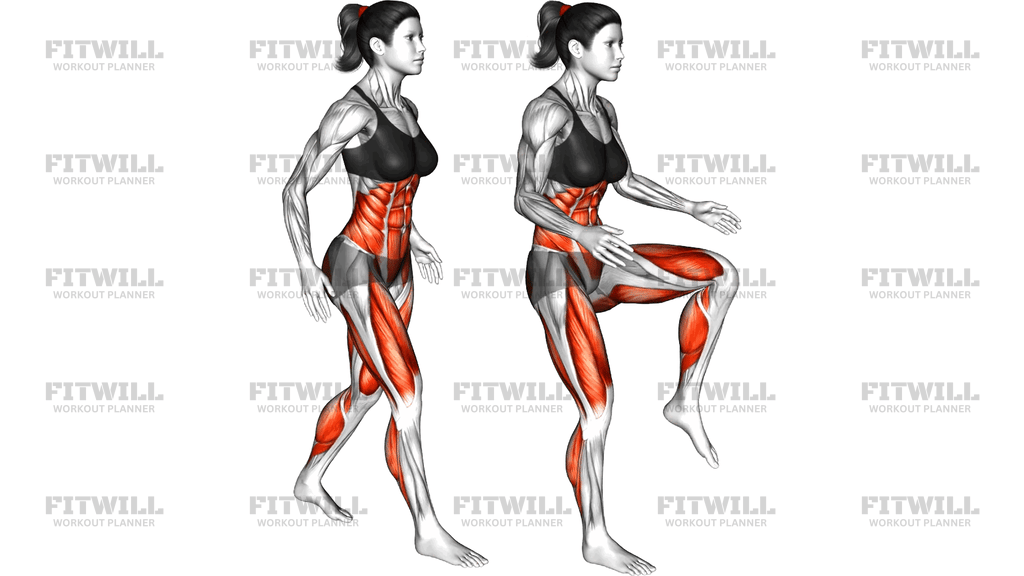
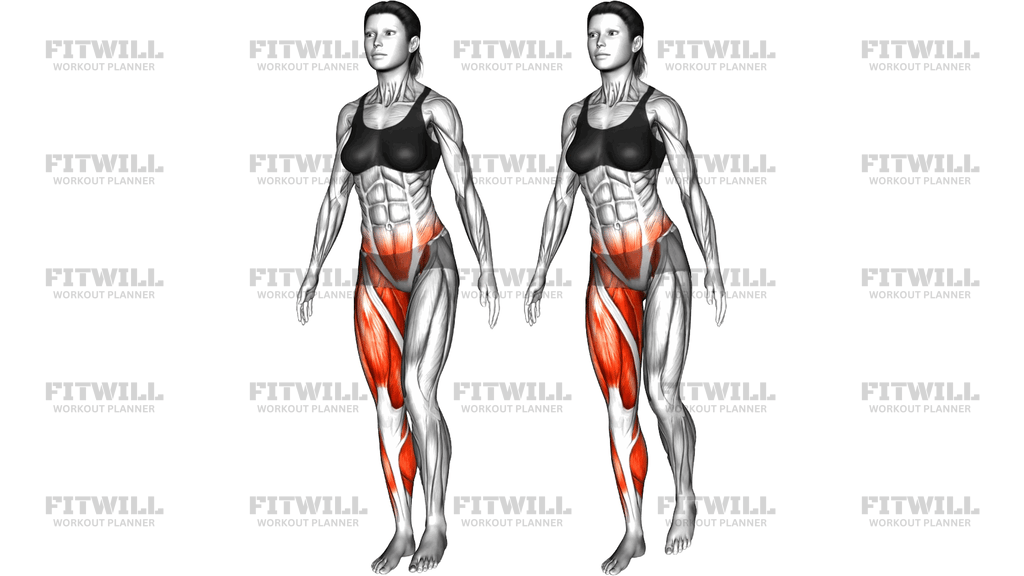
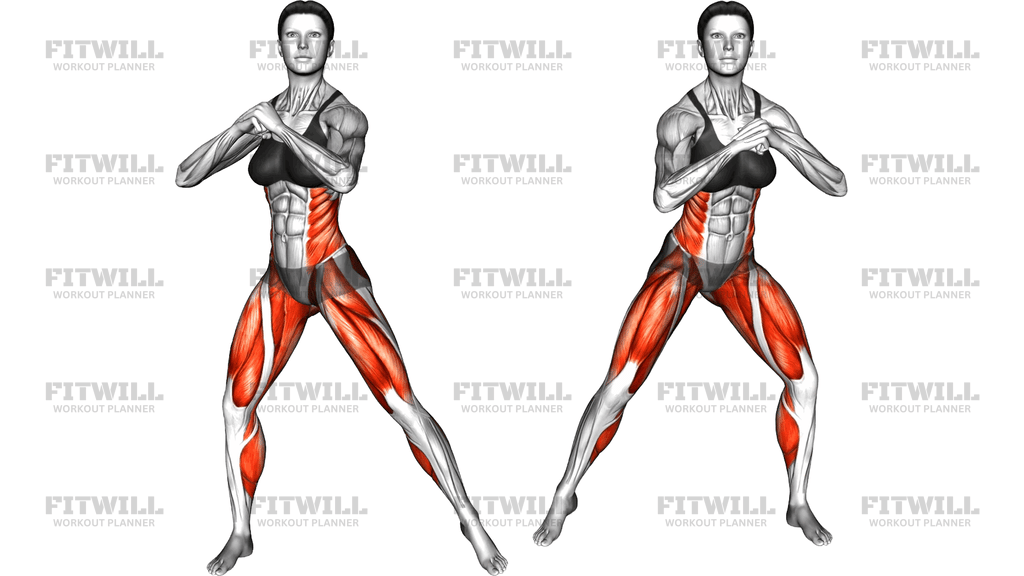
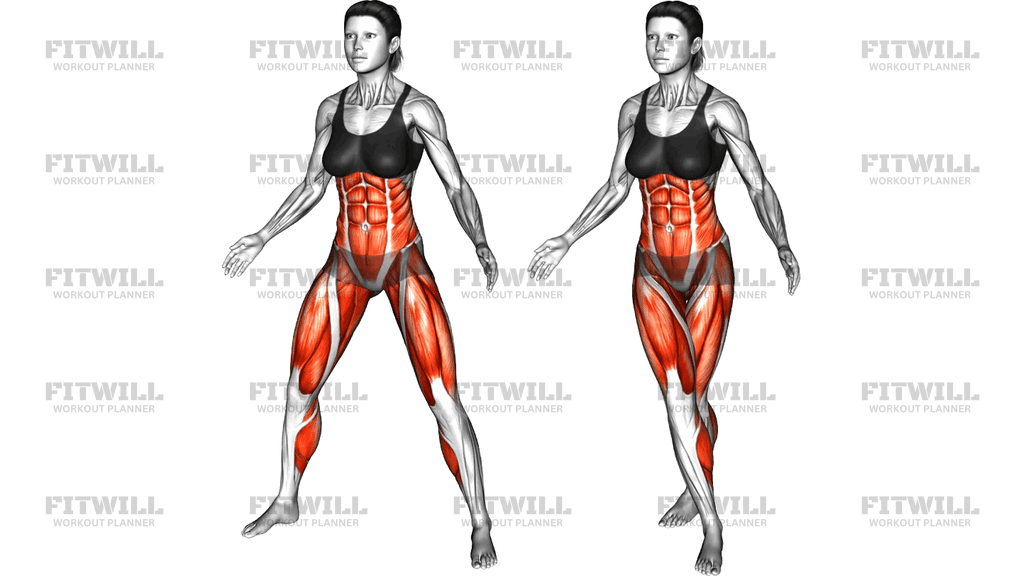
The Criss Cross Tuck Jump is a plyometric bodyweight movement where you jump vertically, cross one leg over the other mid-air while tucking your knees up toward your torso, then land back in a shoulder-width stance. Each rep alternates which leg crosses in front, so your legs switch positions from jump to jump. It combines the explosive demand of a tuck jump with the coordination challenge of swapping leg positions in the air, which makes it noticeably harder than a standard vertical jump.
This exercise suits anyone building explosive lower-body power, athletic coordination, or conditioning capacity. Sprinters, court-sport athletes, and martial artists benefit from the rapid hip flexion and foot-speed component, while general trainees can use it as a high-intensity interval finisher. Because it requires no equipment and very little space, it works well in home workouts, warm-ups, and circuit training alike.
Physically, the Criss Cross Tuck Jump drives your quadriceps, glutes, and calves to produce force, while your hip flexors and lower abs power the knee tuck. Your core works hard throughout to keep your torso upright and absorb the landing. The ankle stabilizers take on significant demand as well, since every landing happens on one crossing foot before you reset to a stable base.
Setup matters more than people expect. You need a firm, non-slip surface, clear overhead space, and a stance about shoulder-width apart with soft knees before each jump. Starting too narrow makes the crossing awkward, and starting too wide wastes energy pulling your feet in. Keeping your arms loose at your sides or swinging them slightly for lift helps you stay balanced without twisting your torso.
Execution comes down to rhythm and control. Drive through the balls of your feet, jump straight up, and as you rise, pull both knees toward your chest while crossing one shin over the other. Land quietly on the balls of your feet, immediately settle into your shoulder-width stance, absorb the impact with bent knees, and reset before the next jump. Quality landings matter far more than jump height, especially as fatigue builds.
The most common use cases are conditioning intervals, athletic warm-up progressions, and plyometric blocks in a lower-body program. Beginners should master the standing criss-cross step pattern and a basic tuck jump separately before combining them, and anyone with sensitive knees or ankles should keep reps low and stay on forgiving surfaces like a rubber floor or grass.
[ Workout Log & Planner ]
Put your next workout in Fitwill
Keep your plan and training log ready when you are.


Instructions
- Stand tall with your feet about shoulder-width apart, arms relaxed at your sides or slightly back, on a firm non-slip surface with clear overhead space.
- Shift your weight onto the balls of your feet and bend your knees into a shallow quarter squat, keeping your chest up and your gaze forward.
- Brace your core firmly to protect your lower back and keep your torso from twisting during the crossing motion.
- Explosively extend your hips, knees, and ankles to jump straight up, swinging your arms forward and up for lift.
- At the top of the jump, pull both knees up toward your chest and cross one shin over the other in front of your body.
- Uncross your legs quickly as you descend and land on the balls of your feet in a shoulder-width stance with knees bent to absorb impact.
- For the next repetition, jump again and cross the opposite shin in front, alternating sides on every rep.
- Exhale sharply as you jump and tuck, then inhale as you land and reset your stance.
- Pause briefly between reps if your form or landing quality starts to slip, rather than rushing into a sloppy jump.
- Finish the set by stepping back to a full standing position and letting your breathing settle before your next exercise.
Tips & Tricks
- Aim for quiet landings. If your heels slap the floor or your knees cave inward, lower your jump height and focus on landing on the balls of your feet first.
- Cross at the shins, not the thighs. Trying to cross higher up usually causes the torso to lean and rotate, which throws off your landing.
- If you keep crossing with the same leg in front, slow down and verbally cue the switch, such as saying right, left out loud on alternating reps.
- Do not let your knees collapse inward on landing. Push them slightly out over your toes as you absorb each jump to protect the joints.
- Keep the tuck driven by your hip flexors and lower abs, not by bending forward at the waist. Your chest should stay tall through the entire movement.
- If your calves or Achilles feel tight during the set, reduce the number of consecutive reps and stretch them between rounds.
- Practice each half separately: standing criss-cross steps for the crossing pattern, and basic tuck jumps for the knee drive, before combining them.
- On a hard floor like concrete, use a rubber mat or move to a more forgiving surface, since repeated plyometric landings on unforgiving ground fatigue the joints quickly.
- Stop the set when your jump height drops noticeably. Plyometric work done deep into fatigue trains slow, heavy landings, which is the opposite of what this exercise is for.
Frequently Asked Questions
What muscles does the Criss Cross Tuck Jump work?
The main drivers are the quadriceps, glutes, and calves, which produce the jump. Your hip flexors and lower abs power the knee tuck, and your core stabilizes your torso through the crossing and landing.
Is the Criss Cross Tuck Jump suitable for beginners?
Beginners should build up to it. Learn a basic tuck jump and a standing criss-cross step pattern first, then combine them at low height with short sets before increasing intensity.
How high should I jump during the Criss Cross Tuck Jump?
Jump only as high as you need to cleanly cross your shins and clear the floor. Extra height adds landing stress without improving the training effect if your tuck is already crisp.
Why do my legs tangle when I try the criss cross portion?
This usually happens when the crossing starts too late or too high. Initiate the cross as soon as your feet leave the floor, cross at the shin level, and slow the tempo down until the pattern feels automatic.
Can I do the Criss Cross Tuck Jump every day?
Plyometric training stresses your joints and nervous system, so two to four sessions per week with rest days in between is a better approach. Daily jumping on hard surfaces can lead to nagging ankle or knee soreness.
What can I substitute if jumping is too hard on my knees?
Do standing criss-cross steps with an exaggerated high-knee lift and no jump, or perform fast bodyweight tucks onto a low step platform. These keep the coordination and hip flexor work while removing the landing impact.
How do I land safely from a Criss Cross Tuck Jump?
Land on the balls of your feet with knees softly bent and tracking over your toes, then immediately settle into your shoulder-width stance. Uncross your legs early on the way down so you never land with one foot stacked over the other.
How many reps and sets should I do?
For power and coordination, do 3 to 5 sets of 5 to 10 crisp reps with full recovery. For conditioning, work in timed intervals of 15 to 30 seconds and stop when your jump quality drops.
Should my arms move during the Criss Cross Tuck Jump?
Yes, a relaxed arm swing upward as you jump adds lift and helps balance. Keep the swing straight up and down rather than rotating across your body, since twisting arms tend to twist the torso and ruin the landing.