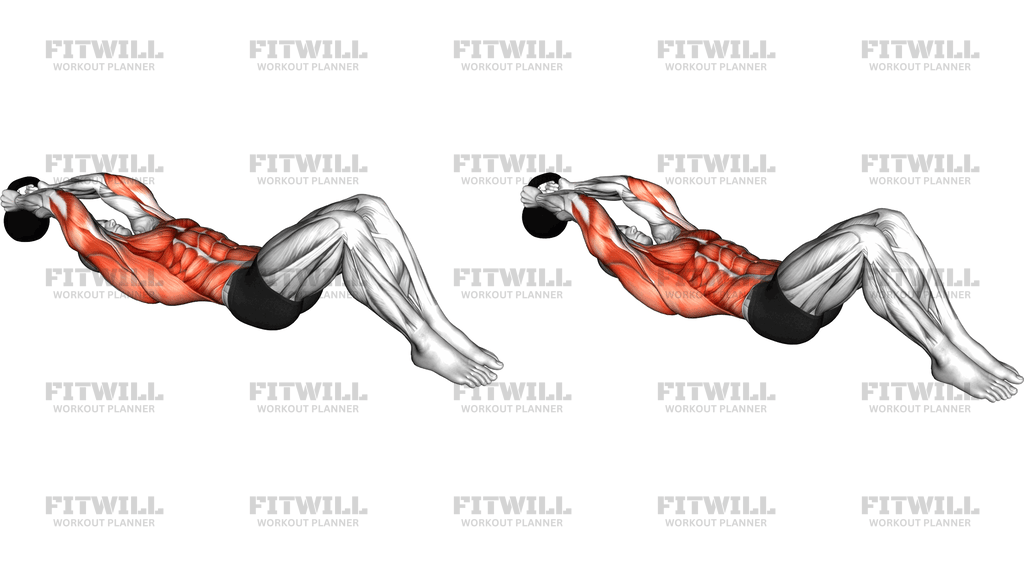
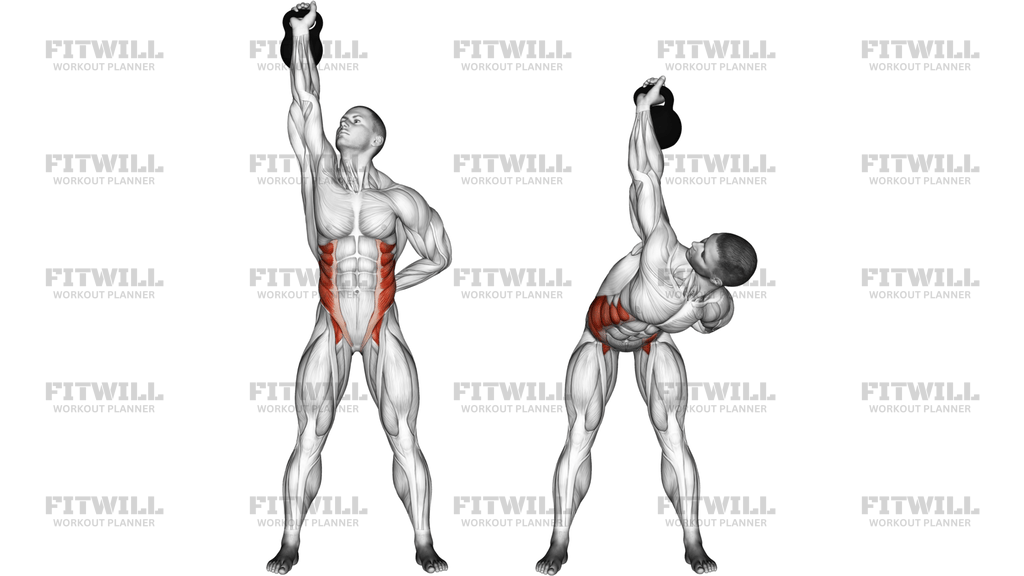
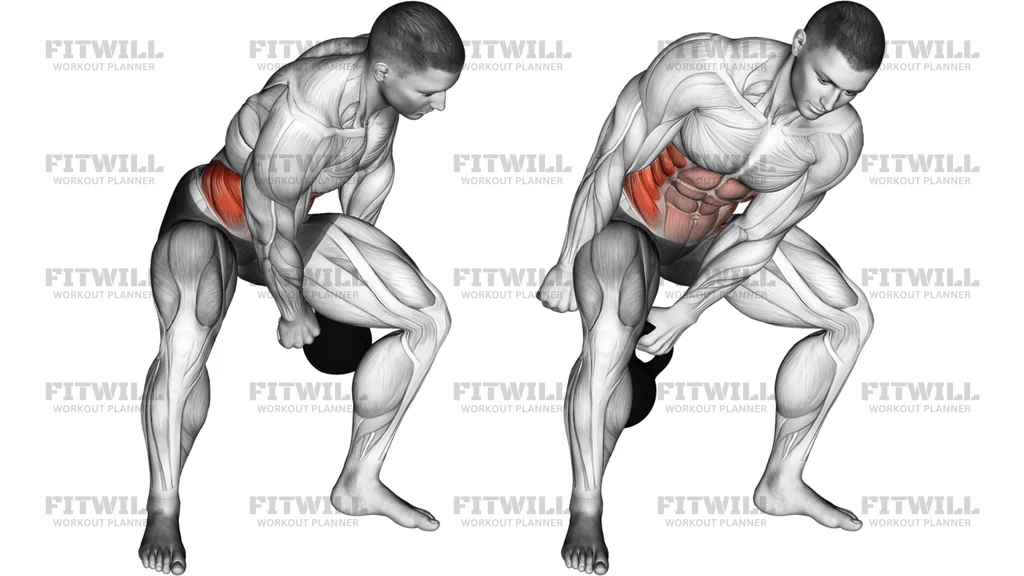
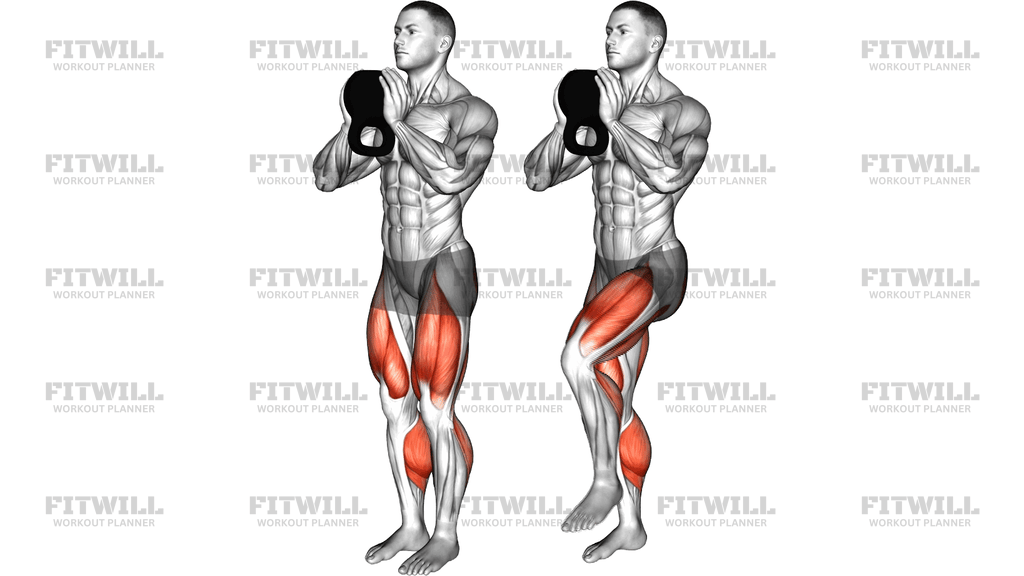
Kettlebell Plank Pass Through
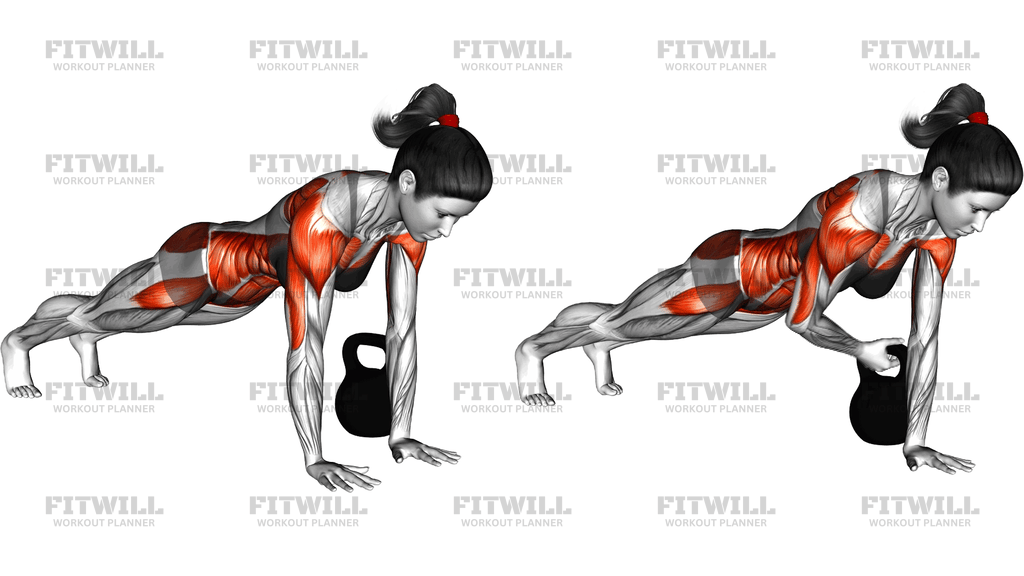
The Kettlebell Plank Pass Through is an anti-rotation core exercise performed from a high plank position. While holding a rigid plank, you reach one hand underneath your body, grab a kettlebell resting on the floor, drag it across to the other side, and set it down before repeating with the opposite hand. Because you are supporting yourself on three limbs while the working arm moves a load, your trunk has to fight rotation the entire time.
This movement is useful for almost anyone who already owns a solid basic plank. It turns a static hold into a dynamic challenge, which makes it popular in kettlebell classes, general strength circuits, and warm-up routines for lifters who want to switch their core on before pressing or squatting. It is also a smart progression for people who find long plank holds too easy but are not ready for more aggressive anti-rotation work like heavy Pallof presses.
The main demand falls on the abs and deep core, with the obliques working hard to stop your hips from twisting every time a hand leaves the floor. The shoulders and arms handle the shifting support base, the shoulder blades stay stable through the moving arm, and the glutes and legs keep the lower body quiet so the force travels through a straight line from shoulders to heels.
Setup matters more than most people expect. The kettlebell should sit on the floor roughly under your chest or slightly off to one side, and your feet should be wide enough to give you a stable base. If the bell is too far away or your feet are too narrow, your hips will swing and your lower back will sag the moment you reach. A mat under the knees is not needed here, but one under the hands and bell keeps the kettlebell from sliding.
Execute the pass slowly: brace the abs, squeeze the glutes, reach one hand under your torso, grip the handle, and drag the bell across to the far side in a controlled arc. Set it down quietly, plant that hand, and repeat from the other side. Keep your shoulders square and hips level the whole time. One clean pass per side with a stable trunk is worth more than six quick, wobbly ones.
A moderate bell works best for most lifters, something light enough to move without the wrist collapsing but heavy enough that you must actually control it. If your hips start rotating or your lower back arches, stop, reset the plank, and continue with fewer reps or a lighter bell.
[ Workout Log & Planner ]
Put your next workout in Fitwill
Keep your plan and training log ready when you are.


Instructions
- Place a kettlebell on the floor and set up in a high plank with your hands under your shoulders and the bell resting slightly off to one side, roughly in line with your chest.
- Set your feet a little wider than hip width so you have a stable base, legs straight, heels pushing back.
- Brace your abs, squeeze your glutes, and press the floor away so your shoulders sit over your wrists and your body forms one straight line from head to heels.
- Shift your weight slightly onto your left hand, then reach your right hand under your torso toward the kettlebell handle.
- Grip the handle firmly and drag the kettlebell across the floor in a smooth arc to the opposite side, keeping your hips and shoulders square.
- Set the kettlebell down quietly, then plant your right hand back on the floor so both hands are supporting you again.
- Reach your left hand under your body, grab the handle, and pass the bell back to the starting side to complete one full rep.
- Exhale as you reach and pull the bell across, and inhale as you reset both hands into the plank.
- Continue alternating passes for the desired number of reps, keeping the movement slow enough that your hips never rotate.
- To finish, place the kettlebell fully on one side, return both hands to the floor, and only then step out of the plank.
Tips & Tricks
- If your hips swing toward the side you are reaching with, widen your feet another few inches. A wider base makes anti-rotation much easier without reducing the core demand much.
- Do not let the reaching shoulder drop toward the floor. Think about pushing the planted hand through the ground while the other arm moves the bell.
- Common mistake: grabbing the kettlebell before bracing. Set your trunk first, then reach. Reaching from a loose plank is when the lower back usually arches.
- Keep the kettlebell close to your body during the pass. Dragging it out wide lengthens the lever and pulls your torso into rotation.
- Set the bell down instead of dropping it. A bell that tips over mid-set forces you to re-grip awkwardly with one hand in a plank.
- Slower is harder here. A three-second pass with a level pelvis trains the obliques more than a fast pass with hips twisting.
- If your wrists complain from supporting your weight, spread your fingers and grip the floor actively, or do a few reps per side only and build up gradually.
- Avoid holding your breath. Exhaling on each reach helps you keep the abs tight instead of puffing air and losing the brace.
- If a standard kettlebell handle is awkward to grab from your plank position, choose a lighter bell with a wider handle so you can grip it without rolling your wrist.
Frequently Asked Questions
What muscles does the Kettlebell Plank Pass Through work?
The abs and deep core do most of the work to hold the plank and resist rotation, with the obliques especially active on each pass. The shoulders, arms, and shoulder blades handle the shifting support, while the glutes and legs keep the lower body stable.
Is the Kettlebell Plank Pass Through suitable for beginners?
Yes, if you can already hold a solid high plank for around 30 seconds. Beginners should use a very light kettlebell and start with just a few passes per side, focusing on keeping the hips level.
How heavy should the kettlebell be for the Kettlebell Plank Pass Through?
Choose a weight you can drag across the floor smoothly without your wrist collapsing or your torso twisting. For most people this is a light to moderate bell, since the exercise trains control, not maximal pulling strength.
Why do my hips rotate during the Kettlebell Plank Pass Through?
Hip rotation usually means the base is too narrow, the bell is being passed too far from the body, or the core is not braced before the reach. Widen your feet, keep the pass close to your torso, and re-brace before every rep.
What can I substitute if I do not have a kettlebell?
A dumbbell or medicine ball works with the same reach-and-drag pattern, and a body weight version where you simply tap your opposite shoulder or slide a hand across the floor trains the same anti-rotation demand.
Should the kettlebell be positioned to one side or in front of me?
Place it just off to one side, roughly under your chest. This lets you grab it with one hand without leaning far off your support base, which keeps the plank position intact.
How many reps of the Kettlebell Plank Pass Through should I do?
Around 6 to 10 full passes, where each side moves the bell once, works well for most training goals. Stop the set as soon as your hips start twisting or your lower back begins to sag.
Is it safe for my lower back?
When done with a braced core and level hips it is generally back-friendly, since the trunk resists movement rather than bending. If you feel your lower back arching or any discomfort, shorten the set, lighten the bell, or regress to a body weight shoulder tap.
Where should the Kettlebell Plank Pass Through go in my workout?
It fits well as a warm-up activation drill before presses or squats, or as a core finisher at the end of a session. Either way, do it while you are fresh enough to keep the plank position strict.