Weighted Kettlebell Dead Bug
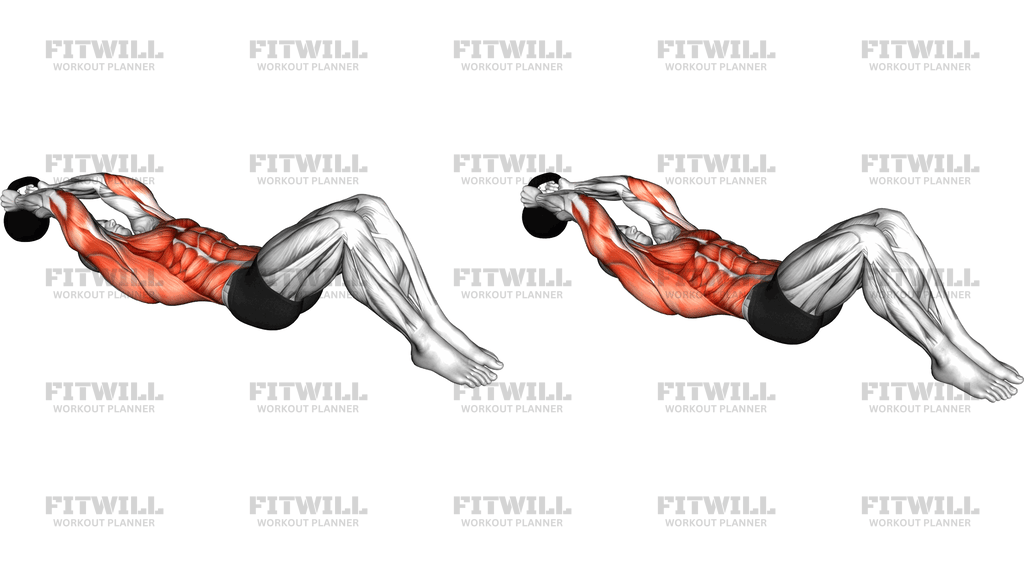
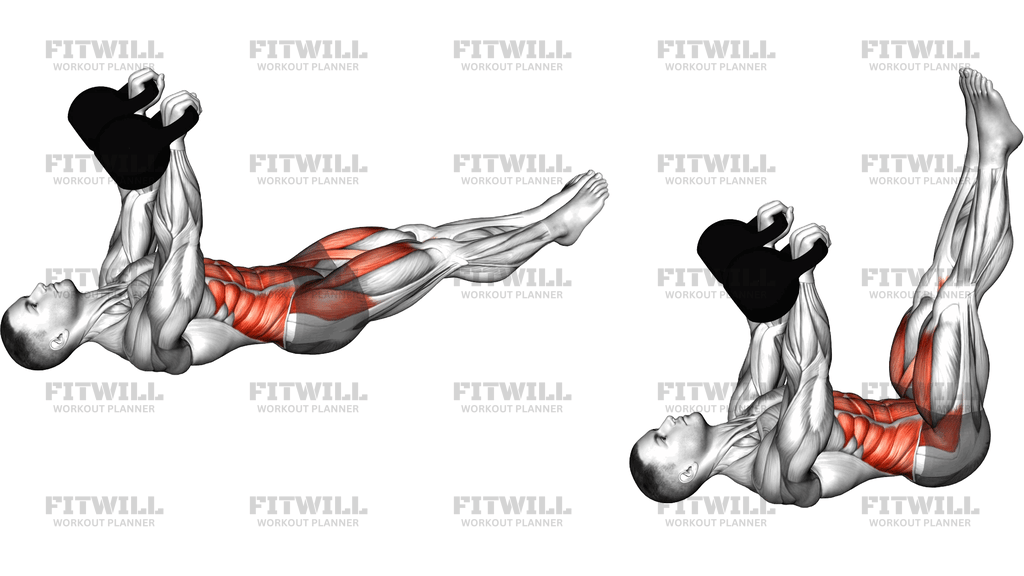
The Weighted Kettlebell Dead Bug is a core stability exercise performed lying on your back while pressing a kettlebell toward the ceiling and lowering the legs in an alternating dead bug pattern. Unlike the bodyweight version, the kettlebell forces your trunk to resist movement in multiple directions at once, since the load sits over one shoulder and tries to drift as your limbs move. The result is a deep-core exercise that trains your abs to stabilize rather than to flex.
This movement is especially useful for people who need to protect their lower back while still training the trunk hard. Because your spine stays flat on the floor the entire time, it is a common choice in rehab-to-performance settings, postpartum return-to-training programs, and for lifters who want stronger bracing for squats and deadlifts. It is also a smart progression for anyone who finds the bodyweight dead bug too easy but is not ready for loaded carry variations.
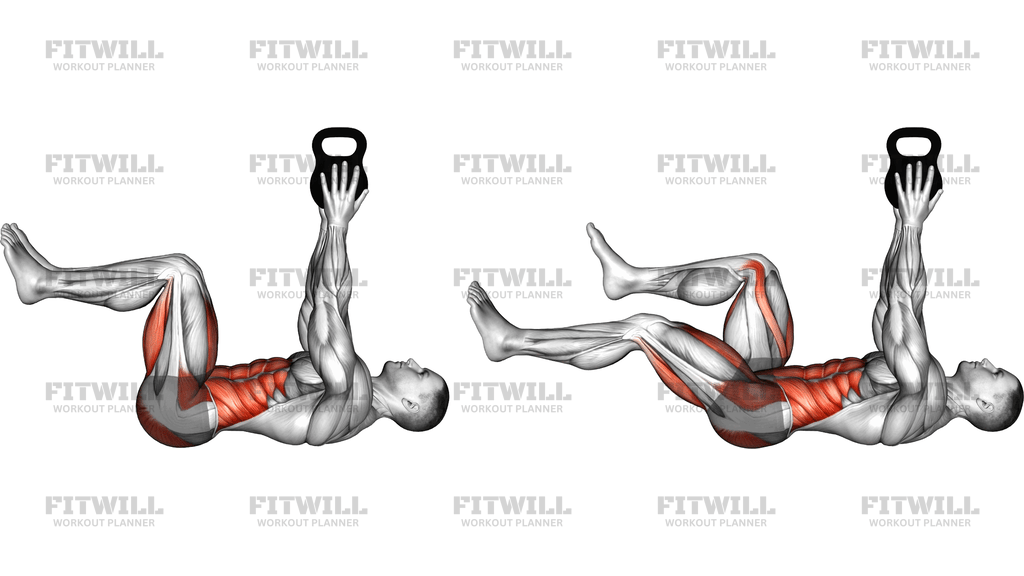
The main work comes from the deep core, particularly the transverse abdominis, along with the rectus abdominis and obliques holding your ribcage and pelvis still. The hip flexors of the moving leg work through a long range as it extends toward the floor, and the pressing arm builds shoulder stability as it holds the kettlebell steady overhead. The highlighted areas in the movement show just how much of the trunk and hip region stays switched on throughout.
Setup matters more than speed here. Your lower back should stay in gentle contact with the floor, your ribs should stay down, and the kettlebell should sit directly over the pressing shoulder, not drift behind your head or out to the side. Holding the bell with your palm flat against its base, as this variation is typically performed, adds a balance demand because the bell wants to tip in any direction. That small instability is what makes the exercise so effective at teaching constant, refined tension.
Execution is simple but demanding: brace your core as if bracing for a light punch, extend one leg slowly toward the floor while keeping the kettlebell vertical, then return and switch sides. Every rep should look identical. If your lower back arches off the floor or the bell starts wandering, the weight is too heavy or the range is too long. Common use cases include core finishers after lower body sessions, warm-up activation before heavy lifting, and low-back-friendly core training blocks.
[ Workout Log & Planner ]
Put your next workout in Fitwill
Keep your plan and training log ready when you are.


Instructions
- Lie on your back on an exercise mat with your knees bent and feet flat on the floor.
- Pick up the kettlebell and hold it with one hand, pressing your palm flat against the underside of the bell so the handle points down and the bell sits on your hand.
- Extend that arm straight up so the kettlebell is stacked directly over your shoulder, then bring both legs up into tabletop position with knees bent to roughly 90 degrees over your hips.
- Press your lower back gently into the floor, ribs down, and exhale as you brace your core firmly.
- Keeping the knee at its angle or letting it straighten slightly, slowly lower one leg toward the floor until the heel hovers just above it.
- Keep the kettlebell perfectly vertical and still over the pressing shoulder for the entire rep, resisting any pull toward the moving side.
- Pause briefly in the extended position, then use your lower abs to draw the leg back up to tabletop without letting your hips tilt.
- Repeat on the opposite leg to complete one rep, continuing to alternate legs for your target number of reps.
- Breathe steadily throughout: exhale as the leg lowers, inhale as it returns, and never hold your breath.
- When finished, bend the free arm up to steady the kettlebell, then bring it down to your chest before sitting up.
Tips & Tricks
- The most common failure point is the lower back peeling off the floor as the leg extends. Shorten the range so the heel stops well above the floor, and only lengthen it once you can keep contact for every rep.
- If the kettlebell keeps tipping off your palm, your press angle is off. Push the bell slightly toward the ceiling rather than letting your elbow drift back, and keep the forearm stacked directly under it.
- Start lighter than you think you need. The balance demand of holding the bell bottoms-up on your palm makes a modest weight feel far heavier than the same kettlebell in a normal grip.
- Move the leg at hip speed, not foot speed. Slow the whole limb down together so the knee angle stays constant, which keeps tension on the lower abs instead of letting momentum do the work.
- Watch your ribs. If they flare up toward the ceiling as the leg lowers, exhale harder and imagine pulling your belt buckle toward your ribs before starting the next rep.
- Keep your gaze on the kettlebell. Tracking the bell helps you catch drift early and keeps your neck in a neutral line rather than craning forward.
- If one side is noticeably harder, that usually reflects a difference in hip flexor control or oblique strength. Match your sets to the weaker side rather than letting the strong side set the pace.
- Place the kettlebell on the floor beside your hip before your first rep rather than pressing up from your chest with a bent arm, which strains the shoulder and wastes tension before you start.
- If the bottoms-up hold is too unstable, flip your grip so your hand wraps the handle with the bell resting on your forearm until your shoulder stability improves.
Frequently Asked Questions
What muscles does the Weighted Kettlebell Dead Bug work?
It primarily targets the deep core, especially the transverse abdominis, along with the rectus abdominis and obliques that hold your ribcage and pelvis still. The hip flexors of the moving leg and the shoulder stabilizers holding the kettlebell work as supporting muscles.
Why hold the kettlebell with the palm against the bell instead of gripping the handle?
The flat-palm hold makes the bell balance on your hand, which adds a shoulder stability and fine-control demand on top of the core challenge. If it feels too unstable at first, grip the handle normally until you build control.
Is the Weighted Kettlebell Dead Bug safe for people with lower back issues?
It is often used in low-back-friendly programming because the spine stays supported on the floor, but tolerance varies from person to person. Start with a light bell, keep the range short, and stop if the movement causes discomfort.
How heavy should the kettlebell be for this exercise?
Most people do well starting with a light bell in the 4 to 8 kg range, because the balance demand of the bottoms-up hold amplifies the load. Choose a weight you can hold perfectly still over your shoulder for every rep.
Should I extend the leg on the same side as the kettlebell or the opposite side?
Extending the leg on the same side as the loaded arm creates a stronger anti-rotation challenge, since the working hip flexor pulls on the same side the weight is pressing. Opposite-side extensions are easier, so use them as a regression if the same-side version breaks your form.
How many reps and sets should I do?
Two to three sets of 6 to 10 slow, controlled extensions per side works well as a core finisher or pre-lift activation. Quality matters far more than volume, so end the set when the bell starts drifting or your lower back lifts.
What is the most common mistake in the Weighted Kettlebell Dead Bug?
Rushing the leg extension and letting the lower back arch off the floor, which shifts work away from the abs and onto the spine. Slow the movement down and stop the heel higher above the floor until you can keep your back in contact throughout.
Can beginners do this exercise?
Yes, provided they start with a very light kettlebell or even master the bodyweight version first. Beginners should also limit the leg to a short extension range and focus entirely on keeping the lower back pressed into the floor.
What can I use instead of a kettlebell if I do not have one?
A light dumbbell held vertically in one hand, a small weight plate pressed between both palms, or a filled water jug all work as substitutes. The key is a modest load held over one shoulder so the core has to resist the tilt.
Where should the kettlebell sit during the rep?
Directly over the pressing shoulder, with your arm locked out and vertical. If the bell drifts behind your head or across your body, the weight is pulling you out of position and your set quality is dropping.