Standing Wall Slide Half Squat
The Standing Wall Slide Half Squat is a bodyweight lower-body exercise performed with your back flat against a wall. From a tall standing position, you bend your knees and slide your back down the wall until you reach a half-squat depth, then press through your heels to slide back up to standing. Because the wall removes balance from the equation and gives you constant feedback about your torso position, it is one of the most forgiving and teachable squat patterns you can do.
This movement is especially useful for beginners learning how to squat correctly, for older adults who want a supported way to build leg strength, and for anyone rehabbing around a knee or hip who needs a controlled, low-load squat variation. It also works well as a warm-up drill before heavier squats or as a stand-alone high-rep exercise when you have no equipment available.
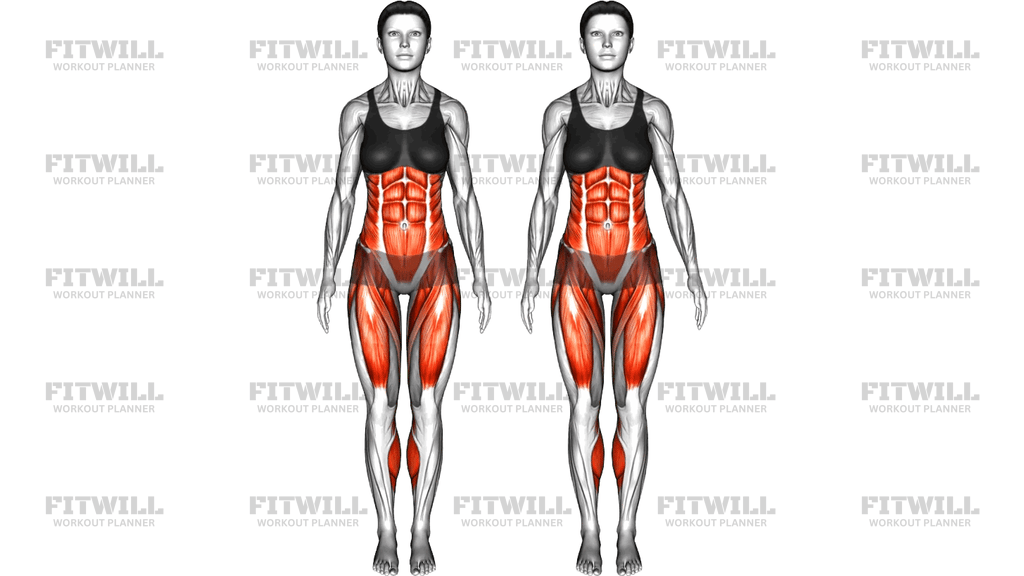
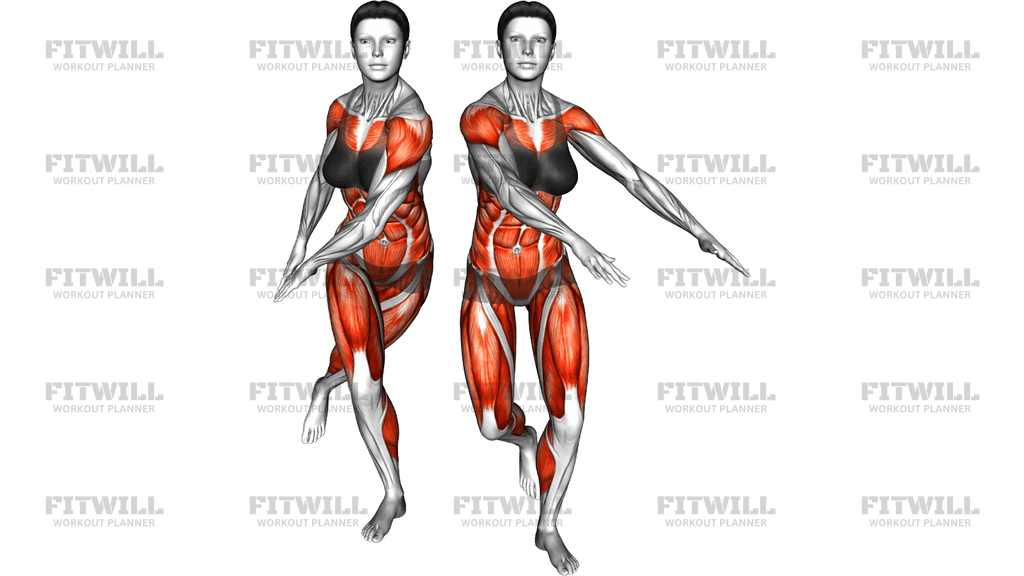
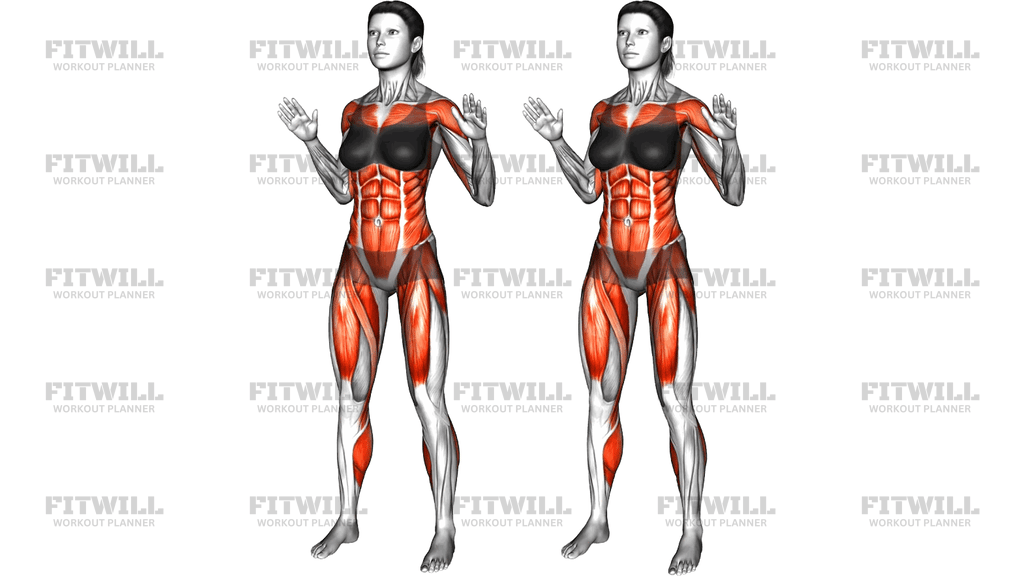
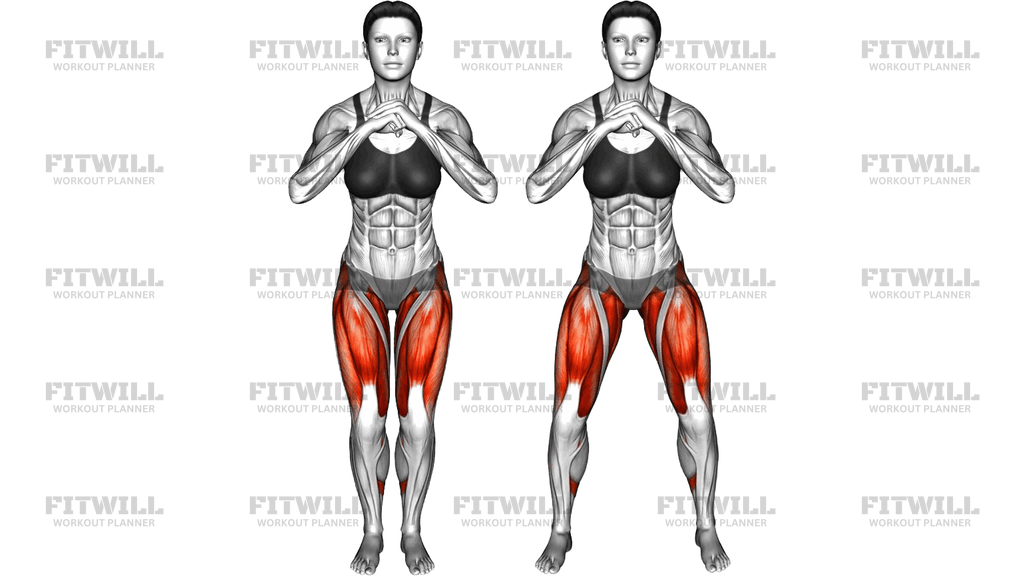
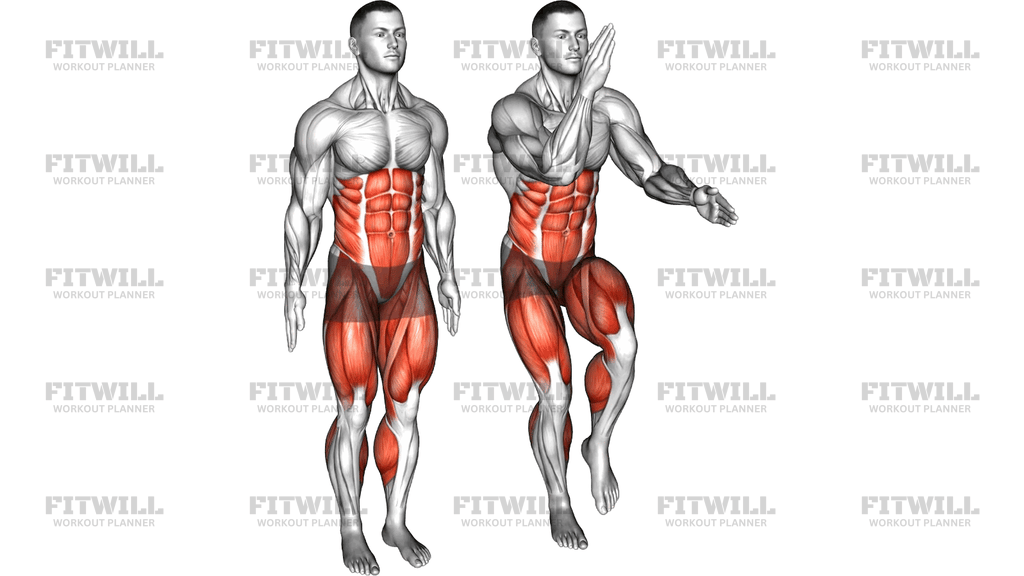
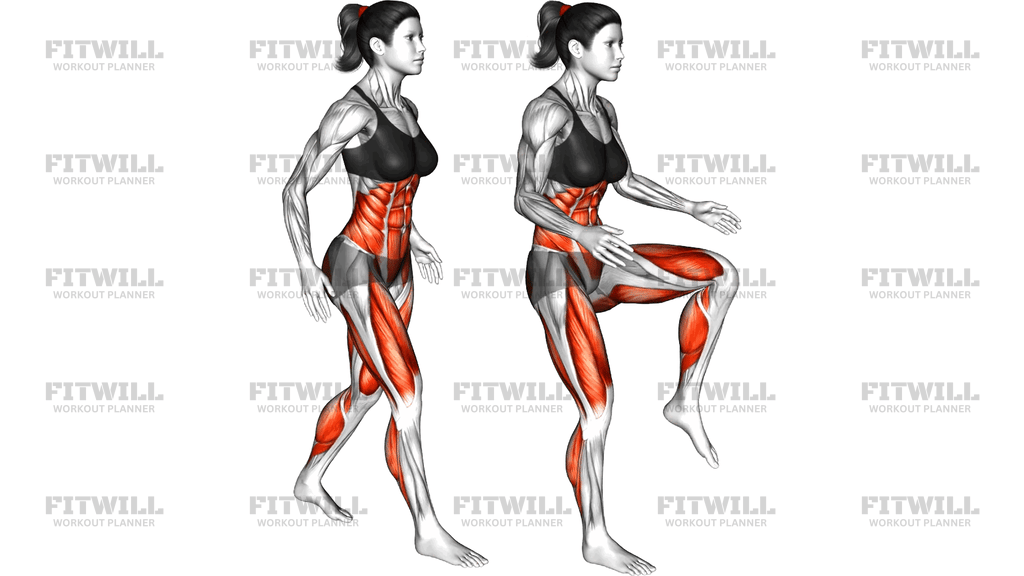
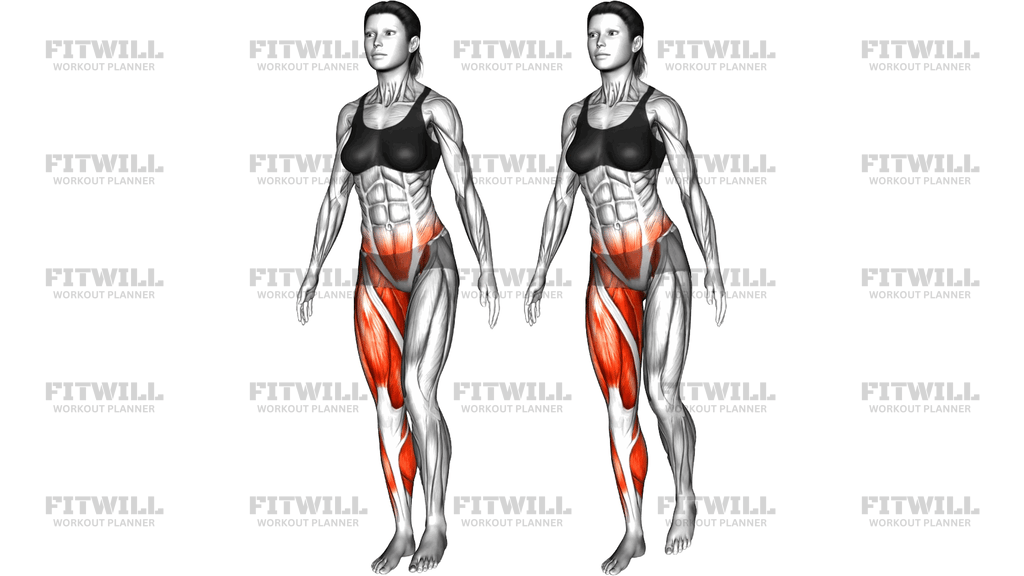
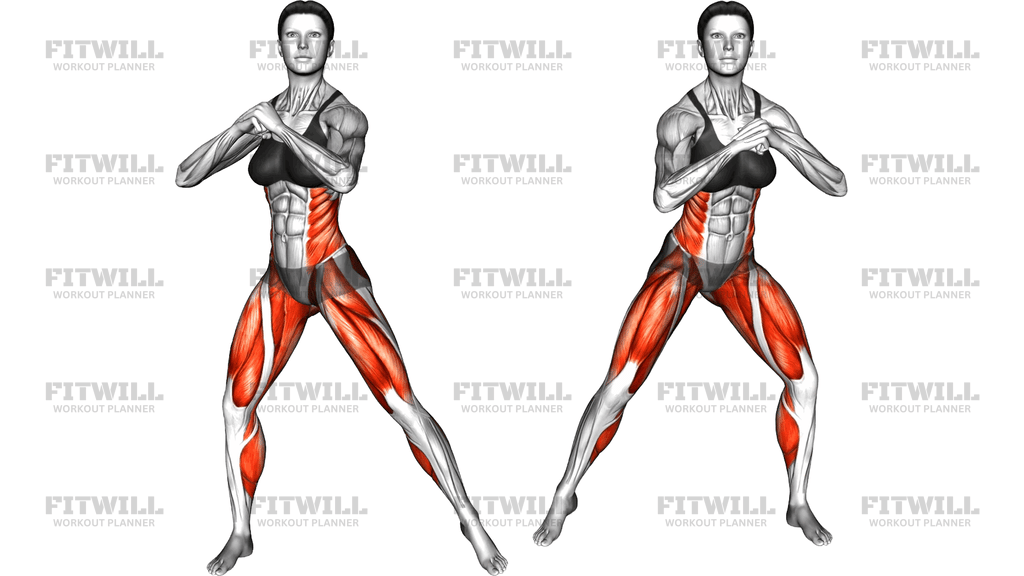
The primary work is done by the quadriceps at the front of the thighs, which control the descent and drive you back up. The glutes assist on the way up, the calves and ankle stabilizers keep your feet grounded, and the core stays active to hold your ribs and lower back against the wall throughout. The highlighted musculature in this exercise is concentrated in the front of the thigh, which tells you where you should feel it most.
The setup matters more than it looks. Your feet need to be far enough from the wall that your knees stay behind or over your toes without your heels lifting, and your back must maintain full contact with the wall from shoulders to hips. If your heels are too close, you will be forced onto your toes or your lower back will peel away from the wall; if they are too far, the movement loses its support and becomes an awkward lean.
To execute it well, slide down slowly rather than dropping, stop at roughly half depth where your thighs are angled but not parallel to the floor, and hold for a beat if you want extra time under tension. Ascend by pushing the floor away through your whole foot, keeping the same wall contact the entire way. The controlled tempo is what makes this exercise valuable, so resist the urge to bounce out of the bottom.
Use the Standing Wall Slide Half Squat in warm-ups, beginner leg sessions, active recovery days, or as a technique reset between heavier squat cycles. Keep the reps moderate, the tempo smooth, and stop the set as soon as your back starts separating from the wall or your heels rise, since those are the first signs the movement is breaking down.
Fitwill
Log Workouts, Track Progress & Build Strength.
Achieve more with Fitwill: explore over 9600 exercises with images and videos, access built-in and custom workouts, perfect for both gym and home sessions, and see real results.
Start your journey. Download today!




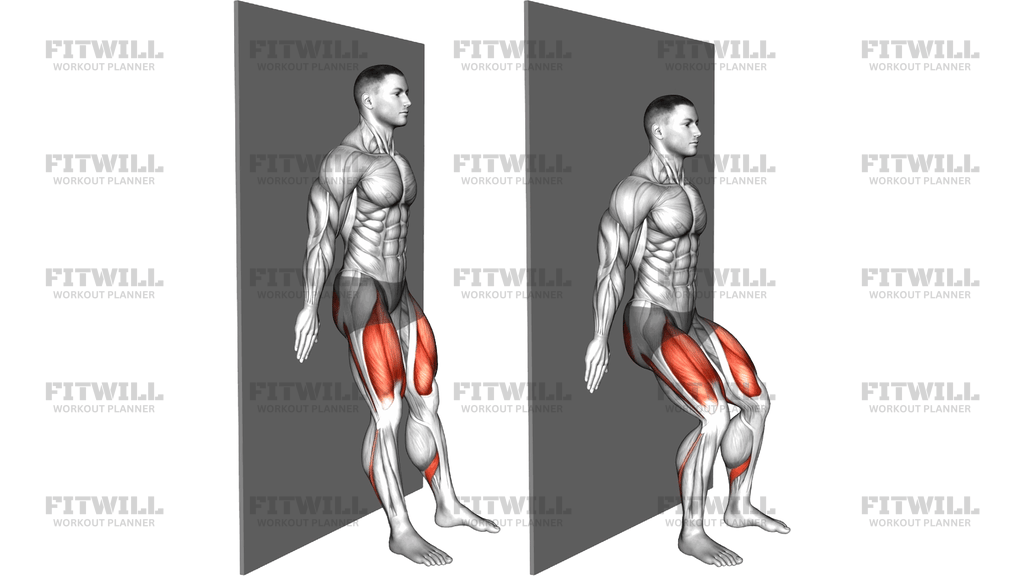
Instructions
- Stand with your back to a clear, smooth wall, feet about 12 to 18 inches away and hip-width apart, toes pointing forward.
- Press the back of your head, your shoulders, and your hips against the wall, and let your arms hang relaxed at your sides.
- Shift your weight so it is spread across both feet, and brace your abdominal muscles lightly as if preparing for a gentle push.
- Inhale, then slowly bend your knees and slide your back down the wall, keeping full contact from shoulders to hips.
- Descend until you reach a half squat, roughly where your thighs are angled toward the floor but your knees are not past about 90 degrees of bend.
- Check that your knees track over your toes, your heels stay flat on the floor, and your lower back has not arched away from the wall.
- Pause for one or two seconds at the bottom position to reinforce control and wall contact.
- Exhale and press through your heels and mid-feet to slide back up the wall until your legs are nearly straight.
- Stand tall without locking the knees hard, reconfirm head, shoulder, and hip contact with the wall, then begin the next repetition.
- Move at a steady two- to three-second pace down and up, and end the set before your form or wall contact slips.
Tips & Tricks
- If your heels lift as you descend, your feet are too close to the wall; step them out a few inches and the movement will immediately feel smoother.
- If your lower back arches off the wall at the bottom, you are going too deep for your current hip mobility; stop an inch or two higher and keep the contact.
- Do not let your knees collapse inward as you slide down; think about gently spreading the floor with your feet to keep them tracking over your toes.
- Avoid pushing off the wall with your hands or grabbing your thighs to stand back up, which is a sign the half-squat depth is too much for one set.
- Keep your head against the wall rather than jutting the chin forward; a forward head position usually comes with a rounded upper back and lost contact.
- Slow the descent down before you increase reps or depth; a two-second lowering phase does far more for control than rushing through a high number of slides.
- Place socks or a smooth shirt between your back and a rough wall surface so friction does not interfere with the sliding path.
- Stop the set when you feel the work moving into your kneecaps or lower back instead of the front of your thighs, and rest before continuing.
Frequently Asked Questions
Which muscles does the Standing Wall Slide Half Squat work the most?
The quadriceps on the front of the thighs do most of the work during the slide down and up. The glutes assist on the way up, while the calves, ankle stabilizers, and core support the position throughout.
How deep should I go in the Standing Wall Slide Half Squat?
Descend to roughly half depth, where your thighs are angled toward the floor but well short of parallel. Only go lower if you can keep your entire back and your heels in contact with the floor and wall the whole time.
How far should my feet be from the wall during the Standing Wall Slide Half Squat?
Start around 12 to 18 inches out and adjust from there. If your heels lift or your back arches off the wall, step farther out; if you feel like you are leaning away from the wall, step slightly closer.
Is the Standing Wall Slide Half Squat good for beginners?
Yes, it is one of the best beginner squat drills because the wall supports your torso and gives constant feedback about your posture. It lets you build leg strength and squat mechanics without needing balance or load.
Why does my lower back keep coming off the wall at the bottom?
This usually means you are descending past your current hip and ankle range of motion, or your feet are too close to the wall. Reduce the depth or move your feet out and the contact should stay solid.
What can I use instead of the Standing Wall Slide Half Squat?
A bodyweight squat, a box squat to a chair, or a supported sit-to-stand from a bench trains similar muscles. The wall version is simply the most supported option when balance or confidence is the limiting factor.
Should my knees travel past my toes during the Standing Wall Slide Half Squat?
A small amount of forward knee travel is normal and safe for healthy knees as long as your heels stay down and your knees track over your toes. If your heels rise or your knees drift inward, that is the cue to adjust your setup.
Can I do the Standing Wall Slide Half Squat every day?
Because it uses only your bodyweight at moderate depth, it can be performed frequently, even as a daily mobility and activation drill. Just scale the volume so your thighs, not your joints, are what you feel working.
How many reps of the Standing Wall Slide Half Squat should I do?
Start with two to three sets of 8 to 12 slow repetitions, focusing on smooth wall contact the entire time. Add reps or a pause at the bottom before you attempt any deeper range.