Dumbbell Incline Alternate Neutral Grip Reverse
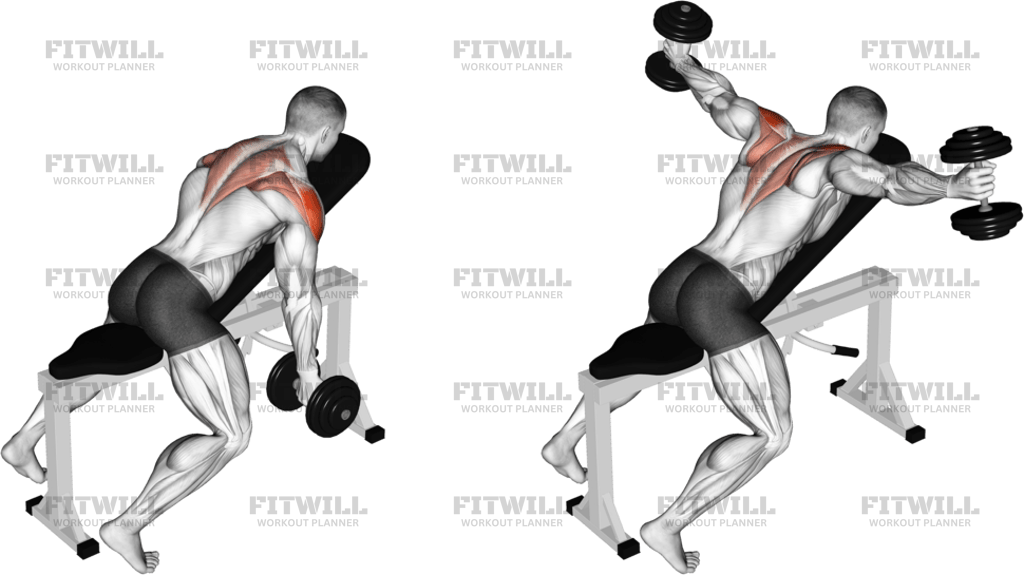
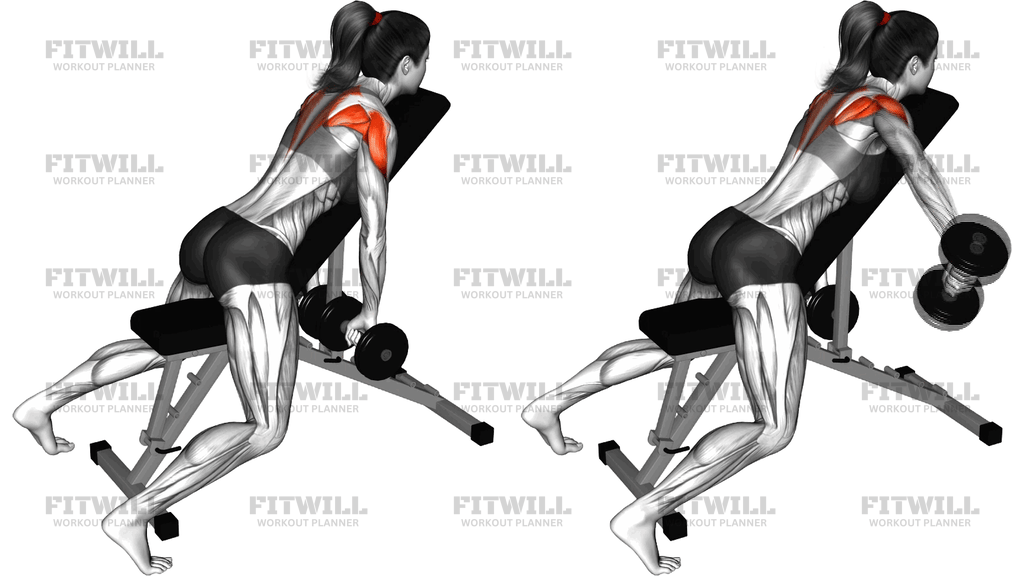
The Dumbbell Incline Alternate Neutral Grip Reverse is a rear-delt and upper-back raise performed while lying chest-down on an incline bench. You hold a dumbbell in each hand with a neutral grip (palms facing each other), let the arms hang straight down, and lift one arm out to the side at a time until it reaches roughly shoulder height, then lower it and repeat with the other arm. The alternating rhythm turns a simple reverse raise into a movement that challenges coordination and lets you focus on one shoulder blade at a time.
The incline bench is what makes this exercise special. Because your chest and torso are supported against the pad, your lower back has nothing to do, and the momentum that people usually cheat with during standing rear-delt work is almost completely removed. That forces the rear deltoid, traps, and rhomboids to do the lifting on their own, which is exactly what most lifters need. If your rear shoulders and upper back tend to lag behind your pressing muscles, this is one of the most honest ways to train them.
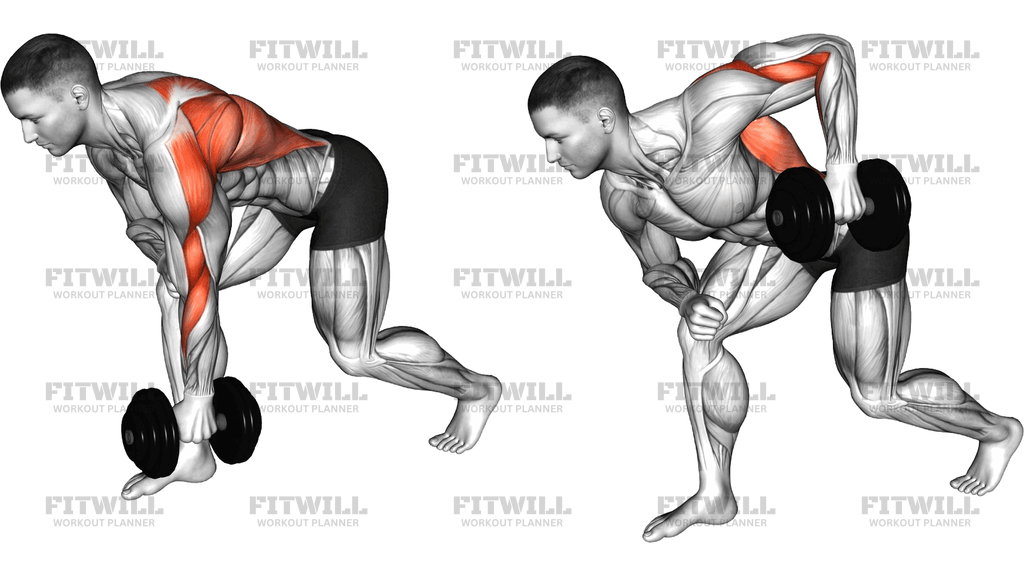
The neutral grip is also worth understanding. With the palms facing inward rather than down, the shoulder sits in a more comfortable rotation at the top of the raise, and many lifters feel a cleaner squeeze at the back of the shoulder with less pinching near the front of the joint. The kneeling stance shown here—one knee on the bench seat, the other foot planted behind you on the floor—stabilizes your hips so the torso stays glued to the pad throughout the set.
To execute it well, keep the working arm mostly straight with only a small bend in the elbow, and think about leading the lift with the elbow rather than the hand. Raise the arm out to the side, not back toward the hip, and stop when the upper arm is level with your back or just slightly above. Anything higher usually pulls in more traps and shifts stress away from the rear delt.
This movement fits well as an accessory exercise after your main presses or rows, typically for 2 to 4 sets of 10 to 15 reps per side. Because each arm works alone while the other hangs loaded, the core also has to resist rotation, which adds a subtle anti-rotation demand you will notice as the set gets harder. Keep the weights light enough that you can pause briefly at the top of each rep—if you cannot, the dumbbells are too heavy and your form will pay for it.
[ Workout Log & Planner ]
Put your next workout in Fitwill
Keep your plan and training log ready when you are.


Instructions
- Set an incline bench to roughly 30-45 degrees and place a dumbbell of the chosen weight on the floor near the top of the bench.
- Straddle the bench so one knee rests on the seat and your other foot is planted behind you on the floor; lean forward until your chest is supported against the backrest.
- Pick up both dumbbells and let your arms hang straight down from your shoulders with a neutral grip, palms facing each other and elbows slightly soft.
- Turn your head to one side or rest your forehead lightly against the pad so your neck stays long and relaxed.
- Brace your core lightly and press your chest into the pad so your torso cannot twist during the lift.
- Exhale and raise one arm out to the side, leading with the elbow and keeping a small bend, until the upper arm is level with your back or just above it.
- Pause for a beat at the top and feel the contraction across the back of the shoulder and upper back.
- Inhale and lower the dumbbell under control until the arm is fully hanging again.
- Repeat the raise with the opposite arm, continuing to alternate until all reps are completed.
- At the end of the set, set both dumbbells on the floor before standing up off the bench.
Tips & Tricks
- The most common mistake on this bench setup is letting the chest peel off the pad as the arm fatigues—if the pad loses contact, the weight is too heavy or you are twisting to help the lift.
- Do not shrug the working shoulder toward your ear; keep it pulled slightly down and back so the rear delt raises the arm instead of the upper traps.
- Raising the arm well above shoulder height turns this into a trap exercise—stop at level with your back to keep the rear shoulder working.
- Keep the elbow bend minimal and constant; bending and straightening the arm mid-rep turns the raise into a half row and hides rear-delt weakness.
- Because you kneel with one knee on the seat, square your hips to the bench before starting; a rotated pelvis invites torso twisting under load.
- Use lighter dumbbells than you would for lateral raises—rear delts and rhomboids are smaller and the bench removes all momentum from the equation.
- The hanging dumbbell on the non-working side pulls you into rotation, so grip it firmly and resist the twist rather than letting it swing.
- A slow three-second lowering phase on this exercise builds more control than adding reps, since the rear delt is highly responsive to tempo.
- If your shoulder pinches with the palm turned down in other reverse raises, the neutral grip here is usually the fix—keep the thumb up as the arm lifts.
Frequently Asked Questions
Which muscles does the Dumbbell Incline Alternate Neutral Grip Reverse work?
The rear deltoid is the primary mover, supported by the rhomboids and middle and lower traps of the upper back. The core also works to stop your torso from rotating as one arm lifts while the other hangs loaded.
Why lie chest-down on an incline bench instead of doing this standing?
The bench supports your torso and removes momentum from the hips and lower back, so the rear shoulders and upper back do all the work. Standing versions are easy to cheat with body English, which usually means less rear-delt stimulus.
What does the neutral grip change compared with a palms-down reverse raise?
With palms facing each other, the shoulder stays in a more comfortable rotation as the arm lifts, which many lifters find easier on the joint. It also lets the rear delt drive the movement cleanly without the forearm rotating the emphasis elsewhere.
How high should I raise my arm on the Dumbbell Incline Alternate Neutral Grip Reverse?
Lift until the upper arm is level with your back or just slightly above. Going much higher shifts the work toward the upper traps and away from the rear deltoid.
Is this exercise suitable for beginners?
Yes, as long as the weight is light and the chest stays on the pad. Beginners should master the single-arm version with both dumbbells set down between efforts before moving to continuous alternating reps.
Why do I feel my lower back or torso twisting during the set?
The hanging dumbbell on the non-working side creates a rotational pull, and a braced core plus firm contact between your chest and the pad should counter it. If you still twist, lighten the weight and make sure your hips are squared to the bench before starting.
Can I do this with both arms at the same time?
Yes, a simultaneous two-arm version works the same muscles and removes the anti-rotation demand. The alternating version simply adds that rotational challenge and lets you concentrate on one shoulder blade at a time.
What can I substitute if I do not have an incline bench?
A reverse pec-deck fly, a bent-over cable reverse fly, or a prone reverse raise on a flat bench all train the rear deltoids. The incline bench version is uniquely strict because the pad pins your torso in place.
How many sets and reps should I use?
Two to four sets of 10 to 15 reps per side works well as an accessory movement after pressing or rowing. Prioritize a controlled tempo and a brief pause at the top over adding load.
Is the kneeling position on the bench necessary?
The one-knee-on-seat, one-foot-back stance stabilizes your hips against the pad and keeps the torso from shifting, which is why it is shown here. Some benches also allow a fully prone position on the incline pad, but either way the chest must stay supported throughout.