Barbell Lying Close Grip Underhand Row On Rack
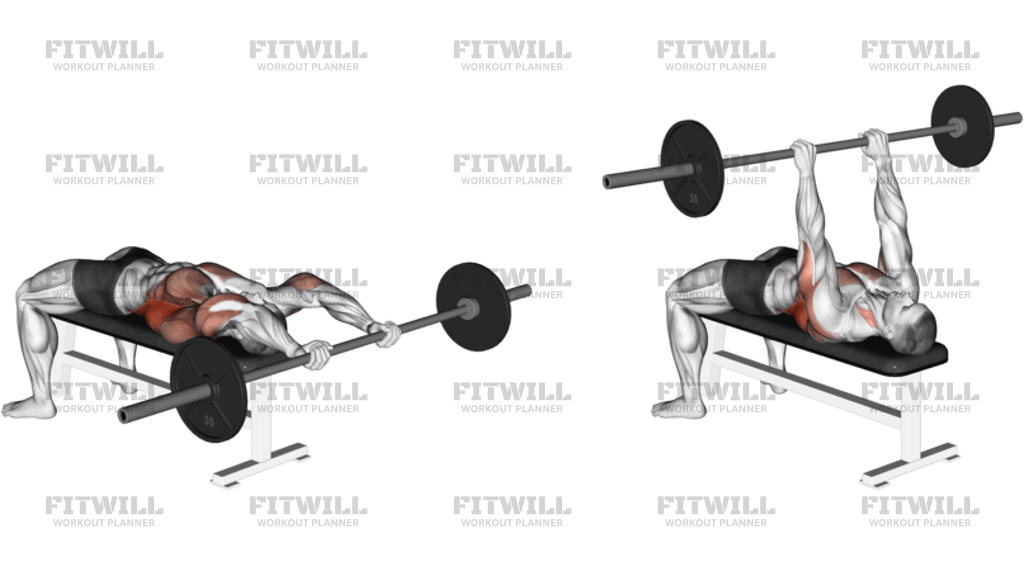
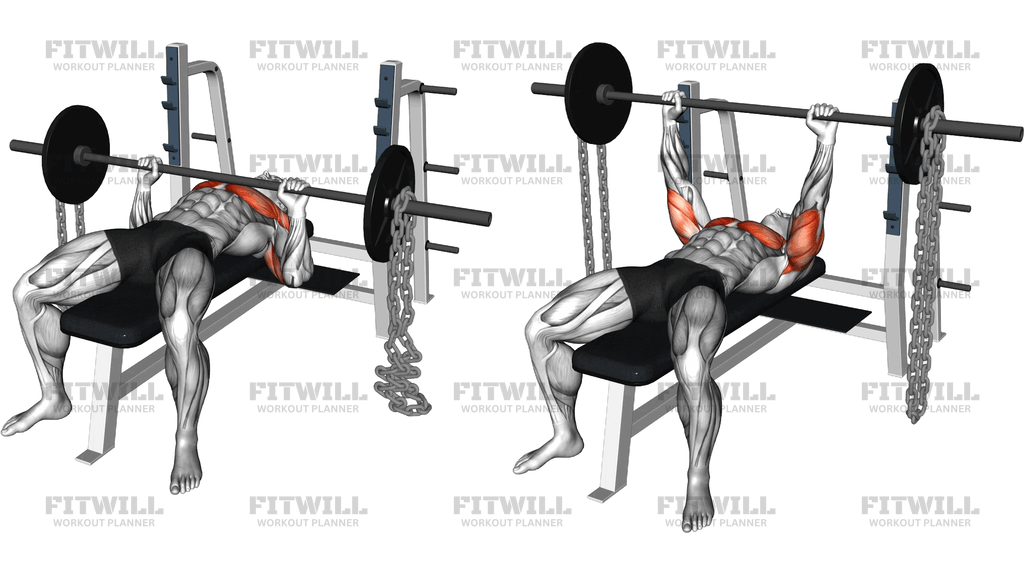
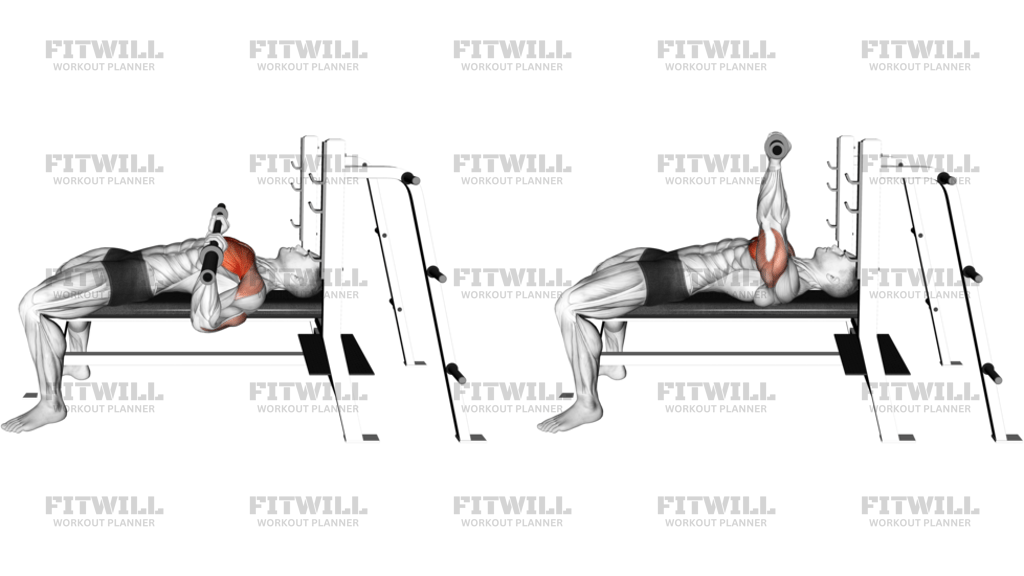
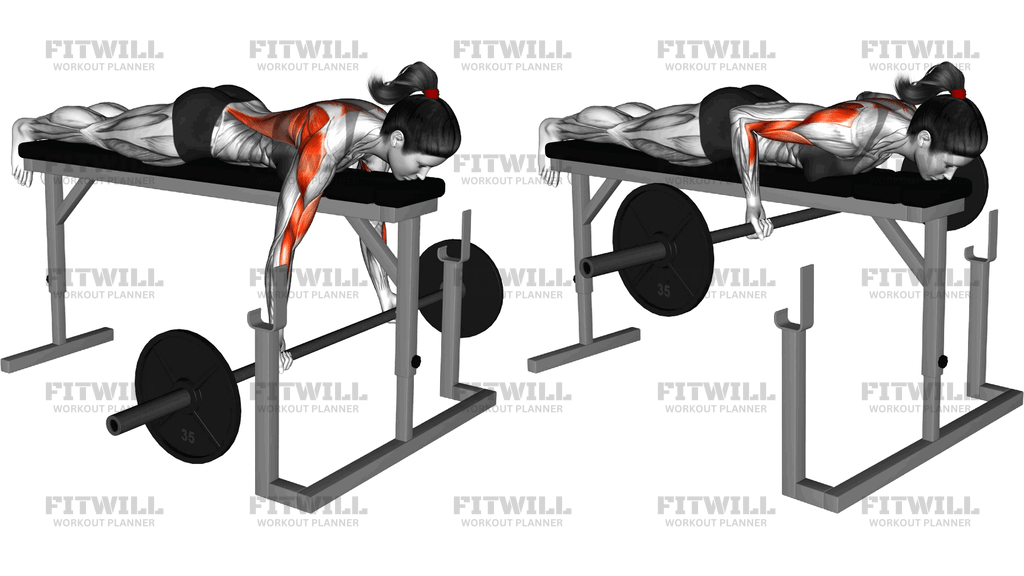
The Barbell Lying Close Grip Underhand Row On Rack is a prone row variation performed face-down on a flat bench with a barbell positioned on rack hooks or stands directly beneath you. You grip the bar with a narrow, palms-up (supinated) stance, let your arms hang fully extended toward the floor, then pull the bar up until it reaches the underside of the bench before lowering it back down under control. Because your chest and torso are supported by the bench, your lower back is largely taken out of the equation, which lets you focus entirely on pulling with the upper body.
The supinated, close grip is what sets this exercise apart. With your palms facing forward and your hands roughly shoulder-width apart or narrower, the lats do the bulk of the work through a longer range, while the biceps assist strongly during the pull. The rhomboids and mid-traps finish the movement by drawing the shoulder blades together at the top, and the rear delts help guide the elbows close to your sides. If you struggle to feel your back working in bent-over rows, or your lower back fatigues before your lats do, this supported version is a very practical fix.
Setup matters more here than in most rowing variations. The bar needs to sit low enough that your arms can hang straight down with only a slight stretch at the bottom, and the bench should be positioned so the bar travels straight up along your sides without scraping your body or the rack uprights. Lying face down with your chin just past the edge of the bench, keep your chest in contact with the pad throughout the set. If the bench is too high or too far from the rack, you will either lose range at the bottom or have to shrug and reach awkwardly to grab the bar.
To execute it well, think of driving your elbows down and back toward your hips rather than simply curling the weight up. Keep the wrists relatively straight instead of letting them bend backward under the load, and squeeze the shoulder blades together for a brief moment at the top before lowering. The bar should travel in a smooth vertical line, and your torso should stay glued to the bench. Common use cases include lat-focused back days, post-injury or lower-back-friendly programming, and as a strict accessory after heavier compound pulls.
Practically, this is a strict movement, so leave your ego at the door. Because you cannot use leg drive or torso momentum, choose a weight you can pull cleanly for your target reps, and use a spotter or safety arms if you train alone and are unsure you can complete a rep. Stop the set as soon as your chest starts lifting off the pad or your form breaks down.
[ Workout Log & Planner ]
Put your next workout in Fitwill
Keep your plan and training log ready when you are.


Instructions
- Set a flat bench inside or directly beside a rack, and place a loaded barbell on the rack hooks or stands at roughly knee height so the bar sits directly beneath your chest.
- Lie face down on the bench with your chest supported near the edge, your head just past the pad, and your legs extended behind you with feet resting on the floor.
- Reach down and grip the bar with an underhand (supinated) grip, hands about shoulder-width apart or slightly narrower, with your arms hanging fully extended.
- Brace your core lightly, keep your chest in contact with the bench, and let the bar hang with a slight stretch across your lats at the bottom.
- Exhale as you pull the bar straight up toward the underside of the bench, keeping your elbows tucked close to your body and pointing back toward your hips.
- Squeeze your shoulder blades together at the top so the bar finishes near your lower ribs, and hold that position for a brief beat.
- Lower the bar in a slow, controlled vertical line until your arms are fully extended again, inhaling as you descend.
- Keep your chest and hips pressed into the pad for every rep; if your torso lifts, the weight is too heavy.
- Complete all reps, then carefully re-rack the bar on the stands before sitting up.
Tips & Tricks
- If you cannot reach the bar comfortably at the bottom, lower the rack hooks or move the bench closer rather than shrugging your shoulders to make contact.
- With a supinated grip, the biceps contribute a lot; if you feel your arms doing most of the work, slow down the pulling phase and focus on driving your elbows back instead of flexing harder.
- Do not let your wrists curl backward under load. Grip the bar so the knuckles stay roughly in line with your forearm, which protects the wrists and keeps the pull efficient.
- Bouncing out of the bottom stretch is the most common fault on this exercise. Pause for a half second with your arms extended before each pull to keep tension on the lats.
- Because you cannot see the bar, film a set from the side occasionally to confirm the bar path is vertical and your elbows stay near your ribs rather than flaring wide.
- Keep your neck relaxed and your face resting toward the pad. Craning your head up tends to pull your chest off the bench and shifts work away from your back.
- Start lighter than you would for a bent-over row. The supported position removes momentum, so the target muscles feel the load sooner than you expect.
- If your shoulders feel pinched at the top, narrow your grip slightly or reduce the range rather than forcing the bar higher.
- Use a spotter or set the safety arms just below the bottom position when training alone with a heavy weight.
Frequently Asked Questions
Which muscles does the Barbell Lying Close Grip Underhand Row On Rack work?
The lats are the primary movers, supported by the rhomboids, mid-traps, and rear delts as the shoulder blades retract at the top. The underhand grip also makes the biceps a significant helper during the pull.
Why use an underhand grip instead of a pronated grip on this lying row?
A supinated, close grip lets the elbows travel close to the body and puts the lats in a stronger line of pull, while the biceps contribute more to the movement. Turning the palms down would shift more emphasis toward the upper back and rear delts.
Is the Barbell Lying Close Grip Underhand Row On Rack suitable for beginners?
Yes, as long as the weight is kept modest and the rack height is set correctly. The bench support makes it easier to learn than bent-over rows because the torso cannot swing, but beginners should master the bar path with light loads first.
How high should the barbell be set on the rack for this exercise?
Set the bar low enough that, when lying face down on the bench, your arms hang almost fully extended with only a slight stretch at the bottom. If you have to shrug or reach to touch the bar, the hooks are too high.
My chest keeps lifting off the bench during the row. What should I fix?
That usually means the weight is too heavy or you are pulling the bar too high up your body. Reduce the load, pull until the bar just reaches the underside of the bench, and keep your chest pressed into the pad for every rep.
Can I substitute the Barbell Lying Close Grip Underhand Row On Rack if I don't have a rack?
A close-grip chest-supported dumbbell row on an incline bench is the closest substitute and trains the same muscles. You can also set the barbell on low safety pins in a squat rack or have a partner hand you the bar once you are lying down.
How does this exercise differ from a regular bent-over barbell row?
The bench supports your torso, so your lower back and hips are not working to hold you upright, which makes the movement stricter and more lat-focused. You also cannot use body English, so the target muscles do all of the work.
How close should my hands be on the bar?
Roughly shoulder-width apart or slightly narrower is the target. Going much narrower puts extra stress on the wrists and elbows with an underhand grip without adding meaningful lat involvement.
Is it safe to do this exercise alone with a heavy barbell?
Use a spotter or set safety pins just below the bar's lowest position when training alone. Lying face down makes it harder to bail cleanly, so never take a weight you are not confident you can re-rack under control.
How many reps and sets work best for this movement?
Because it is a strict, supported pull, moderate rep ranges of 8 to 15 per set for 3 to 4 sets work well. Focus on a controlled lowering phase and a brief squeeze at the top rather than moving maximum weight.