Snatch Pull
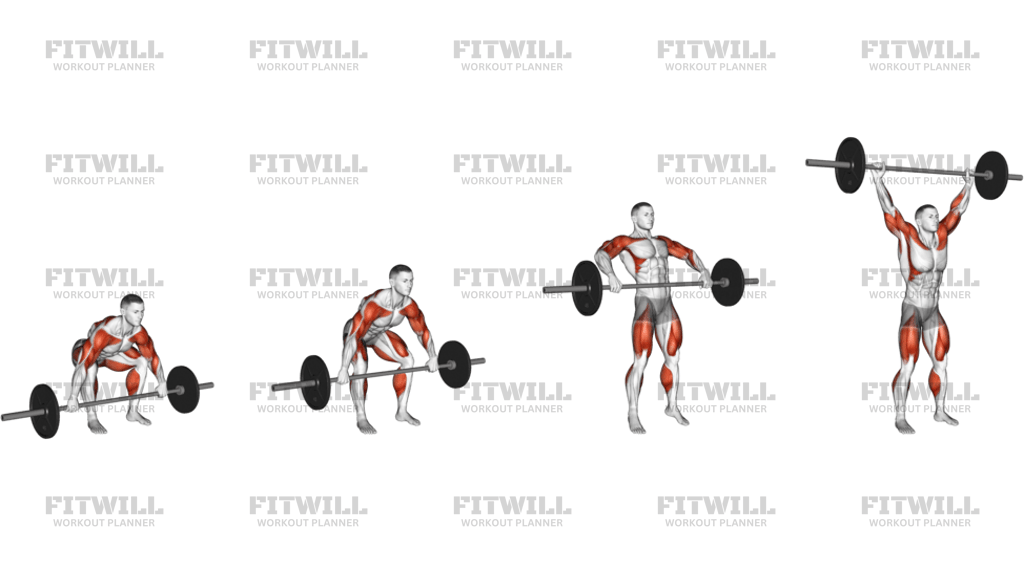
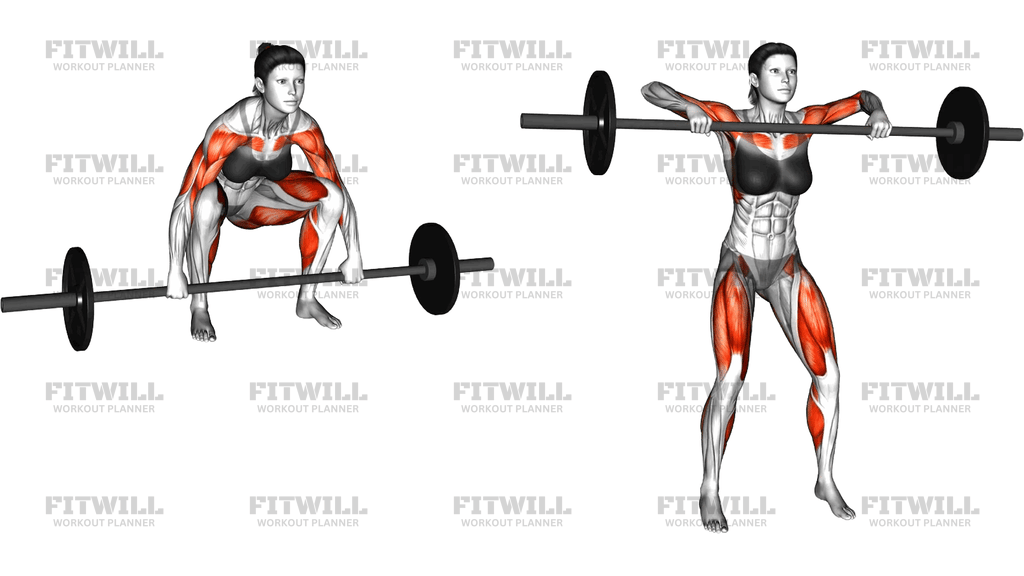
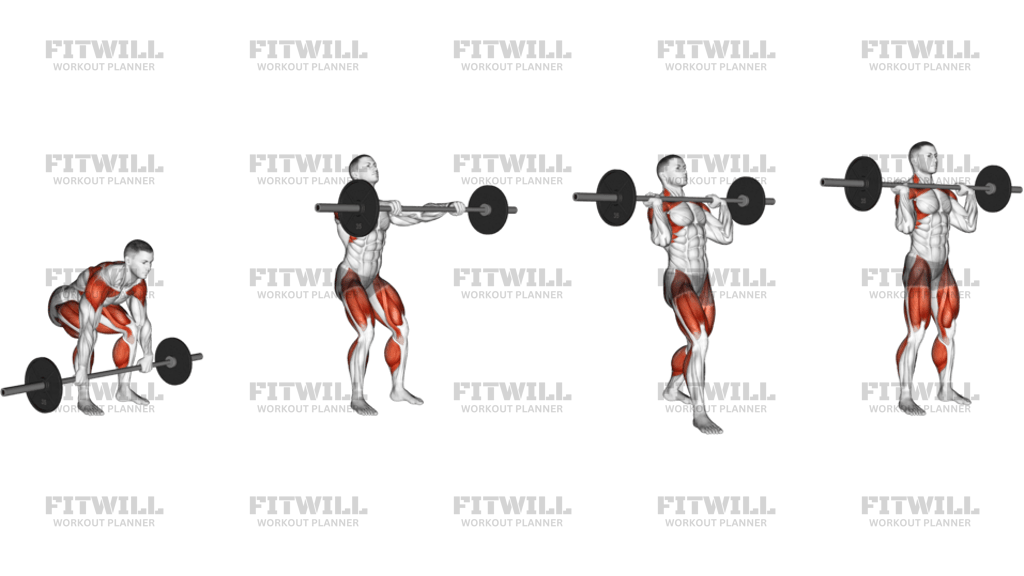
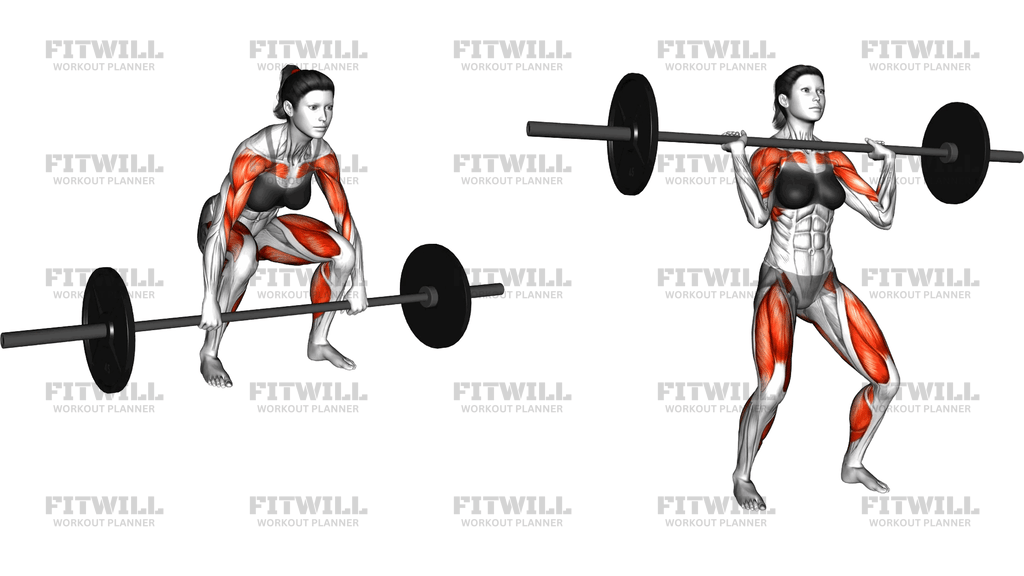
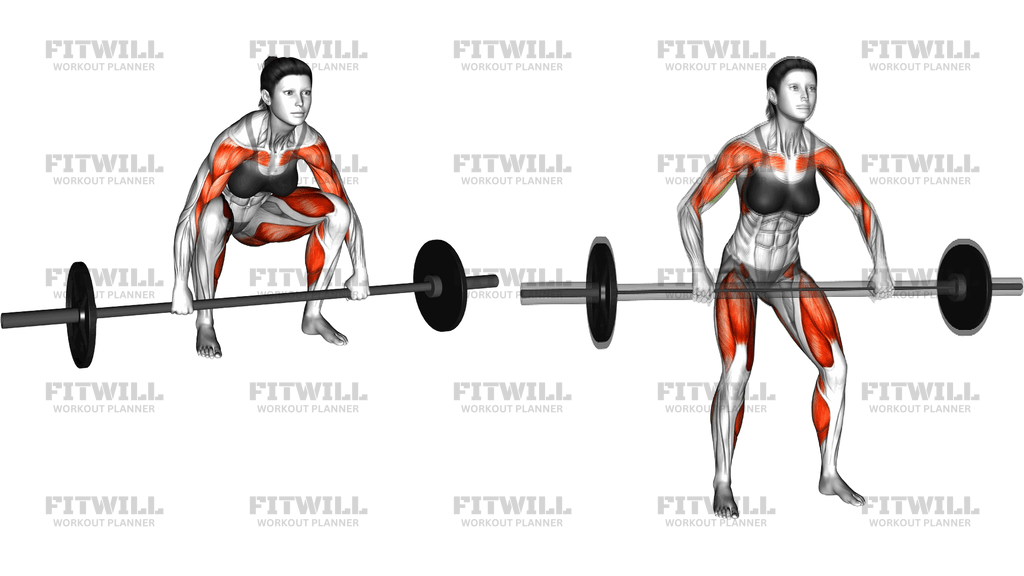
The Snatch Pull is a weightlifting pulling exercise performed with a barbell and a snatch-width grip, where you drive the bar from the floor up toward your lower ribs without racking it overhead. It is essentially the first and most powerful phase of the snatch, isolated so you can load it heavier and repeat it more often than the full lift. The two-frame sequence shows the movement clearly: a low crouched start with the bar over mid-foot, followed by an explosive extension to standing with a tall pull and elevated shoulders.
Because of the wide hand position, the Snatch Pull demands more from your upper back and traps than a conventional deadlift or clean pull, while the floor start keeps your glutes, hamstrings, and quads heavily involved. Your lower back works isometrically the entire time to hold your spine neutral as force transfers from your legs through your hips to the bar. The finish position, where shoulders rise toward the ears and elbows travel up and out, is what builds the aggressive pull-under that a full snatch requires.
This movement is most useful for Olympic weightlifters and CrossFit athletes who need a stronger second pull, but it also works well for general strength trainees who want a powerful, full-body hinge with extra upper-back demand. Because you never have to catch the bar overhead, you can use loads well above your best snatch and focus purely on speed and extension. Power athletes in sports like sprinting and jumping also benefit from the triple-extension pattern it trains.
Setup quality determines everything here. The bar should start over the middle of your foot, your grip wide enough that the bar sits in the crease of your hip when standing, and your shoulders slightly ahead of the bar in the start position. If the bar drifts forward or your hips shoot up too early, the pull loses its power and your lower back takes stress it should not. Keep the bar close to your legs throughout, especially as you pass the knees.
Execution should feel like one smooth acceleration: push the floor away, finish standing tall with hips and knees fully extended, then let the momentum carry the bar up as your traps shrug hard. Do not fake extra height by leaning back or bending your arms early. Control the bar back to the floor rather than dropping it, reset your brace, and breathe in before the next rep.
[ Workout Log & Planner ]
Put your next workout in Fitwill
Keep your plan and training log ready when you are.


Instructions
- Set a loaded barbell on the floor over the middle of your feet with your feet about hip-width apart and toes turned slightly out.
- Grip the bar with a wide snatch-width overhand grip, roughly one and a half shoulder-widths per side, and hook your fingers over your thumbs if possible.
- Drop into the start position with hips low, chest up, shoulders slightly ahead of the bar, and the bar touching or nearly touching your shins.
- Take a breath into your belly, brace your trunk, and pull your shoulder blades back and down to lock in a neutral spine.
- Push the floor away and pull the bar up in a smooth path close to your legs, letting knees and hips extend together as you pass mid-thigh.
- Finish the pull by standing tall, driving your hips through, and shrugging your traps hard so your shoulders rise toward your ears while elbows travel up and out.
- Do not bend your arms early or lean back at the top; the height of the bar should come from leg and hip drive, not arm curling.
- Inhale at the top, then lower the bar under control back to the floor, keeping it close to your body and your back flat.
- Pause briefly on the floor, re-brace, and exhale before starting the next rep, or fully reset your stance between singles.
Tips & Tricks
- The most common mistake is shooting the hips up first and turning the lift into a stiff-leg deadlift; if this happens, lighten the load and consciously keep your chest up for the first third of the pull.
- Keep the bar dragging lightly against your shins and thighs; a gap between bar and body means the weight is swinging forward and your traps are not getting a clean line of pull.
- Think 'long and slow to the knee, fast and tall to the top.' Rushing the first pull robs you of the position you need to accelerate at mid-thigh.
- If your upper back rounds in the start position, narrow your grip slightly or pull from a small deficit-free block until your mobility allows the full snatch-width setup.
- Use a hook grip or lifting straps once the weight gets heavy; a failing grip will make you cut the shrug short even when your legs have plenty left.
- The finish should feel like a vertical jump through the floor with the bar riding up your torso, not a row; if your elbows bend before your hips are extended, drop the load and drill the timing.
- Avoid hyperextending your lower back at the top; finish tall with glutes squeezed instead of leaning backward to chase extra bar height.
- Chalk your hands and check your collars before each set, because a plate shifting on a heavy snatch pull will pull you off balance immediately.
- Snatch pulls respond well to triples and fives at 80–110% of your best snatch; use them as an accessory after your main lifts rather than a replacement for them.
Frequently Asked Questions
What muscles does the Snatch Pull work?
The Snatch Pull primarily trains your traps and upper back through the shrug, with major contributions from your glutes, hamstrings, quads, and lower back during the extension. Your forearms and grip are also challenged by the wide hand position.
How wide should my grip be for the Snatch Pull?
Use a snatch-width grip, roughly one and a half shoulder-widths per side, so the bar sits in the crease of your hip when you stand tall. If your shoulders cannot hold the start position, narrow the grip a few centimeters until your mobility improves.
Is the Snatch Pull suitable for beginners?
Yes, with a light load and attention to the start position. Beginners should first learn a neutral-spine hinge and a conventional deadlift, then use snatch pulls from a hang position before progressing to pulls from the floor.
Why does the bar drift away from my body during the pull?
This usually happens when the hips rise too early or the lats relax, letting the bar swing forward past the knees. Keep your shoulders slightly ahead of the bar at setup and actively pull the bar back into your legs as you extend.
Should I use a hook grip or straps for Snatch Pulls?
A hook grip is standard for weightlifting-specific work, but straps are fine for accessory sets at heavier loads. Whichever you choose, never sacrifice the finishing shrug because your grip is failing.
How is the Snatch Pull different from a deadlift?
A deadlift ends once you stand tall with the bar at your hips, while the Snatch Pull continues into an explosive triple extension with a hard trap shrug. The wide grip also places greater demand on your upper back and changes the pulling angle.
Can I replace the full snatch with Snatch Pulls in my training?
Snatch Pulls build pulling strength and power but skip the overhead catch, so they complement rather than replace the full lift. Use them to overload the second pull when your snatch technique or pulling strength is the limiting factor.
How heavy should I go on Snatch Pulls?
Most lifters use 80–110% of their best snatch for sets of three to five reps. Stay within a load you can extend fully and keep near your body; if bar speed dies, the weight is too heavy for the exercise's purpose.
Is it safe for my lower back?
The Snatch Pull is safe when your spine stays neutral and the load matches your technique. Avoid rounding in the start position, do not lean back to fake a taller finish, and build volume gradually so your lower back adapts to the demands.
What can I use if I do not have a barbell for Snatch Pulls?
Dumbbell snatch pulls or kettlebell pull variations can train a similar explosive hinge and shrug, though the wide fixed grip of a barbell is hard to replicate exactly. A trap bar with a high handle can also work as a substitute for the extension portion.