Suspension Sprinter
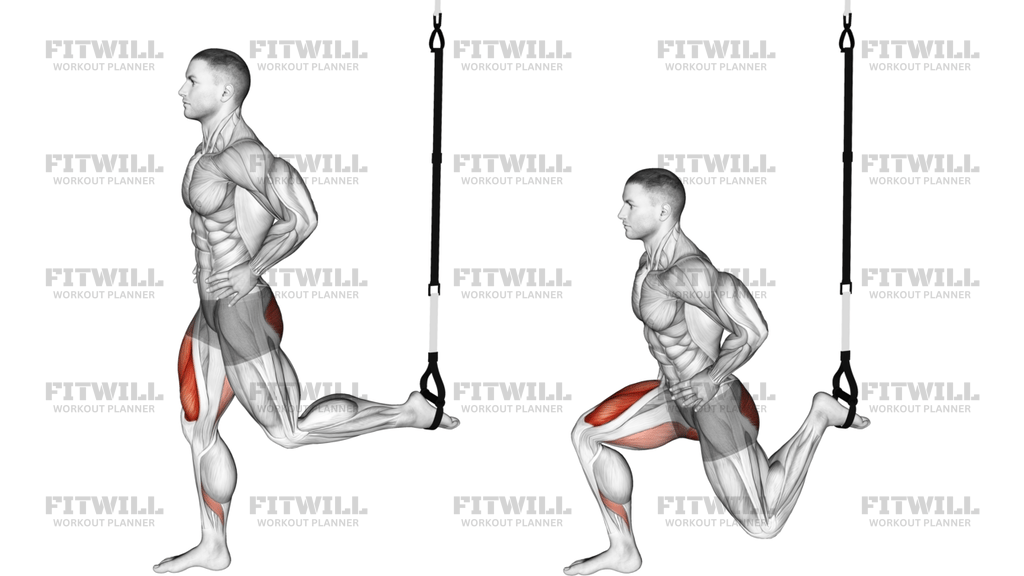
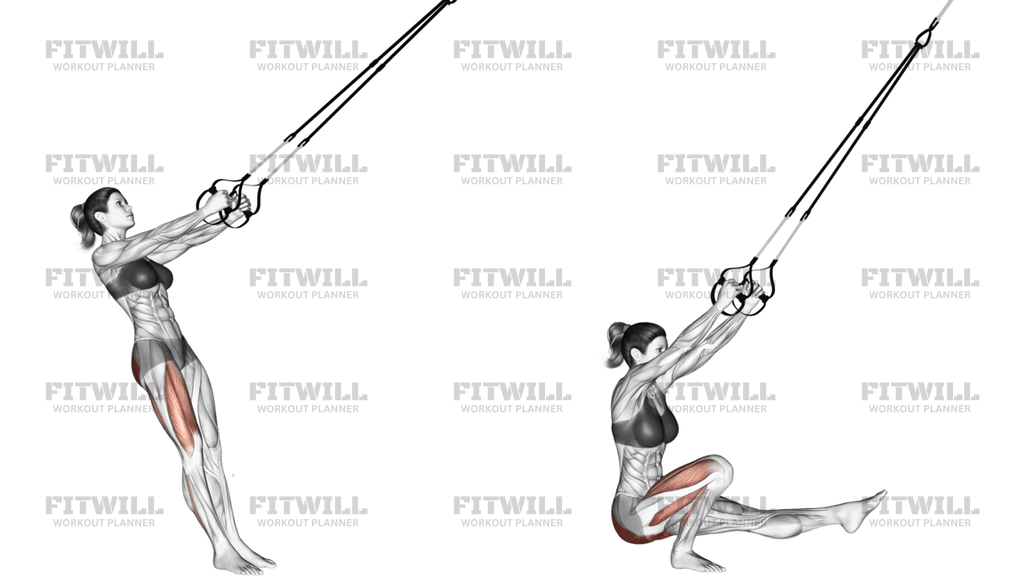
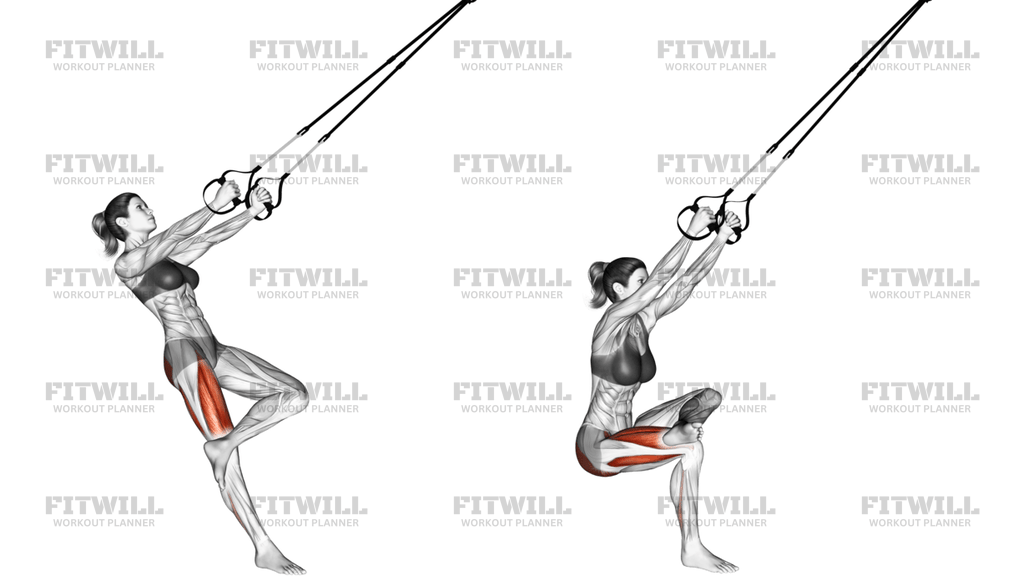
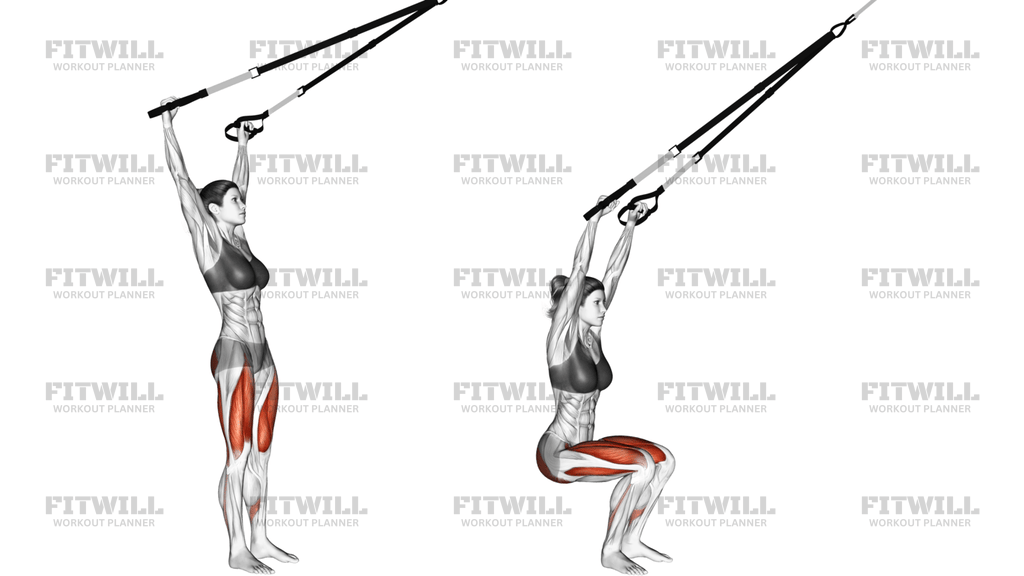
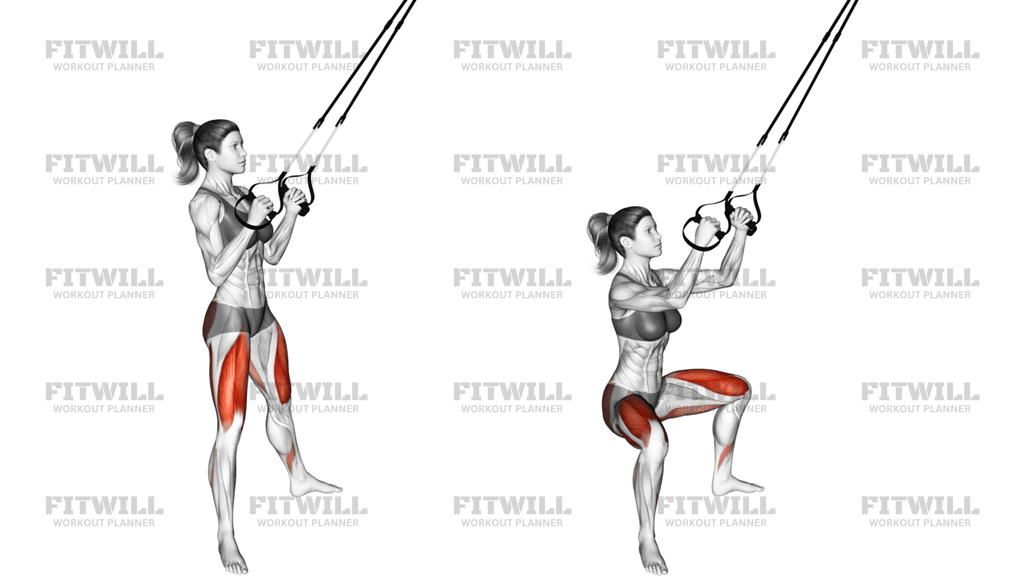
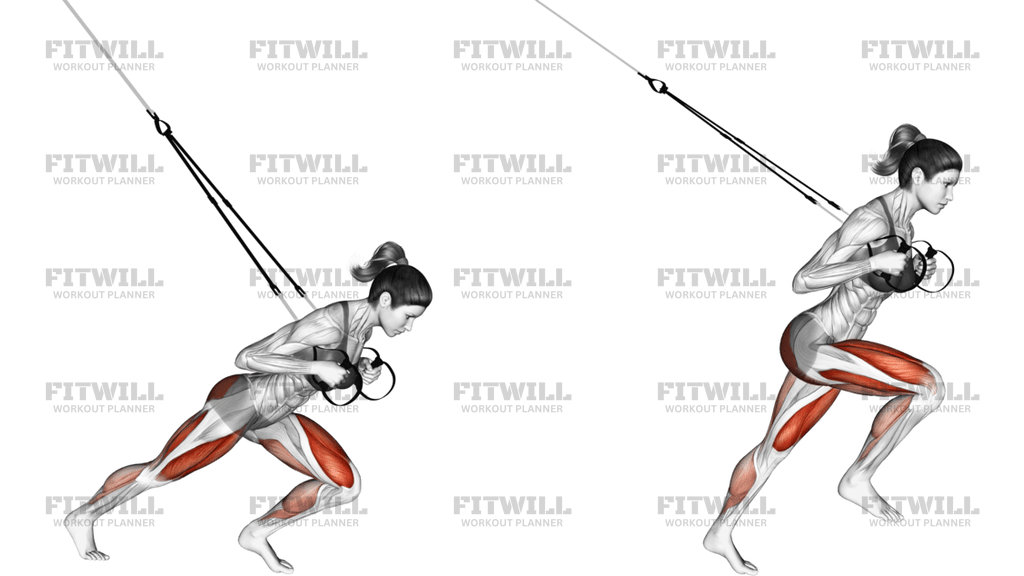
Suspension Sprinter is a suspension-assisted split-stance drive that looks and feels like the first part of a sprint start. You hold the handles close to your chest, set one foot forward and one foot back, and use the straps for balance while you load the front leg and keep the torso slightly angled forward. The pattern trains the glutes and thighs hard without requiring a jump, which makes it useful for strength, control, and athletic coordination. Because the body stays in a staggered stance, the working leg has to produce force while the trunk resists twisting and the shoulders stay quiet.
The setup matters because the straps should steady you, not carry the rep. A stable front foot, lifted back heel, and firm midsection let you load the front hip and knee while the rear leg stays long and active. That position keeps the movement honest: if you stand too upright, the exercise becomes easier and less athletic; if you yank on the handles, the arms and shoulders start doing work that should stay in the legs. The best version feels centered, with the straps giving you just enough support to stay balanced while the lower body does the real work.
During each rep, think about driving the floor away with the front leg while the back leg stays light and ready to move. Keep the chest angled forward enough to match a sprint posture, then finish tall through the hips without shrugging or rocking backward. The return should be smooth and controlled so the front thigh and glute stay under tension instead of bouncing between positions. A clean rep looks smooth from start to finish: no knee collapse, no bouncing off the bottom, and no sudden pull from the arms to get you upright.
Suspension Sprinter fits well in warmups, accessory blocks, or lower-body circuits when you want single-leg strength, balance, and trunk control in one movement. It is usually easier to learn than a free-standing split squat because the straps help you stay centered, but the exercise still demands clean foot placement and steady breathing. If the front knee or low back starts to feel sloppy, shorten the stance, reduce the range, and keep the motion crisp. As your control improves, you can use a slower lowering phase or a brief pause at the bottom to make each leg do more work without changing the setup.
[ Workout Log & Planner ]
Put your next workout in Fitwill
Keep your plan and training log ready when you are.


Instructions
- Adjust the straps to mid-length, face the anchor, and hold the handles at chest height with your elbows bent and palms in a neutral grip.
- Step one foot forward and the other back into a split stance, keeping the front foot flat and the back heel lifted on the ball of the foot.
- Keep light tension in the straps so you can balance without leaning back on them.
- Hinge slightly forward from the hips and brace your midsection so your ribs stay stacked over your pelvis.
- Lower by bending the front knee and letting the rear knee travel down and back until you feel the front leg load up.
- Keep the front knee tracking over the second and third toes while the front foot stays planted.
- Drive through the front heel and midfoot to rise back up, extending the hip and knee while the handles stay close to your chest.
- Finish tall, reset under control, and keep the movement smooth for the planned reps before switching sides.
Tips & Tricks
- Think of the straps as a balance aid; if your arms are doing the work, reduce how much you pull on the handles.
- A shorter split stance makes it easier to keep the front heel down and the torso stable.
- Keep pressure through the whole front foot, especially the big toe and heel, so the knee does not drift inward.
- Match the forward body angle to a sprint start rather than standing perfectly upright at the top.
- Lower with control instead of dropping into the bottom position; the front glute should stay loaded all the way down.
- Keep the rear leg active and light, but do not try to push off it during the drive phase.
- If the movement feels unstable, reduce the range before you make the straps longer or the stance wider.
- Stop the set when your shoulders start shrugging, your knee caves in, or your lower back begins to arch.
Frequently Asked Questions
What muscles does Suspension Sprinter work most?
The front leg does most of the work, so you should mainly feel the glutes, quads, and hamstrings, with the core helping you stay steady.
Is Suspension Sprinter the same as a split squat?
It uses the same split-stance pattern, but the straps add balance support and the torso angle feels more like a sprint start.
How should I hold the handles?
Hold the handles close to your chest with relaxed shoulders and just enough tension to keep your balance.
How far apart should my feet be?
Set your stance long enough to load the front leg without losing the back heel or forcing your hips to twist open.
Can beginners do this exercise?
Yes. Keep the stance short, move slowly, and use the straps only for balance until the pattern feels solid.
What should I avoid during the rep?
Do not yank on the straps, bounce out of the bottom, or let the front knee cave inward as you drive up.
Where should I feel the working leg?
You should feel the front glute and thigh working hard, especially as you lower and then drive back to the tall position.
How can I make it harder?
Slow the lowering phase, pause briefly at the bottom, or increase the range only if you can keep the front foot and knee aligned.