Weighted Dumbbell Shoulder Pendulum
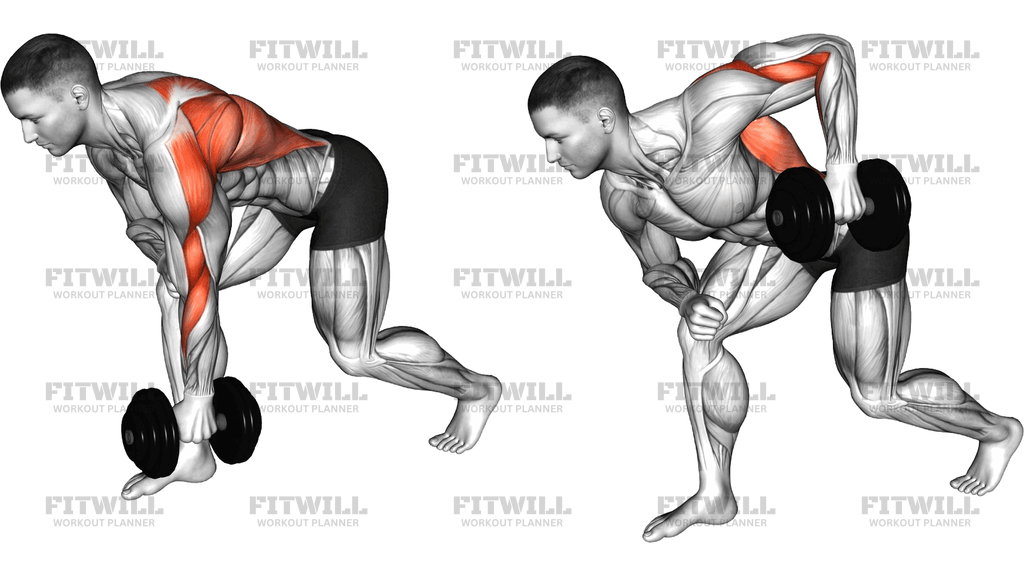
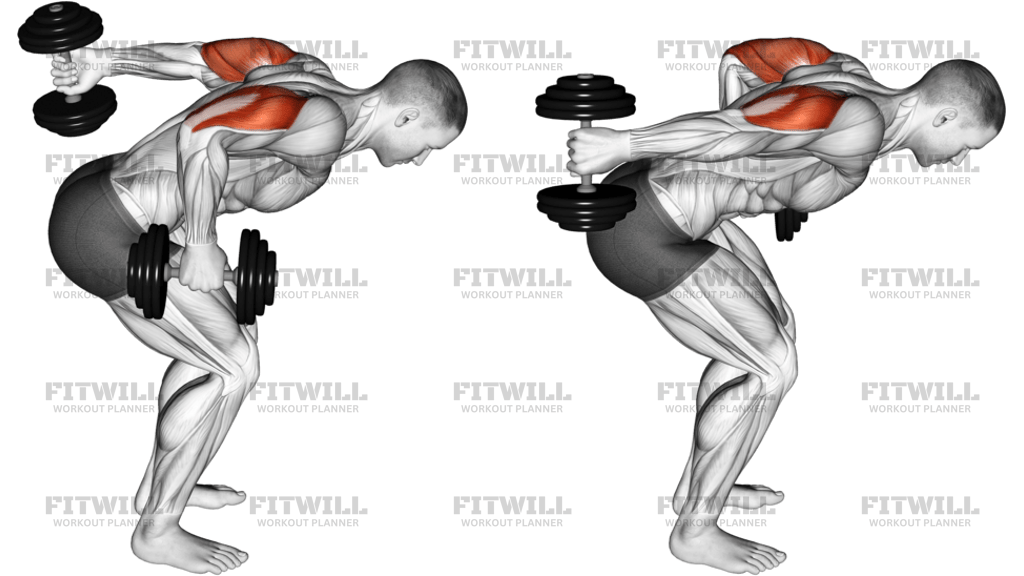
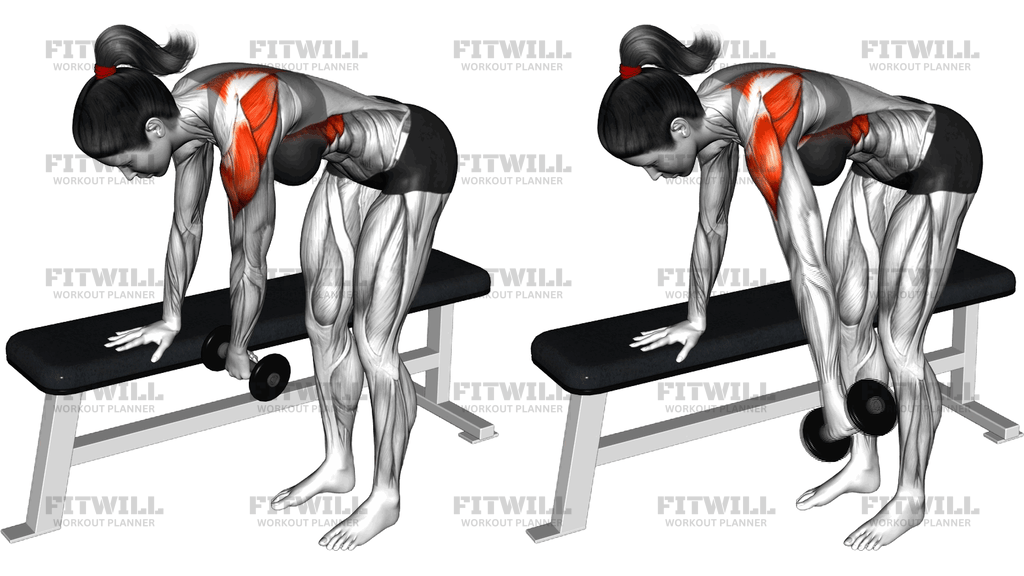
The Weighted Dumbbell Shoulder Pendulum is a low-load shoulder movement performed bent over with one hand braced on a flat bench. You hold a light dumbbell in the free hand and let the arm hang straight down from the shoulder, then swing it smoothly forward and back like a pendulum. Because the torso is supported and the weight is small, the shoulder joint moves through a gentle, controlled arc instead of being loaded heavily.
The movement mainly works the rear deltoid along with the rotator cuff muscles that steer the upper arm in the socket. The trapezius and other muscles around the shoulder blade work quietly to keep the scapula steady while the arm swings. Because the arm hangs vertically, the demand on the shoulder is modest, which makes this a useful drill for warming up before pressing or pulling, and a common choice in shoulder-focused routines where controlled, light-resistance movement is the goal.
This exercise suits lifters who want to bring blood flow into the shoulders before heavier training, people whose shoulders feel stiff from long hours at a desk, and anyone building tolerance and control in the back of the shoulder. It is also frequently used in rehab-style settings for the same reason, though anyone working around an injury should follow the guidance of their therapist or doctor first.
Setup matters more here than in most dumbbell exercises. You need a bench at roughly knee-to-mid-thigh height, a hinge deep enough that your torso sits near parallel to the floor, and a support hand placed directly under the shoulder. A light dumbbell is essential; the swing should come from the shoulder joint, not from a heavy weight dragging the arm around or from your trunk rocking.
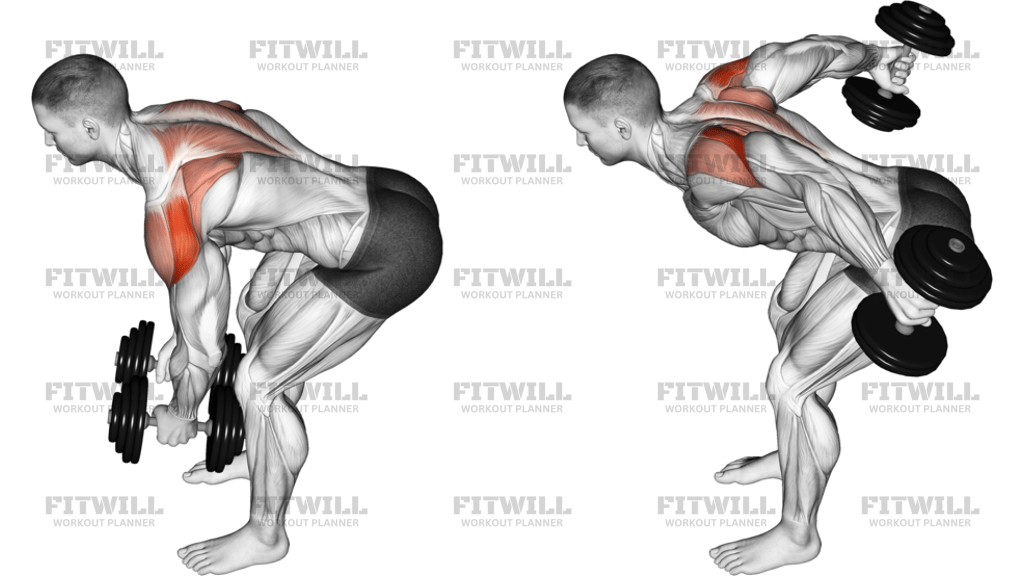
To execute it well, keep the back flat, the neck long, and the knees softly bent. Let the arm hang fully relaxed before starting, then swing it forward until the dumbbell is slightly ahead of your body and back until it is behind your hip, moving at a slow, even rhythm. The elbow stays soft, the shoulder stays low and away from the ear, and the torso stays still throughout.
Use the Weighted Dumbbell Shoulder Pendulum as a warm-up filler, as gentle accessory work on shoulder or upper back days, or as a standalone mobility practice on rest days. Keep the weight light, keep the range comfortable, and stop if you feel pinching or sharp pain in the shoulder joint.
[ Workout Log & Planner ]
Put your next workout in Fitwill
Keep your plan and training log ready when you are.


Instructions
- Place a flat bench in front of you and stand facing it with your feet about hip-width apart, one foot slightly staggered behind for balance.
- Hinge forward at the hips until your torso is close to parallel with the floor, then place your left hand flat on the bench directly under your left shoulder with the arm straight.
- Grip a light dumbbell in your right hand with the palm facing in, and let your right arm hang straight down toward the floor.
- Soften your knees, flatten your lower back, and brace your core lightly so your torso will not rotate during the swing.
- Let the right shoulder relax down away from your ear, keeping a small amount of space between the arm and your ribs.
- Keeping the elbow nearly straight, swing the dumbbell forward in a smooth arc until it is slightly in front of your body.
- Swing the arm back the same way until the dumbbell is behind your hip, then continue the front-to-back pendulum motion at an even tempo.
- Breathe steadily throughout, inhaling and exhaling with the rhythm of the swing rather than holding your breath.
- Complete your target reps, stop the arm gently at your side, then switch hands and repeat on the other side with the opposite hand supporting you on the bench.
Tips & Tricks
- Choose a dumbbell between about 1 and 4 kg. Anything heavier turns the swing into a momentum drill and pulls on the shoulder joint instead of conditioning it.
- Stack your supporting hand directly under the shoulder on the bench. Reaching forward or planting the hand too far away rounds the upper back and shifts the hinge position.
- Do not let your torso twist to help the dumbbell along. The swinging comes from the shoulder joint; if your chest is rotating toward the working side, the weight is too heavy or the range is too big.
- Keep the elbow slightly soft rather than locked. A rigid straight arm with a weight at the end transfers every swing directly into the elbow and shoulder capsule.
- Watch your neck. Many people crane the head up to look forward in the hinge; keep the neck in line with the spine and look down at the bench instead.
- Control the top of each swing. Letting the arm fall back behind you and yank at the front of the shoulder is the most common failure point in this setup.
- Match your breathing to the pendulum rhythm instead of holding your breath, especially since the bent-over position raises pressure in the trunk.
- If your hamstrings limit how far you can hinge, bend the knees more or use a lower bench so the torso can still get near parallel without rounding.
- Keep the swings small at first. A short, smooth arc trains the rear shoulder and rotator cuff better than a big, fast one that drags the shoulder blade around.
Frequently Asked Questions
Which muscles does the Weighted Dumbbell Shoulder Pendulum work?
The rear deltoid does most of the visible work, with the rotator cuff muscles controlling the arm in the shoulder socket. The traps and shoulder blade stabilizers hold the scapula steady while the arm swings.
How heavy should the dumbbell be for the Weighted Dumbbell Shoulder Pendulum?
Stay light, usually between 1 and 4 kg. The exercise is about controlled shoulder movement, so if the weight dictates the speed of the swing, it is too heavy.
Should my arm stay completely straight during the pendulum swing?
Keep it essentially straight with only a tiny bend in the elbow. Locking the elbow hard or bending it repeatedly turns the movement into something else entirely.
Why do I need to support myself on a bench for this exercise?
The bench support removes load from the lower back, so you can hold a deep hinge comfortably while the arm hangs vertically. That vertical hang is what keeps the shoulder stress gentle and the arc clean.
Can beginners do the Weighted Dumbbell Shoulder Pendulum?
Yes, and it is actually a good early shoulder exercise because the setup is simple and the load is minimal. Beginners should focus on a still torso and a smooth, small arc before thinking about more weight.
Should I swing front to back or in circles?
The pendulum pattern is forward and back, which matches the arc shown in the exercise. Once that feels easy and controlled, some people add small side-to-side swings or gentle circles as variety.
What are the most common mistakes in this movement?
Using too much weight, rocking or twisting the torso to drive the swing, rounding the lower back in the hinge, and letting the arm yank back behind the hip. All of them are fixed by slowing down and shrinking the range.
What can I use instead of a flat bench for support?
Any stable surface at knee to mid-thigh height works, such as a sturdy chair or the rack of a squat stand. If nothing is available, you can perform the pendulum unsupported, but your lower back will have to hold the hinge on its own.
Is the Weighted Dumbbell Shoulder Pendulum safe if my shoulder hurts?
Do not push through pinching or sharp pain, and reduce the range or weight first. If you have an existing shoulder injury, run this exercise past your doctor or physical therapist before adding it to your routine.