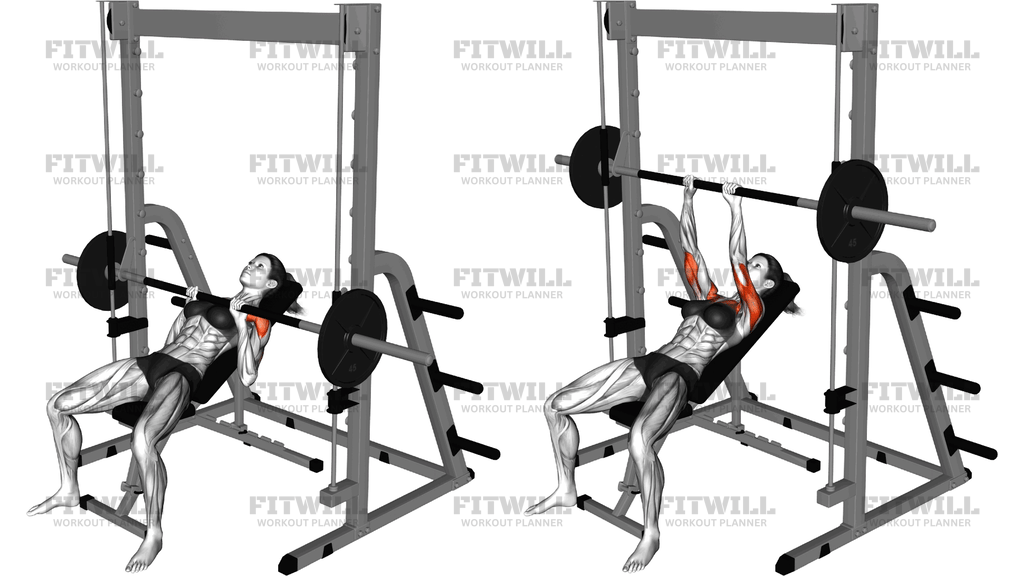
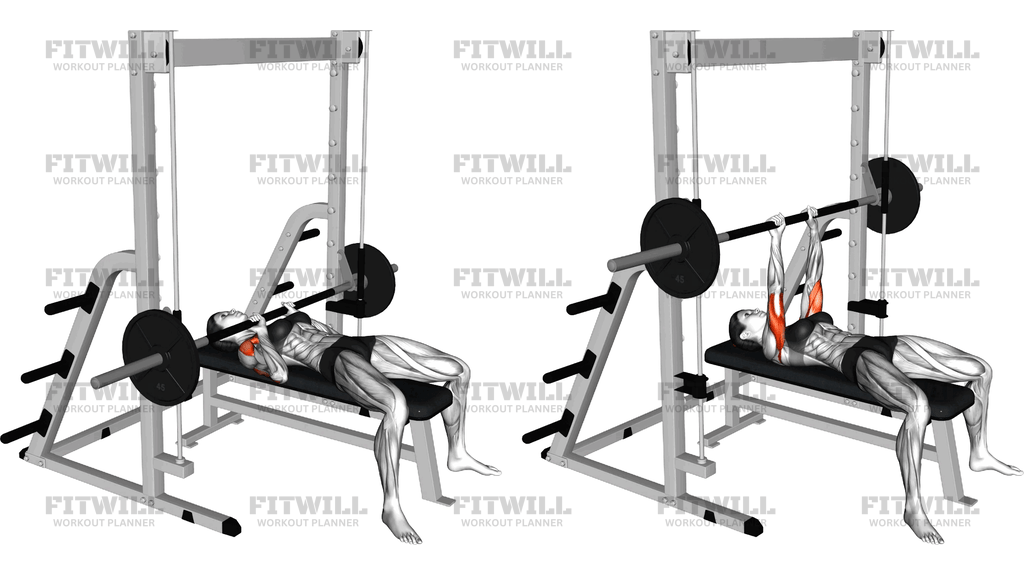
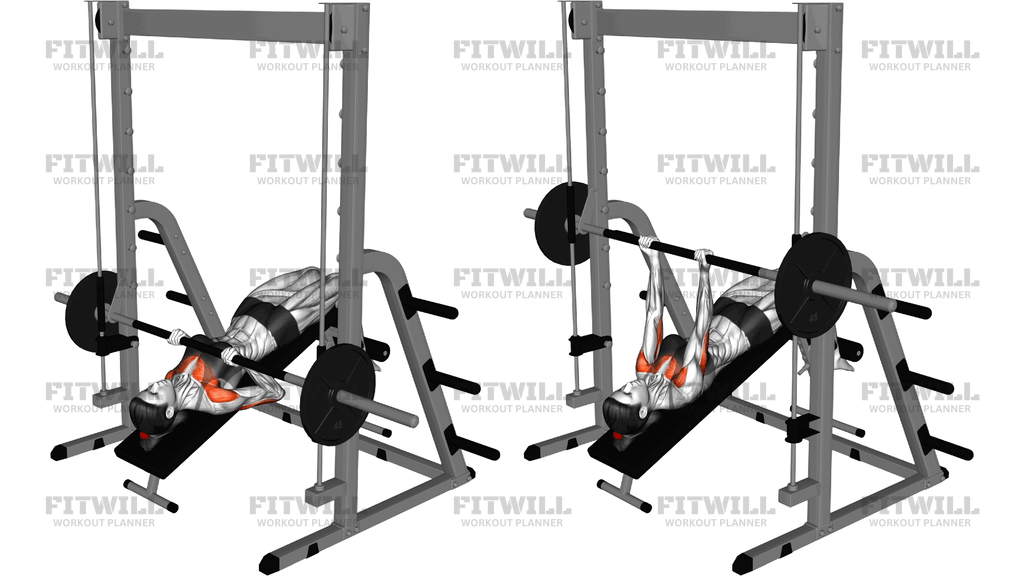
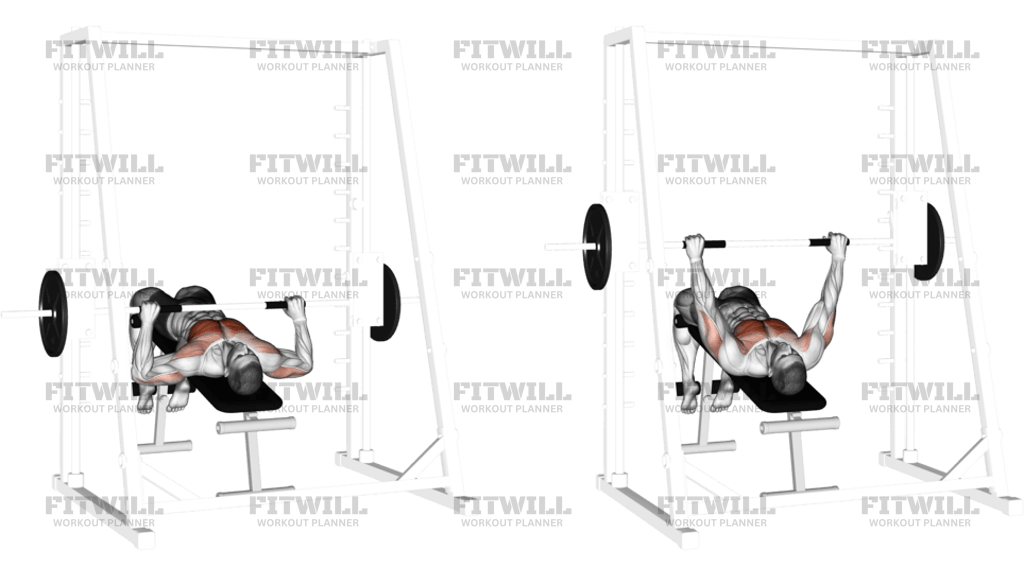
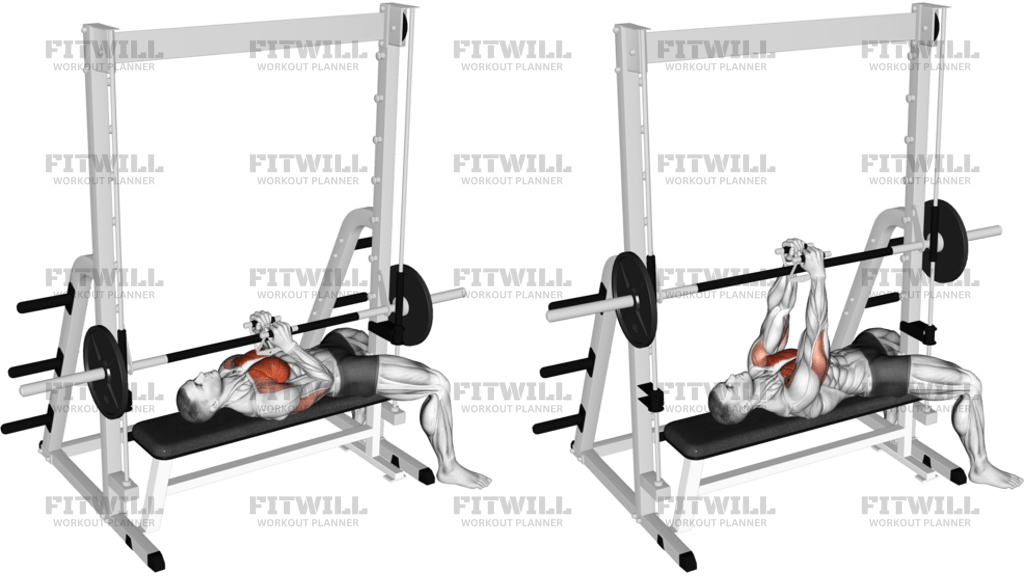
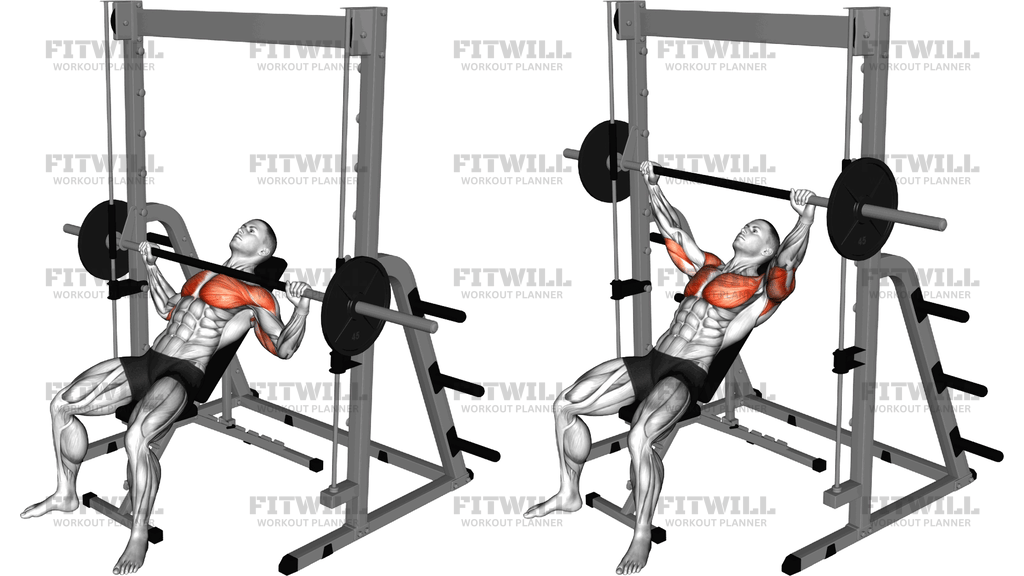
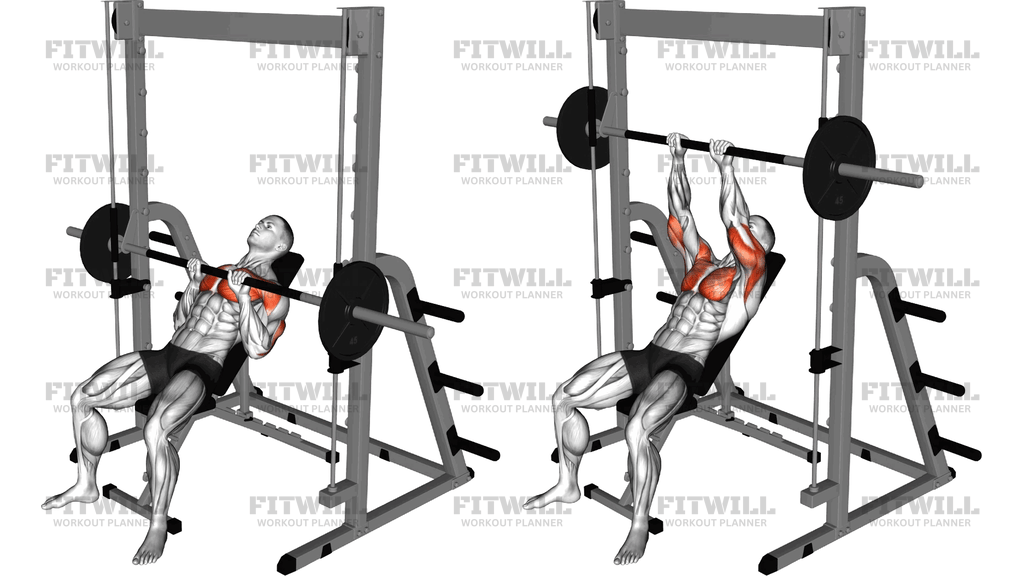
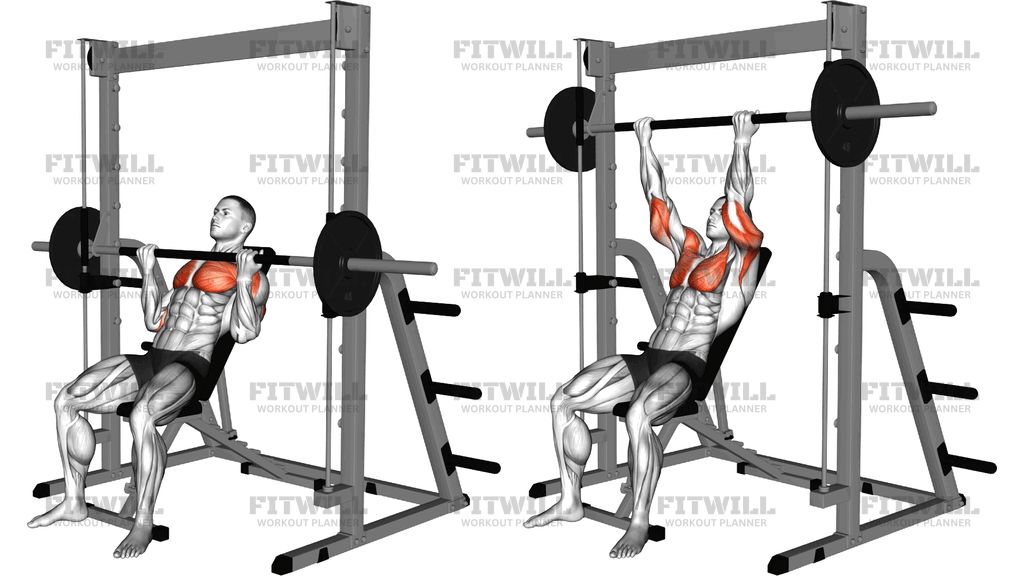
Smith Incline Close Grip Bench Press
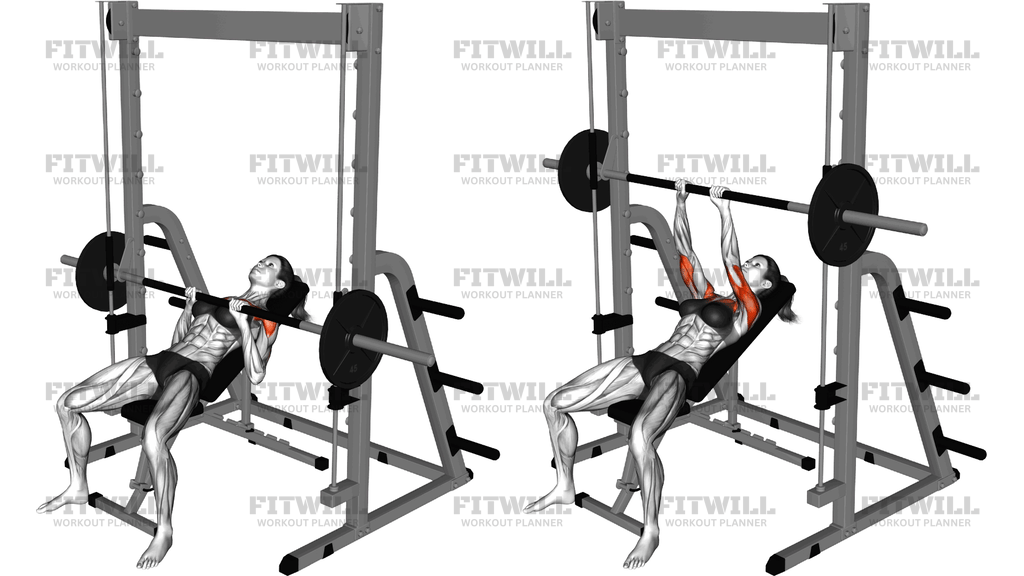
The Smith Incline Close Grip Bench Press is a machine-based press performed on an incline bench positioned inside a Smith machine, with the hands placed roughly shoulder-width or slightly narrower on the bar. The incline angle shifts the pressing line toward the upper portion of the chest, while the close hand placement puts the triceps in the driver's seat for the lockout. Because the bar travels on fixed vertical rails, you can focus entirely on pressing hard and keeping your elbows tucked instead of stabilizing the weight.
This setup suits lifters who want to build triceps strength for pressing in general, add targeted work to the upper chest, or push close to failure without a spotter. The Smith machine's safety catches make it a practical choice for training alone, and the fixed bar path is forgiving for anyone still learning how a close-grip press should feel. Powerlifters often use it as a secondary press day movement, while general lifters use it to load the triceps harder than isolation work like pushdowns allows.
Setup matters more here than with a free-weight barbell. The bench needs to be placed so the bar descends to the upper chest without forcing your shoulders into an awkward stretch, and your grip width needs to be narrow enough to bias the triceps but not so narrow that your wrists bend backward. Feet planted on the floor, shoulder blades pulled together, and a small arch in the upper back create a stable base before the bar is unlocked.
To execute the press, lower the bar under control toward the upper chest with your elbows tracking close to your torso, let it lightly touch at the bottom, then drive it back up along the same line until the arms are extended. The fixed rails mean the bar can only move vertically, so small adjustments in bench position will change where the bar lands on your body - take the time to get this right before loading weight.
Common use cases include a pressing accessory after heavier flat or incline barbell work, a triceps-focused finisher, or a safe way to train incline pressing without a partner. Keep the reps controlled, avoid flaring the elbows outward, and never bounce the bar off the chest - the Smith machine's rigidity punishes sloppy reps just as much as free weights do.
[ Workout Log & Planner ]
Put your next workout in Fitwill
Keep your plan and training log ready when you are.


Instructions
- Position an incline bench inside the Smith machine at roughly a 30-45 degree angle, centered so the bar will descend to your upper chest.
- Lie back with your head, upper back, and hips on the bench, feet flat on the floor, and grip the bar with hands about shoulder-width apart.
- Rotate the bar to release it from the safety hooks and hold it over your upper chest with arms fully extended.
- Pull your shoulder blades down and together, keep a slight natural arch in your upper back, and brace your core.
- Lower the bar in a slow, straight line toward the top of your chest, keeping your elbows tucked close to your sides rather than flared out.
- Pause briefly when the bar lightly touches your upper chest - do not bounce it off your ribcage.
- Press the bar back up along the same vertical path, pushing through your palms until your arms are fully extended and the triceps are engaged at the top.
- Exhale as you press up and inhale as you lower the bar under control.
- Complete all repetitions, then rotate the bar forward to re-rack it securely on the hooks before sitting up.
Tips & Tricks
- If the bar drifts toward your neck or collarbones at the bottom, slide the bench a little further forward or backward - a few centimeters of adjustment makes a big difference on a fixed rail.
- Do not grip the bar with your hands nearly touching; a width narrower than your shoulders is enough to bias the triceps, while an extremely narrow grip strains the wrists and shoulders.
- Keep your wrists stacked over your forearms. If your wrists bend back, narrow your grip slightly less or focus on pressing with the base of your palm.
- The Smith machine removes the need to stabilize the bar side to side, so use that to your advantage by pausing for a beat at the bottom of each rep instead of rushing.
- Lower the weight 10-15% compared to a normal incline press at first - the close grip reduces chest contribution and your triceps will feel it sooner than you expect.
- Avoid letting your hips rise off the bench to shorten the range; this turns the movement into a steeper press and reduces the work on the upper chest and triceps.
- If your shoulders feel pinched at the bottom, reduce the depth so your upper arms stop around parallel to the floor rather than forcing the bar to touch.
- Set the safety catches just below the bar's lowest position so a failed rep can be safely released onto them.
- Keep your elbows around 45 degrees or less relative to your torso throughout - wide-flared elbows on a close grip defeat the purpose of the hand placement.
Frequently Asked Questions
What muscles does the Smith Incline Close Grip Bench Press work?
The triceps are the primary movers, especially through the lockout. The upper chest and front shoulders assist throughout the press, with the incline angle emphasizing the clavicular head of the pec major.
Why use a close grip on an incline press instead of a normal grip?
The narrow hand placement keeps the elbows closer to the body, which shifts more of the load to the triceps while the incline still recruits the upper chest. It is a useful compromise when you want both pressing and triceps work in one movement.
Is the Smith Incline Close Grip Bench Press good for beginners?
Yes. The fixed bar path removes the balance demands of a free-weight barbell, and the safety catches let you train without a spotter. Beginners should start light to learn where the bar lands on the upper chest before adding load.
Where exactly should the incline bench be placed under the Smith machine bar?
Position the bench so that when the bar is lowered with elbows tucked, it makes contact with the upper portion of your chest rather than your neck or mid-chest. Test this with the unloaded bar before adding plates.
How wide should my grip be?
About shoulder-width, or slightly inside it. Going much narrower stresses the wrists and shoulder joints without adding meaningful triceps benefit.
Can I do this exercise if I don't have a Smith machine?
You can substitute a close-grip incline press with a barbell or dumbbells on an incline bench, but the free-weight versions require more stabilization and ideally a spotter when the weight gets heavy.
Why do my shoulders feel uncomfortable at the bottom of the rep?
The bar may be descending too far or your elbows may be flaring out. Keep the elbows tucked and stop the descent once your upper arms reach roughly parallel to the floor rather than forcing a deep touch.
Should I lock out my elbows at the top of each rep?
Yes, extending fully at the top is safe for healthy elbows and maximizes triceps involvement. Just avoid slamming into the lockout - finish each rep with control.
How heavy should I go on the Smith Incline Close Grip Bench Press?
Treat it as a secondary pressing movement rather than a max-effort lift. Choose a weight you can control for 8-15 reps with a brief pause at the chest, and use the safety catches whenever you work close to failure.
Do I need a spotter for this exercise?
No, which is one of its main advantages. Set the Smith machine's safety catches just below your lowest bar position so you can safely release the bar if a rep fails.