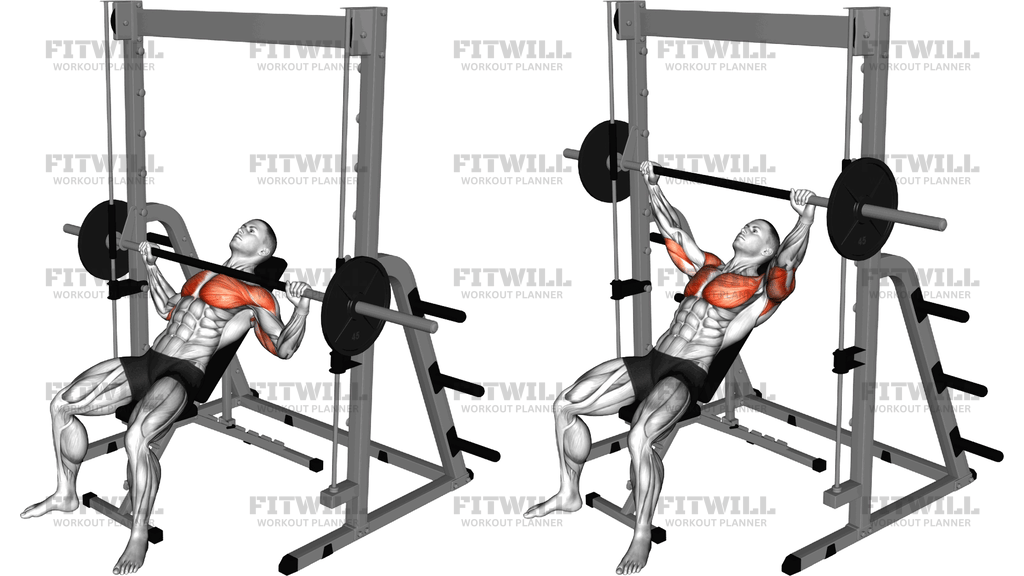
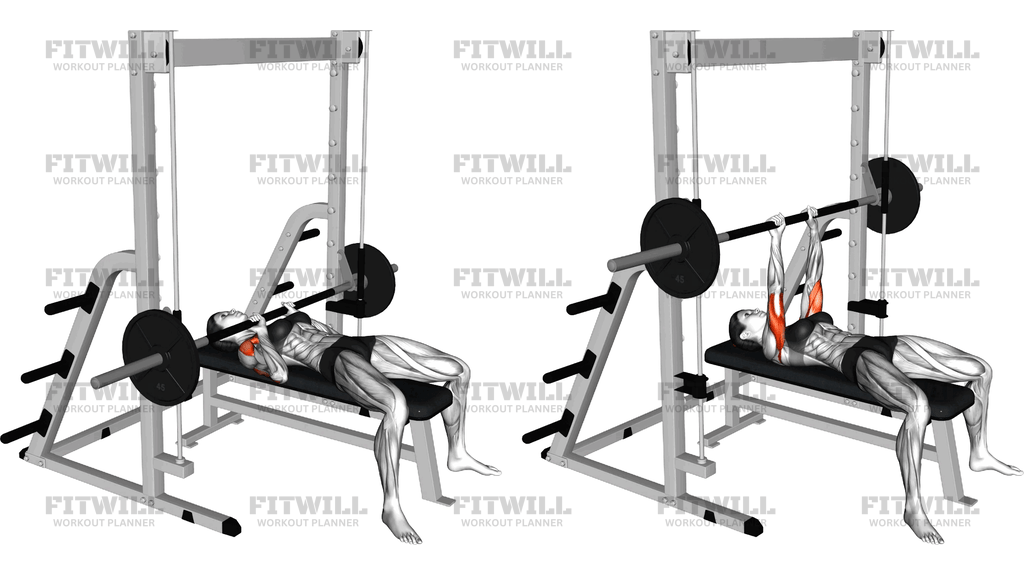
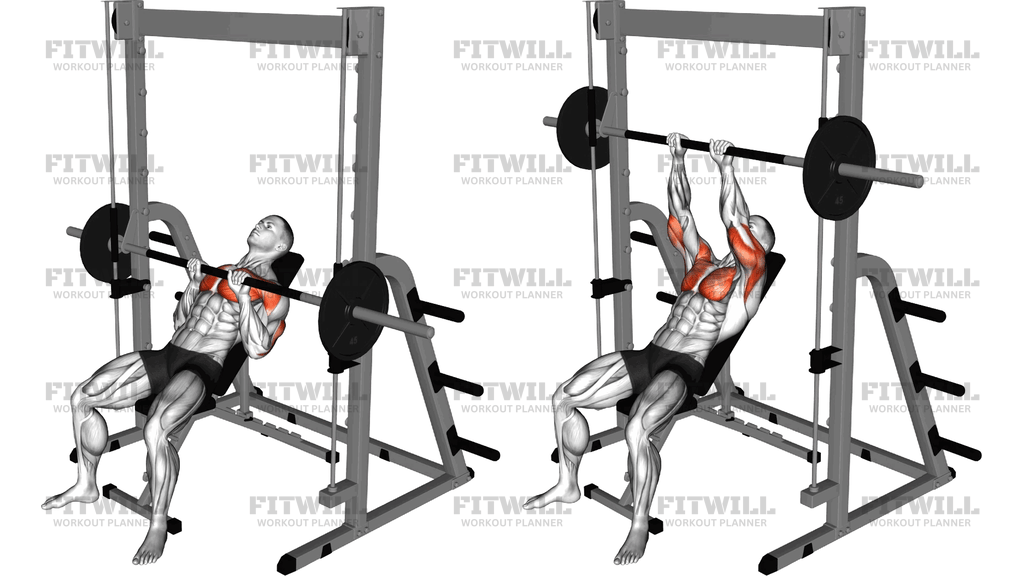
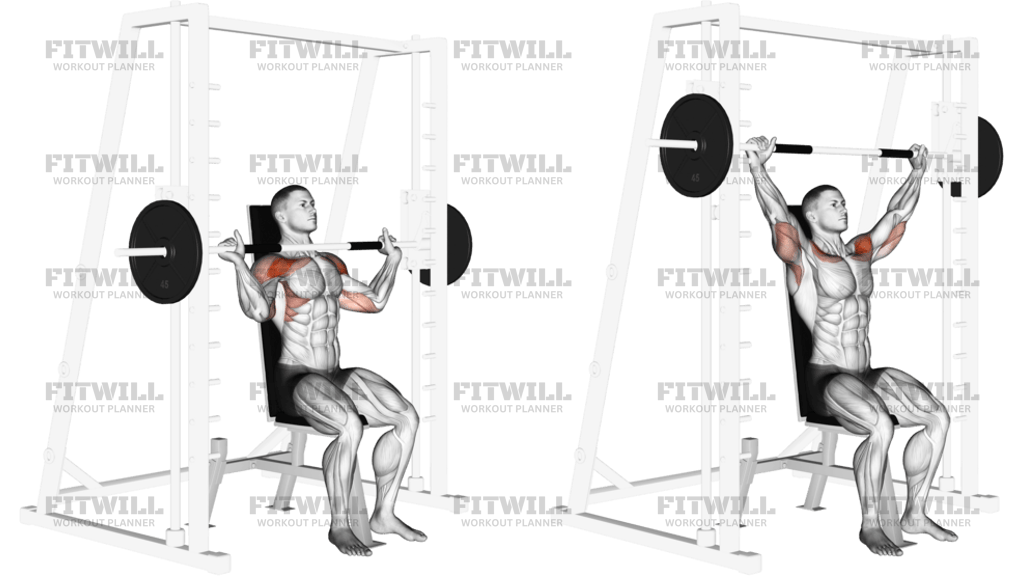
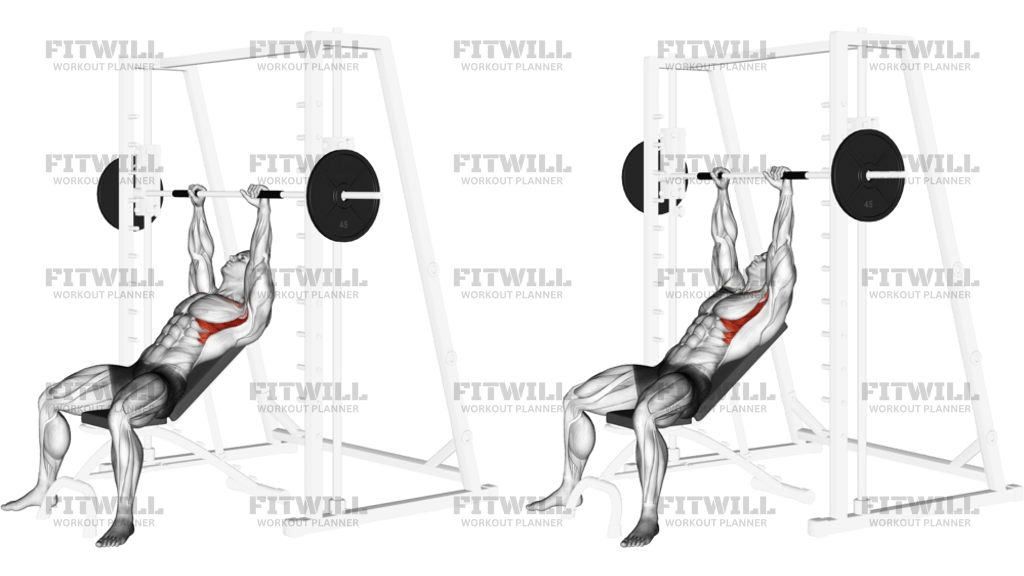
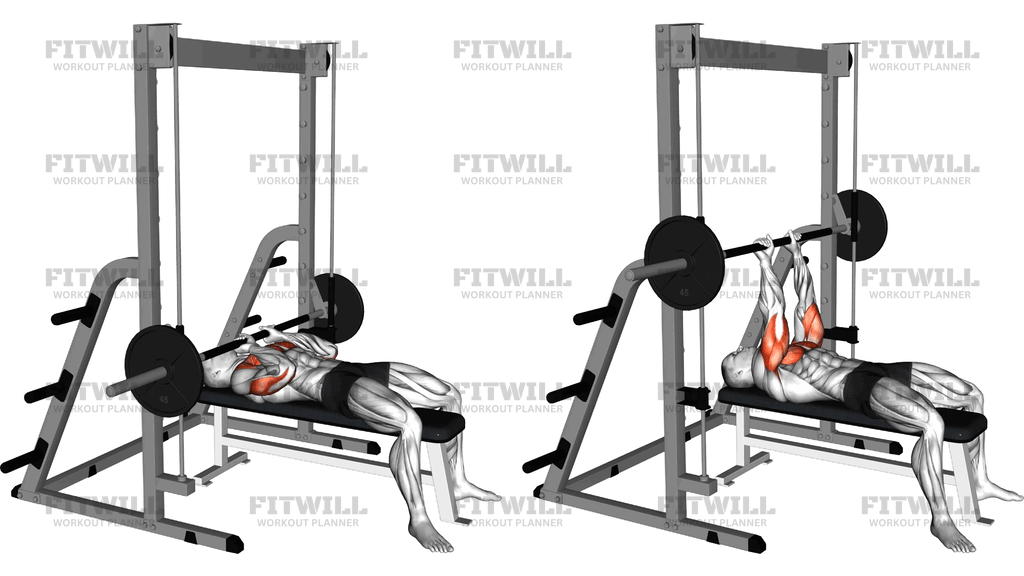
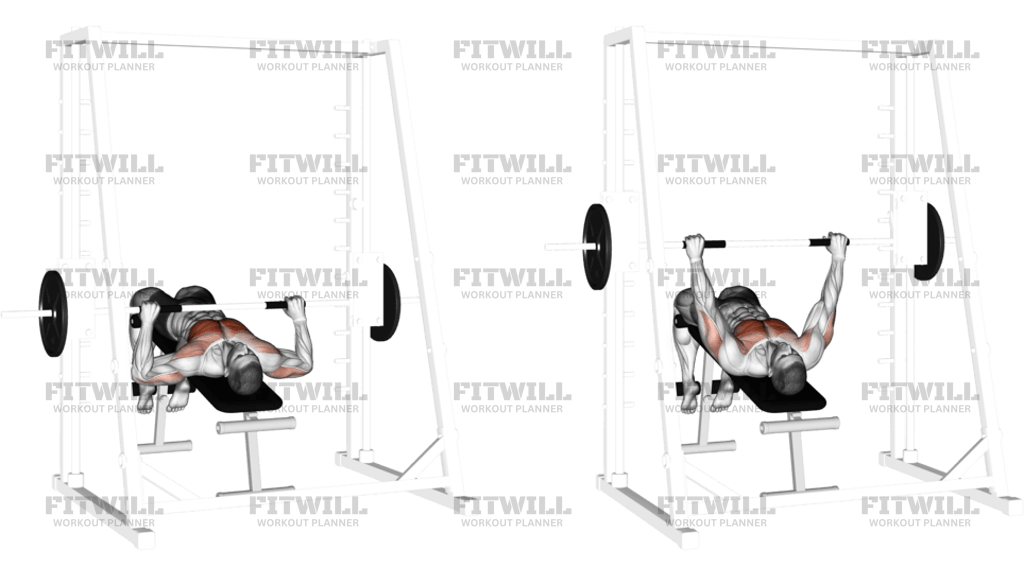
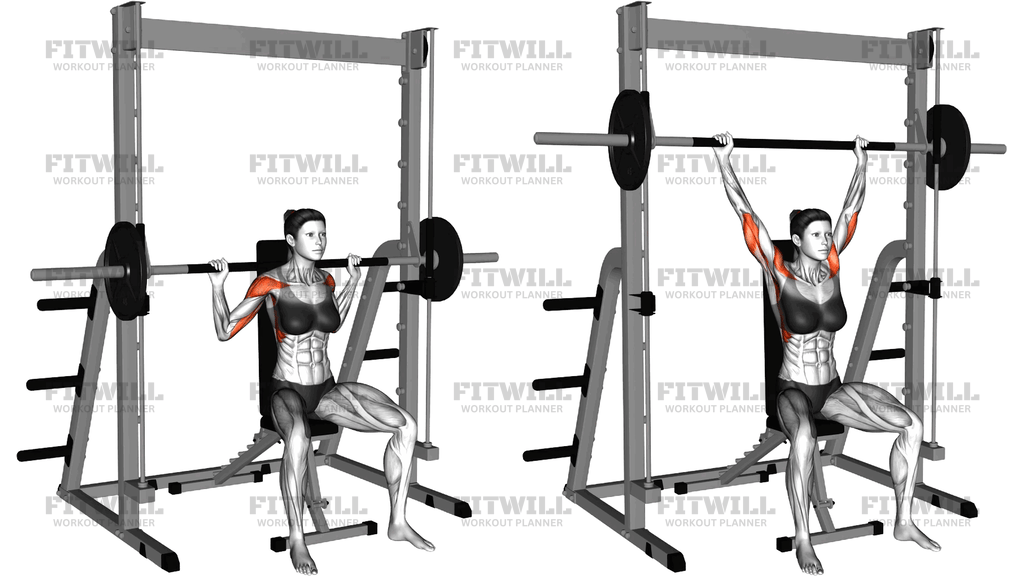
Smith Incline Close Grip Bench Press
The Smith Incline Close Grip Bench Press is a machine-based pressing exercise performed on an incline bench set inside a Smith machine, with the hands placed roughly shoulder-width or slightly narrower on the bar. The incline angle shifts the press toward the upper portion of the chest, while the close hand position places the triceps under heavy demand as the primary driver of the lockout. Because the Smith machine bar travels on fixed vertical rails, the movement removes the need to balance the weight, letting you focus entirely on pressing hard and controlling the path.
This setup is especially useful for lifters who want to overload the triceps and upper chest without a spotter, and for anyone who finds the fixed bar path more comfortable on the shoulder joints than a free-weight barbell. The Smith machine also allows easy self-rescue: if a rep stalls, you can rotate the bar to rack it, which makes it a practical choice for training close to failure. It works well as a main pressing movement on an upper-body day or as a secondary press after a heavier flat or incline bench session.
The position on the bench matters more than most people expect. Because the bar is locked to a vertical path, you must position the bench so the bar descends to the right spot on your body naturally, typically the upper chest just below the collarbones. Setting the bench too far forward or back forces your elbows into awkward angles and shifts stress onto the shoulders. Take the time to slide the bench into place and do a couple of unloaded rehearsal reps before adding plates.
To perform it well, lie back with your head, upper back, and hips in contact with the bench, plant your feet on the floor, and grip the bar with hands about shoulder-width apart. Lower the bar under control to your upper chest, keeping your elbows tucked relatively close to your torso rather than flared wide, then press up until your arms are straight without snapping the elbows into lockout. Brace your core throughout so your lower back stays supported against the incline.
Common mistakes include gripping far too narrow, which strains the wrists, and bouncing the bar off the chest to gain momentum. Because the incline angle already reduces the range the chest has to contribute, keep the reps deliberate and let the triceps do their job. If your shoulders feel pinched at the bottom, raise the bench angle slightly or reduce the depth of each rep rather than forcing the bar lower.
[ Workout Log & Planner ]
Put your next workout in Fitwill
Keep your plan and training log ready when you are.


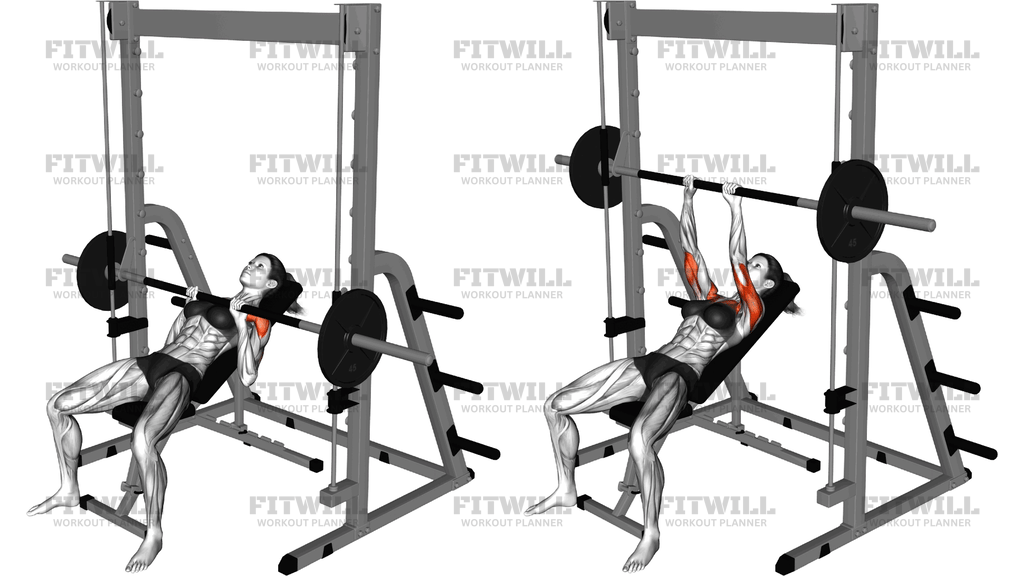
Instructions
- Position an incline bench inside the Smith machine so the fixed bar path lines up with your upper chest, then set the bench angle to roughly 30 to 45 degrees.
- Adjust the bar height so you can unrack it with arms nearly straight while your shoulder blades stay pinned against the bench.
- Lie back with your head, upper back, and hips on the bench and your feet flat on the floor on either side for a stable base.
- Grip the bar with an overhand hold at about shoulder width, much narrower than a standard bench press but wide enough to keep your wrists stacked over your elbows.
- Rotate the bar to release it from the safety hooks and hold it over your upper chest with arms extended.
- Inhale and brace your core, then lower the bar in a straight controlled line until it lightly touches your upper chest, keeping your elbows tucked at roughly 45 degrees to your torso.
- Press the bar back up along the same vertical path, exhaling as you drive through the sticking point, and stop just short of slamming the elbows into a hard lockout.
- Squeeze the triceps and upper chest at the top for a moment before starting the next rep.
- After your final rep, rotate the bar forward to re-rack it in the hooks and confirm it is secure before sitting up.
Tips & Tricks
- Test the bench position with an empty bar first. If the bar drifts toward your neck or lower down your sternum on the way down, slide the bench forward or backward until the vertical path meets your upper chest cleanly.
- Keep your wrists straight over your elbows. Grip pressure through the heel of the palm, not the fingertips, prevents the wrist bend that causes forearm and elbow discomfort on close-grip pressing.
- Do not chase a narrower grip. Going narrower than shoulder width mostly adds wrist strain without extra triceps work because the elbows are already fully tucked.
- Control the descent for two to three seconds. The fixed bar path means momentum cannot save you, so a controlled lowering phase is where much of the triceps and upper chest stimulus comes from.
- Lightly touch the chest rather than bouncing. Bouncing off the ribcage at the bottom is the most common way lifters lose tension and irritate the shoulder on this incline angle.
- Set the Smith machine safety stops just below your chest level so a failed rep can be escaped safely, letting you train close to failure without a partner.
- Keep your shoulder blades retracted and pressed into the bench for the entire set. Letting them drift forward as you fatigue turns the press into a shoulder-dominant movement.
- If the bar path feels like it pulls your shoulders forward, your bench is likely too high up the incline; lower the bench angle or reposition one notch before adding weight.
Frequently Asked Questions
What muscles does the Smith Incline Close Grip Bench Press work?
The triceps are the primary movers because of the narrow hand position, with the upper chest and front shoulders assisting throughout the press. The incline angle biases the work toward the clavicular head of the chest rather than the mid-chest.
How close should my grip be on this exercise?
About shoulder width is enough. Narrower than that forces your wrists to bend inward and stresses the elbows without adding meaningful triceps involvement.
Is the Smith Incline Close Grip Bench Press good for beginners?
Yes, it is one of the friendlier close-grip pressing variations to learn because the fixed bar path removes balance demands and the bar can be re-racked at any point. Beginners should start light to learn where the vertical path meets their upper chest.
Why does the bench position matter so much in a Smith machine press?
The bar only travels vertically, so your body has to be positioned where that path naturally lands on your upper chest. A bench set even a few inches off makes your elbows flare or drift and shifts stress onto the shoulder joints.
Should I touch my chest on every rep?
A light touch at the upper chest is a good target, but stop higher if your shoulders feel pinched. Depth should come from comfortable shoulder mobility, not forcing the bar lower.
What is the most common mistake with this movement?
Bouncing the bar off the chest and flaring the elbows wide. Both habits dump tension off the triceps and place the shoulder in a vulnerable position under the incline angle.
Can I use the Smith Incline Close Grip Bench Press instead of a barbell close-grip press?
Yes, it is a solid substitute, especially when training without a spotter. The trade-off is slightly less stabilizer involvement in exchange for a safer, more consistent bar path.
Where should I set the Smith machine safety stops?
Set them just below the point where the bar touches your upper chest. That way, if a rep stalls, you can rotate the bar and let the stops catch it rather than being pinned under the weight.
How does this differ from a regular incline bench press?
The close grip shifts much of the load from the chest to the triceps, and the Smith machine locks the bar to a straight vertical line instead of the slight backward arc of a free-weight press. Expect your upper chest to still work, but your arms will be the limiting factor.
How should I breathe during the set?
Inhale and brace as you lower the bar, then exhale forcefully as you press up. Reset your brace at the top of each rep rather than holding your breath through multiple repetitions.