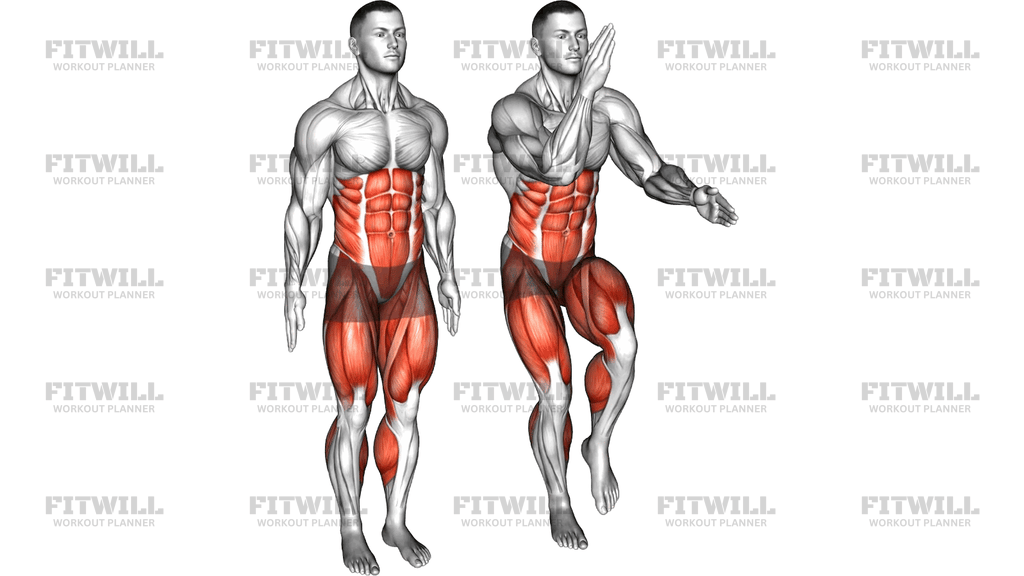
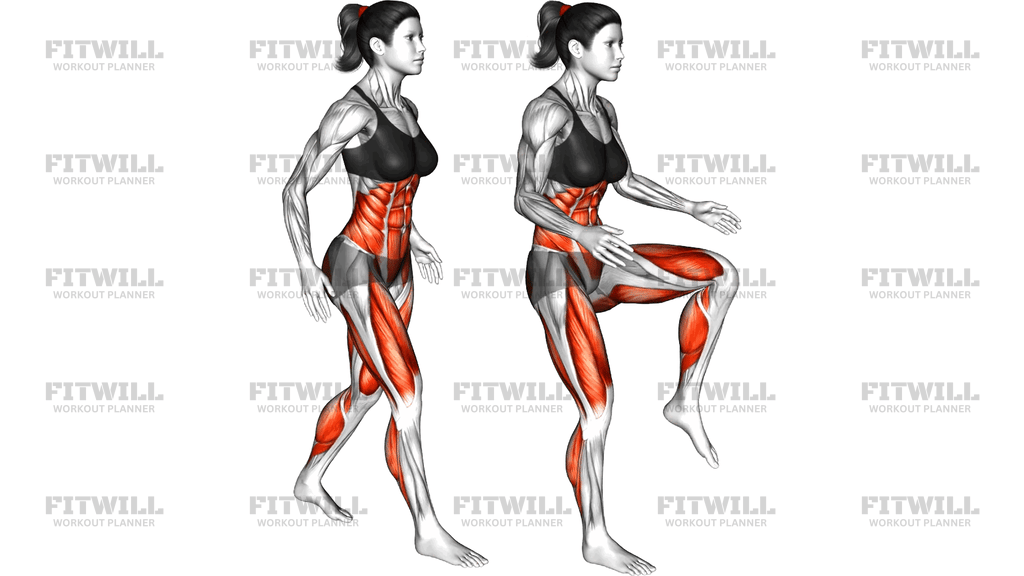
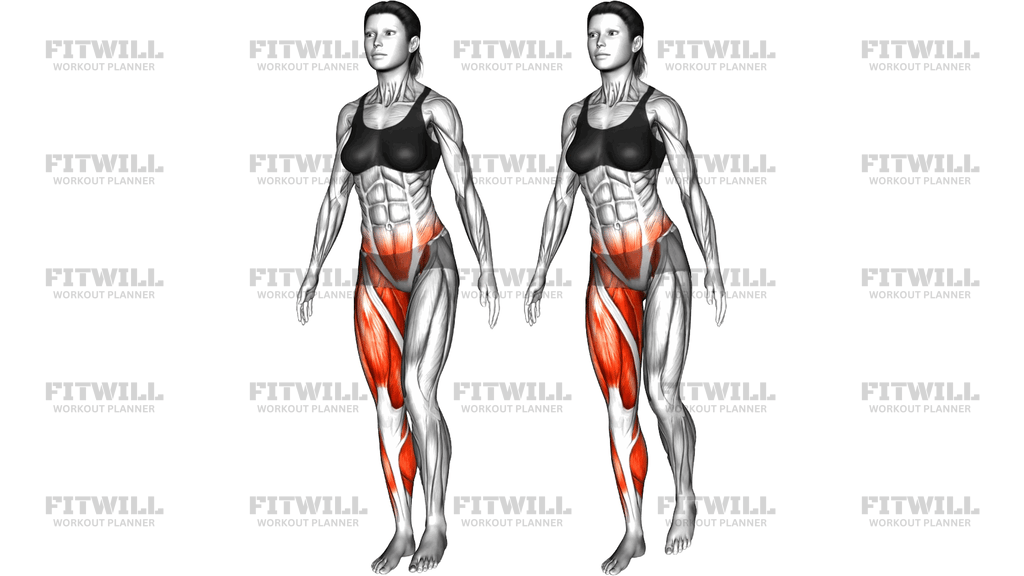
Step Up (1st And 2nd Stairs Steps)
The Step Up (1st And 2nd Stairs Steps) is a bodyweight stepping exercise performed on an ordinary staircase, moving up from the floor onto the first step and then continuing onto the second. Because the movement uses the natural rise of real stairs, the stepping height stays in a practical, joint-friendly range, and the pattern closely matches how you climb stairs in daily life. It is one of the simplest ways to load the legs without any equipment beyond a stable staircase.
This exercise is useful for beginners building basic single-leg strength, for older adults who want to stay confident on stairs, and for anyone returning from time away from training who needs an easy entry point before moving to taller boxes or weighted step ups. It also works well as a warm-up or as higher-repetition conditioning when performed continuously for a set number of flights or time blocks.
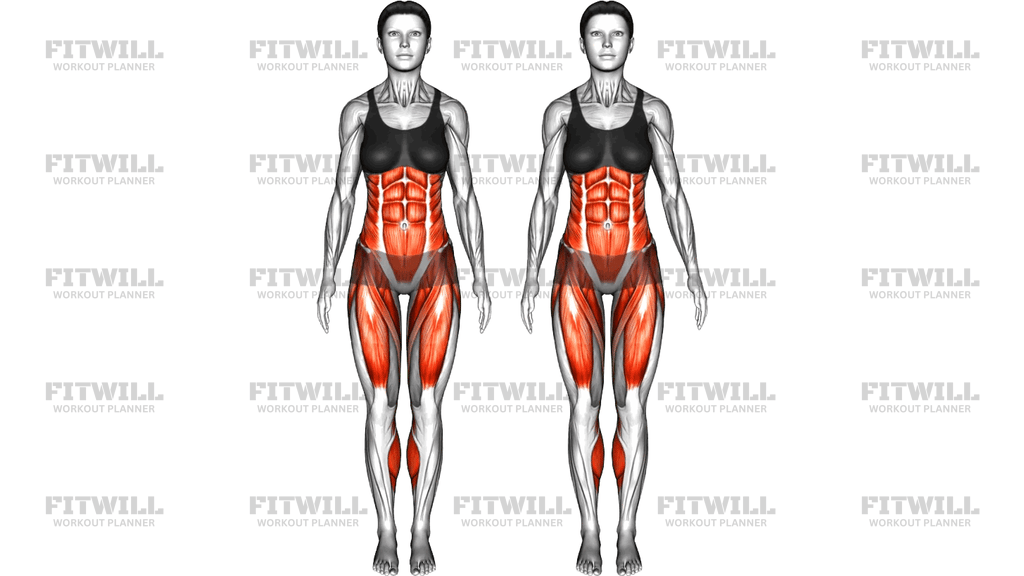
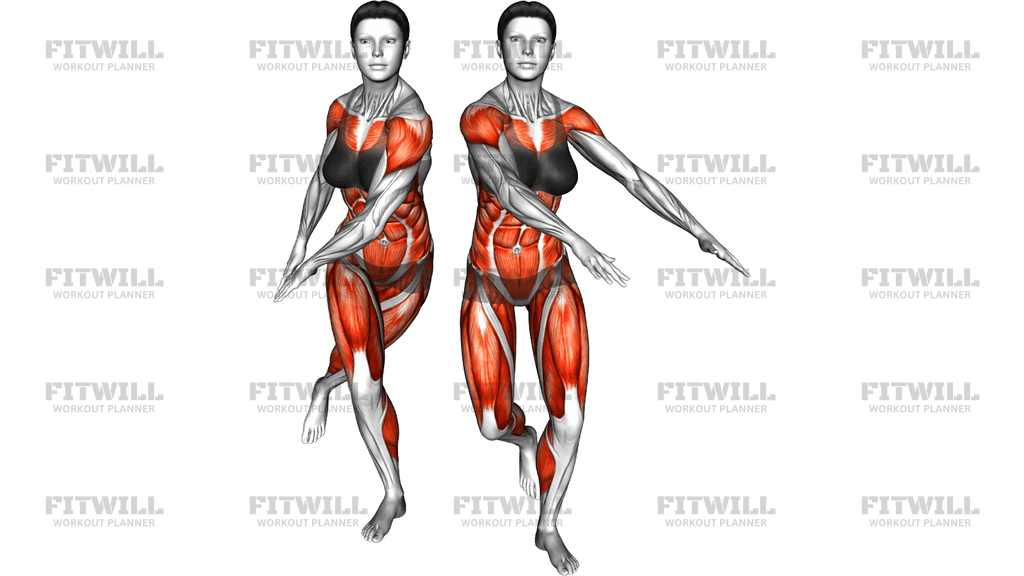
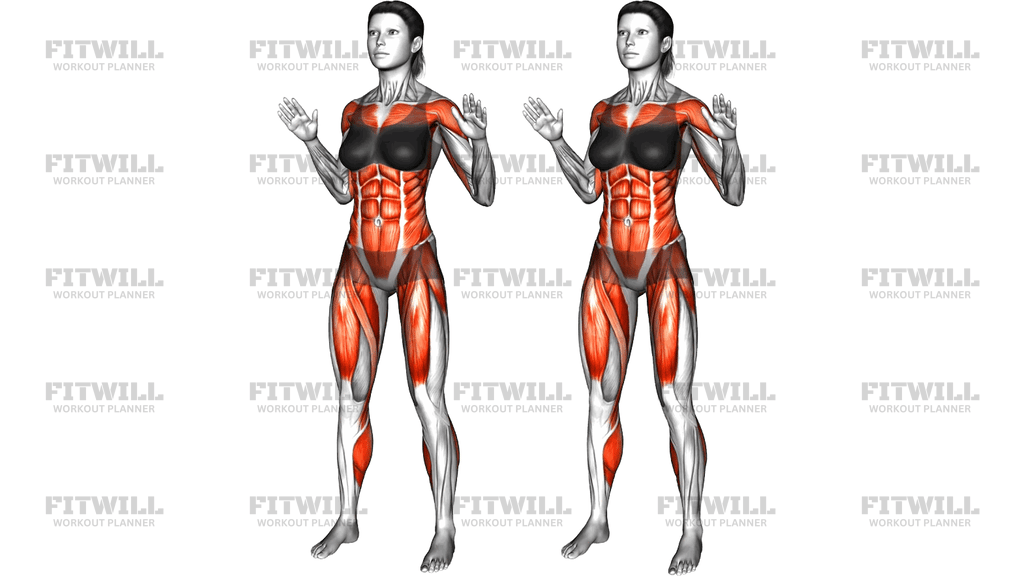
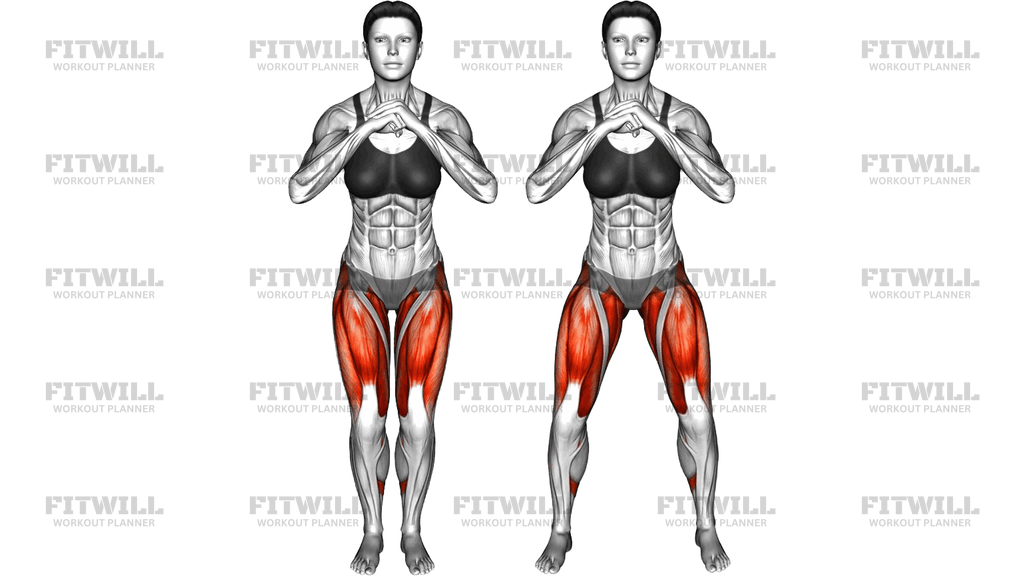
The main work comes from the quadriceps of the leading leg as they straighten the knee, with strong contributions from the glutes as they extend the hip and keep the pelvis level. The calf muscles and the smaller stabilizers around the ankle and foot control the push-off and the landing, and the muscles of the standing hip work quietly to stop you from wobbling side to side. Because one leg does the lifting at a time, each side has to earn its own strength, which helps expose and eventually correct left-right differences.
Setup matters more than it looks. Choose a staircase with a handrail or wall nearby for balance insurance, stand tall facing the steps, and place your whole foot flat on the step rather than letting the heel hang off the edge. Keep your torso upright with only a slight forward lean, and let the front leg, not a push from the back foot, do most of the lifting.
To execute the movement well, shift your weight over the working leg, drive through the heel and mid-foot, and rise until that leg is fully standing tall on the step. Step the trailing foot up to meet it, then continue to the second step or step back down one step at a time with control. The descent is where most people rush; lowering slowly keeps the knee tracking over the foot and turns the way down into useful strength work too.
Common use cases include home workouts, rehab-style lower body routines, and warm-ups before squats or lunges. Keep the repetitions even on both sides by always starting each set with the same lead leg and switching leads between sets, and stop before your balance, not your muscles, is the first thing to fail.
[ Workout Log & Planner ]
Put your next workout in Fitwill
Keep your plan and training log ready when you are.


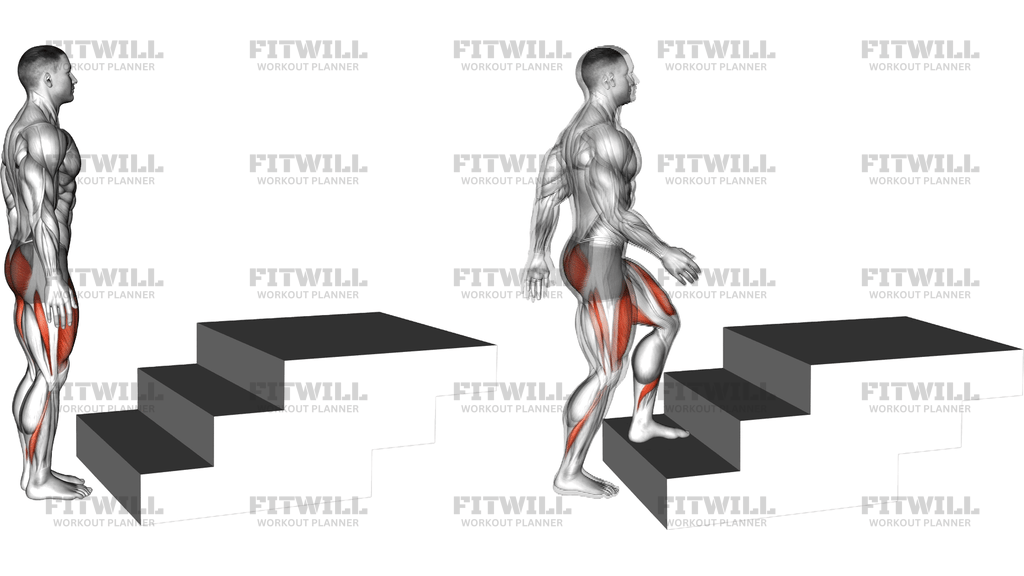
Instructions
- Stand facing a stable staircase, close enough to the first step that you can place a foot on it without leaning forward, with a handrail or wall within easy reach.
- Place your right foot fully on the first step so your entire foot, including the heel, rests flat on the surface, and set your feet about hip-width apart.
- Brace your midsection lightly, keep your chest tall, and let your arms hang relaxed at your sides or hover near the rail for balance only.
- Shift your weight onto the front leg and push through the heel and mid-foot to straighten the knee and hip, lifting your body until you are standing upright on the first step.
- Bring your left foot up to meet the right on the same step, finishing with both feet together, hips and knees fully extended, and shoulders stacked over the hips.
- Step up onto the second step with the same lead leg if you are continuing the climb, again pressing through the whole foot rather than bouncing off the toes.
- To come back down, step one foot at a time onto the lower step, lowering slowly and letting the front knee bend in line with the foot until the trailing foot touches down.
- Exhale as you press up onto each step and inhale as you lower back down, keeping the breathing steady rather than holding it.
- Complete your repetitions with the right leg leading, then reset on the floor and repeat the set with the left leg leading so both sides get equal work.
- Re-check your foot placement at the start of every rep, keeping full contact with the step and avoiding any twisting of the knee as you climb or descend.
Tips & Tricks
- The most common mistake is pushing off the bottom leg instead of letting the top leg lift you; tap the trailing foot lightly or keep its heel on the floor so the working leg does the real work.
- Letting the heel hang off the front edge of the step shifts stress into the calf and Achilles; reposition your foot so the whole sole sits flat on the tread before each climb.
- Watch that the front knee travels forward over the toes rather than caving inward; if it drifts in, consciously spread the floor with your foot and slow the tempo down.
- Do not let your torso collapse forward as you step up; a small forward lean is fine, but your chest should stay noticeably taller than your hips throughout the climb.
- If your hips rock side to side at the top, you are stepping to a height your hip stabilizers cannot control yet; stick to the first step only and master it before adding the second.
- Pause for one second standing tall on the step instead of bouncing straight into the next rep; this removes momentum and makes the glutes finish the hip extension.
- Descend under control rather than dropping down; the lowering phase on stairs taxes the quads and knee tracking just as much as the climb, and rushing it is where stumbles happen.
- Keep your hand on the rail for safety, but lean on it as little as possible; if you find yourself pulling yourself up, the effort should be shifted back into your legs.
- Always alternate which leg starts each set; leading with the same leg every time quietly builds a bigger strength gap between sides.
- Wear flat, secure footwear or go barefoot on a clean staircase, since loose slippers or socks are the fastest way to slip on a step edge.
Frequently Asked Questions
Which muscles does the Step Up (1st And 2nd Stairs Steps) work the most?
The quadriceps on the front of the thigh do most of the lifting as the knee straightens, with the glutes extending the hip and keeping the pelvis level. The calves and ankle stabilizers handle the push-off and control the landing.
Is this exercise suitable for complete beginners?
Yes, it is one of the most beginner-friendly lower body exercises because normal stair height is a modest, familiar step. A beginner can start with just the first step, hold the handrail for balance, and keep the repetitions low while the pattern becomes automatic.
Should I use the first step or the second step?
Start with the first step until you can climb and lower with a steady torso and no hip wobble, then add the second step for a slightly greater challenge. If you cannot control the descent from the second step, return to single-step work for a while.
Why does my back leg feel like it is doing half the work?
That usually means you are pushing off the floor with the trailing foot instead of driving through the leg already on the step. Keep the trailing foot relaxed and light, and focus all your pressure into the heel and mid-foot of the top leg.
How many repetitions should I do per set?
Count one repetition per step-up with each leg, and aim for 8 to 12 controlled climbs per side when training for strength, or longer continuous bouts of 1 to 3 minutes when using stairs for conditioning. Stop when your balance or knee control starts to slip, not just when the legs burn.
Can I do the Step Up (1st And 2nd Stairs Steps) if my knees are sensitive?
The shallow height of the first step is often well tolerated, but let discomfort guide you and keep the range small. Lower yourself slowly, keep the knee tracking over the foot, and if stepping down bothers the knee, step down to a shallower height or hold the rail for support.
What is the most common mistake on stairs specifically?
Rushing the way down and letting the heel hang off the tread edge. Both problems disappear when you place the whole foot flat on the step and treat the descent as a controlled one-leg squat rather than a drop.
What can I use instead if I do not have stairs at home?
Any stable, low platform works, such as a sturdy step platform, a low bench, or the bottom landing of a deck. Just make sure the surface cannot slide and that its height is similar to a stair rise so the pattern stays the same.
Should I hold weights while stepping up?
Not at first; master the bodyweight version with upright posture and even strength on both sides first. Once you can complete your sets with steady balance and no push-off from the trailing foot, holding light dumbbells is a sensible progression.
How do I make sure both legs get equal work?
Always lead each set with the same leg, complete that set, then switch so the other side leads the next one, and match the number of repetitions exactly. Doing alternating step-ups also works, as long as you track totals per leg.