Kettlebell Leg Raise
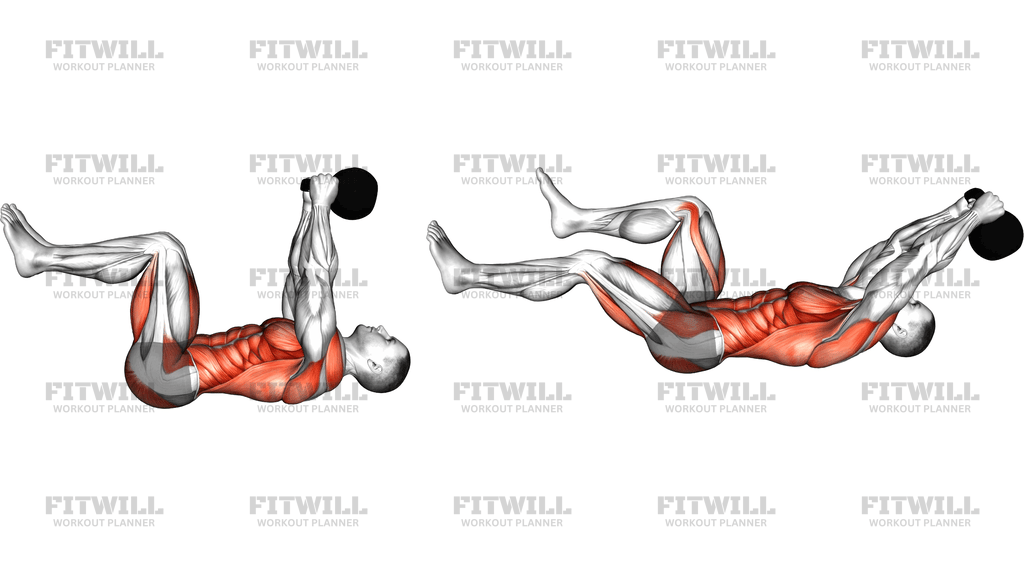
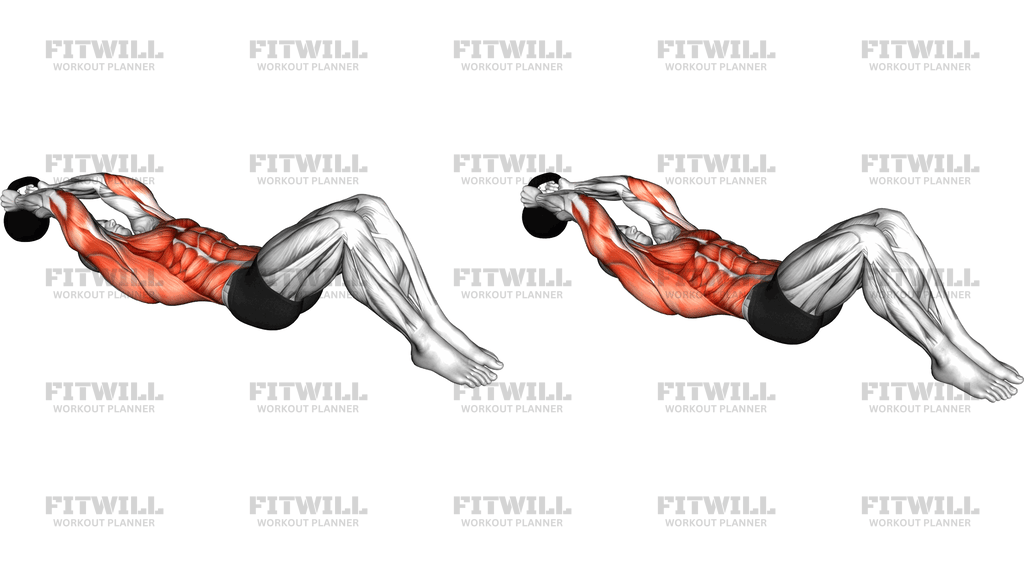
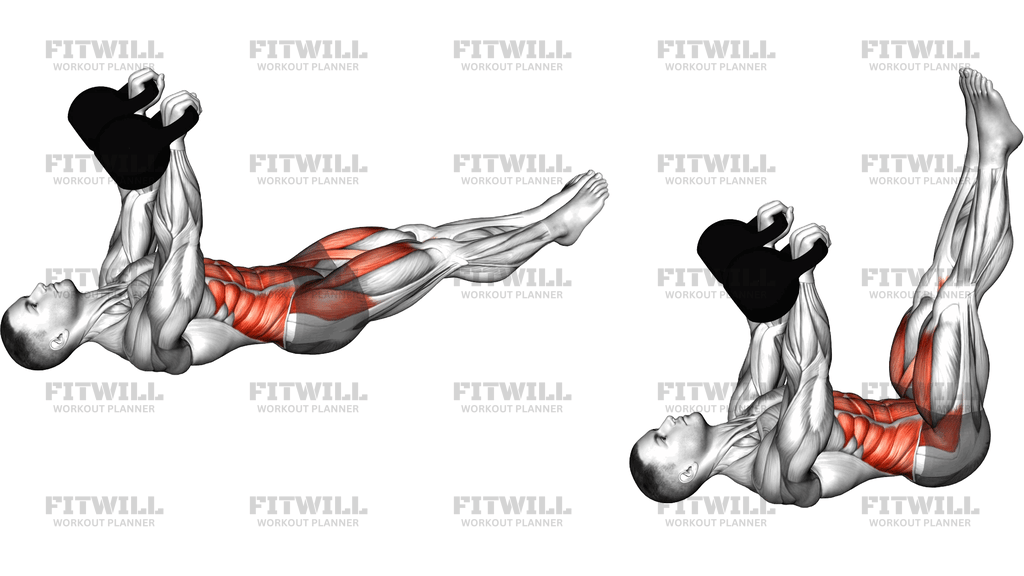
The Kettlebell Leg Raise is a supine core exercise where you lie on your back, hold a kettlebell over your chest with straight arms, and raise your extended legs from just above the floor to a vertical position. The kettlebell acts as a stable counterweight and anchor for your upper body, which lets you load the lower abs and hip flexors through a long range of motion without needing a bench, decline setup, or hanging bar.
This movement is particularly useful for people who find hanging leg raises too demanding on grip and shoulder endurance, or who want to isolate the trunk without their grip giving out first. Because your upper body is pinned in place by the weight, all of the attention goes to controlling the pelvis and spine as the legs travel. The lower portion of the abs works hard to keep the ribcage and pelvis pulled together, while the hip flexors drive the legs upward.
The setup matters more than most lifters expect. Holding the kettlebell with vertical, straight arms over the chest keeps your shoulders and upper back in a fixed, supported position. If the weight drifts behind your head or the elbows bend, the load shifts away from the trunk and the exercise becomes unstable. Pressing the low back into the floor before the legs begin to move is what separates a clean rep from a swing that uses momentum and stresses the lumbar spine.
Execution is simple on paper: legs start long and hovering just off the floor, then rise until they point at the ceiling, then lower under control. The difficulty comes from the bottom half of the range, where the lever arm of the extended legs places the greatest torque on the trunk. Slowing down that lowering phase is where most of the training effect lives, so resist the urge to let the legs drop quickly.
This exercise fits well as a core finisher after lower body or pressing sessions, or as a progression step between bent-knee floor raises and hanging leg raises. Because the kettlebell is held rather than moved, the weight primarily serves as an anchor, so it does not need to be heavy to be effective. Choose a load that stays put comfortably for the entire set rather than one that challenges your arms.
For safety, keep the range honest: if your low back lifts off the floor as the legs descend, stop the descent higher and rebuild from there. Momentum is the enemy here, since a fast swing from the floor both reduces abdominal work and increases stress on the lumbar area. Bending the knees slightly is a legitimate modification that shortens the lever and makes the movement more manageable without changing the setup.
[ Workout Log & Planner ]
Put your next workout in Fitwill
Keep your plan and training log ready when you are.


Instructions
- Lie flat on your back on the floor and hold a kettlebell by the handle with both hands, arms fully extended so the bell sits directly above your chest.
- Extend both legs straight out so they hover an inch or two above the floor, knees together, toes pointing up.
- Press your low back firmly into the floor and brace your abdominals as if preparing for a light nudge to the stomach.
- Exhale and raise your straight legs toward the ceiling by flexing at the hips, keeping the knees as straight as your flexibility allows.
- Continue lifting until your legs are roughly perpendicular to the floor and your hips curl slightly off the ground at the top.
- Pause briefly at the top with the legs vertical and the abs actively squeezing.
- Inhale and lower the legs slowly toward the floor, keeping the low back pressed down the entire way.
- Stop the descent just before your heels touch the floor or your low back begins to arch, then start the next rep.
- Keep the kettlebell's arms vertical and still throughout the set; the weight should not drift behind your head or toward your knees.
- After the final rep, bend the knees, set the feet on the floor, and place the kettlebell down safely before standing.
Tips & Tricks
- The most common mistake is swinging the legs off the floor to start each rep. Initiate the lift by squeezing the abs and pulling the pelvis slightly toward the ribcage instead of kicking upward.
- If your low back peels off the floor during the lowering phase, stop the descent earlier and shorten the range rather than letting the heels reach the floor.
- A kettlebell that is too heavy will pull your shoulders forward or let the arms tilt. The weight is an anchor, not a challenge, so err on the lighter side.
- Slightly soft knees are acceptable if your hamstrings are tight, but keep the bend constant throughout the rep rather than bending more as the legs get heavy.
- Exhale as the legs rise and inhale during the lowering; holding your breath for multiple reps makes the brace unstable.
- Think about lifting with the hips, not just the feet. If only your feet travel upward while your pelvis stays glued down, the hip flexors are doing the work without the lower abs contributing.
- Point your toes toward the ceiling and keep the legs together to maintain a clean, straight lever from hip to heel.
- Control the top position too. Yanking the legs past vertical and letting them fall back turns the rep into a pendulum and strips out the abdominal work.
Frequently Asked Questions
What muscles does the Kettlebell Leg Raise work?
The primary work comes from the lower abs, specifically the lower fibers of the rectus abdominis, with the hip flexors driving the legs upward. The deep core stabilizes the trunk while the arms hold the kettlebell steady overhead.
Why hold a kettlebell during a leg raise instead of just lying flat?
The kettlebell anchors your upper body and shoulders so your torso does not shift as the legs travel. This lets you focus entirely on pelvic control and gives you a stable base without needing a bench or overhead bar.
How heavy should the kettlebell be for the Kettlebell Leg Raise?
Light to moderate is right for most people, since the bell only needs to stay fixed over your chest for the duration of the set. If your arms or shoulders fatigue before your abs, the weight is too heavy.
Can beginners do the Kettlebell Leg Raise?
Yes, but beginners should bend the knees to shorten the leg lever and stop the descent higher off the floor. Mastering a controlled range with a light bell is more productive than forcing straight legs from the floor.
Should my legs be completely straight during the Kettlebell Leg Raise?
Straight legs create the greatest challenge because they lengthen the lever arm, but a slight and consistent knee bend is fine if hamstring tightness or lower back discomfort limits you. The key is that the bend does not change mid-rep.
Why does my lower back arch at the bottom of the movement?
That arch means the torque from the extended legs exceeds what your abs can control, so the pelvis tilts forward. Do not lower the legs as far, keep the low back pressed into the floor, and build up the range over time.
Is it a problem if the kettlebell drifts behind my head?
Yes, because it changes your shoulder position and can strain the joint while reducing the anchor effect. Keep the arms vertical over the chest and check their position every few reps.
What can I substitute if I don't have a kettlebell?
A single dumbbell held with both hands works the same way, or you can do the movement with your arms braced overhead against a stable object. The essential feature is a fixed upper body, not the specific implement.
How does the Kettlebell Leg Raise compare to the hanging leg raise?
Both train the lower abs and hip flexors through a long range, but the floor version removes the grip and shoulder endurance demands of hanging. That makes it a good stepping stone or an option when grip fatigue would otherwise cut sets short.
Is it safe to do the Kettlebell Leg Raise every day?
The abs recover quickly compared to larger muscle groups, but they still benefit from rest like any trained muscle. Two to four focused sessions per week with controlled reps is a sustainable rhythm for most people.