Cable Rear Delt Row (Parallel Bar)
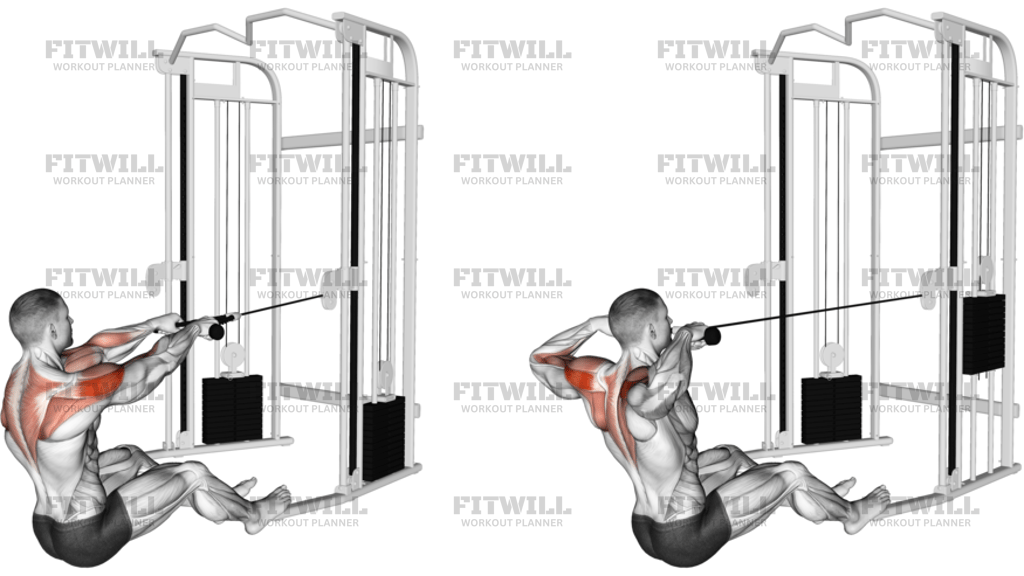
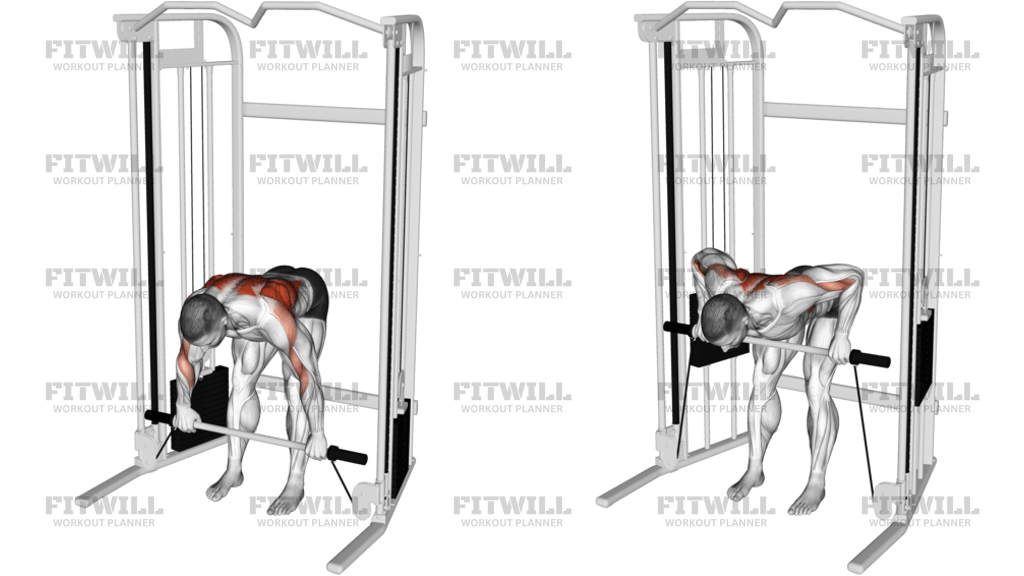
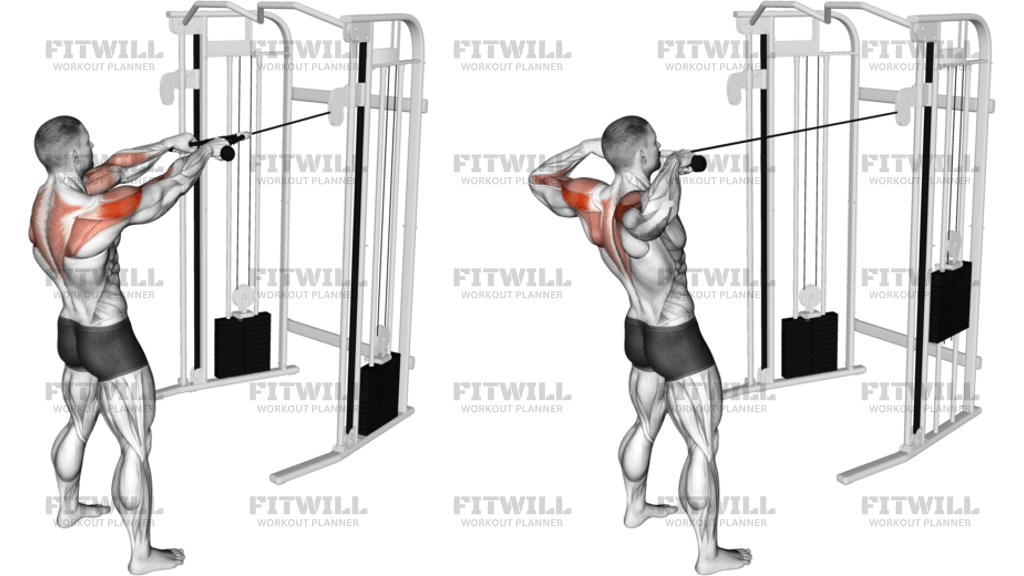
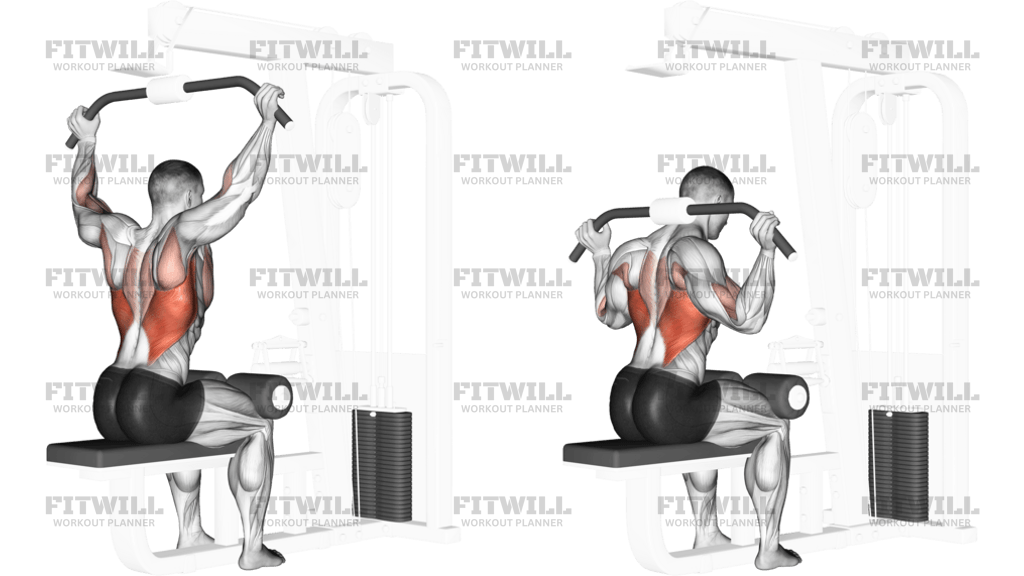
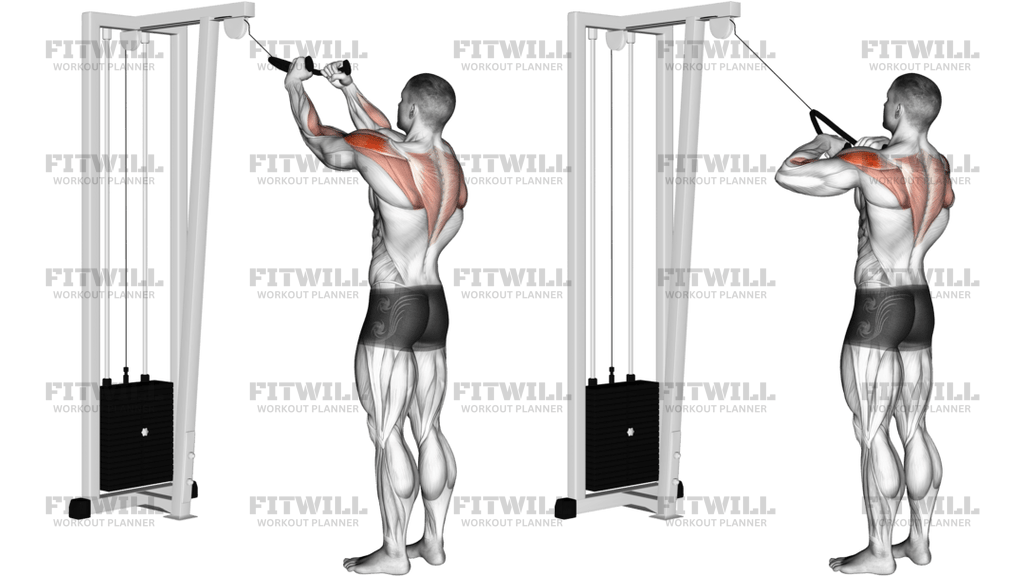
The Cable Rear Delt Row (Parallel Bar) is a seated cable exercise that targets the rear deltoids, the muscles at the back of the shoulders that most pressing and everyday movements leave undertrained. You sit facing a low pulley with your feet braced on the footplate, take hold of a parallel bar handle attached to the cable, and pull the handle toward your upper abdomen with your elbows flared out to the sides. That high-elbow path is what shifts the work away from the lats and onto the rear delts and upper back.
This movement fills a real gap in most training programs. Bench presses, push-ups, and overhead work hammer the front and side of the shoulders while the rear delts often go largely untouched, which can contribute to rounded shoulders and imbalances over time. Because the cable provides steady tension through the entire range and the seated position removes momentum from the equation, this version makes it easier to isolate the rear delts than standing barbell rows or dumbbell rear delt raises.
The setup matters more than it might seem. The height of the pulley, the position of your feet on the footplate, and how far you sit from the handle all determine whether the cable pulls in a clean line toward your torso or drags your shoulders forward. Sit tall with a slight forward lean from the hips rather than a rounded spine, and keep your chest open so the rear delts can do the pulling.
Execution is simple but easy to get wrong. Pull the handle back until it reaches your upper abdomen, driving your elbows up and out rather than keeping them tucked in close to your ribs. Squeeze your shoulder blades together at the back, pause briefly, then let the handle travel forward under control until your arms are extended and your shoulder blades are allowed to spread slightly. The return is where most people rush, and it is where a large share of the muscle-building value lives.
You will see this exercise used by lifters balancing out heavy pressing, by people dealing with desk-driven posture who want stronger upper back musculature, and by anyone whose rear delts have stalled on lighter isolation work. It pairs well with face pulls and rear delt flyes in a shoulder or upper back day, and it works as a primary rear delt builder on its own.
Keep the load honest. Because the biceps and upper back assist, it is tempting to go heavy and turn this into a generic row, but the rear delts respond better to moderate weight, strict elbow position, and a deliberate pause at the back. If your torso is rocking backward on every rep, the weight is telling you something.
[ Workout Log & Planner ]
Put your next workout in Fitwill
Keep your plan and training log ready when you are.


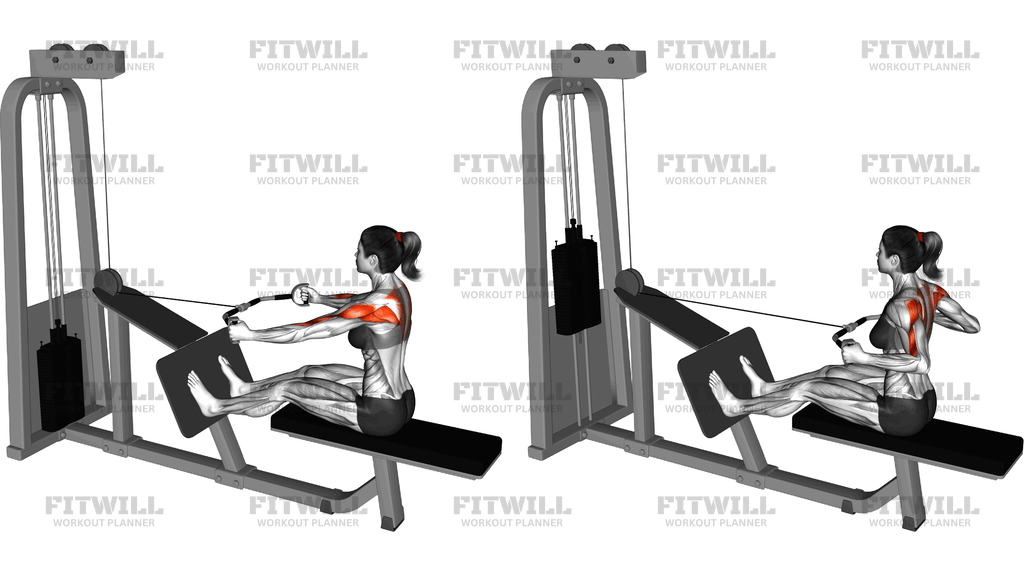
Instructions
- Sit on the bench facing the cable machine and place both feet flat on the footplate with your knees slightly bent, about soft-lock, not jammed straight.
- Grip the parallel bar handle with both hands, palms facing down or neutrally, and slide back until your arms are nearly fully extended with light tension on the cable at the start.
- Sit tall and hinge forward slightly from the hips, keeping your chest lifted and your spine neutral rather than rounded.
- Brace your core to hold your torso steady; your trunk should stay mostly still throughout the set instead of rocking with each rep.
- Pull the handle toward your upper abdomen, keeping your elbows wide and above forearm height so the rear delts lead the movement.
- At the end of the pull, squeeze your shoulder blades together and hold that contracted position for a brief moment.
- Extend your arms forward slowly, letting the cable pull your shoulder blades apart slightly at full stretch without letting your shoulders slump.
- Exhale as you pull the handle back and inhale as you return it forward under control.
- Complete your reps, then set the handle back on the hook or rest it against the stack before standing up.
Tips & Tricks
- If you feel the work mainly in your biceps, your elbows are probably drifting down toward your ribs; raise them slightly and think about pulling with the backs of your shoulders.
- Rounding forward at full stretch is the most common fault on this setup; keep a small hip hinge and a proud chest so your spine does not curl as the cable pulls you in.
- Do not turn this into a standard seated row by tucking your elbows and pulling to your lower belly; the whole point of this version is the high elbow path toward the upper abdomen.
- Reduce the weight if your torso swings backward on each pull; the seated position only isolates the rear delts when your trunk stays quiet.
- Let the shoulder blades move at the end of the forward return instead of holding them pinched; the slight stretch between reps improves rear delt involvement on the next pull.
- A false grip, with the handle resting in your fingers rather than clamped in your palm, can reduce forearm and biceps takeover if your arms keep fatiguing first.
- Pause for a full second at the back of each rep; rear delts respond well to that squeeze and it prevents you from bouncing through the range.
- Keep wrists straight and neutral over the handle; bending the wrists back shifts tension into the forearms and away from the target muscles.
- Position your feet so the cable clears your knees cleanly; if the handle drags near your thighs, you are sitting too far back on the bench.
Frequently Asked Questions
What muscles does the Cable Rear Delt Row (Parallel Bar) work?
The primary targets are the rear deltoids at the back of the shoulders. The rhomboids, mid traps, lats, and biceps assist, especially as the weight gets heavier.
Why pull with my elbows flared instead of tucked like a normal seated row?
Tucked elbows shift the work to the lats and biceps, which defeats the purpose of this exercise. Flaring the elbows and pulling toward the upper abdomen puts the rear delts in the strongest line of pull.
Is the Cable Rear Delt Row (Parallel Bar) good for beginners?
Yes. The seated position and fixed cable path make it one of the more forgiving rear delt exercises to learn. Start with a light weight and focus on elbow position before adding load.
How is this different from a regular Cable Seated Row?
A standard seated row uses low elbows pulling toward the lower torso to emphasize the mid back and lats. This version raises the elbows and pulls toward the upper abdomen to shift emphasis onto the rear deltoids.
My shoulders roll forward when the handle returns. How do I fix that?
You are likely letting the weight stack pull you into a slouch. Use less weight, keep a slight hip hinge with your chest up, and control the forward return instead of letting the cable yank your arms out.
What can I substitute if my gym has no low pulley or row station?
Bent-over dumbbell rear delt rows, chest-supported rear delt rows, or cable rear delt flyes with a single handle at mid height all train similar tissue. Resistance band pull-aparts are a solid minimal-equipment option.
How heavy should I go on this exercise?
Choose a load you can pull strictly with wide elbows and no torso rocking, typically lighter than your standard seated row. Rear delts are a small muscle and respond better to control than to heavy grinding reps.
Should my knees be bent or straight on the footplate?
Knees should be softly bent, not locked straight. This keeps your hips anchored so your torso stays stable and the pull comes from your shoulders rather than your lower back.
How many sets and reps work best for the Cable Rear Delt Row (Parallel Bar)?
Three to four sets of 10 to 15 controlled reps with a brief pause at the back works well for most people. Higher-rep sets are common because the rear delts handle volume nicely when form stays strict.
Is it safe to do this exercise every training day?
It is generally a low-stress movement for the shoulder joint, but the rear delts still need recovery like any muscle. Two to three sessions per week with at least a day between them is a sensible frequency.