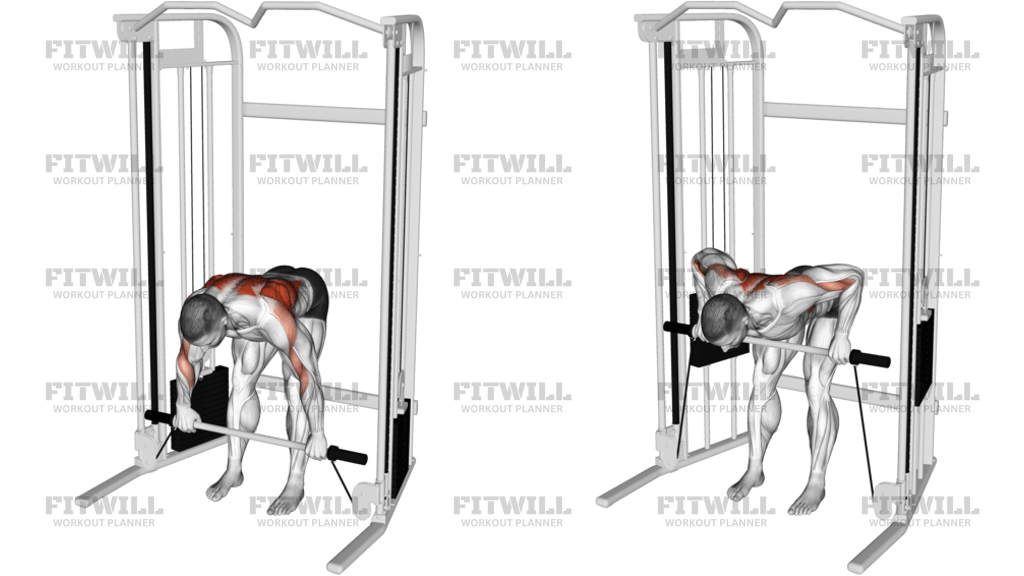
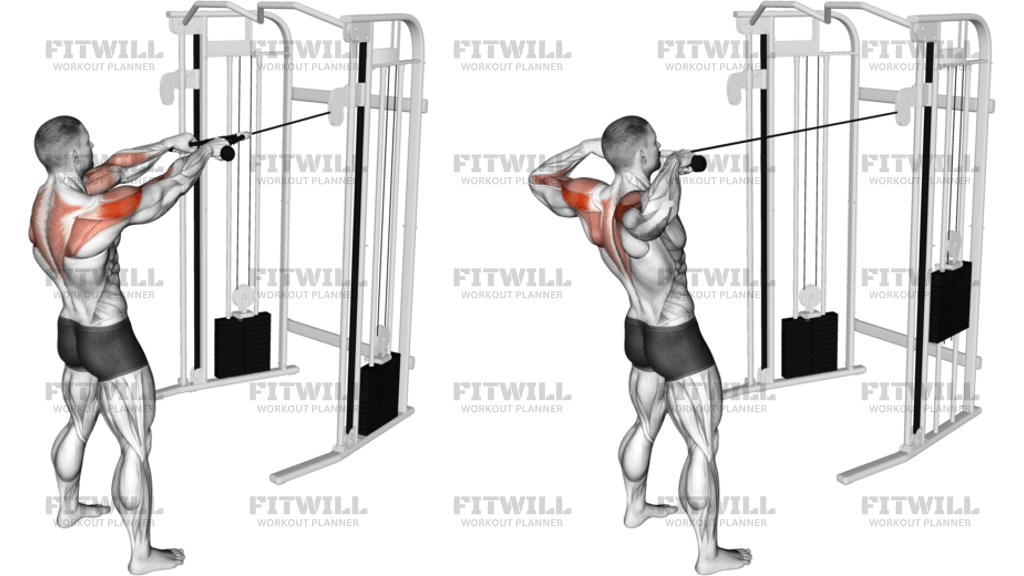
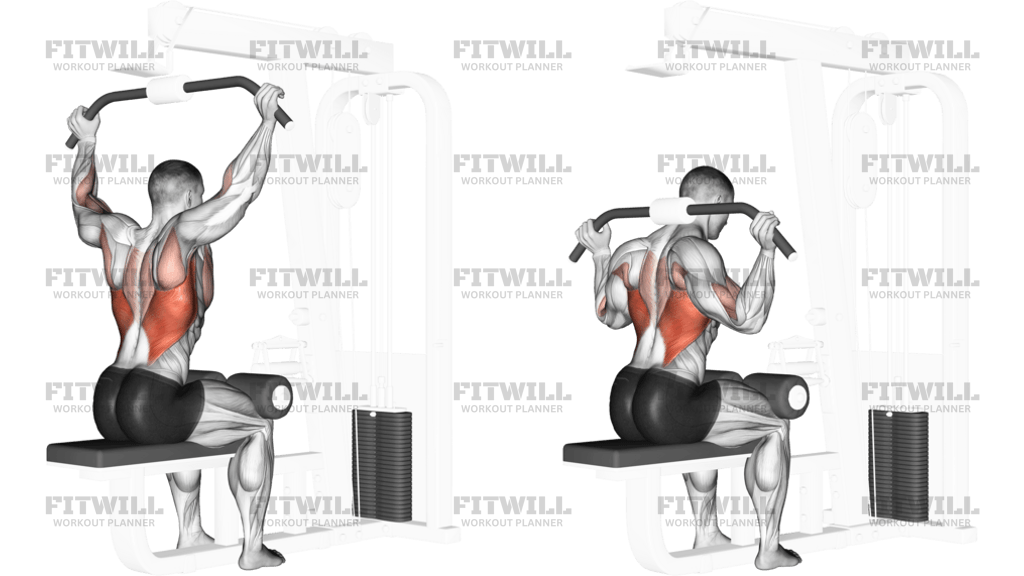
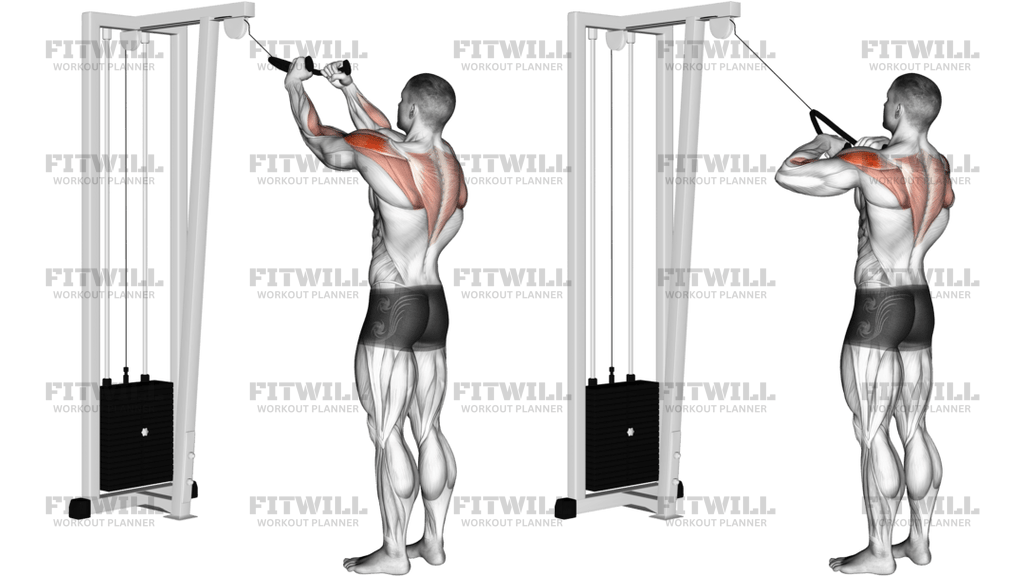
Cable Rear Delt Row
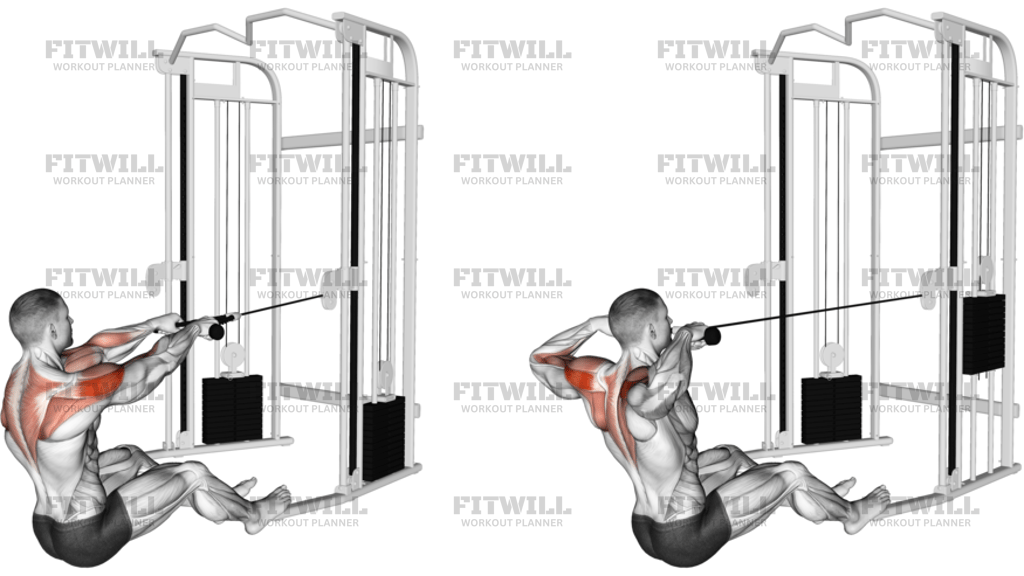
The Cable Rear Delt Row is a seated row variation performed at a low cable station, set up so your feet are braced on the footplate and the cable runs low and parallel to the floor. Instead of pulling with your elbows tucked close to your ribs like a standard seated row, you drive the elbows up and out to the sides, which shifts the emphasis away from the lats and onto the rear deltoids and the muscles between the shoulder blades. It is one of the most practical ways to load the back of the shoulders, an area that is hard to challenge heavily with free weights.
This movement is especially useful for anyone whose training leans heavily on pressing exercises. Desk workers with rounded shoulders, lifters who bench and overhead press regularly, and people chasing better shoulder balance all tend to be undertrained in the rear delts. Because the cable provides constant tension through the entire range, the rear shoulders and upper back stay loaded even when the arms are extended, something dumbbell rear delt rows cannot fully replicate.
The main muscles worked are the rear deltoids, supported strongly by the rhomboids and mid-traps as the shoulder blades pull together. The biceps and forearm muscles assist with the pull, and the muscles along the spine work isometrically to keep your torso upright as the cable tugs you forward. The exact distribution depends on your elbow path: the wider and higher the elbows finish, the more the rear delts take over.
Setup matters more here than in most rowing variations. The low cable angle means your torso is the anchor for the whole movement, so sitting tall with a slight forward lean at the shoulders is what allows the elbows to travel wide without the lower back doing the pulling. Gripping the attachment with a neutral or overhand grip and letting the shoulder blades protract fully at the start gives you room to move through a complete range.
To execute it well, think of the pull as happening at the elbows, not the hands. Row until the elbows are just past the line of your torso and roughly level with your shoulders, pause briefly while the shoulder blades squeeze together, then let the arms extend under control until you feel a stretch across the back of the shoulders. Keep the weight moderate; this is a small muscle group, and momentum from the torso robs the rear delts of the work.
You will see this exercise in shoulder-focused sessions, upper body pull days, and rehabilitation-adjacent programming where steady, low-impact loading of the rear shoulders is preferred. It pairs naturally with face pulls and band pull-aparts, and it works well as a finishing movement after heavier rows.
[ Workout Log & Planner ]
Put your next workout in Fitwill
Keep your plan and training log ready when you are.


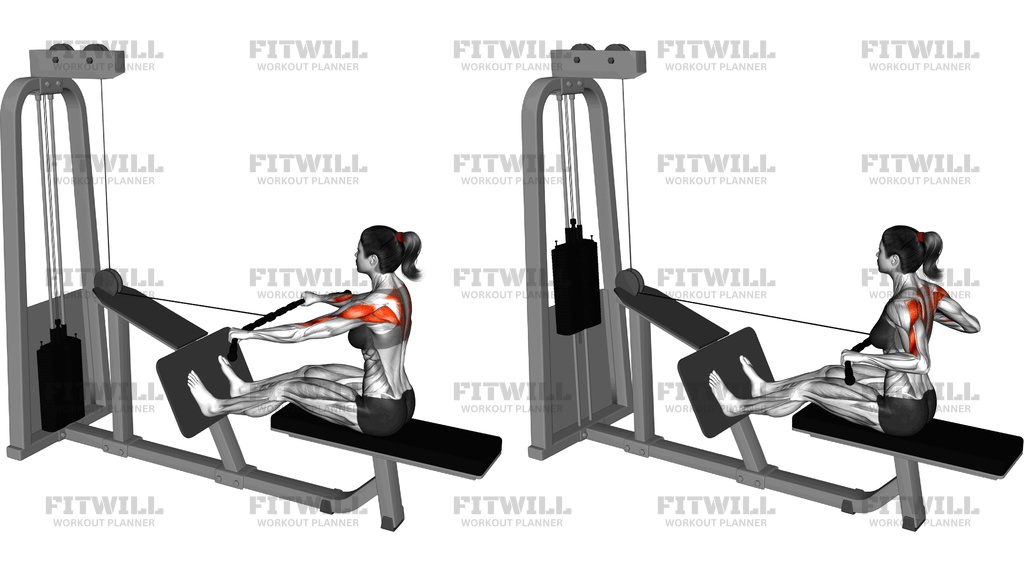
Instructions
- Sit on the cable row bench and place both feet firmly on the footplate with your knees slightly bent, then take a neutral or overhand grip on the rope or handle attachment connected to the low pulley.
- Slide back until your legs are nearly extended and your torso is upright; keep a soft bend in the knees so the footplate does not lock your legs straight.
- Let your arms extend fully toward the pulley and allow your shoulder blades to roll slightly forward so you feel a gentle stretch across the back of your shoulders.
- Brace your core and lift your chest, keeping your spine tall with only a small forward lean from the shoulders, not from rounding your lower back.
- Pull the attachment toward your body by driving your elbows up and out to the sides, keeping them higher than your wrists and away from your ribs.
- Continue until your elbows are just past your torso and roughly level with your shoulders, squeezing your shoulder blades together at the end point.
- Hold that contracted position for a beat, then slowly extend your arms back toward the pulley, resisting the cable as the shoulder blades spread apart again.
- Exhale as you pull the weight toward you and inhale as you let it return to the start.
- Complete all repetitions with your torso position unchanged, then release the handle, let the stack settle, and stand up carefully from the bench.
Tips & Tricks
- If your elbows drop toward your ribs during the pull, the lats take over and the rear delts lose the stimulus; consciously aim them out wide, closer to shoulder height.
- Choose a lighter weight than you would use for a standard seated row. If your torso rocks backward as you pull, the weight is pulling you into the rep instead of your shoulders moving the weight.
- Avoid shrugging your shoulders up toward your ears at the end of the pull. Keep them pressed down as the elbows travel back so the mid-back and rear delts do the work rather than the upper traps.
- Do not fully straighten and lock your knees against the footplate; a slight bend protects the knees and gives you a stable base to pull against.
- Think of pinching a pencil between your shoulder blades at the top of each rep. That brief pause is where the rear delt and upper back get their strongest contraction.
- Let the arms extend fully on each rep rather than stopping halfway. Cutting the stretch short turns the exercise into a short-range pull and reduces the work done by the rear shoulders.
- Keep your wrists neutral and relaxed. Bending the wrists back under tension shifts stress to the forearms and can cause grip fatigue before the target muscles are worked.
- If you feel it mostly in your biceps, use a lighter weight and focus on pulling with the elbows while keeping the hands as hooks.
Frequently Asked Questions
What muscles does the Cable Rear Delt Row work?
The rear deltoids are the primary movers, with the rhomboids and mid-trapezius working hard as the shoulder blades pull together. The biceps and forearms assist, and the lower back stabilizes your torso throughout.
How is the Cable Rear Delt Row different from a regular seated cable row?
In a standard seated row the elbows stay close to your sides, which biases the lats. Here you pull the elbows up and out wide, which rotates the shoulders and redirects the effort to the rear delts and upper back.
Is the Cable Rear Delt Row good for beginners?
Yes. The seated position and cable guide make the path easy to learn, so beginners can focus on the elbow trajectory without balancing a weight. Starting light to learn the wide-elbow pull is the key.
Should I use a rope or a straight bar for the Cable Rear Delt Row?
A rope attachment makes it easier to keep the elbows wide and lets the hands travel naturally, which suits the rear delt focus. A straight bar with an overhand grip works too but can pull the elbows inward if your grip is narrow.
Why do I feel the Cable Rear Delt Row in my biceps instead of my shoulders?
This usually means the weight is too heavy and your arms are flexing harder than your shoulders are extending. Reduce the load, slow the pull down, and think about driving the elbows back and out rather than bending the hands toward you.
How heavy should I go on this exercise?
Use a load you can control for 10 to 15 reps with an upright torso and a full range. If your chest drops or your body swings back on each rep, the weight has exceeded what the rear delts can handle.
Can the Cable Rear Delt Row replace face pulls?
They overlap, but not completely. Face pulls train the rear delts and external rotators through a higher pulling angle, while this row lets you load the same muscles with more weight. Using both gives more complete rear shoulder development.
Is it safe for my lower back to lean while doing the Cable Rear Delt Row?
A small forward lean from the shoulders is normal because of the low cable angle, but your spine should stay in one piece. If you feel your lower back rounding or arching sharply to move the weight, lighten the load and reset your posture.
Where should the Cable Rear Delt Row go in my workout?
It works well after your heavier rows or presses, when the bigger muscles are pre-fatigued and the rear delts can be isolated. It also pairs nicely with face pulls or band pull-aparts at the end of an upper body session.