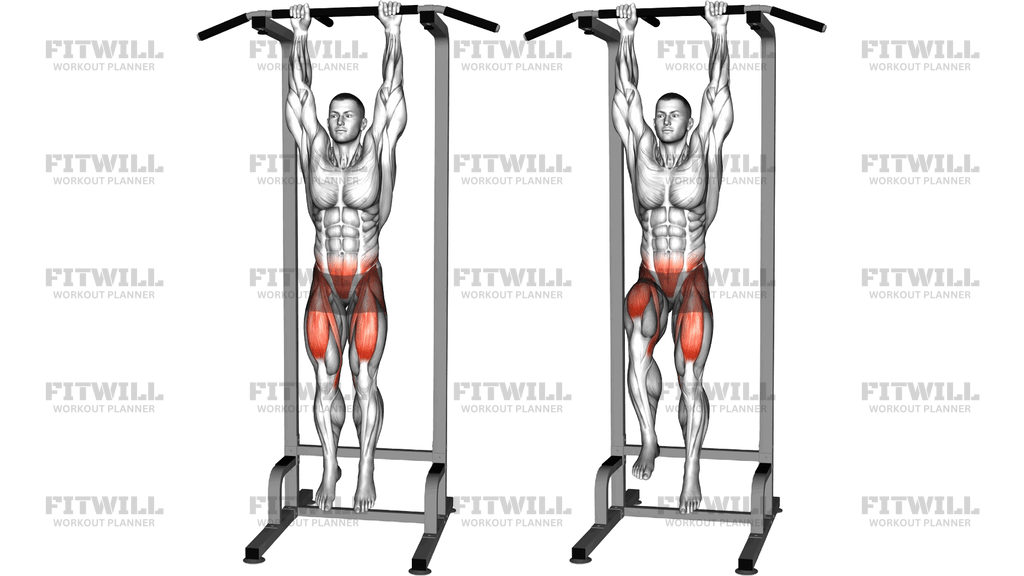
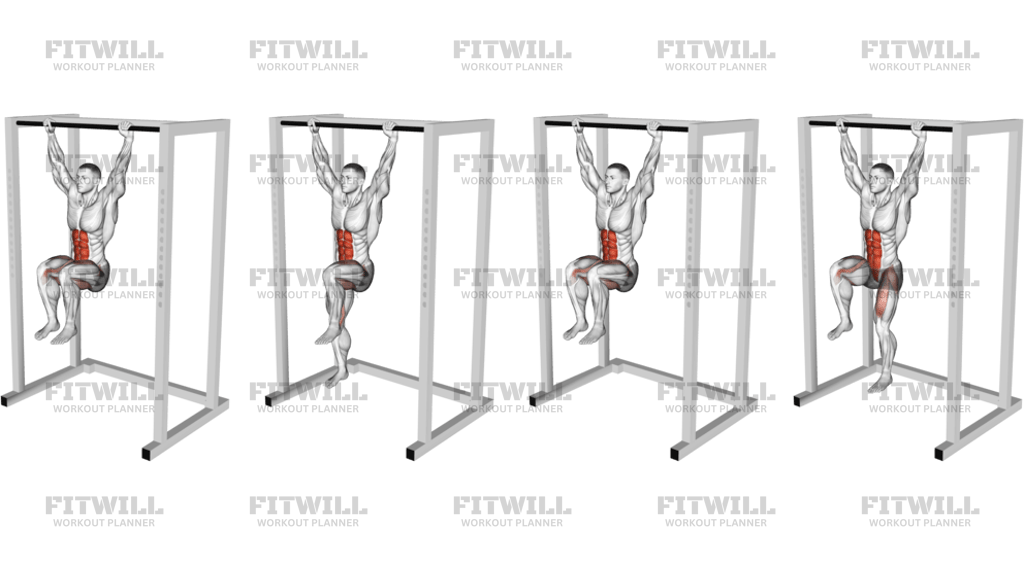
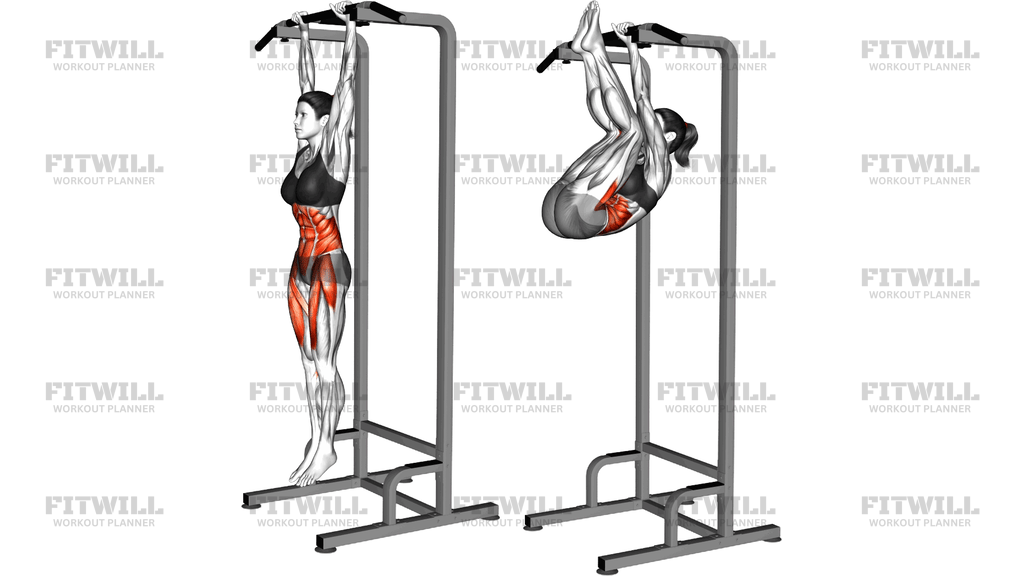
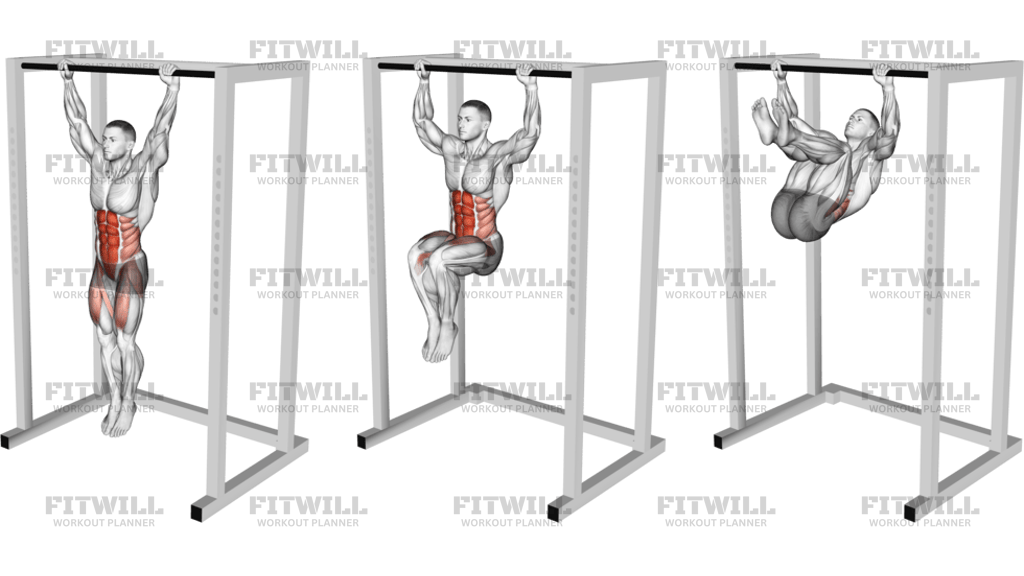
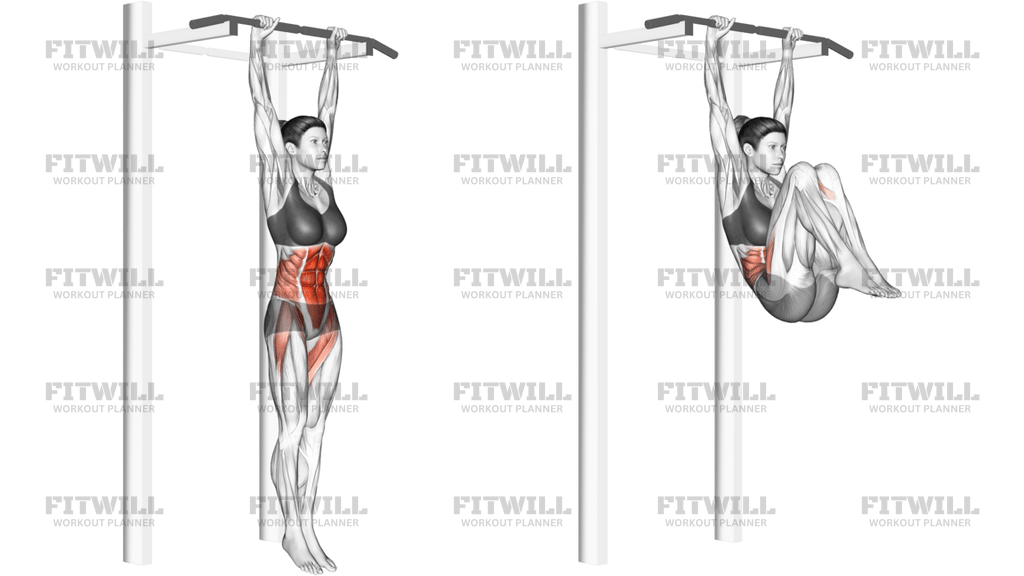
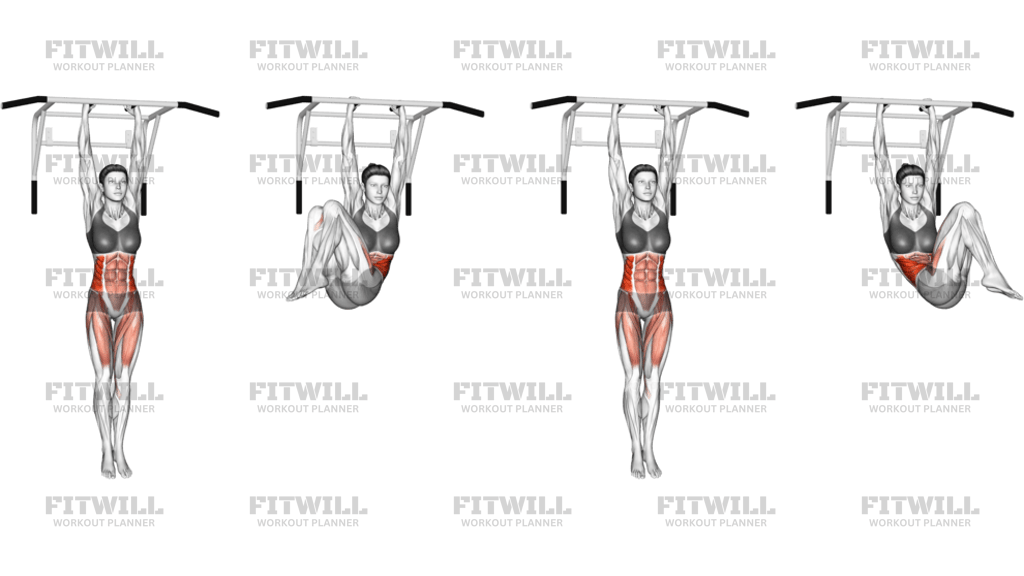
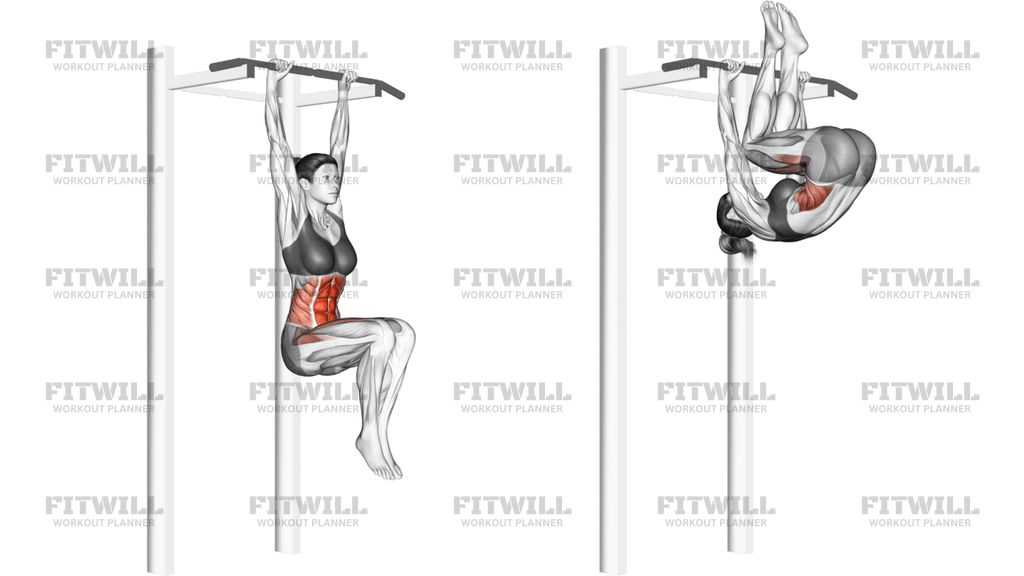
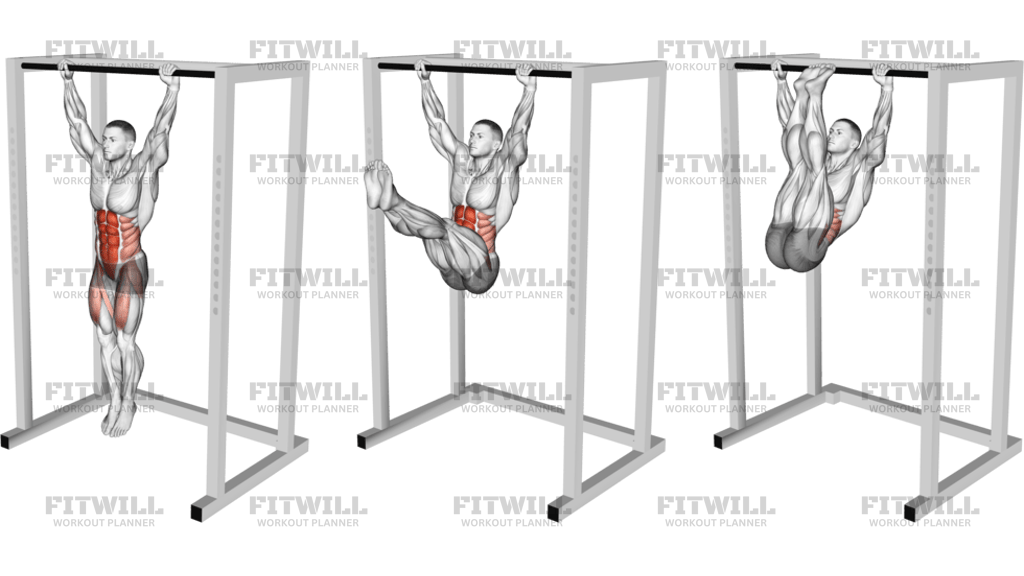
Arm Slingers Hanging Straight Legs
Arm Slingers Hanging Straight Legs is a hanging core exercise performed with your forearms supported in padded arm slings that hang from a pull-up bar. Instead of gripping the bar with your hands, you settle each forearm into a sling, which removes the grip and shoulder-pull demands of a regular dead hang and lets you focus almost entirely on lifting your legs. From the supported hang, you raise both straight legs up in front of you until your hips are fully flexed, then lower them back down under control.
The main work comes from the lower portion of the rectus abdominis along with the deep core, which has to curl the pelvis upward at the top of the lift. The hip flexors assist strongly, especially as the legs pass the halfway point, and the shoulders, upper back, and forearms work isometrically to keep your torso stable in the slings. Because the slings cradle your arms, this is one of the most accessible ways to train straight-leg hanging raises if your grip usually gives out before your abs do.
This movement suits lifters who already handle hanging knee raises comfortably and want to progress toward full straight-leg raises, as well as anyone whose grip strength limits their hanging ab work. Climbers, martial artists, gymnasts, and bar athletes use it to build the hip and trunk strength needed for levers, L-sits, and strict toe-to-bar work. It is equally useful in a general strength program as a demanding but joint-friendly abdominal exercise.
Setup matters more than people expect. The slings should hang at even heights so your shoulders stay level, your forearms should sit deep enough in the padding that your elbows cannot slip out, and your body should hang quiet and still before the first rep. If you start each set twisted or swinging, the legs will drift sideways and the lower abs will lose their job to momentum.
To execute well, think of the lift as pelvis-first, not feet-first. The legs stay straight and together, but the real rep happens when your tailbone tucks under and your lower back rounds slightly at the top. Simply swinging straight legs to hip height without curling the pelvis trains the hip flexors and mostly bypasses the abs. Control on the way down is just as important as the lift itself; resist the descent rather than dropping the legs.
The main safety points are straightforward. Keep the descent slow so your lower back never gets yanked into an arch, stop the set when your pelvis stops tucking, and step down from the slings rather than jumping out of them. If straight legs feel too heavy at first, bend the knees slightly and work toward longer legs over time.
[ Workout Log & Planner ]
Put your next workout in Fitwill
Keep your plan and training log ready when you are.


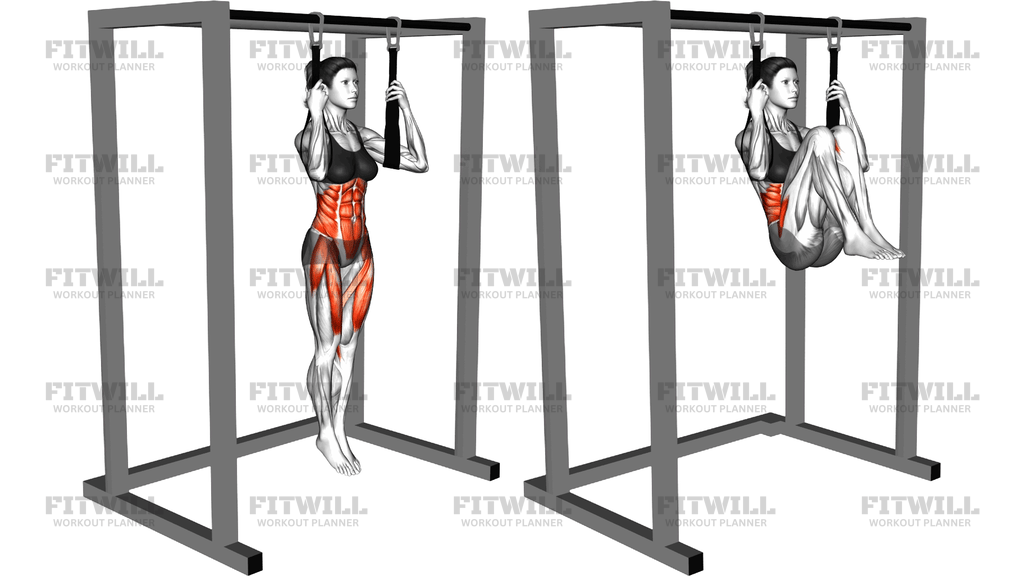
Instructions
- Hang two padded arm slings from a sturdy pull-up bar at shoulder-width or slightly wider, and check that they sit at even heights.
- Slide one forearm up through each sling so the padding cradles your forearm just below the elbow, then let your body settle into a supported hang with feet off the floor and legs hanging straight down.
- Grip the top of each sling with your hands for security and pull your shoulders down away from your ears so your upper back is engaged rather than shrugged.
- Brace your abs and squeeze your legs together with toes pointed before you move, keeping your torso still in the slings.
- Exhale and raise both straight legs up in front of you, leading with the pelvis so your tailbone tucks under as your legs rise toward hip height or higher.
- Keep lifting until your hips are fully curled and your legs reach roughly parallel to the floor or above, with your lower back rounded rather than arched at the top.
- Pause for a beat at the top, then lower your legs slowly and with resistance, taking two to three seconds on the way down instead of dropping them.
- Let the legs return to a full dead hang under control, exhale, reset your brace, and pause briefly before starting the next rep.
- Complete your set, then step down onto the floor or a box one arm at a time rather than slipping or jumping out of the slings.
Tips & Tricks
- If your shoulders creep up toward your ears during the set, press your forearms down into the sling padding lightly before each rep to re-engage the upper back.
- Swinging is the most common fault here. It usually starts with a leg kick instead of a pelvic tuck, so make the first inch of every rep slow and deliberate.
- If your legs bend as you fatigue, you are shifting the work to the hip flexors. Either finish the set with slightly bent knees on purpose or stop the set and log the honest range.
- Aim to curl the pelvis at the top rather than just reaching a height with your feet. A shorter range with a visible pelvic tuck beats a higher swing without one.
- Uneven sling heights will quietly twist your torso rep after rep, so level them before you hang instead of compensating mid-set.
- Keep the descent at least twice as slow as the lift. Most of the lower ab work in this exercise happens during the controlled lowering phase.
- If your elbows feel pinched, slide your forearms deeper into the slings so the padding sits on the forearm rather than right at the joint.
- Use chalk or wrap your hands around the top of the slings if your hands tend to slide, since a slipping hand costs you stability on every rep.
- Breathe out sharply on the lift and inhale during the lowering phase; holding your breath through the whole range makes the top position much harder to control.
Frequently Asked Questions
What muscles does Arm Slingers Hanging Straight Legs work?
The primary muscles are the lower abs, particularly the lower fibers of the rectus abdominis, which curl the pelvis upward. The hip flexors lift the straight legs, while the shoulders, upper back, and forearms work statically to hold you steady in the slings.
Why use arm slings instead of gripping the pull-up bar directly?
The slings support your forearms, so your grip and biceps stop being the limiting factor and your abs get the full training stimulus. This also lets you extend sets on hanging ab work when your hands would normally fail first.
Is Arm Slingers Hanging Straight Legs suitable for beginners?
It is a demanding exercise, so most beginners get better results starting with supported knee raises in the same slings. Once you can control several clean sets of knee raises with a pelvic tuck, progress to straight legs.
How high should I raise my legs?
Lift until your legs are at least parallel to the floor and your tailbone has visibly tucked under, which rounds your lower back slightly at the top. Height alone does not count as a rep if the pelvis never curls.
My body swings forward and back on every rep. How do I fix it?
Slow the first and last third of each rep, start the lift with the pelvis rather than a leg kick, and pause for a second in the dead hang between reps. If swinging persists, have a partner lightly steady your hips until you own the movement path.
Can I substitute this exercise if I do not have arm slings?
A standard hanging straight-leg raise from a pull-up bar trains the same pattern, though your grip will fatigue sooner. A captain's chair or Roman chair leg raise is another close substitute that supports the forearms on pads.
Should my knees stay locked straight the whole time?
Keep the legs as straight as you can control, but a soft knee is fine and does not ruin the rep. If your knees bend progressively as the set goes on, that is a sign of fatigue and a good place to end the set.
Is it safe for the lower back?
Yes, when the lowering phase is controlled and you keep the pelvic tuck at the top. Problems usually come from dropping the legs quickly, which snaps the lower back into an arch under load, so treat the descent as the priority.
How many reps should I aim for?
Work in the range where you can keep the pelvic tuck on every rep, commonly 6 to 12 clean repetitions. Add sets or slow the lowering phase before you chase higher rep numbers.
How do I get out of the slings safely when the set is over?
Stop while you still have control, place one hand on the bar or upright for balance, and step down onto the floor or a low box one arm at a time. Jumping out of the slings mid-fatigue is an easy way to land awkwardly.