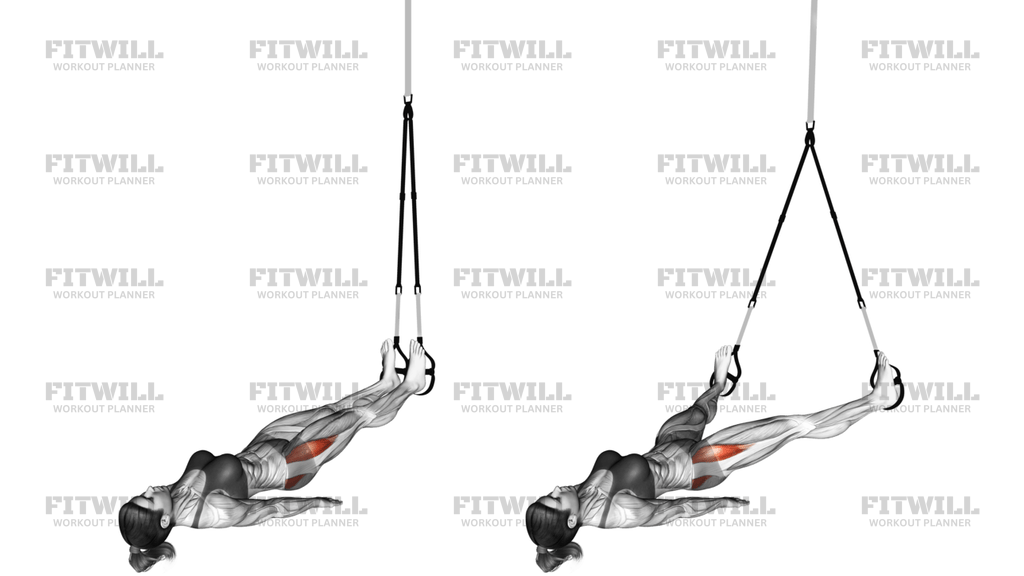
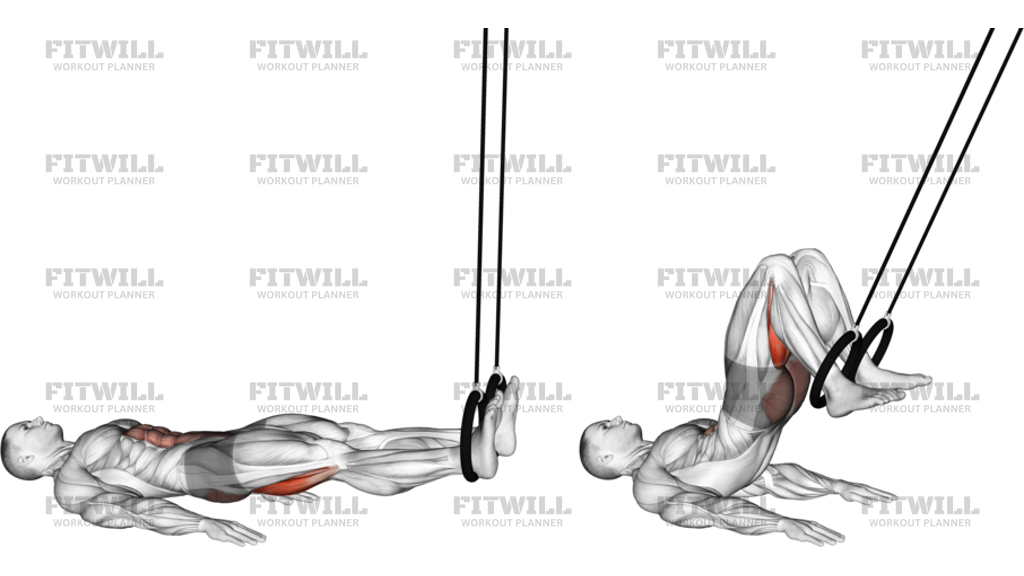
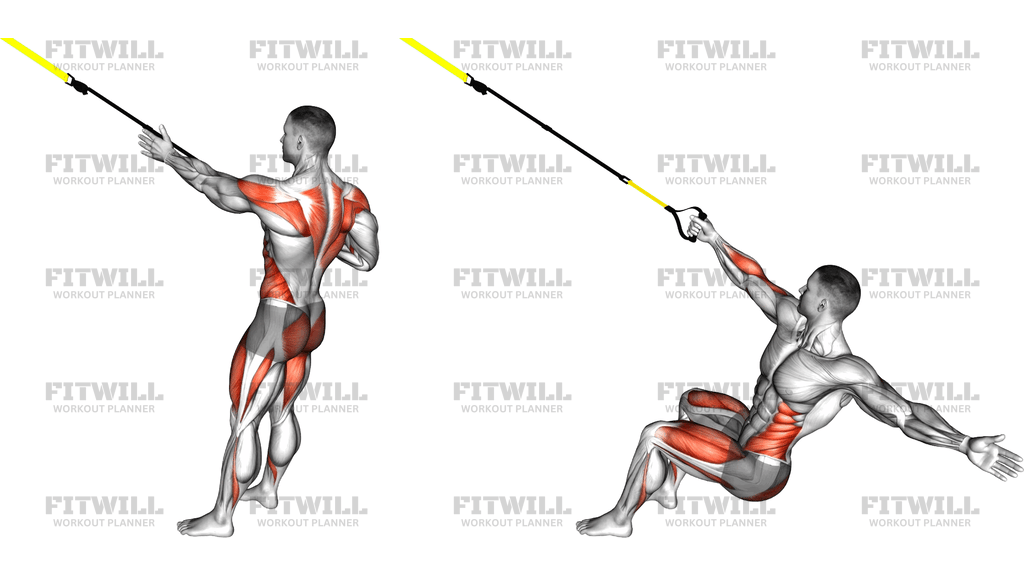
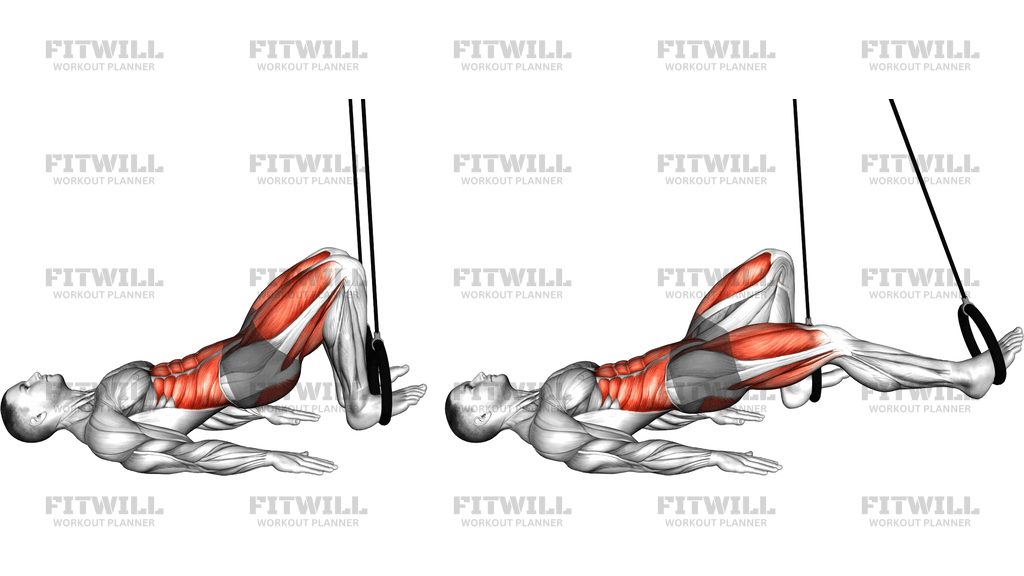
Suspension Single Leg Deadlift
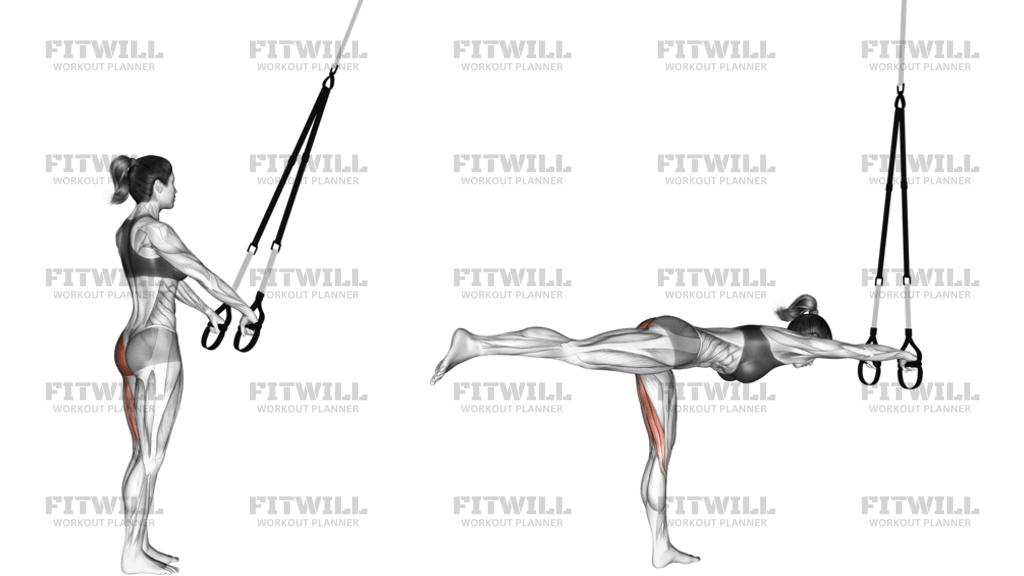
Suspension Single Leg Deadlift is a balance-assisted hip hinge that trains the glutes, hamstrings, and trunk while asking one leg to do the work. The straps are there to steady you and guide your balance, but the movement should still feel like a controlled single-leg hinge rather than a pull from the arms. That makes it useful for lifters who want unilateral lower-body work without the same balance demand as a free single-leg deadlift.
The main action happens at the hip of the standing leg. As you hinge forward, the torso and free leg move in opposite directions, so the body stays long from head to heel instead of folding at the waist. In anatomy terms, the exercise centers on the Gluteus maximus, with the hamstrings, rectus abdominis, and erector spinae helping keep the pelvis and spine organized.
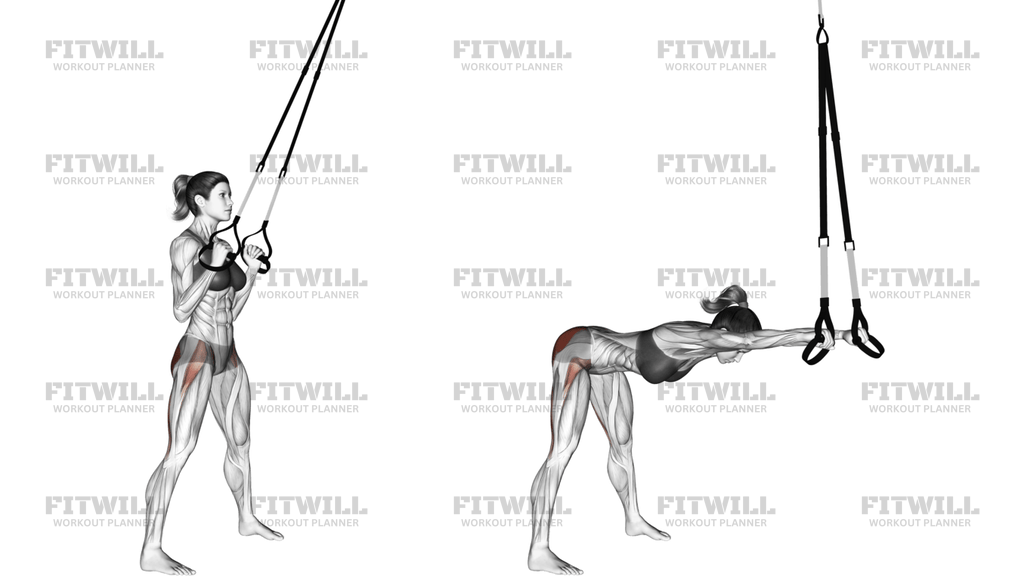
The setup matters because the straps can either help you stay stacked or tempt you to lean on your arms. Stand tall facing the anchor, hold the handles with straight arms, and shift your weight onto one foot before you begin. Keep the standing knee softly bent, square your hips, and use light tension in the straps so they support balance without taking over the rep.
Each repetition should feel like a smooth hinge and drive, not a dive toward the floor. Lower your chest by sending the hips back, keep the free leg in line with your torso, and stop when your back stays neutral and the standing hamstring reaches a strong stretch. From there, press through the standing heel, pull the hips forward, and finish tall with the glute fully engaged rather than leaning back at the top.
Suspension Single Leg Deadlift fits well in warm-ups, accessory work, and lower-body sessions where control matters more than load. It can also be a useful regression if a dumbbell or barbell single-leg deadlift feels too unstable. Keep the range honest, the tempo deliberate, and the straps quiet; when the handles start swinging or the pelvis opens up, the set is no longer training the intended pattern.
Fitwill
Log Workouts, Track Progress & Build Strength.
Achieve more with Fitwill: explore over 9600 exercises with images and videos, access built-in and custom workouts, perfect for both gym and home sessions, and see real results.
Start your journey. Download today!




Instructions
- Face the suspension anchor, hold a handle in each hand, and stand tall with your arms straight and the straps lightly taut.
- Shift your weight onto one foot, let the other foot hover behind you, and keep your standing knee softly bent.
- Square your hips and ribs to the floor before you start, using the straps only as light balance support.
- Hinge at the standing hip and send the free leg straight back as your torso lowers in one long line.
- Keep your spine neutral and lower until your torso is near parallel to the floor or your hamstring reaches a strong stretch.
- Pause briefly at the bottom without collapsing into your lower back or twisting open at the hip.
- Drive through the standing heel, pull the hips forward, and rise by squeezing the standing glute.
- Finish tall with the ribs stacked over the pelvis, then reset the free foot before the next rep.
- Breathe in as you lower and exhale as you stand, keeping the handles quiet throughout the set.
Tips & Tricks
- Keep enough tension in the straps to help with balance, but do not pull yourself upright with your arms.
- If the standing hip keeps opening toward the ceiling, shorten the range and keep both headlights on the front of your pelvis facing the floor.
- A soft bend in the standing knee helps you load the glute and hamstring without locking the joint out.
- Think about sending the free heel back, not lifting the leg high, so the hinge stays focused on the hip.
- Stop the descent when your back starts rounding; the lower-back muscles should stabilize, not replace the hinge.
- Keep the handles still. If they are swinging, your tempo is too fast or you are leaning on momentum.
- Use a lighter grip than you would for a pulling exercise; the hands should only steady the body.
- At the top, stand tall without arching your lower back or thrusting the hips forward past neutral.
Frequently Asked Questions
What does Suspension Single Leg Deadlift train most?
It primarily trains the glutes, with the hamstrings and trunk working hard to keep the standing leg and pelvis stable.
Are the suspension straps supposed to carry my weight?
No. The straps should only help you balance while the standing leg does the work; if you are hanging on them, the hinge is too light or too unstable.
How low should I go on the single-leg hinge?
Lower until your torso stays long and neutral and you feel a strong stretch in the standing hamstring. Depth matters less than keeping the pelvis square and the spine steady.
Why is my standing hip opening during Suspension Single Leg Deadlift?
That usually means you are rotating instead of hinging. Reduce the range, keep the free leg in line with your torso, and point both hip bones toward the floor.
Can beginners do Suspension Single Leg Deadlift?
Yes. The straps make it more beginner-friendly than a free single-leg deadlift, especially if you keep the range small and move slowly.
Should I keep my standing knee straight or bent?
Keep a soft bend in the standing knee. Locking it out shifts the stress away from the hip hinge and makes balance harder.
What grip should I use on the handles?
Use a relaxed, neutral grip with straight wrists. The handles are for balance, so a hard squeeze is usually unnecessary unless the straps feel unstable.
How can I make Suspension Single Leg Deadlift harder?
Slow the lowering phase, reduce how much you rely on the straps, or pause longer at the bottom while keeping the hips square.