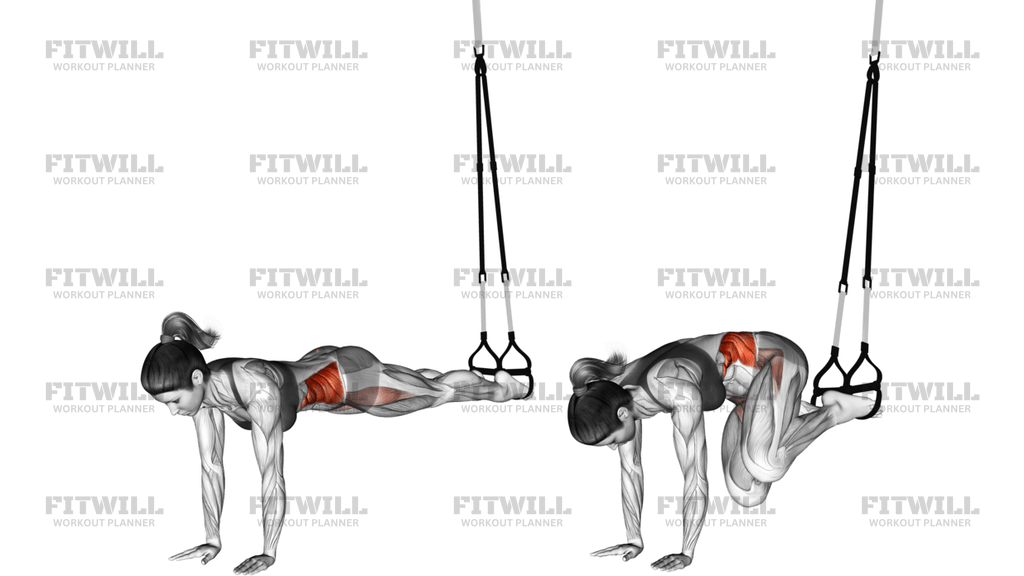
Suspender Front Plank
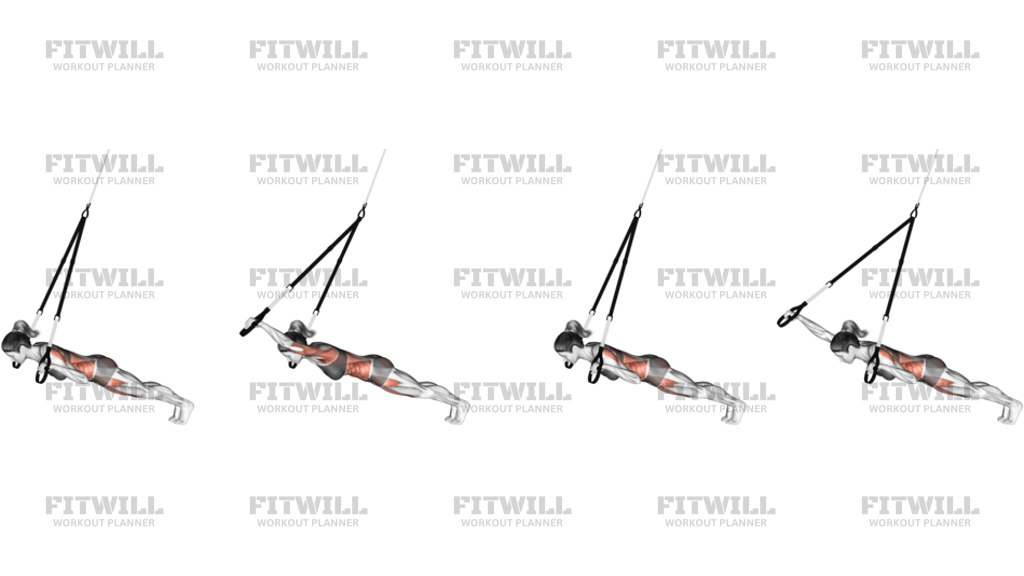
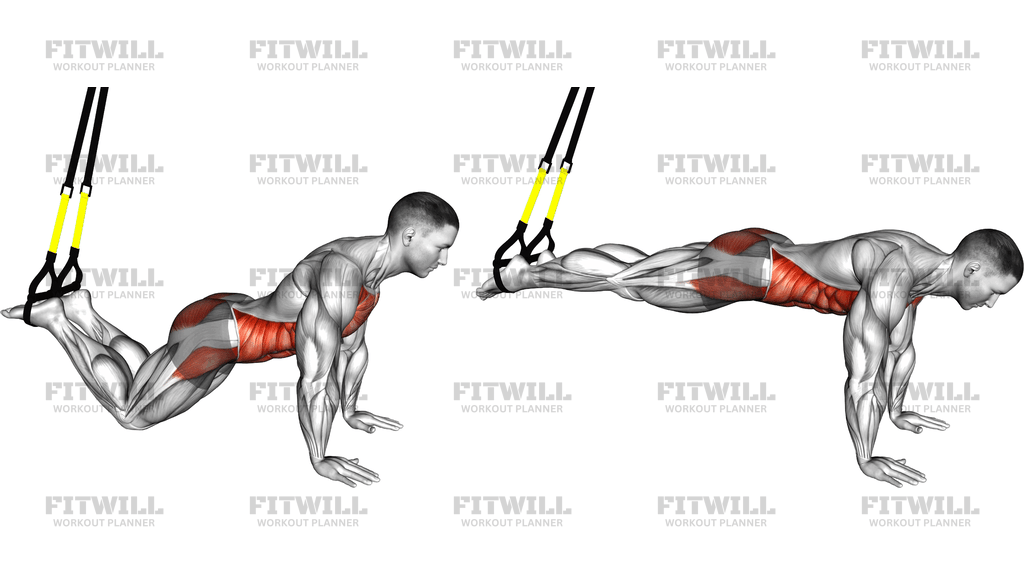
Suspender Front Plank is a suspension-based anti-extension core exercise performed with the feet supported in straps and the hands on the floor. From a tucked start, you extend the legs into a long front plank while the unstable straps force the abs, obliques, shoulders, and glutes to keep the torso from sagging, twisting, or piking. It is a useful way to train plank strength with more instability than a standard floor version.
The setup matters because the straps can either add clean challenge or create chaos. Your wrists should sit under the shoulders, the fingers should be spread for a firm base, and the shoulders should stay active so the chest does not collapse toward the floor. The pelvis should stay stacked under the ribs, not dumped forward. If the starting position is loose, the swing of the straps will steal tension from the core and make every rep harder to control.
Use the movement like a controlled extension and return, not like a fast knee tuck. Begin with the knees drawn in, brace the abdomen, and press the body long until you reach a straight line from shoulders through hips to the straps. Keep the glutes tight and the ribs down as the legs extend so the lower back does not take over. On the way back, bend the knees and let the hips come forward only as much as you can control.
This exercise fits well in warm-ups, accessory core work, athletic conditioning, or any session where you want stronger trunk control under instability. It can be scaled by shortening the range, slowing the tempo, or using shorter holds in the long-plank position. A good rep looks quiet and organized: the straps stay level, the shoulders stay stacked, and the torso stays braced from the first rep to the last.
[ Workout Log & Planner ]
Put your next workout in Fitwill
Keep your plan and training log ready when you are.


Instructions
- Set the suspension straps evenly and place both feet in the cradles so they hang at the same height.
- Put your hands on the floor under your shoulders, spread your fingers, and start with your knees tucked under your hips.
- Press through your palms, keep your shoulders active, and brace your abs before the straps start moving.
- Extend your legs back under control until your body forms a straight line from shoulders to feet.
- Keep your ribs down, glutes tight, and neck long so the lower back does not arch.
- Hold the long plank briefly without letting the straps swing or the hips drift side to side.
- Bend your knees and draw them back under your hips with the same control you used to extend.
- Breathe out as you extend and breathe in as you return to the tucked position.
- Reset the straps and body position after each rep if the movement starts to feel unstable.
Tips & Tricks
- Keep the straps level; if one foot sits higher or swings more, the torso will rotate.
- Think about pushing the floor away so the shoulders stay stacked and the chest does not sink.
- A shorter tuck-to-extend range is better than forcing a long plank with a sagging lower back.
- Tighten the glutes before the legs extend; that helps stop the pelvis from tipping forward.
- If the straps start to swing, pause and regain control instead of rushing into the next rep.
- Use a slow return so the abs keep working when the knees come back underneath the hips.
- Keep the head in line with the spine and look slightly ahead of the hands, not straight down at the feet.
- This movement should feel like a plank with moving feet, not like a hamstring curl or a push-up.
- Stop the set when the hips begin to pike up or the low back starts to take over.
Frequently Asked Questions
What muscles does Suspender Front Plank work?
It heavily trains the abs and obliques, with strong help from the shoulders, glutes, and hip flexors as you hold the body long against the moving straps.
Is this exercise more of a plank or a leg movement?
It is primarily a plank. The legs move in the straps, but the main job is to keep the torso from arching, sagging, or twisting.
How should the feet sit in the suspension straps?
Both feet should be secured evenly in the cradles so they move together. Uneven strap height usually makes the pelvis rotate and reduces core quality.
What should I feel if my form is right?
You should feel the front of the core, the sides of the waist, and the shoulders working hard. If the low back is doing most of the work, the body line is probably broken.
Can beginners do Suspender Front Plank?
Yes, but a shorter range, slower tempo, or brief isometric holds are smarter at first. A basic floor plank is usually the better prerequisite if the straps feel too unstable.
What is the most common mistake?
Letting the hips sag while the legs extend. That shifts tension out of the abs and into the lower back and usually makes the straps swing.
How is this different from a standard front plank?
The suspension adds instability under the feet, so your shoulders and core must resist rotation and extra movement while you extend and return.
How can I make the exercise easier?
Use a smaller tuck-to-extend range, shorten the hold at full plank, or slow the rep down so you can keep the straps quiet and the torso aligned.