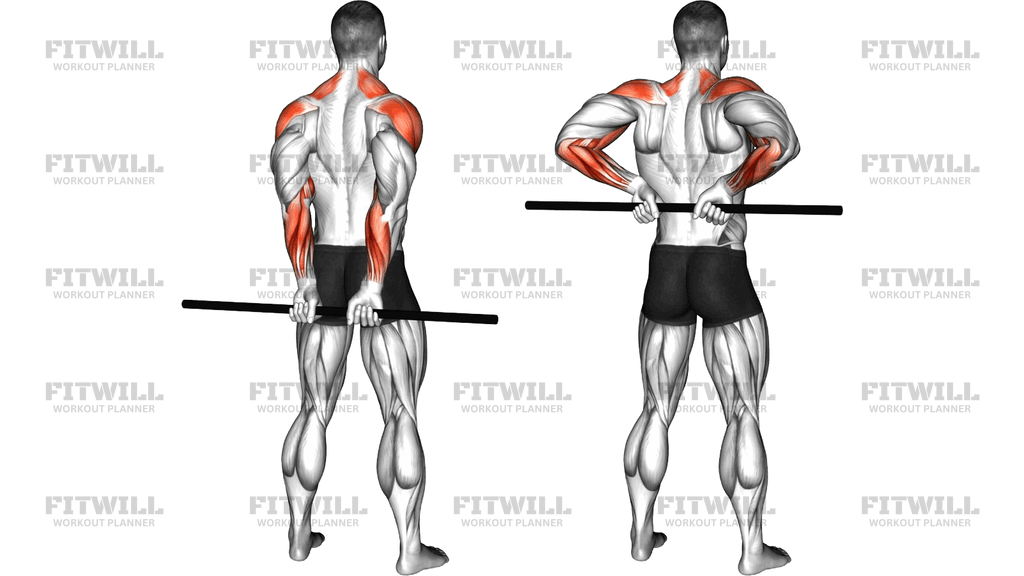
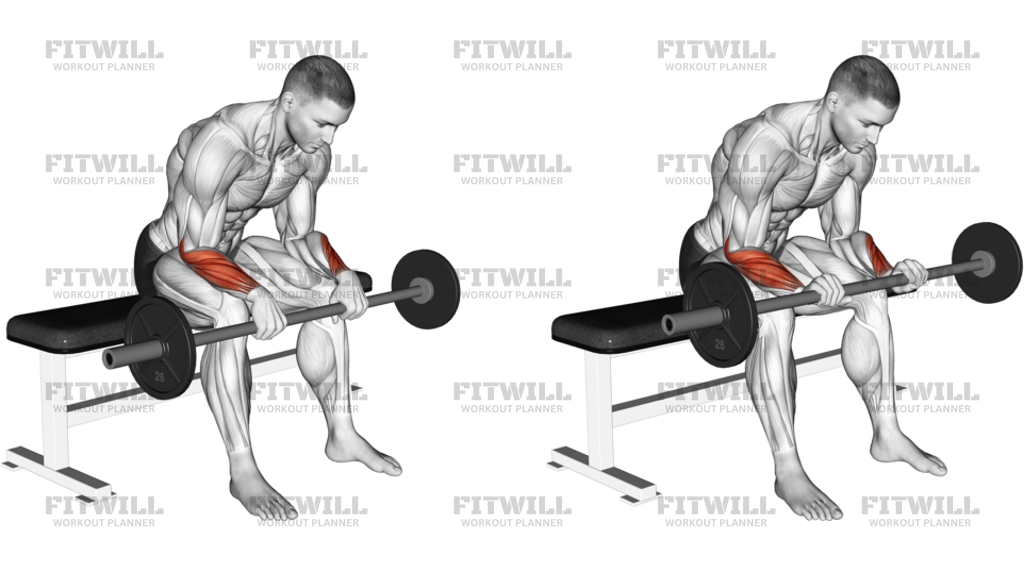
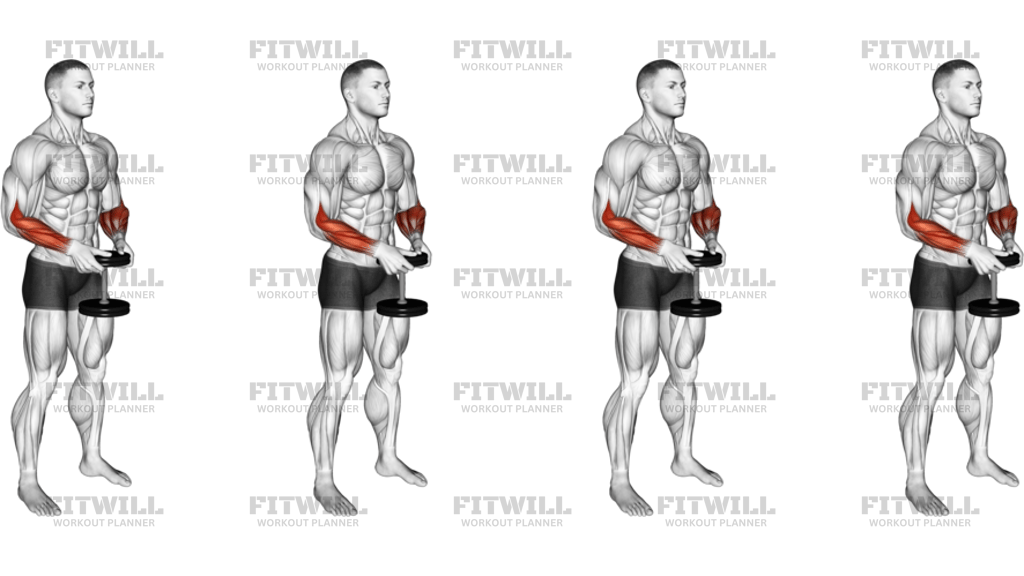
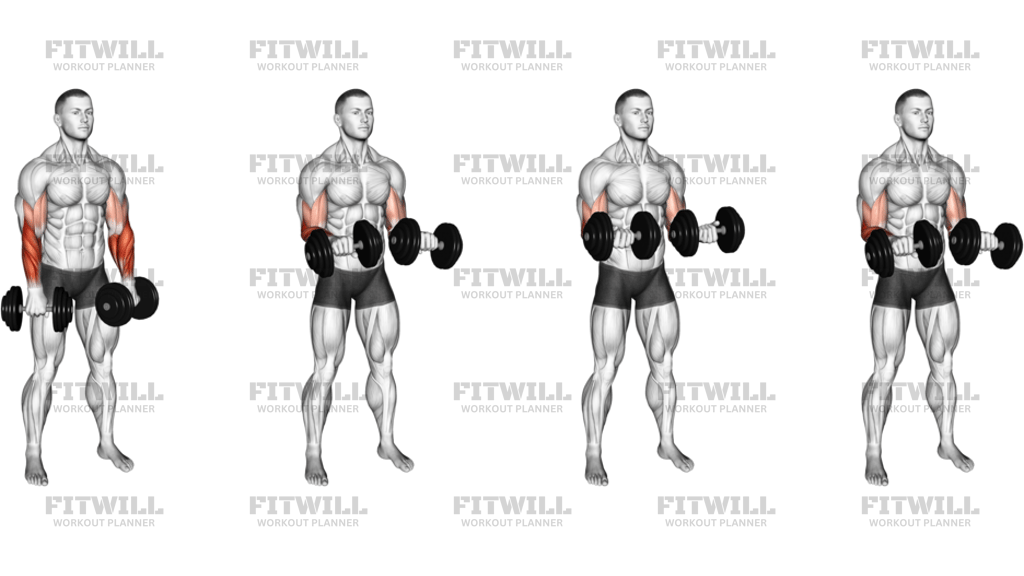
Dumbbell Standing Back Wrist Curl
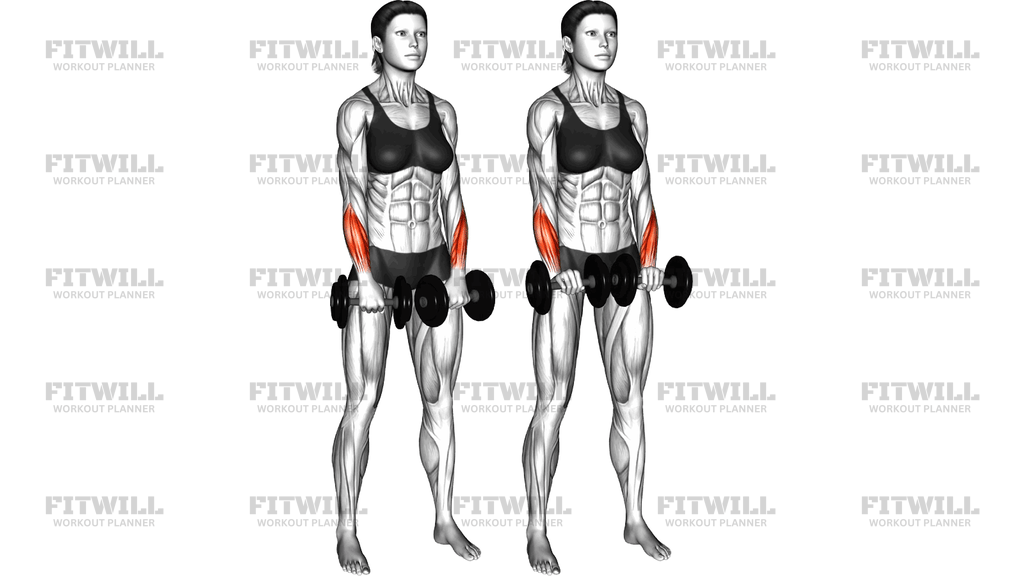
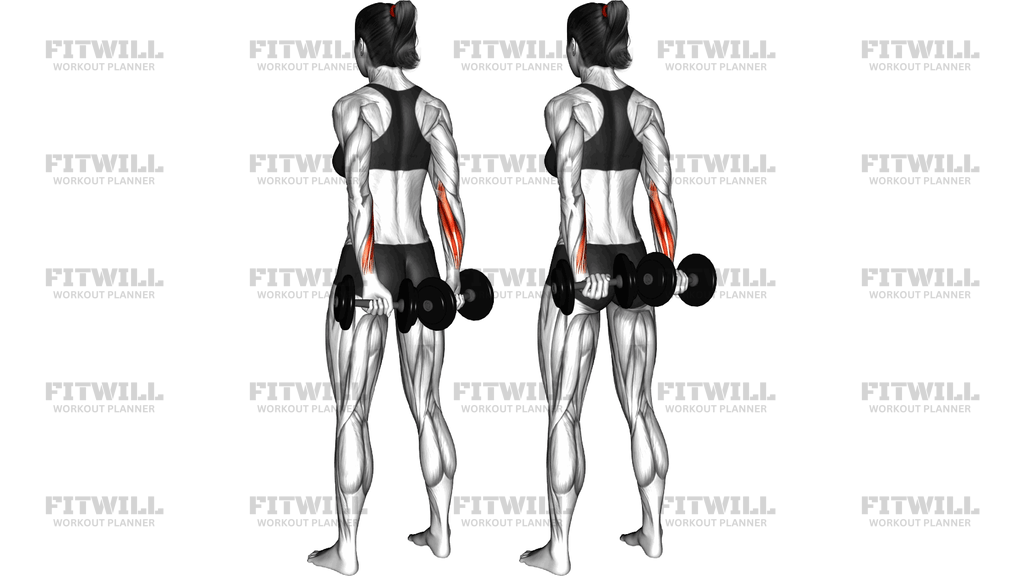
The Dumbbell Standing Back Wrist Curl is a forearm isolation exercise performed with a dumbbell held in each hand behind your body, arms hanging naturally at your sides. From this position, you extend your wrists to raise the dumbbells up and behind you, then lower them back down under control. Because the weight sits behind your hips rather than in front of your thighs, the wrists work through a slightly different line than a standard front-facing wrist curl, and the forearm extensors on the top of the forearm do the bulk of the work.
This movement is especially useful for anyone whose training revolves around gripping: lifters who struggle to hold a bar through heavy pulls, climbers and racket players who need durable wrists, and desk workers dealing with stiff, underworked forearms. The muscles on the back of the forearm are often undertrained compared with the flexors, yet they are what stabilize your wrist every time you grip, carry, or press something. Strengthening them balances out the forearm and supports healthier wrist mechanics under load.
The standing setup matters here. With no bench or thigh to rest your forearms on, your shoulders, upper arms, and grip stabilizers all have to hold the dumbbells in place while only the wrists move. That makes the exercise slightly less strict than a seated wrist curl over a bench, but it also trains the forearms in a more functional, weight-bearing context, which is exactly how they work during real lifts.
To execute it well, keep your arms relaxed and locked into position at your sides, then think only about the wrist joint. Let the dumbbells roll down toward your fingertips as the wrists flex slightly forward, then extend the wrists to curl the weights up behind you as high as your range comfortably allows. Squeeze briefly at the top, then lower slowly. The movement arc is short, so control and tempo carry most of the value, not heavy weight.
Common use cases include forearm-focused accessory work at the end of upper body sessions, grip-building blocks for pull-ups, deadlifts, and rows, and rehabilitation-style strengthening for the extensor side of the forearm. Because the dumbbells hang behind your body, use lighter loads than you would for a regular curl variation, and stop well before your form breaks down.
A few practical safety points: keep your lower back neutral and avoid leaning back or shrugging to help the weight up, since the load sits behind you and any cheating tends to show up in your posture. If you feel pinching or sharp discomfort in the wrist joint, reduce the range or the weight rather than pushing through it.
[ Workout Log & Planner ]
Put your next workout in Fitwill
Keep your plan and training log ready when you are.


Instructions
- Stand upright with your feet about hip-width apart, holding a dumbbell in each hand with a neutral grip, arms hanging straight down behind your glutes so the dumbbells sit just behind your hips.
- Let your shoulders relax down and back, keep your elbows soft but stationary, and brace your core lightly so your torso does not sway during the set.
- Allow your wrists to flex forward slightly so the dumbbells roll a little toward your fingers; this is your starting stretch position.
- Keeping your arms fixed in place, extend your wrists to curl the dumbbells up and back behind your body as far as your range allows.
- Pause for a beat at the top with the backs of your hands facing up behind you and feel the top of your forearms contracting.
- Lower the dumbbells slowly back down by letting the wrists flex again, resisting the weight on the way down rather than dropping it.
- Breathe out as you curl the weights up behind you and breathe in as you lower them.
- Keep the movement confined to the wrist joints throughout; if your elbows or torso start moving, the set is finished.
- Complete your repetitions, then set the dumbbells down safely before shaking out your wrists and forearms between sets.
Tips & Tricks
- Start lighter than you think you need. With the weight hanging behind your body you have no thigh or bench to rest against, so even a modest dumbbell feels heavy on the wrists by the tenth rep.
- The most common mistake is turning this into an arm swing. If the dumbbells drift away from your body or your elbows bend to help, drop the weight and pin your upper arms to your sides before continuing.
- Do not let the dumbbells sink too deep into your fingers at the bottom. A slight roll toward the fingertips is fine for stretch, but losing grip position mid-set shifts work away from the wrist extensors.
- Use a slow two-second lowering phase. The top-of-forearm muscles get a lot of their benefit from the eccentric, and this exercise has a short range, so tempo is where the stimulus comes from.
- If your wrists feel pinched at full extension behind you, shorten the range slightly instead of forcing the top position. A controlled partial rep beats a forced end range here.
- Watch for shrugging. Because the load pulls down behind you, the upper traps will try to take over late in a set; keep your shoulders heavy and relaxed throughout.
- Alternate this with a regular palms-forward wrist curl across the week so you train both sides of the forearm evenly rather than only the flexors.
- Chalk or a secure grip helps if sweaty hands cause the dumbbell to slip in the behind-the-body position, where you cannot see your hands.
- Warm the wrists up first with a few slow bodyweight wrist circles and light extension movements before loading this pattern.
Frequently Asked Questions
What muscles does the Dumbbell Standing Back Wrist Curl work?
It primarily targets the wrist extensors on the top of the forearm, which extend the wrist and curl the dumbbells up behind you. Your grip muscles and forearm stabilizers also work isometrically to hold the dumbbells in the behind-the-body position.
How is the Dumbbell Standing Back Wrist Curl different from a regular standing wrist curl?
In a regular standing wrist curl the dumbbells hang in front of your thighs with palms facing forward, and the wrists curl the weight toward your body. In the back version the dumbbells sit behind your glutes and you extend the wrists to lift them, which emphasizes the extensor side of the forearm instead of the flexors.
Is this exercise suitable for beginners?
Yes, as long as beginners use light dumbbells and focus on moving only at the wrists. The standing position requires a bit more control than a seated version, so starting with two to three pounds and mastering the movement path is the smart approach.
Why do my arms and shoulders move when I do the Dumbbell Standing Back Wrist Curl?
That usually means the weight is too heavy or fatigue has set in, so your body is recruiting the elbows and shoulders to finish reps. Set the dumbbells down, reduce the load, and restart with your upper arms pinned to your sides and only the wrists moving.
How many repetitions should I do for this exercise?
Because the range of motion is short and the muscles are small, higher reps work well, typically 12 to 20 per set for two to four sets. Aim for a controlled tempo rather than chasing heavy weight.
Can I do the Dumbbell Standing Back Wrist Curl with both arms at the same time?
Yes, that is the standard setup shown with a dumbbell in each hand behind the body. If your grip or coordination struggles with both arms together, you can perform it one arm at a time with the free hand bracing on something stable.
What can I use instead of dumbbells for this movement?
A barbell held behind the back works with the same wrist extension pattern, and a resistance band or cable handle can replace the dumbbell if wrist comfort is an issue. The key is keeping the arms fixed at your sides and extending only at the wrists.
Should I feel this in my forearms or in my wrists?
You should feel muscular work along the top of your forearms. Sharp or pinching sensations inside the wrist joint itself are a warning sign, so reduce the range of motion, lighten the load, or switch to a band version if that happens.
How does the Dumbbell Standing Back Wrist Curl help my grip strength?
Strong wrist extensors stabilize the wrist joint whenever you grip a bar, dumbbell, or racket, so training them makes your overall grip more secure under heavy pulls and carries. Balanced forearms also tend to hold up better during high-rep pulling work.