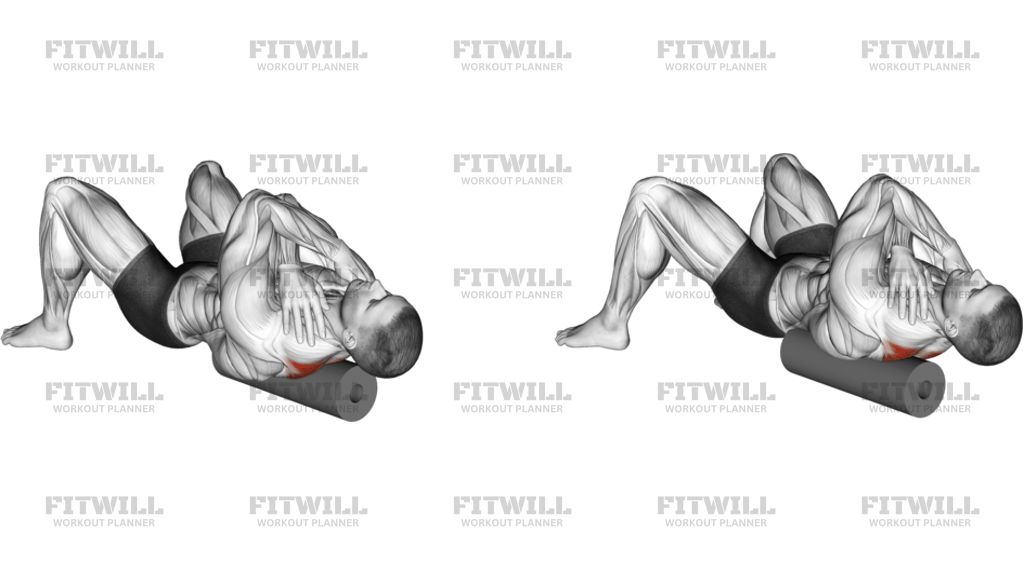
Lying Thoracic Extensions On Foam Roller
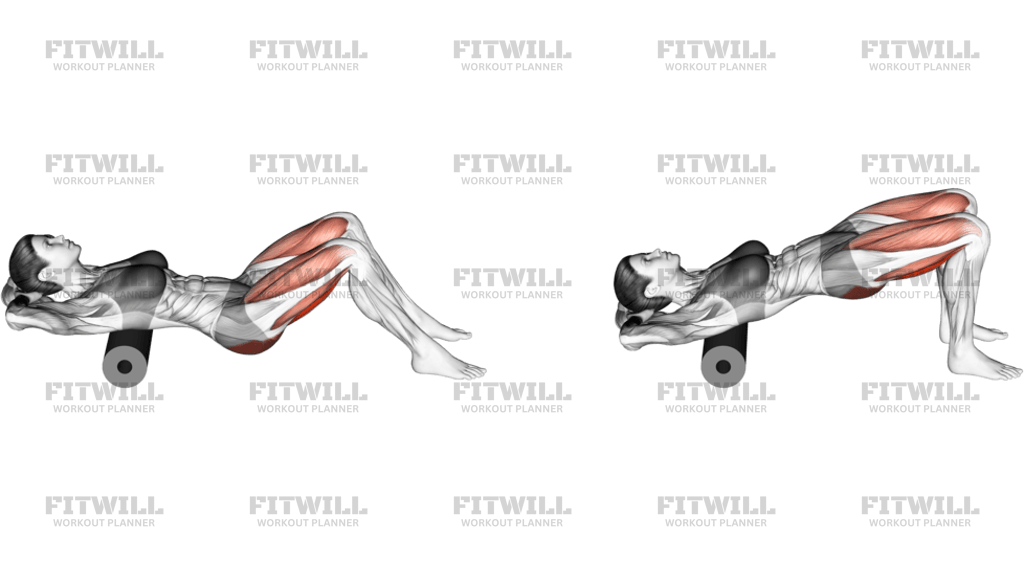
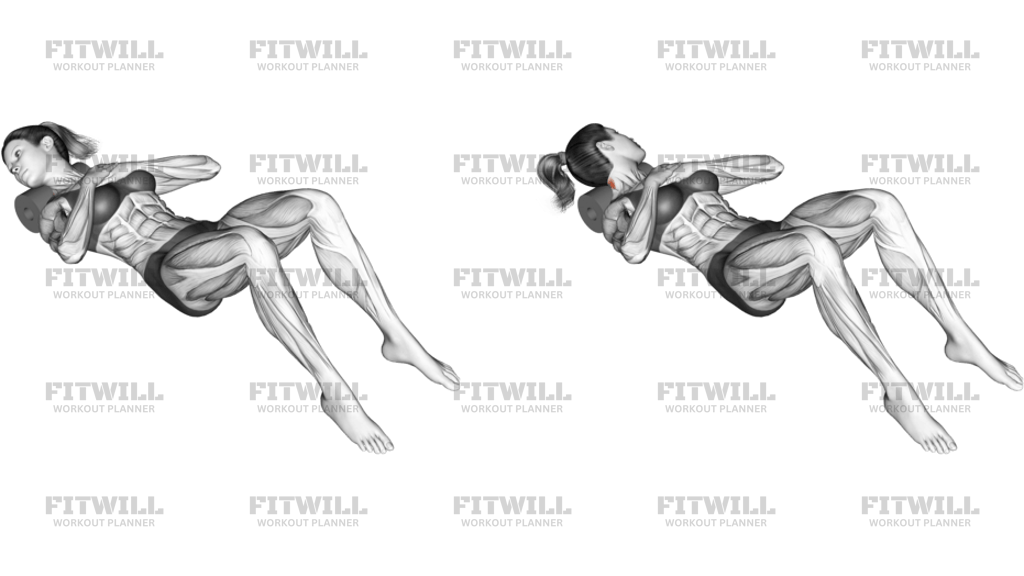
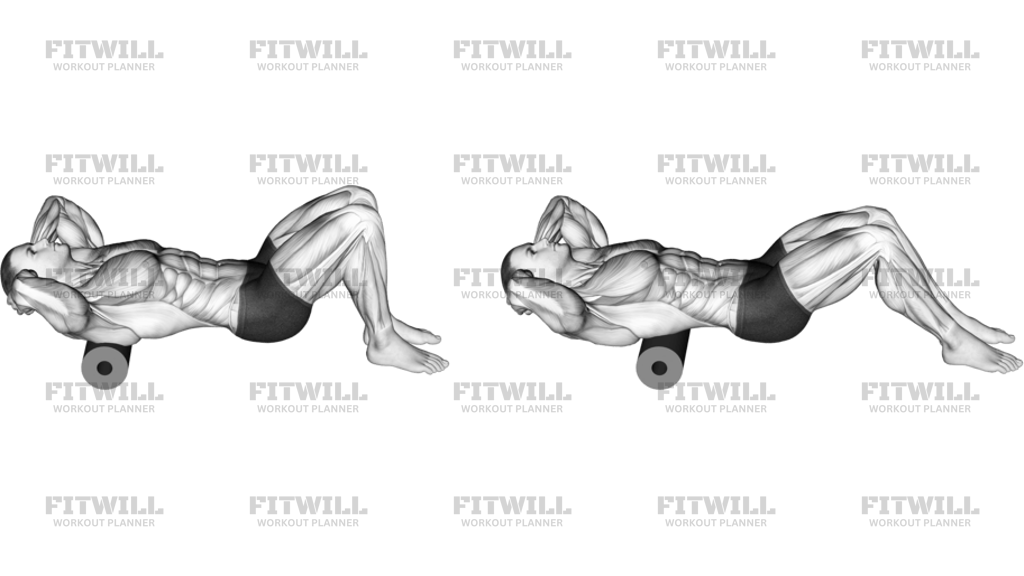
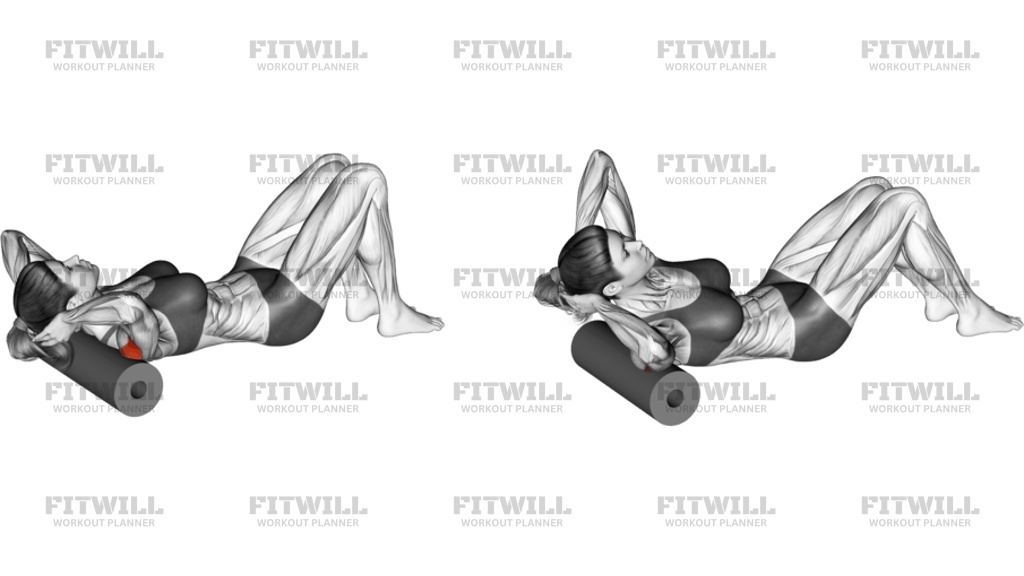
Lying Thoracic Extensions On Foam Roller is a mobility drill that uses a foam roller as a fulcrum to gently extend the mid-back over it. You lie back so the roller sits crosswise under your shoulder blades or mid-back, support your head with your hands, brace your hips against the floor, and let your upper spine arch backward over the roller. The roller acts like a hinge point, encouraging extension specifically in the thoracic spine while the lower back stays relatively quiet.
This movement is most useful for people who spend long hours sitting at a desk, driving, or hunched over a phone. That posture tends to stiffen the thoracic spine into a rounded position, which often shows up as tightness between the shoulder blades, restricted overhead reach, or compensation from the lower back and neck. Lifters who bench press, overhead press, or squat also benefit, because better thoracic extension improves shoulder position and bar path under load.
The main target is thoracic spine mobility, with a secondary stretch through the chest, the muscles along the spine, and the front of the shoulders. The core works isometrically to control the descent and keep the ribs from flaring, so the movement teaches you to extend through the mid-back rather than hinging from the lumbar spine.
Setup matters more here than in most stretches. The roller should sit on muscle and bone of the mid-back, not on the lumbar spine, and the hips stay planted on the floor so extension goes where you want it. Feet flat and knees bent give you a stable base and let you adjust how much weight you sink into the roller. Supporting the head with the hands prevents the neck from snapping into extension as you arch back.
To perform it well, lower slowly over the roller, exhale as you reach the end of your range, pause for a few seconds, then return to the starting position with control. You can repeat several extensions at one spinal segment, then shift the roller an inch or two up or down to address a different segment. Common use cases include a pre-workout mobility routine, a break from prolonged sitting, or a cool-down after pressing days.
Keep the movement moderate. If you feel sharp pain, numbness, or pinching anywhere in the spine or shoulders, back off the range or reposition the roller. Never place the roller directly under the lower back or neck for this drill.
[ Workout Log & Planner ]
Put your next workout in Fitwill
Keep your plan and training log ready when you are.


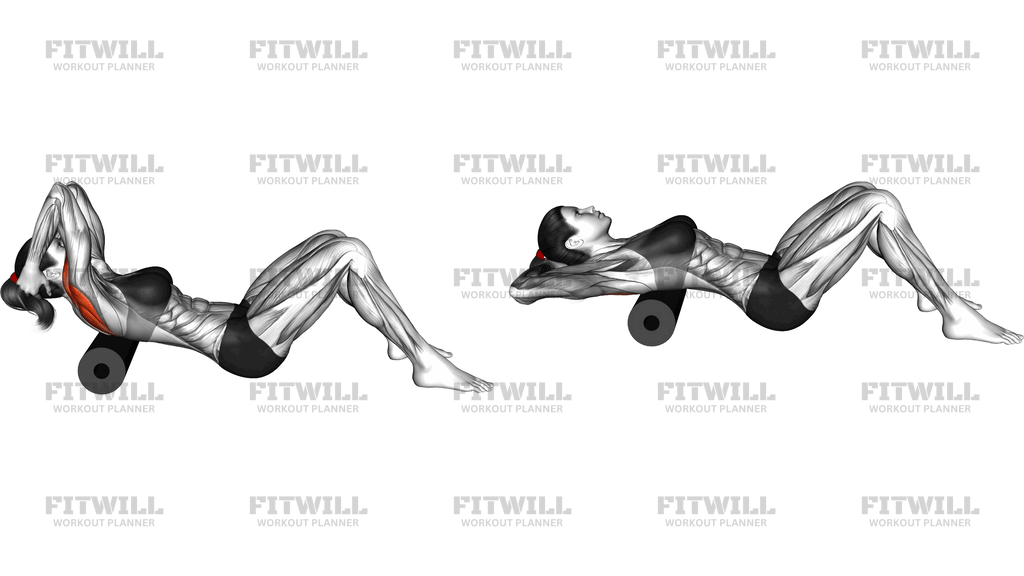
Instructions
- Sit on the floor with your knees bent and feet flat, then position a foam roller crosswise under your mid-back, roughly at the bottom of the shoulder blades.
- Interlace your fingers and place both hands behind your head to cradle and support your skull, keeping your elbows pointing forward or slightly inward.
- Plant your hips on the floor, engage your abs lightly to protect the lower back, and keep your feet rooted so they can help control the movement.
- Inhale, then slowly lean backward over the roller, letting your upper spine arch around it while your hips stay down.
- Continue lowering until you feel a comfortable stretch through the mid-back and chest, keeping your chin gently tucked so the neck stays relaxed.
- Hold the extended position for two to five seconds and exhale fully, letting the ribs drop slightly at the top of the breath.
- Return to the starting position under control by pulling your ribs down and lifting your torso back toward your thighs.
- Complete five to ten repetitions on one segment, then move the roller an inch up or down and repeat on the next area of the mid-back.
- When you finish the last segment, keep your hands behind your head, rock forward, and come up to sitting before removing the roller.
- Work within the mid-back only, stopping the roller well below the shoulder blades' lower edge and never rolling into the lumbar spine or neck.
Tips & Tricks
- If you feel the arch happening in your lower back, you are likely letting the ribs flare and the hips lift. Pull the lower abs in a little tighter and reduce the depth of the lean.
- Roller placement too high turns this into a neck stretch and too low turns it into a lower-back hinge. Aim for the bra-line or mid-shoulder-blade area and adjust in small steps.
- Do not pull on your neck with your hands. The hands are there to hold the head's weight, so keep the elbows relaxed and the pull gentle.
- Rushing reps turns this into pointless flopping. Slow descents with a pause at the end range give the tissue time to adapt and give you usable feedback.
- If the roller feels too hard or the pressure is uncomfortable, choose a softer roller or place a towel over it before lying back.
- Breathe out fully at the deepest point. Exhaling lets the rib cage drop, which often buys a few extra degrees of pain-free extension.
- Keep your chin slightly tucked. Letting the head drop backward turns this into a neck-extension exercise instead of a thoracic one.
- Expect one side or one segment to feel stiffer than the rest. Spend an extra couple of reps there, but never force past sharp pain.
- Do this drill before pressing or overhead work rather than as an exhausting finisher, so the improved position carries into your lifts.
Frequently Asked Questions
Which muscles and joints does Lying Thoracic Extensions On Foam Roller target?
The primary target is the thoracic spine's extension range, supported by the erector spinae along the mid-back. You will also feel a stretch through the chest and abs while the core holds the hips and ribs in place.
Is Lying Thoracic Extensions On Foam Roller suitable for beginners?
Yes, as long as you start with a soft roller, limit your range, and keep the roller on the mid-back only. Beginners often compensate with the lower back, so move slowly and prioritize feeling the stretch between the shoulder blades.
Where exactly should I place the foam roller?
Start crosswise under the bottom of the shoulder blades or at the mid-back, around bra-line height. After a set of extensions, shift the roller an inch at a time up or down, but never place it under the lower back or the neck.
Why do my hands go behind my head for this exercise?
Cradling your head supports its weight and stops your neck from snapping into extension as you arch back. The hands should support, not pull, so keep your elbows relaxed.
How many reps and how long should I hold each extension?
Five to ten controlled repetitions per segment works well, with a two to five second hold at the deepest point of each rep. You can cover two or three segments in a session.
Should I roll back and forth along the roller like foam rolling?
No, this is not a rolling massage. The roller stays in one spot while your spine extends over it, and you only reposition it after finishing the reps on that segment.
Can I do this exercise every day?
Yes, thoracic mobility work is generally well tolerated daily, especially if you sit for long periods. Keep the intensity moderate and stop if the area feels irritated rather than looser.
What can I use if I do not have a foam roller?
A firmly rolled towel or a rolled yoga mat can work as a substitute fulcrum, though it provides a narrower contact point. Stability-ball back extensions are another option, but they demand more balance.
When should I avoid Lying Thoracic Extensions On Foam Roller?
Skip it or get clearance from a qualified professional if you have an acute back injury, osteoporosis, recent spinal surgery, or you experience sharp pain, numbness, or dizziness during the movement. Mild stretching discomfort is normal; sharp or radiating symptoms are not.
Should this be done before or after a workout?
It fits nicely as a warm-up before bench presses, overhead presses, or squats because it opens the mid-back for better shoulder and bar positioning. It also works as a stand-alone break from prolonged sitting at a desk.