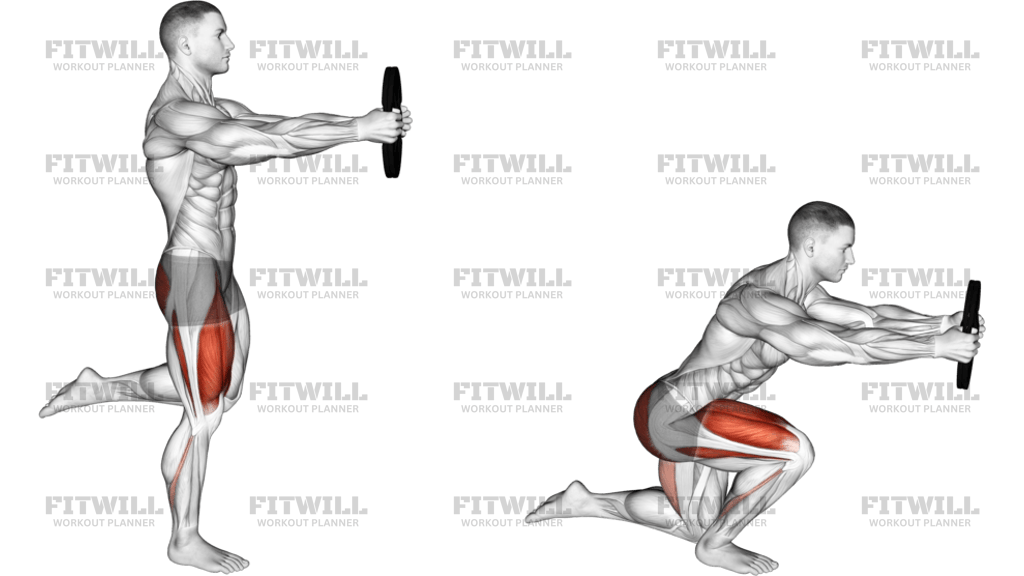
Weighted Sandbag Front Rack Forward Lunge
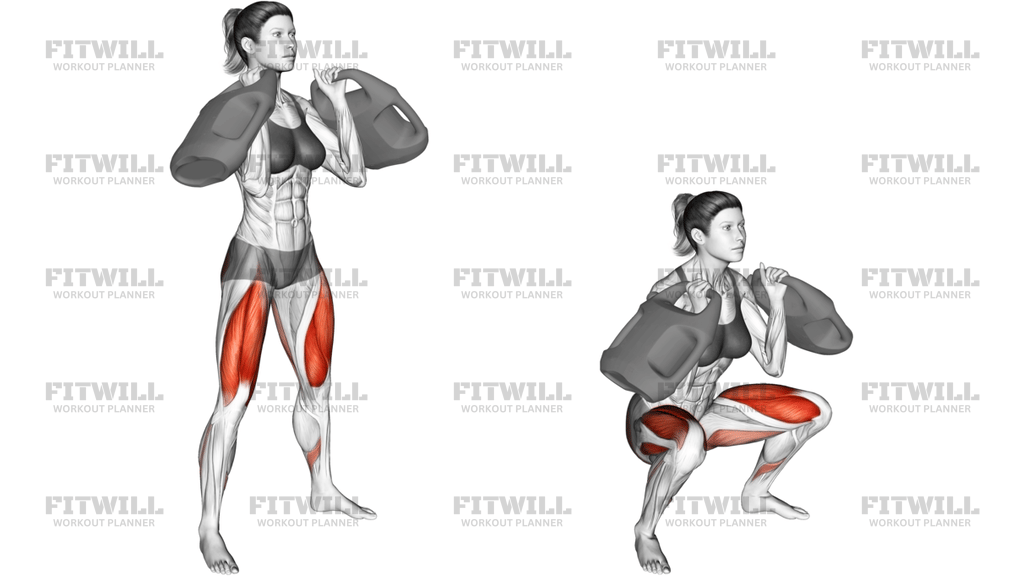
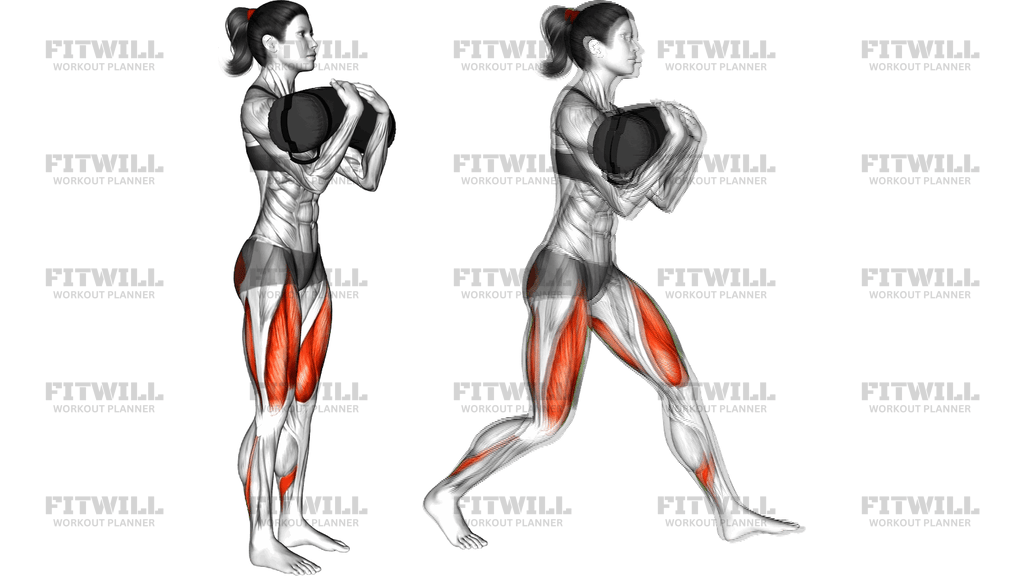
The Weighted Sandbag Front Rack Forward Lunge is a single-leg strength exercise where you hold a sandbag in the front rack position, cradled across the front of your shoulders and upper chest, then step forward into a lunge. Unlike a barbell, the sandbag shifts and settles against your body, which forces your arms, shoulders, and trunk to stay actively engaged just to keep the load in place. This makes the movement both a leg builder and a trunk and upper-back endurance challenge in one.
This exercise works the quadriceps hardest, since the front-loaded lunge demands strong knee extension on both the stepping and the standing leg. The glutes and hamstrings drive you back up to standing, while the calves and ankle stabilizers control the balance through each step. Because the sandbag rests on the front of the shoulders, your upper back, front shoulders, and core are under constant tension to prevent the bag from pulling you forward or tipping to one side.
The front rack setup is the defining detail here. With the bag sitting high across both shoulders and your hands or arms securing it from underneath and around the sides, your torso naturally wants to lean forward more than it would with a back squat position. That forward-pull is exactly what makes the exercise valuable: it trains you to stay tall under load, which carries over to cleaner squatting, running posture, and heavier carries.
Execution comes down to a deliberate, straight-ahead step. You step forward far enough that your front shin stays roughly vertical and your front knee tracks over your mid-foot, then you lower until the back knee approaches the floor. Pushing through the front foot, you either step back to the start or continue into the next rep, keeping your chest up the whole time. Rushing the step or taking too short a stride are the two most common faults, and both shift stress away from the legs and onto the knees and lower back.
This variation suits lifters who want leg work without a barbell, home trainees using a sandbag as their main load, and anyone doing conditioning circuits where lunges, cleans, and carries flow together. It is also a practical way to expose and fix side-to-side imbalances, since each leg has to handle the step on its own while the bag quietly tests your symmetry.
Start with a moderate sandbag weight you can hold at chest height for all your reps without the shoulders collapsing, and treat the movement as a skill before a grinder. Controlled tempo, a full-depth lunge on stable footing, and an even number of reps per leg will get more out of this exercise than simply adding weight.
[ Workout Log & Planner ]
Put your next workout in Fitwill
Keep your plan and training log ready when you are.


Instructions
- Clean or lift the sandbag onto the front of your shoulders so it rests high across both collarbones, then wrap your arms around the sides of the bag with your elbows pulled down and slightly in front of your ribs.
- Stand tall with your feet hip-width apart, toes pointing straight ahead, and set your stance so you have clear space to step directly forward.
- Take a breath into your belly, brace your trunk, and squeeze the bag lightly with your arms to lock it in place against your chest.
- Step one foot straight forward, planting it far enough ahead that both knees can bend to about 90 degrees without the front heel lifting.
- Lower your hips straight down, letting the back knee travel toward the floor while your front shin stays close to vertical and your torso stays as upright as the sandbag allows.
- Pause briefly at the bottom with your weight spread across the whole front foot, not dumped onto the toes.
- Drive through the front heel and mid-foot to push back to standing, either stepping the rear foot alongside the other or continuing directly into the next lunge on the same leg.
- Exhale as you push up out of the lunge and inhale at the top before each new step.
- Complete all reps on one leg or alternate sides as planned, resetting your grip on the sandbag between sets if it has slipped down your chest.
Tips & Tricks
- If the sandbag keeps sliding toward your neck, raise it higher on the shoulders and pull your elbows down harder rather than letting your upper back round forward to catch it.
- A short step is the most common fault in this movement; it drives the front knee well past the toes and turns the rep into a knee-dominant grind. Step farther out so the front shin stays closer to vertical.
- Keep your eyes on a fixed point at eye level ahead of you. The shifting sand will tempt you to look down, which pulls your chest forward and dumps load onto your lower back.
- Squeeze the bag with your arms the entire rep. Letting the arms go slack turns the front rack into a resting position and the bag will drag your torso down as you fatigue.
- Alternate legs rep for rep if you notice the bag tilting to one side; it usually signals that one leg is cutting depth or rushing the push back.
- If balance is the limiting factor, pause a beat at the top of each rep with your feet together instead of reducing the depth of the lunge.
- Use a firm, non-slip floor. The forward step under front load punishes wobbling surfaces, and a slick floor can make the planted foot slide out from under the bag.
- When your grip and shoulders give out before your legs, that is a sign the sandbag is too heavy for this variation; drop weight before your torso position breaks down.
- Control the lowering phase to roughly two seconds. The shifting sand makes fast descents far less stable than with a fixed-weight barbell or dumbbell lunge.
Frequently Asked Questions
Which muscles does the Weighted Sandbag Front Rack Forward Lunge target most?
The quadriceps do the bulk of the work as you lower into and drive out of the lunge. The glutes and hamstrings assist on the way up, while the core, front shoulders, and upper back work continuously to hold the sandbag in the front rack.
How is the sandbag front rack position different from holding dumbbells at my sides?
In the front rack, the load sits on your shoulders rather than hanging from your hands, so your grip gets a break but your trunk, upper back, and shoulders stay under constant tension. It also encourages a more upright torso and makes the lunge noticeably harder on the core.
Is the Weighted Sandbag Front Rack Forward Lunge suitable for beginners?
Yes, as long as you start with a light sandbag and have room to step forward safely. Beginners often benefit from doing the first sets bodyweight or with an empty bag to learn the stride length and rack position before adding meaningful load.
How deep should I lower in the forward lunge?
Lower until both knees are bent to roughly 90 degrees and your back knee is close to the floor, as long as you can keep your front heel down and your torso tall. If your form shifts before that point, work within the range you can control and build depth over time.
Should I step back to standing between reps or keep lunging forward?
Stepping back to a standing position between reps is the most controlled option and matches the standard forward lunge pattern. Walking forward with continuous steps also works, but it requires more space and more balance, so save it for when the rack position feels solid.
Why does my front knee drift inward on this exercise?
A knee that caves inward usually points to weak or under-cued glutes on the stepping leg, or a step that is too narrow. Deliberately line the front knee up over your second toe as you descend, and shorten your stance slightly if your hips feel twisted.
What can I use if I don't have a sandbag?
Two dumbbells or kettlebells held in the front rack at shoulder height, or a single kettlebell or barbell in a clean position, are close substitutes. You lose the shifting, unstable character of the sand, but the lunge pattern and leg demand stay very similar.
How heavy should the sandbag be for this movement?
Choose a weight you can hold at chest height with your chest up for every planned rep without your shoulders rounding or the bag sliding down. For most people that means starting noticeably lighter than they would use for a back-loaded lunge.
Is the forward step safe for my knees?
With a long enough stride, an upright torso, and a front heel that stays planted, the forward lunge is a well-tolerated knee exercise for healthy trainees. If you have a history of knee discomfort, control the tempo, limit depth to a pain-free range, and check with a professional if symptoms persist.
How many reps and sets work best for the Weighted Sandbag Front Rack Forward Lunge?
It works well in the 6 to 12 rep range per leg for 3 to 4 sets when the goal is strength, or higher rep sets of 12 to 20 when used for conditioning. Because the trunk and shoulders fatigue alongside the legs, stop the set when your torso position starts to fade rather than when your legs alone give out.