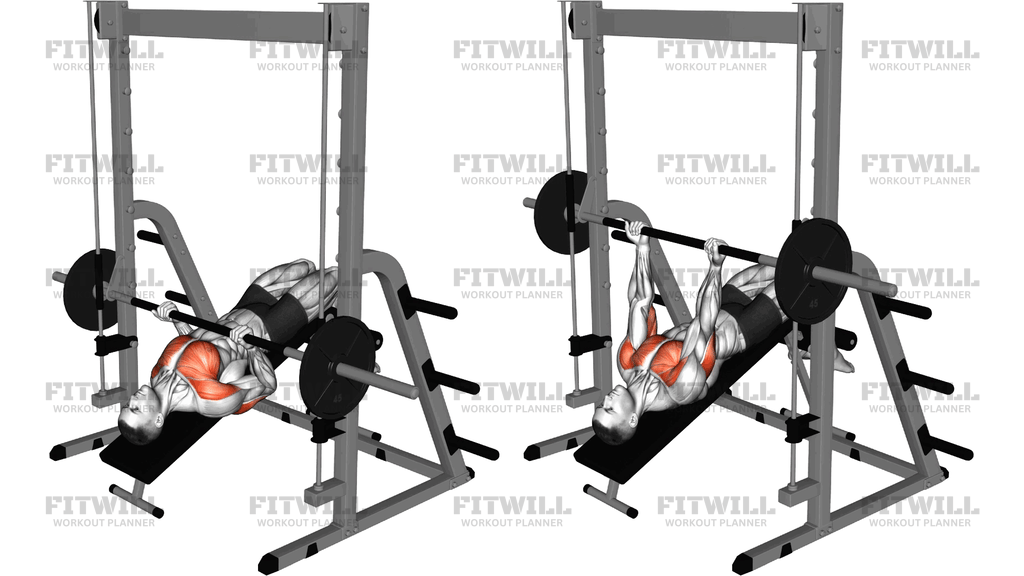
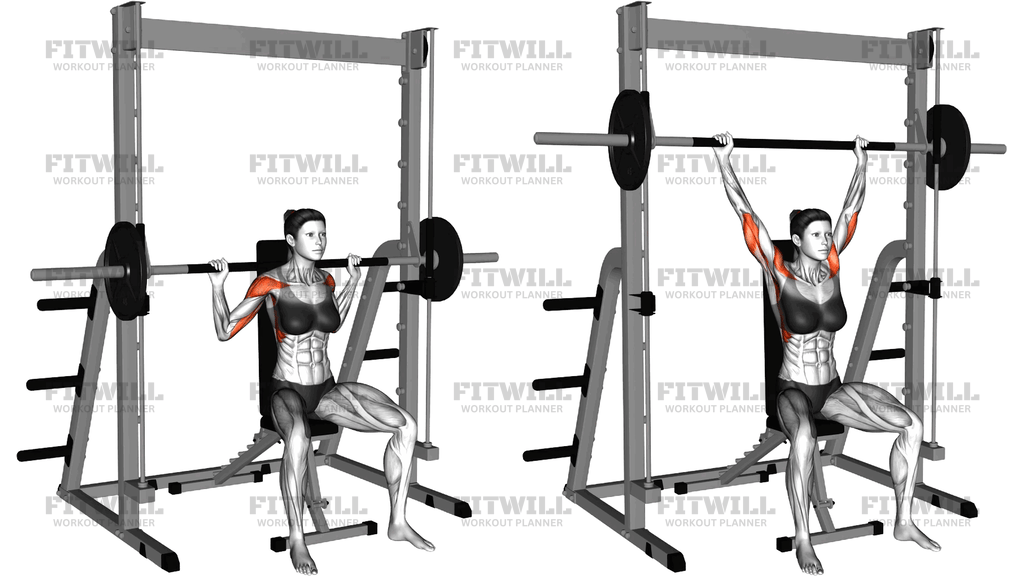
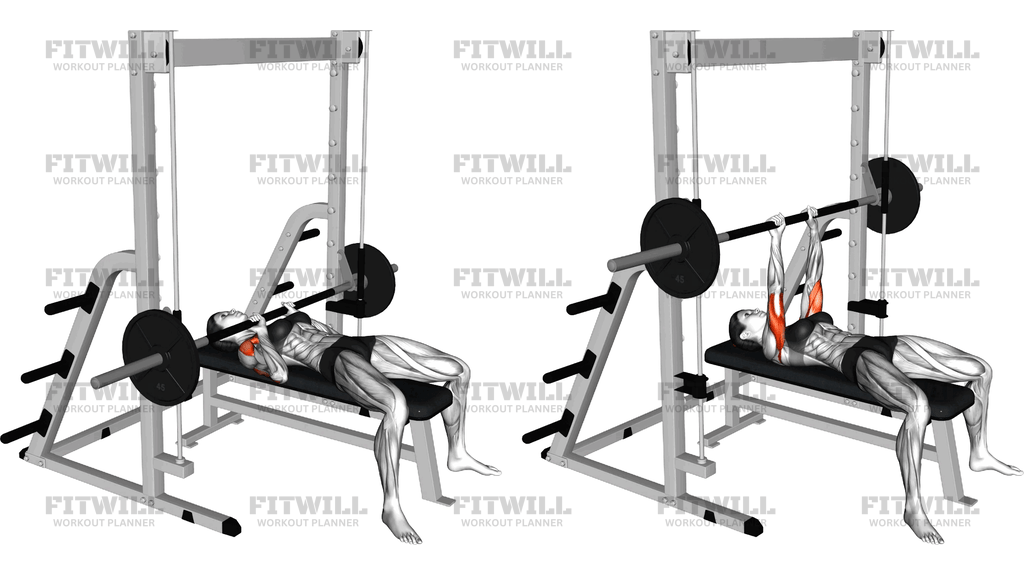
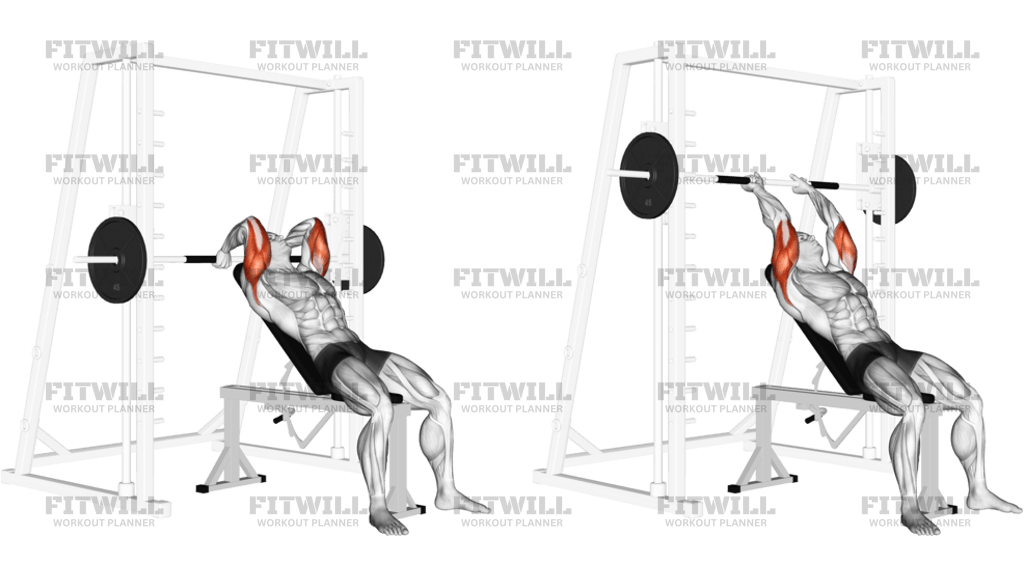
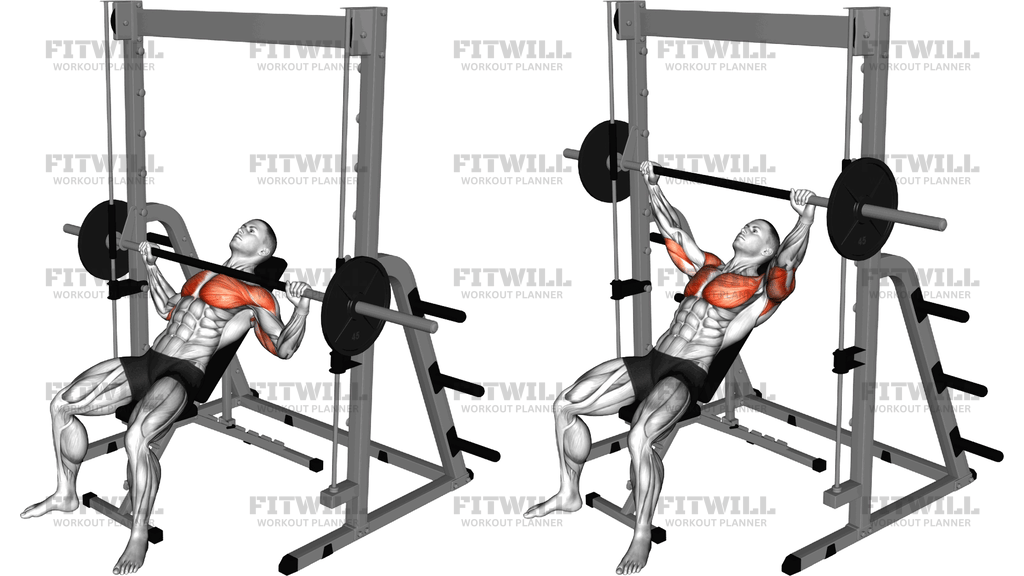
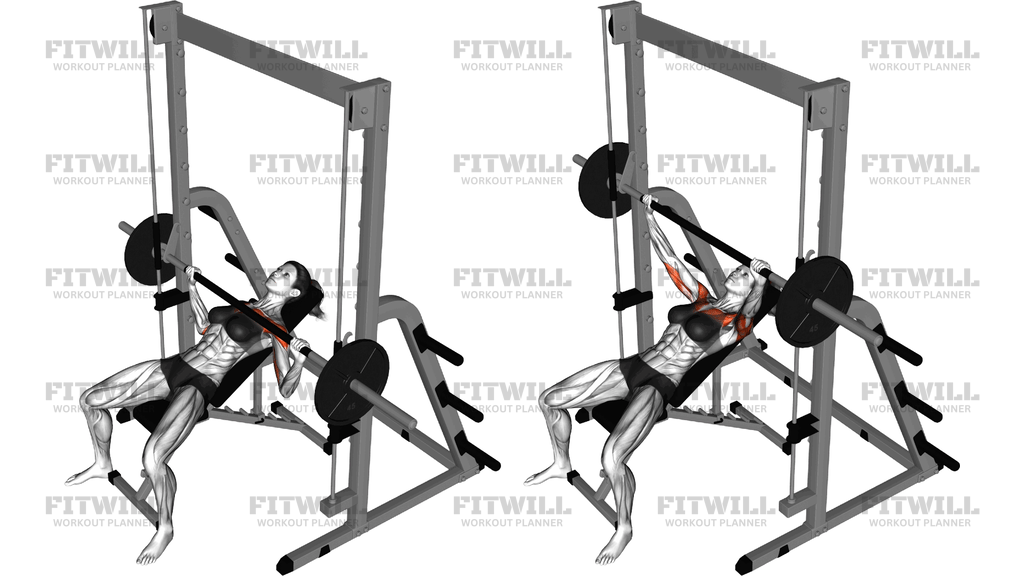
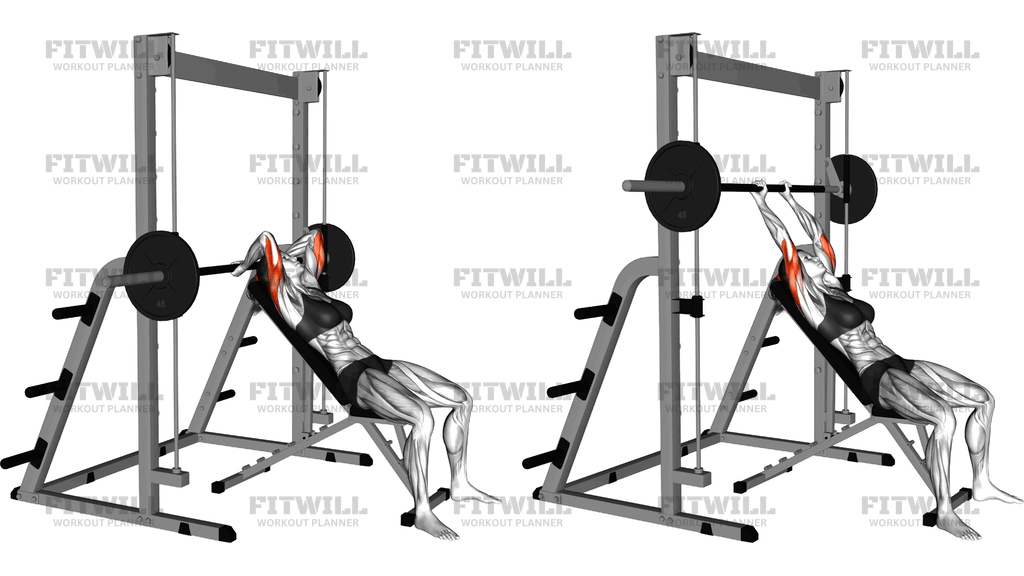
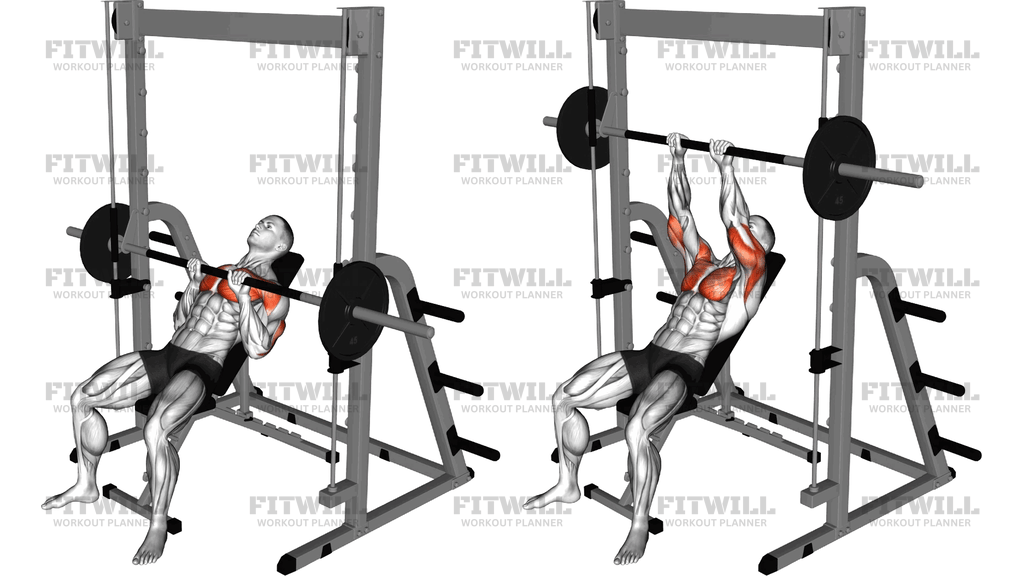
Smith Jm Bench Press
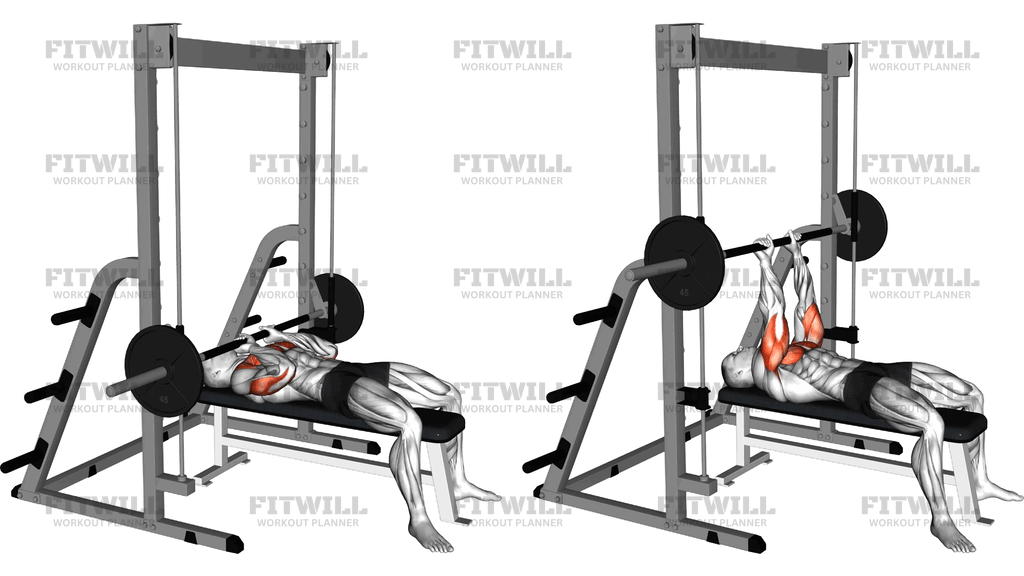
The Smith Jm Bench Press is a triceps-dominant pressing movement performed lying on a flat bench inside a Smith machine. It takes the JM press, a hybrid between a close-grip bench press and a skull crusher, and runs it on the machine's fixed vertical track. You grip the bar around shoulder width, unrack it, and lower it down toward your upper chest while your elbows bend deeply and drift slightly toward your head, then press back up to lockout. The fixed bar path is what makes this version appealing: the machine removes the balance demand of a free-weight bar, so you can concentrate fully on loading the triceps through that deep elbow bend.
This exercise is especially useful for lifters who want serious triceps development without the wrist and elbow stress that heavy free-weight JM presses or skull crushers can produce. Because the Smith machine bar is counterbalanced and guided, you can train close to failure with more confidence, which matters when the goal is building pressing strength in the locked-out range. Powerlifters often use it to strengthen the triceps for bigger bench lockouts, while general lifters use it as a heavy triceps builder on upper-body days.
The triceps do most of the work here, with the chest and front shoulders assisting as the bar travels up and down. The elbow position is the defining detail: instead of flaring wide like a standard bench press, your elbows stay tucked and travel back past your torso, so the forearm and upper arm fold together at the bottom. That deep fold is exactly why the triceps get challenged through a long range, but it is also why rushing or overloading this lift punishes the elbows.
Setup matters more on this movement than on a regular machine press. Position the flat bench so the bar lines up roughly over your upper chest when unracked, keep your feet planted on the floor, and pin your shoulder blades down and back against the bench. Because the Smith machine locks the bar into a straight vertical path, your body has to match the machine, not the other way around. Take a minute to adjust the bench before adding weight rather than compensating with an awkward arm angle once you are under load.
Execution comes down to control. Lower the bar slowly toward a point near your upper chest or lower neck area, let the elbows bend fully, and drive the weight back up by straightening the arms without letting the shoulders roll forward. Start lighter than you think you need, since the deep elbow angle makes this lift harder than a comparable close-grip press. Add weight only when the bar path feels smooth and your elbows stay quiet through the whole rep.
[ Workout Log & Planner ]
Put your next workout in Fitwill
Keep your plan and training log ready when you are.


Instructions
- Place a flat bench inside the Smith machine so the bar sits directly above your upper chest and face area when you lie down.
- Set the bar's safety stops just below your deepest range so the hooks catch the bar if a rep stalls.
- Grip the bar about shoulder width with an overhand grip, then lie back on the bench with your head toward the machine and your feet flat on the floor.
- Unrack the bar, rotate it out of the safety hooks, and hold it with your arms straight over your upper chest.
- Pull your shoulder blades down and back into the bench and brace your core before the first rep.
- Lower the bar in a slow, controlled line toward your upper chest, keeping your elbows tucked so they bend deeply and point down toward your feet rather than flaring out.
- Descend until your forearms fold back toward your upper arms at the bottom, with the bar close to your neck or upper chest.
- Press the bar straight back up by extending your elbows until your arms are fully locked out over your upper chest.
- Exhale as you press up and inhale as you lower the bar under control.
- After your final rep, rotate the bar back into the safety hooks and make sure it is fully seated before letting go.
Tips & Tricks
- Do not set the bench too low relative to the bar path; if the bar starts over your chin or throat instead of your upper chest, every rep pulls your shoulders out of position.
- If your elbows ache at the bottom, stop descending the moment your forearms touch your biceps and reverse there; the deep stretch is optional, lockout strength is not.
- Keep your wrists stacked over your elbows. Bending the wrists back turns a triceps press into a forearm strain.
- A Smith JM press is easier to overload than a free-weight one, but that cuts both ways: the fixed path removes your bailout options, so respect the safety stops.
- If your shoulders roll forward at lockout, drop the weight slightly and finish each rep by squeezing the triceps instead of shrugging the bar up.
- Grip width changes the feel. Narrower shifts more load to the triceps, while a wider grip lets the chest contribute more on the way up.
- Warm up your elbows with a few light high-rep sets before jumping to working weight, since cold elbows complain loudly on this lift.
- Use a rep rhythm of roughly two seconds down and one second up; bouncing out of the bottom robs the triceps of the hardest part of the rep.
Frequently Asked Questions
What muscles does the Smith Jm Bench Press work?
The triceps are the primary muscle, working through a deep bend and full extension at the elbow. The chest and front shoulders assist as secondary movers, especially during the lower half of the press.
How is the Smith Jm Bench Press different from a regular Smith machine bench press?
In a standard bench press the bar touches mid-chest and the elbows flare out to the sides. In the JM version you keep the elbows tucked, lower the bar toward your upper chest or neck area, and let the elbows fold back deeply, which shifts most of the load onto the triceps.
Is the Smith Jm Bench Press good for beginners?
It can be, because the fixed bar path and safety hooks make it safer than the free-weight version. However, beginners should start with a standard close-grip press first to build basic pressing strength and elbow tolerance.
Why should I set the safety stops on the Smith machine for this exercise?
The bar travels a fixed path and cannot be steered around a stuck rep. Setting the hooks just below your bottom position means a failed attempt rests safely on the stops instead of on your neck or chest.
Where exactly should the bar touch at the bottom of a Smith Jm Bench Press?
It should come down close to your upper chest or lower neck area, not your mid-chest. If you find yourself lowering toward the nipples like a regular bench press, you have drifted into a close-grip press instead.
Can I substitute dumbbell skull crushers or a free-weight JM press instead?
Yes, both train the triceps in a similar elbow-dominant pattern. The Smith machine version is generally easier to set up safely and control when training heavy or close to failure.
My elbows hurt during this press. What should I change?
Reduce the weight, shorten the range so you reverse just before the deepest fold, and make sure your wrists stay stacked over your elbows. Persistent discomfort is a signal to switch to a less elbow-intensive triceps movement and build up gradually.
How heavy should I go on the Smith Jm Bench Press?
Start noticeably lighter than your close-grip or regular bench press numbers, since the deep elbow angle makes the same load much harder. Add weight only when reps feel smooth and your elbows stay comfortable.
Does this exercise help with bench press lockout?
Yes, it is popular among bench pressers because it overloads the triceps in the exact extended-arm position used to finish a heavy press. Stronger lockout strength usually translates to better bench numbers over time.