Dumbbell Decline Close Grip Press
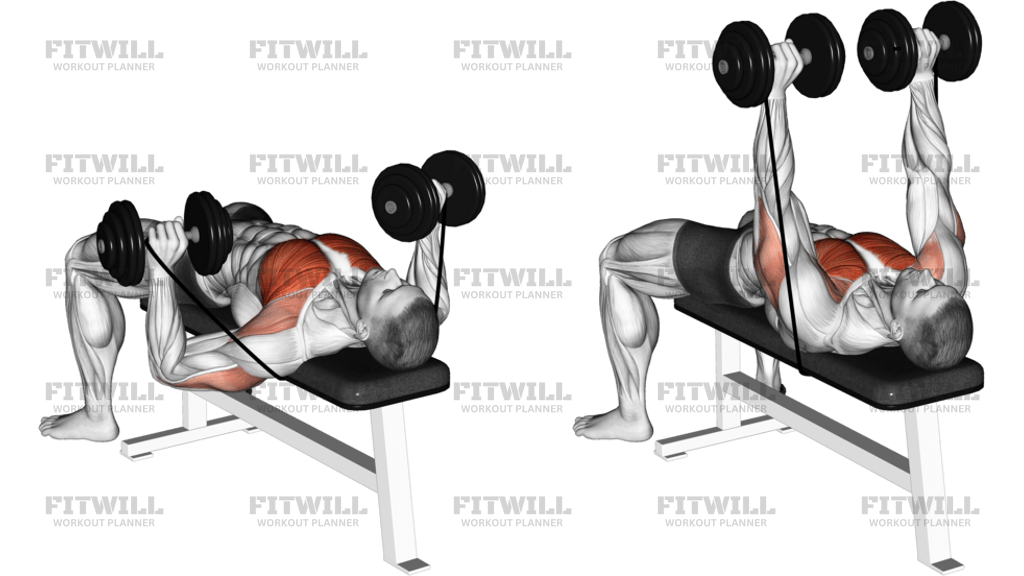
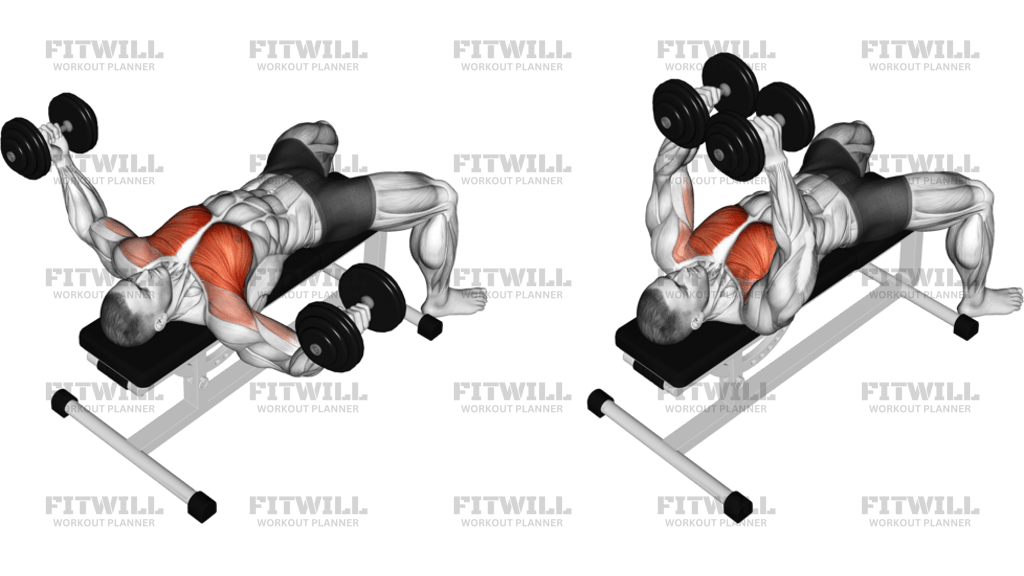
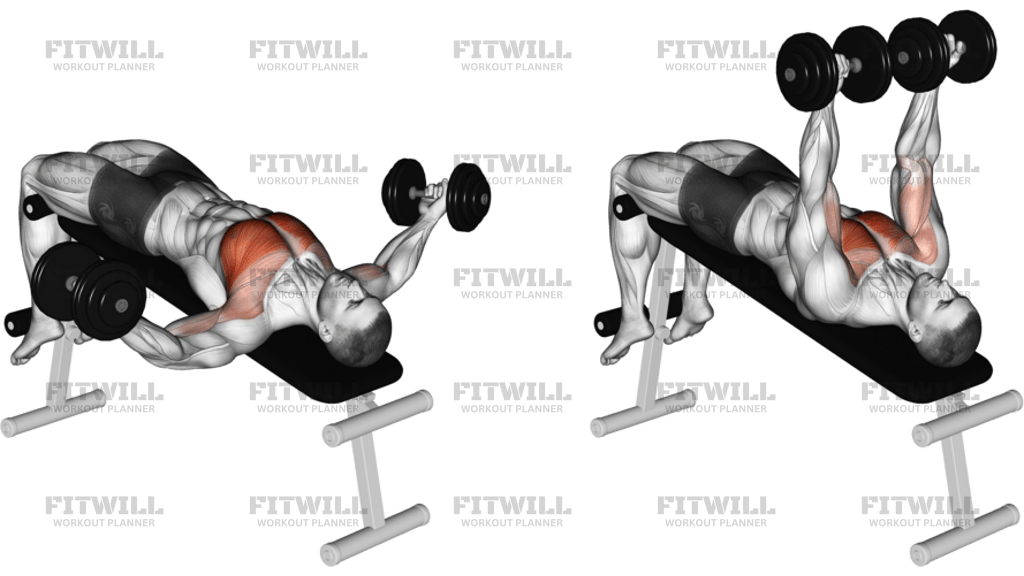
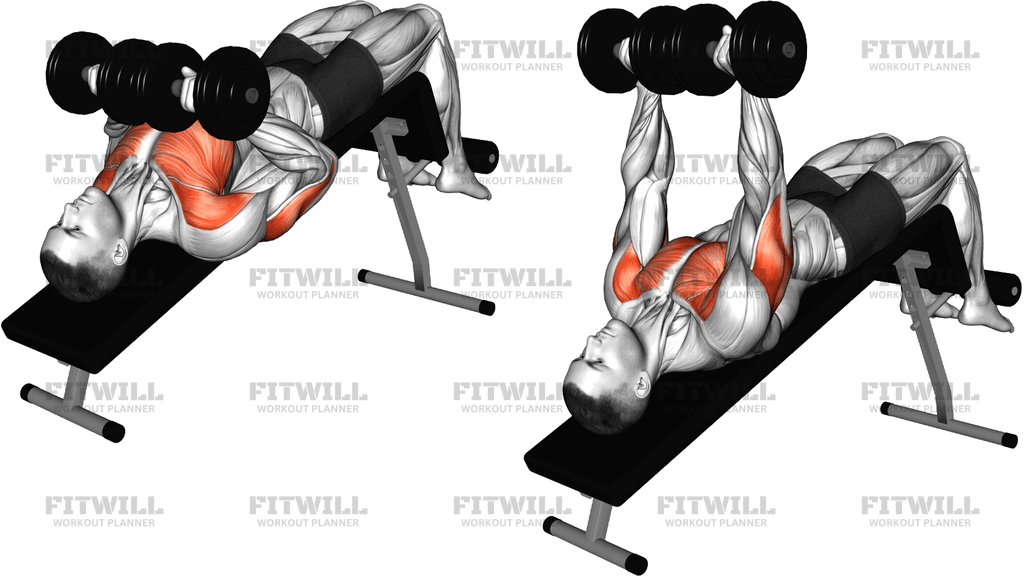
The Dumbbell Decline Close Grip Press is a pressing variation performed on a decline bench with the dumbbells held close together so the hands travel nearly side by side throughout the movement. The decline angle tilts your torso so your head is lower than your hips, shifting the emphasis of the press toward the lower portion of the chest, while the narrow hand position forces the triceps to contribute far more than they would in a standard wide-grip press.
This combination makes the exercise a good choice for lifters who want to build the lower chest without relying solely on dips, and for anyone whose elbows get irritated by wide barbell pressing. Because each dumbbell moves independently, the stabilizing muscles around each shoulder have to work on their own, which can expose and gradually correct side-to-side strength differences.
Setup matters more here than in most pressing variations. On a decline bench your feet are anchored under the roller pads and your hips are the lowest point of contact, so a loose or uneven position lets your torso slide down the pad and changes the pressing angle mid-set. Take a moment to wedge your hips and upper back firmly into the bench before the first rep, and keep the dumbbells positioned directly over your lower chest rather than drifting up toward your collarbones.
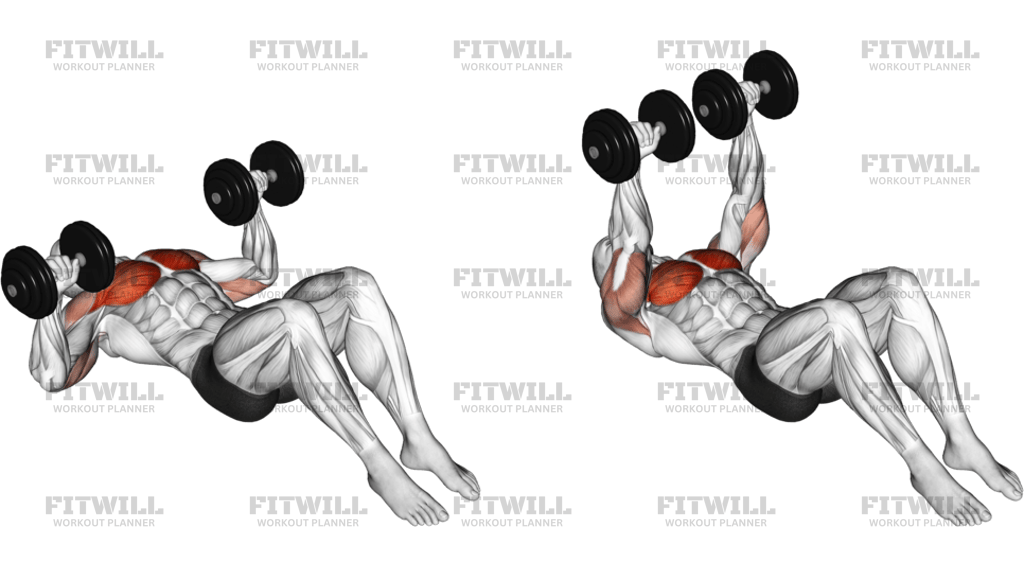
To execute the press, hold the dumbbells with a neutral grip so your palms face each other and the heads of the dumbbells almost touch. Lower them under control until they are just outside your lower chest, keeping your elbows tucked at roughly 20 to 30 degrees from your torso rather than flared wide. Press back up along the same path, squeezing the dumbbells toward each other at the top without clanging them together.
The close-grip element is what separates this from a regular decline dumbbell press: the triceps take on a large share of the work, and the chest still gets strong stimulation because of the decline angle. Expect to use noticeably less weight than a standard-width press, especially at first. Work with a weight you can control through the full range, and have a spotter or a careful self-handoff routine ready, since getting heavy dumbbells into position on a decline bench is the riskiest part of the movement.
[ Workout Log & Planner ]
Put your next workout in Fitwill
Keep your plan and training log ready when you are.


Instructions
- Set a decline bench at a moderate angle (roughly 20 to 40 degrees) and secure your feet under the roller pads so your body cannot slide down the pad.
- Bring the dumbbells into position by sitting on the low end of the bench, resting them on your thighs, then rocking back onto the bench and guiding them up over your lower chest.
- Grip each dumbbell with a neutral grip, palms facing each other, and hold the weights close together so the inner heads are nearly touching directly above your lower chest.
- Brace your core, press your hips and upper back into the bench, and keep a slight, natural arch in your lower back with your head resting on the pad.
- Inhale and lower both dumbbells slowly toward your lower chest, keeping your elbows tucked about 20 to 30 degrees from your sides and the dumbbells staying close together.
- Stop when the inner heads of the dumbbells are just outside your lower chest and you feel a stretch across the chest without your shoulders rolling forward.
- Exhale and press the dumbbells back up along the same path until your arms are extended over your lower chest, keeping the weights close but not clanging them together.
- Squeeze your chest and triceps briefly at the top, then begin the next repetition with the same controlled descent.
- After your final rep, bring the dumbbells back to your thighs, sit up by driving your feet against the pads or roll to a seated position, and rack the weights.
- Rest, recheck your foot and hip position if anything shifted, and reset your grip before starting the next set.
Tips & Tricks
- Getting the dumbbells into place is the hardest part of this exercise. Use a thigh-kick handoff, or have a partner hand you the weights once you are anchored on the bench, rather than trying to lift them from the floor while lying at an angle.
- If your hips slide down the pad during the set, you are not wedged in tightly enough. Dig your heels into the foot pads and press your hips back into the bench before each set.
- Elbows that flare out to the sides turn this into a regular decline press and put extra stress on the shoulders. Cue yourself to keep the dumbbells touching or nearly touching from the first inch of the descent.
- Do not lower the dumbbells to your upper chest or collarbone. The decline angle means the weights should track to your lower chest; pressing toward the wrong spot strains the shoulder joint.
- Expect to use less weight than a standard decline dumbbell press. The narrow position shortens the triceps' favorable leverage, and trying to match your usual press weight is the most common reason form breaks down.
- Avoid clanging the dumbbell heads together at the top. Hold them a few centimeters apart so your muscles keep tension instead of resting on the collision.
- Keep your wrists stacked directly over your elbows throughout the press. Bent-back wrists under load are a sign the dumbbells are too heavy for the close position.
- If your lower back feels pinched, check that you are not over-arching. A slight natural arch is fine on a decline bench, but excessive arching combined with the head-down angle is unnecessary.
- Warm up your elbows and triceps with a light set or two before working weight, since the close grip loads the elbow joint more directly than a wide press.
Frequently Asked Questions
What muscles does the Dumbbell Decline Close Grip Press work?
The primary muscle is the lower chest, specifically the sternal head of the pectoralis major, which is emphasized by the decline angle. The triceps work hard because of the close-grip position, and the front shoulders assist with pressing.
How close should my hands be on the dumbbells?
Hold the dumbbells so their inner heads are nearly touching or lightly in contact, with your palms facing each other in a neutral grip. You do not need to force them to stay glued together the entire time, but they should travel within a few centimeters of each other.
Is the Dumbbell Decline Close Grip Press good for beginners?
It can be, but beginners should start with light dumbbells and practice the handoff and decline position first. The bench setup is less intuitive than a flat press, so learning to get into position safely is the first skill to master.
Why use dumbbells instead of a barbell for a decline close grip press?
Dumbbells let each arm move on its own path, which reduces wrist and shoulder strain in the narrow position and helps even out strength differences between sides. A barbell close-grip decline press is an option, but the fixed bar path can be harsher on the wrists and elbows.
What is the most common mistake in this exercise?
Letting the elbows flare wide and the dumbbells drift apart, which turns it into a standard decline press and defeats the purpose of the close grip. Another frequent issue is lowering the weights toward the upper chest instead of the lower chest.
Can I substitute the Dumbbell Decline Close Grip Press with dips?
Yes, weighted or bodyweight dips with a narrower torso lean target a similar combination of lower chest and triceps. Dips are a solid alternative if you lack a decline bench, though dumbbells make it easier to scale load in small increments.
How far down should I lower the dumbbells?
Lower until the inner heads of the dumbbells are just outside your lower chest and you feel a comfortable stretch across the pecs. Going deeper than your shoulders and chest allow usually causes the shoulders to roll forward and takes tension off the target muscles.
Should I have a spotter for this exercise?
A spotter is strongly recommended with heavier dumbbells, mainly for getting the weights into and out of position on the decline angle. If you train alone, use moderate dumbbells and the thigh-kick handoff so you can sit up and set the weights down safely.
How does this differ from a regular decline dumbbell press?
Both use the same decline setup, but the close grip keeps the dumbbells nearly touching and tucks the elbows, shifting much of the load to the triceps while still working the lower chest. The regular press allows a wider elbow position and typically lets you handle more weight.
Where should the dumbbells be at the top of the press?
Directly over your lower chest with arms extended, wrists stacked over elbows, and the dumbbell heads held a few centimeters apart. Locking them out over your face or collarbones means the weights have drifted up the bench and your shoulder position is compromised.